
3 - 3.5 hours·English
5.0(49)
Tokyo: Fast & Furious JDM Car Tour, Daikoku PA & C1 Loop
Free cancellationProfessional tour guideTransportation during the tour

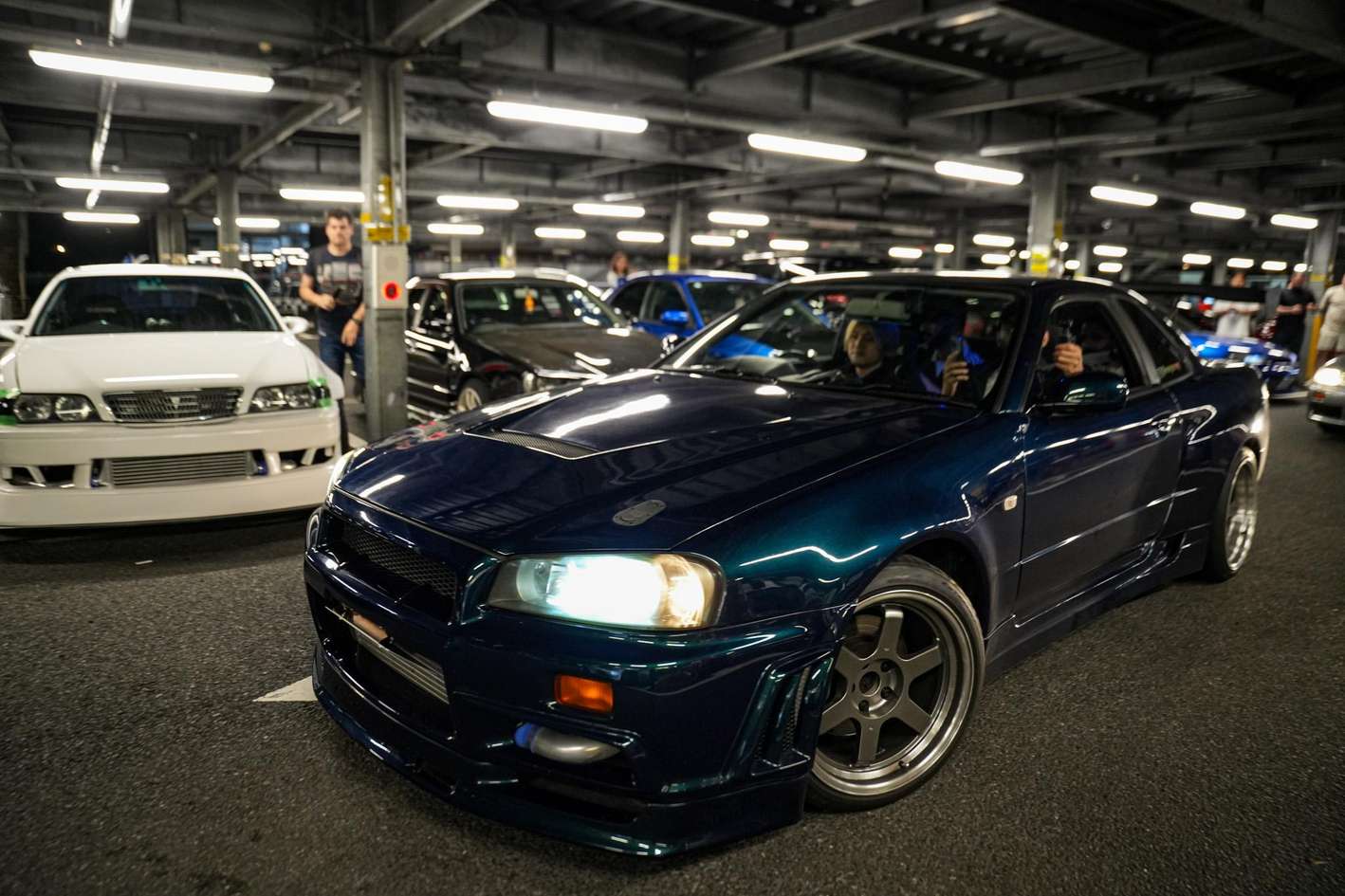
See the Skylines and Supras you've only watched on video, riding shotgun in a real modified JDM car. Ride with local enthusiast drivers who know the Wangan, handle tolls and routes, and drop you back at your hotel after the meet. Free entry to Daikoku PA, guaranteed round-trip transport, no driving permit needed.
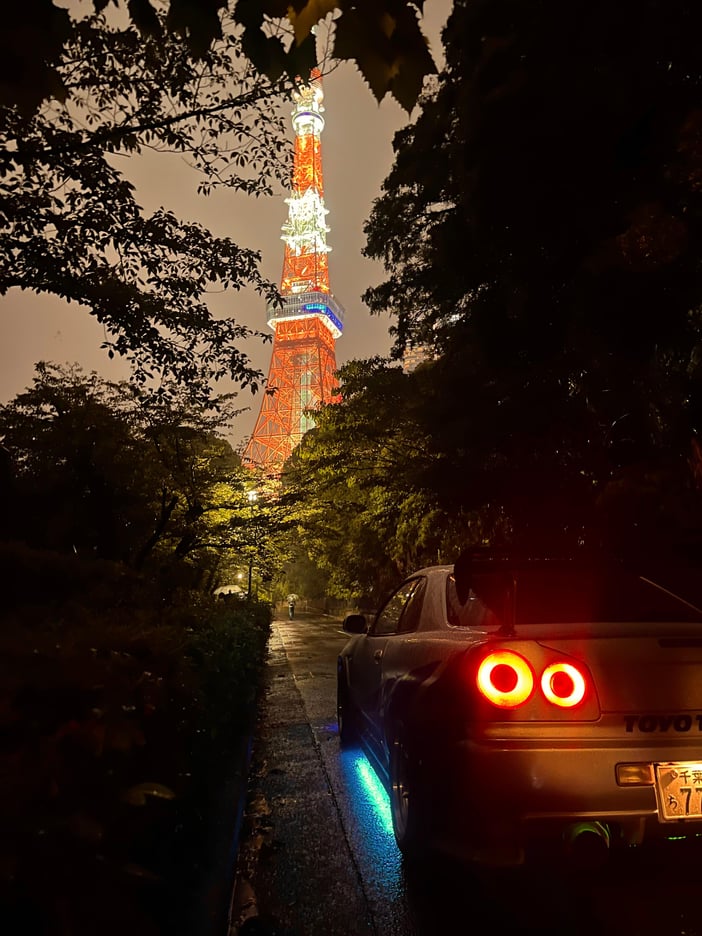
"Guide was brilliant, such an awesome experience! I'd recommend it even if you're not into cars at all."
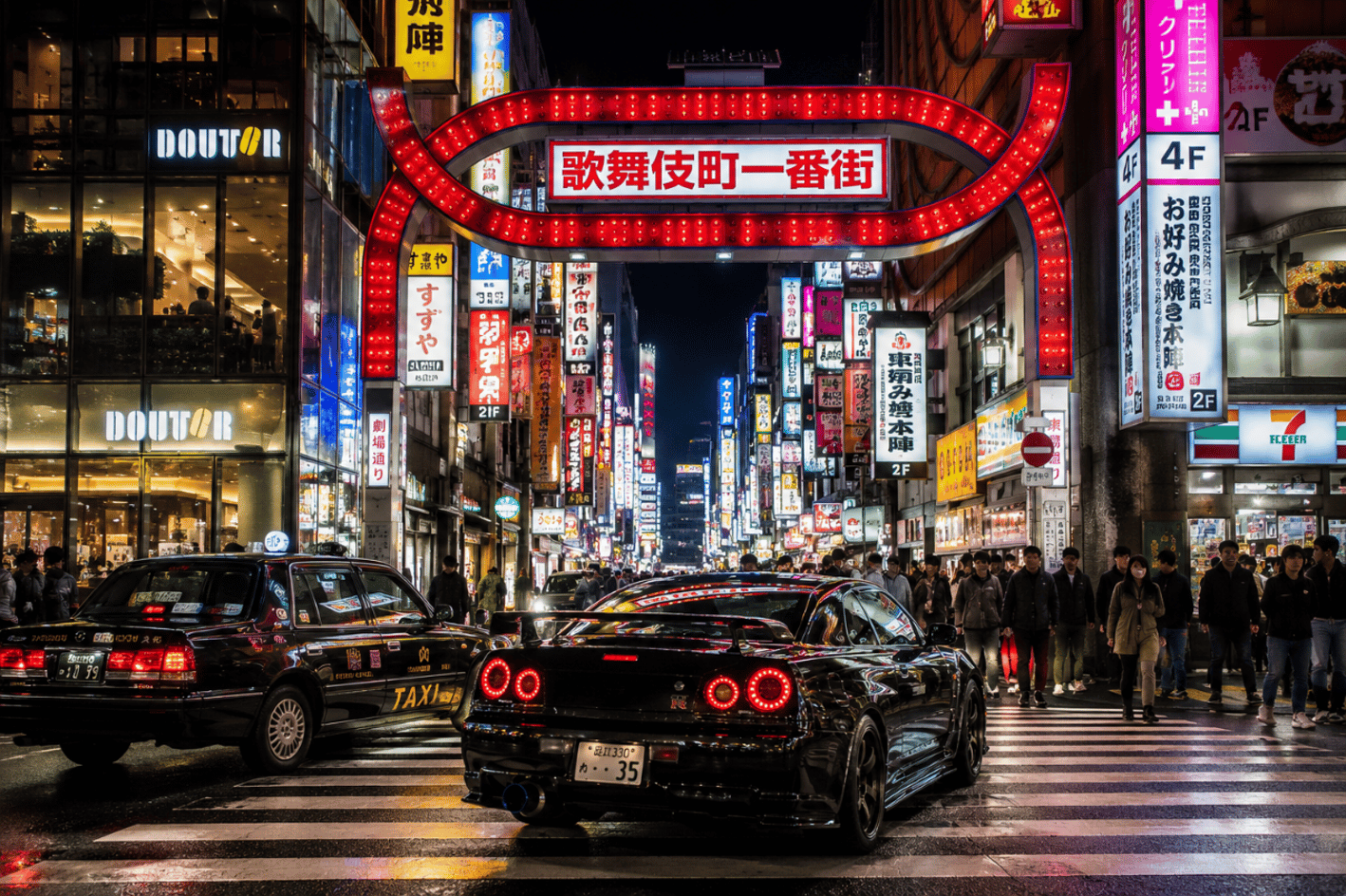
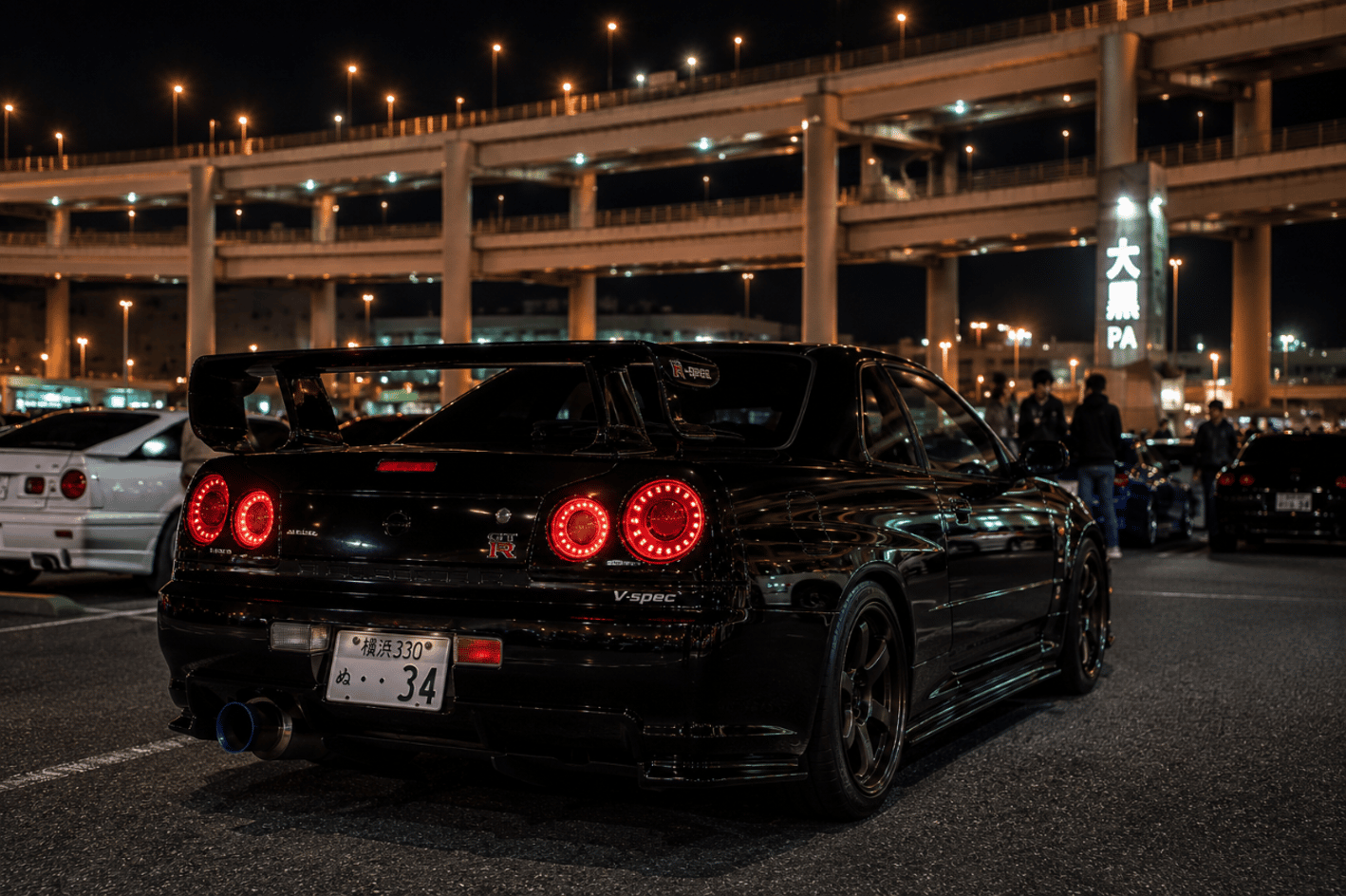
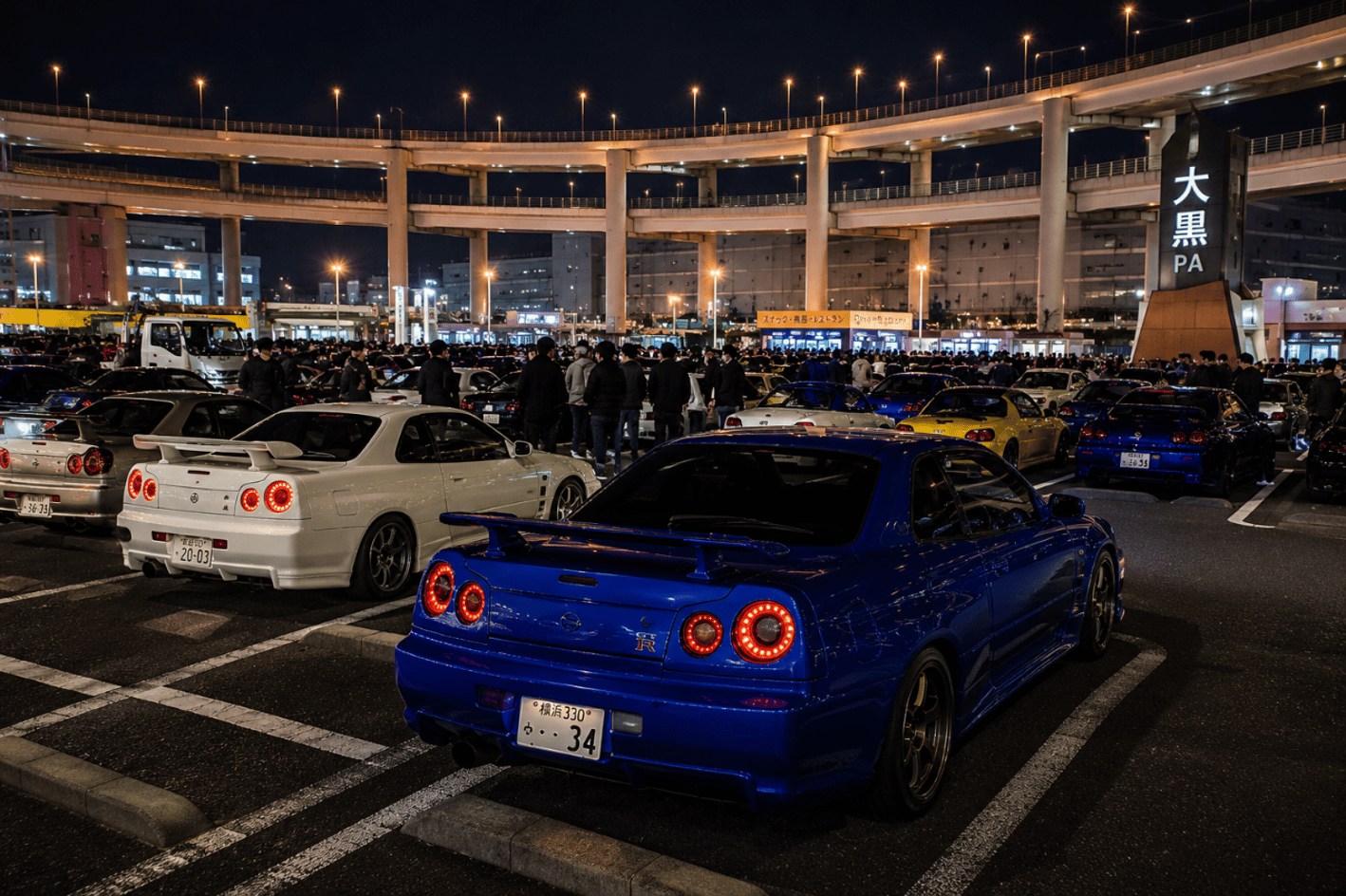
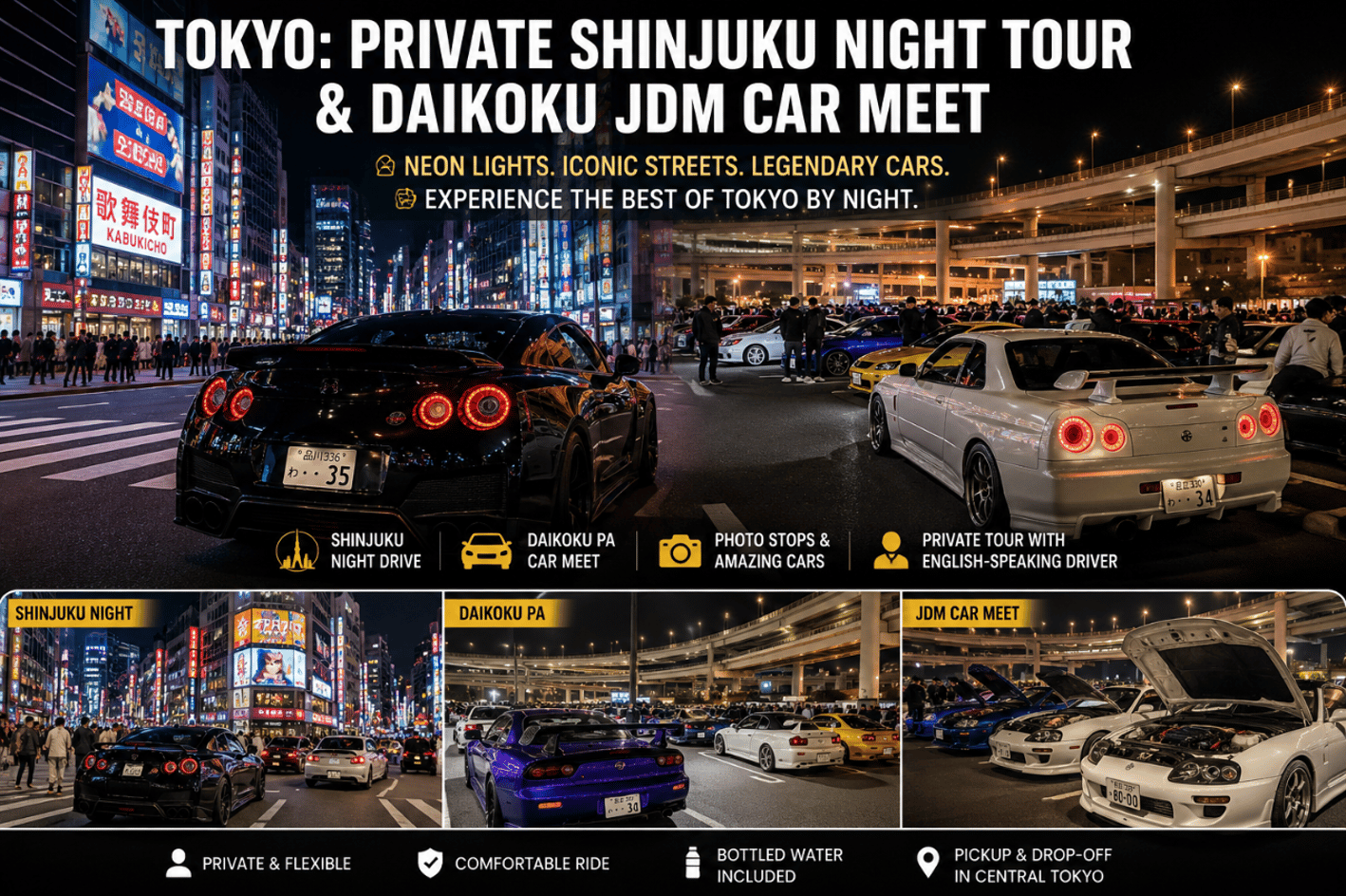
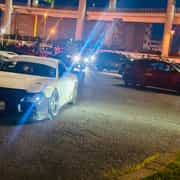
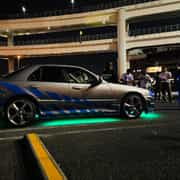
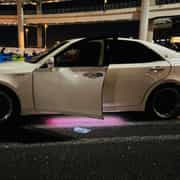
Daikoku PA has no pedestrian exits and cabs cannot pick you up there, so your way in and out needs a plan.
Read the guide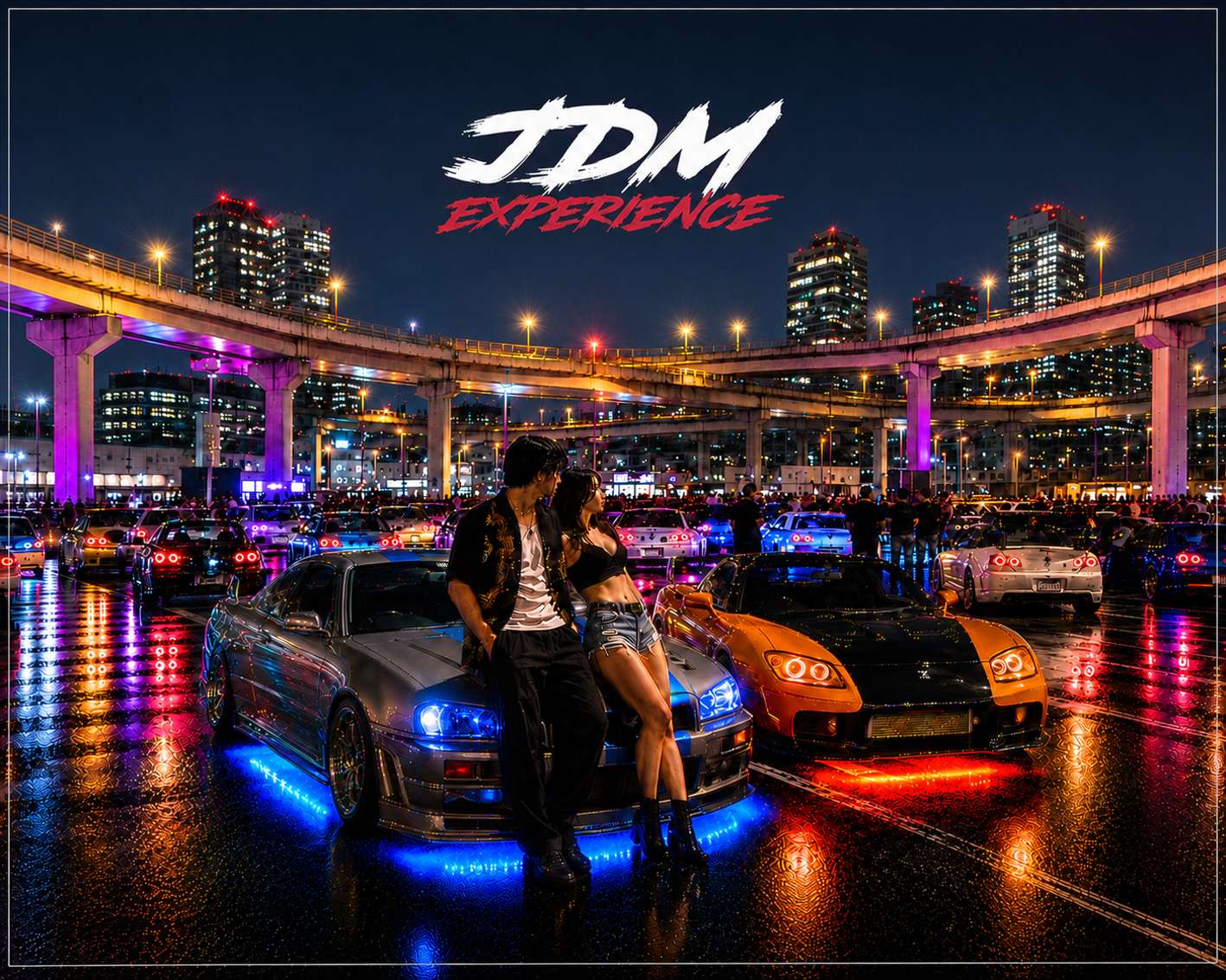
The meet has no timetable, but first cars arrive from 5 pm and weekend police closures can start at 7:30 pm.
Read the guideThis guide splits into two questions: how you get onto the island, and when the cars actually show up. The first settles your transport, the second settles your night. Read both before you book anything.
Once you know what Daikoku PA is, these two questions decide the visit: how you reach a car-only island, and which night gives you the cars.
No trains, no buses, no taxi rank: how visitors actually set foot on the meet island
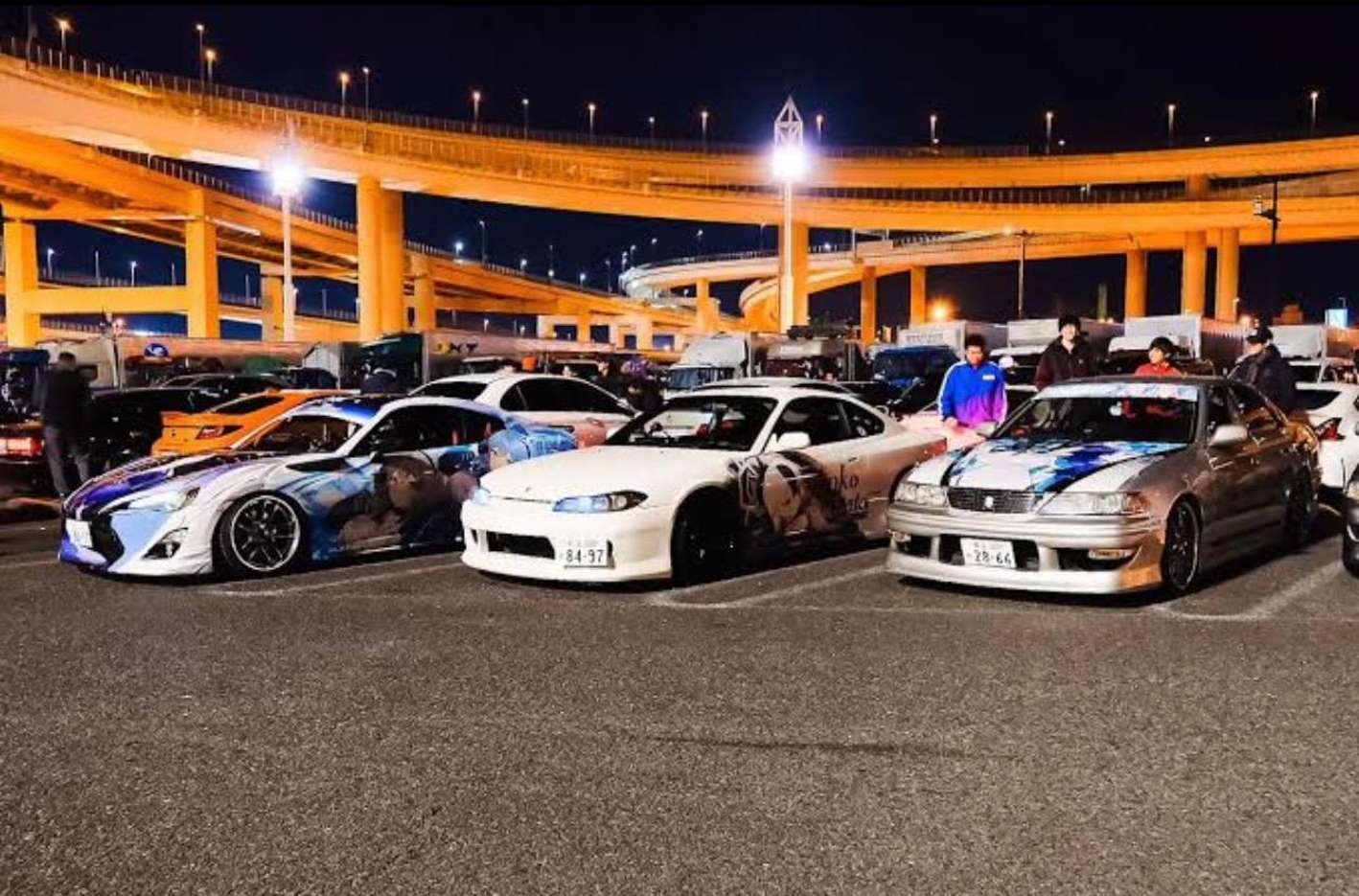
The hard fact first: Daikoku PA sits inside an expressway interchange, so no train, bus or sidewalk reaches it. A metered taxi can drop you there in about 35 to 45 minutes from central Tokyo when traffic is light, but drivers rarely agree to enter the toll island, wait and bring you back.
That is why most overseas visitors end the evening by booking a ride rather than improvising one. Guided passenger tours budget 45 minutes to an hour each way, since that door-to-door time covers hotel pickups and real traffic, unlike the bare driving figure. The page walks through taxis, rentals and tours in detail.
When the first Skylines roll in, which nights fill the lot, and when police clear it
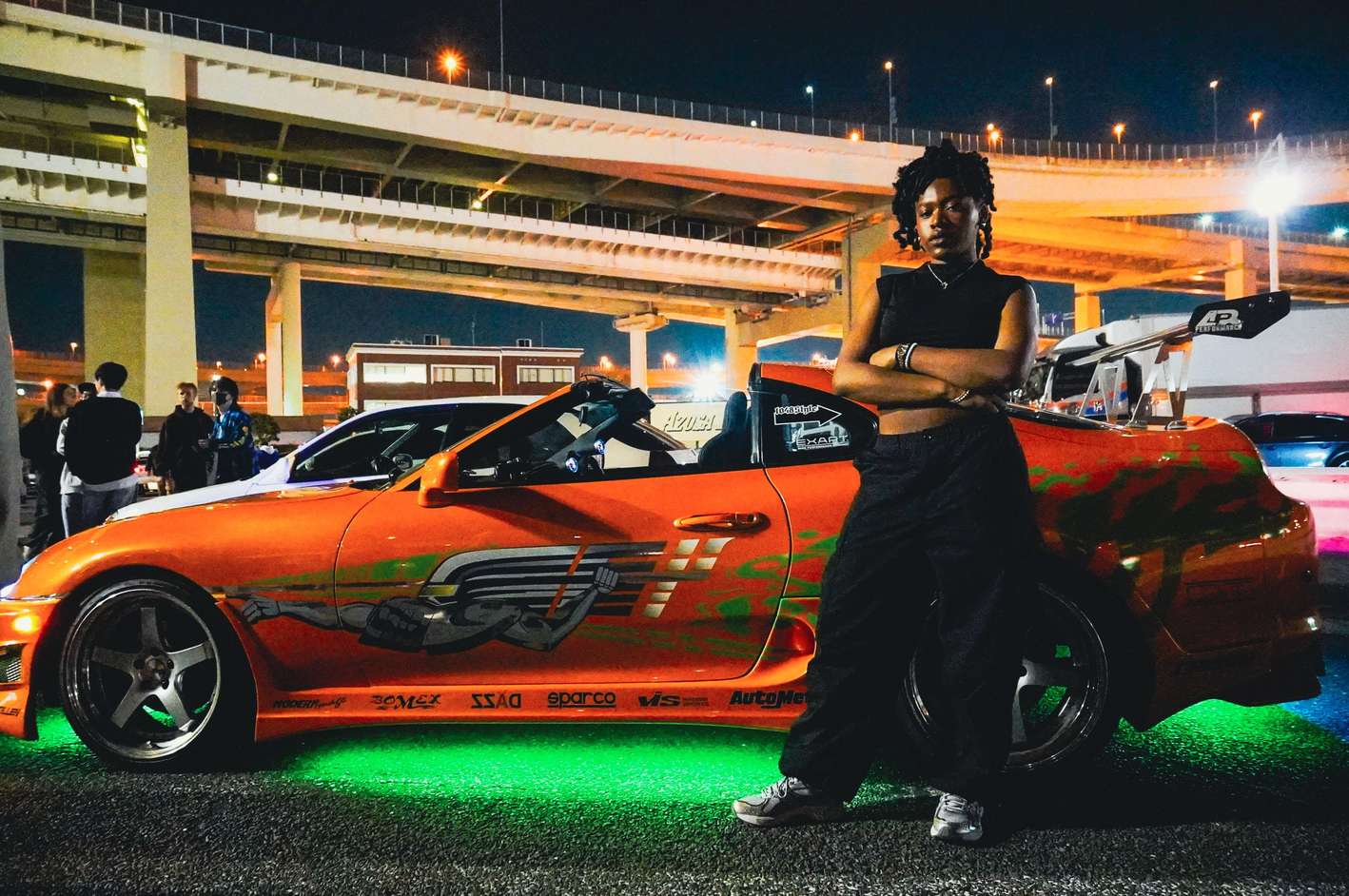
Nothing at Daikoku is scheduled, which is exactly why guesswork costs people their evening. On Friday and Saturday the first modified cars arrive between 5 and 6 pm around sunset, the main wave builds from 7 pm, and the busiest stretch runs from 9 to 11 pm.
That same stretch is the one police can shut down, sometimes from 7:30 pm.
The fix is simple: leave central Tokyo before 5 pm on a weekend, or go Monday to Thursday, when the lot stays calmer and closures are rare. Sunday mornings swap the risk entirely, bringing classics and supercars in daylight from 6 am. The page lays out every night and hour.
Daikoku PA sits inside an expressway interchange in Yokohama Bay, and no train, bus or sidewalk reaches it. That fact decides your whole evening. The guide gets you onto the island, past the police loudspeakers and home again.
Daikoku is an expressway rest island: on foot is illegal, by train impossible, so every visit ends in a car.
Taxis can drop you but almost never wait, and no cab is allowed to pick you up inside, so pre-booked return transport is the deciding factor.
Friday and Saturday fill the lot but police can clear it from 7:30 pm; Sunday mornings bring classics and supercars in daylight with no shutdown risk.
Passengers need no licence, only a physical passport, and most guided tours include expressway tolls and fuel.
Never touch or lean on a car, and clear out the moment the police loudspeakers start.
Reach the meet by car: book a guided tour with round-trip transport from Tokyo, take a taxi that agrees in advance to wait, or drive yourself with the right permit.
The meet takes over a highway rest stop shaped like a giant steel doughnut, parked on Daikoku Pier out in Yokohama Bay where the Bayshore Route meets the K5 Daikoku Line.
From central Tokyo it is about 35 to 45 minutes of driving when traffic is light, roughly 31 to 34 kilometres of expressway. What the map cannot show you is that the island has no station, no bus stop, no taxi rank and no footpath.
The pedestrian gates stay locked and fenced, which makes buses useless and walking in illegal as well as dangerous. Every arrival plan has to end in a motor vehicle, or there is no arrival at all.
Planning to just take the train over There is no train, bus or walkway: the gates are locked and fenced, so walking in is illegal, dangerous and physically impossible
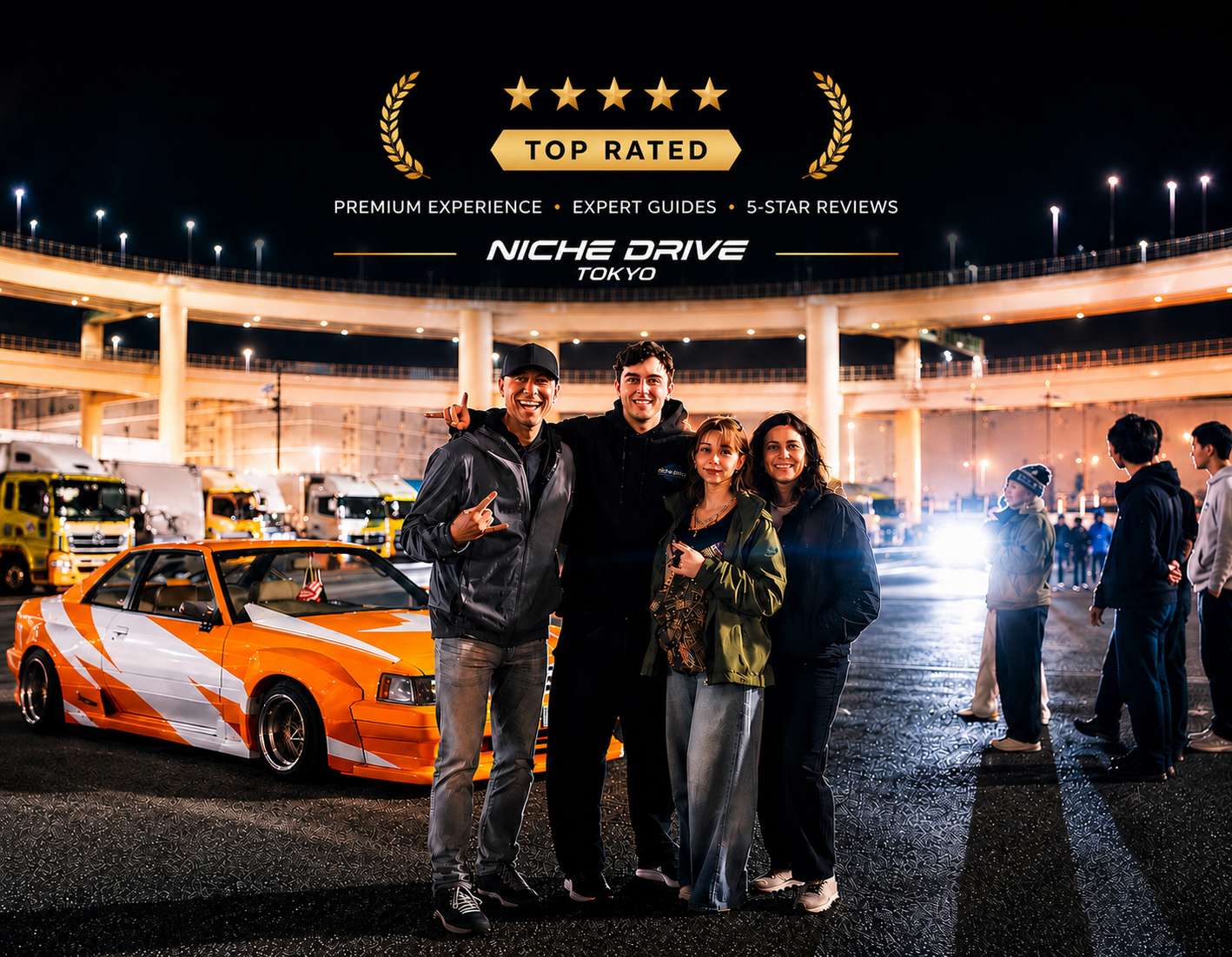
Three ways across the water, and one decides it. A metered taxi will drop you there, but many drivers refuse to enter the toll island, wait with the meter running and bring you back, and you must agree on all of that before you set off.
Renting works only if you carry a 1949 Geneva Convention permit, or an official Japanese translation if your licence comes from Switzerland, Germany, France, Belgium, Monaco or Taiwan.
Self-driving also means expressway tolls on your own account, since many entrances are ETC-only and cash lanes are shrinking.
The return trip is what kills improvised plans. Cabs are not permitted to pick passengers up inside Daikoku, rideshare apps show no drivers there, and visitors who arrive without a booked ride back risk standing on a highway island at midnight.
Guaranteed return transport is the deciding factor, which is why most overseas visitors end up in a passenger seat with a local driver.
A guided tour takes 45 minutes to an hour each way, door to door through real traffic, with hotel drop-off at the end. The transit details, taxi fares and late-night surcharges live in the getting-there guide.
Every route in that table leads to the same conclusion: only the ones with a driver attached bring you home.
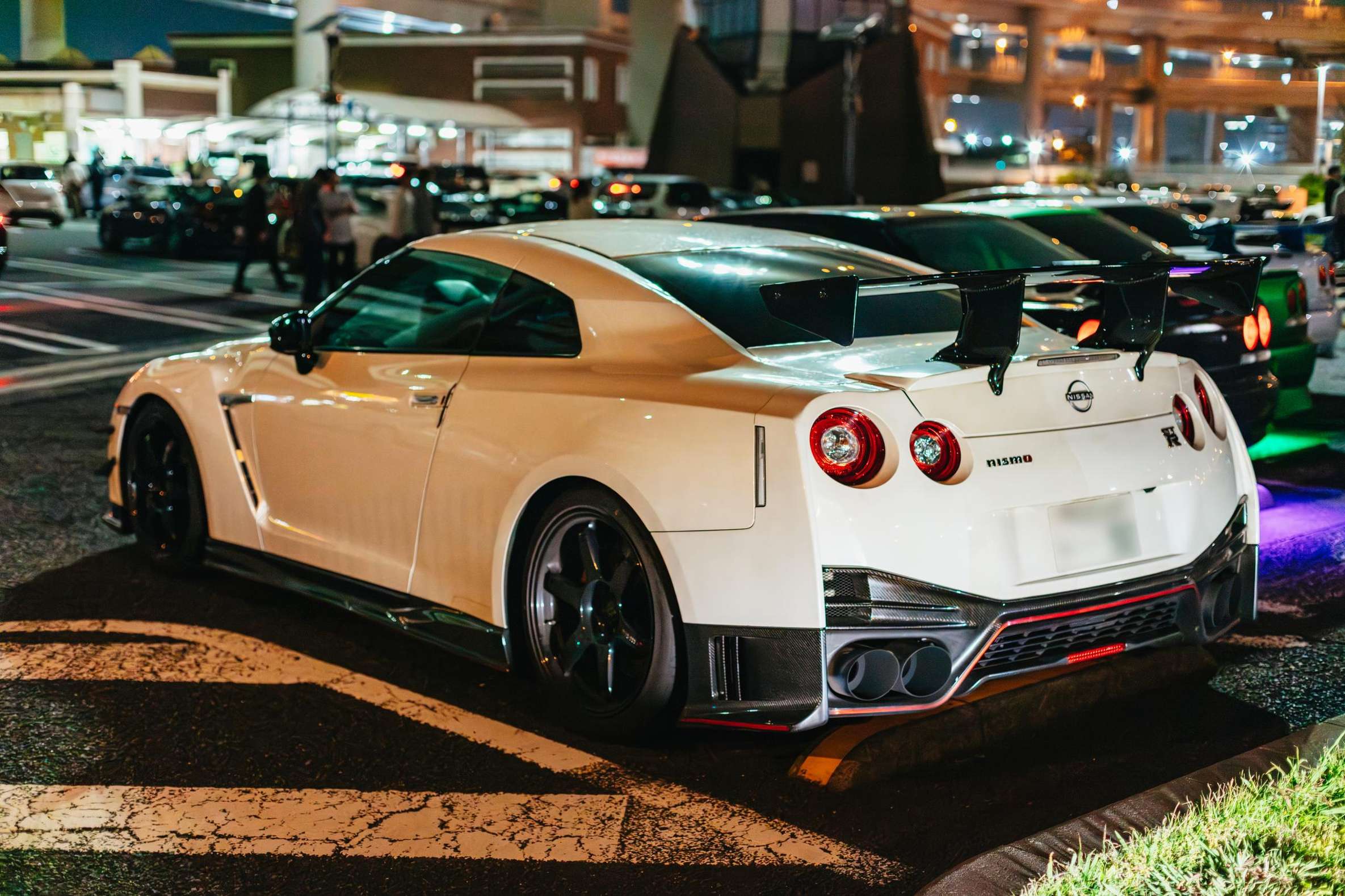
Friday and Saturday nights are the spectacle you have seen in the clips: the biggest crowds, the heaviest modified JDM turnout, the first cars rolling in from 5 pm and the main wave from 7 pm.
The same energy draws the police, who often clear the lot between 7:30 and 9:15 pm. Leave central Tokyo by 4:30 to 5 pm on a weekend and you arrive around 6 to 6:30 pm, among the cars, before the shutdown hour.
Midweek is the trade in the other direction. Monday to Thursday bring smaller turnouts, a relaxed vibe and closures so rare they barely register. A 7:30 pm departure from town lines you up with the weekday peak from 8 pm onward.
Regulars will tell you weekdays still deliver impressive cars, while weekends feel livelier, and recent visitors describe both busy weekend nights and occasional closures.
Sunday morning flips everything: vintage Japanese classics and European supercars in daylight between 6 and 10 am, peaking 8 to 10, no police anywhere. The hour-by-hour detail sits in the night-by-night schedule.
| Biggest of the week | Calm and photo-friendly | Smaller, relaxed | |
|---|---|---|---|
| Cars | Modified JDM at peak | Classics and supercars | Solid tuned turnout |
| Police risk | Closures common from 7:30 pm | Almost none | Rare |
| Atmosphere | Loud, high-energy, packed | Daylight, owners mingling | Quiet lot, easy parking |
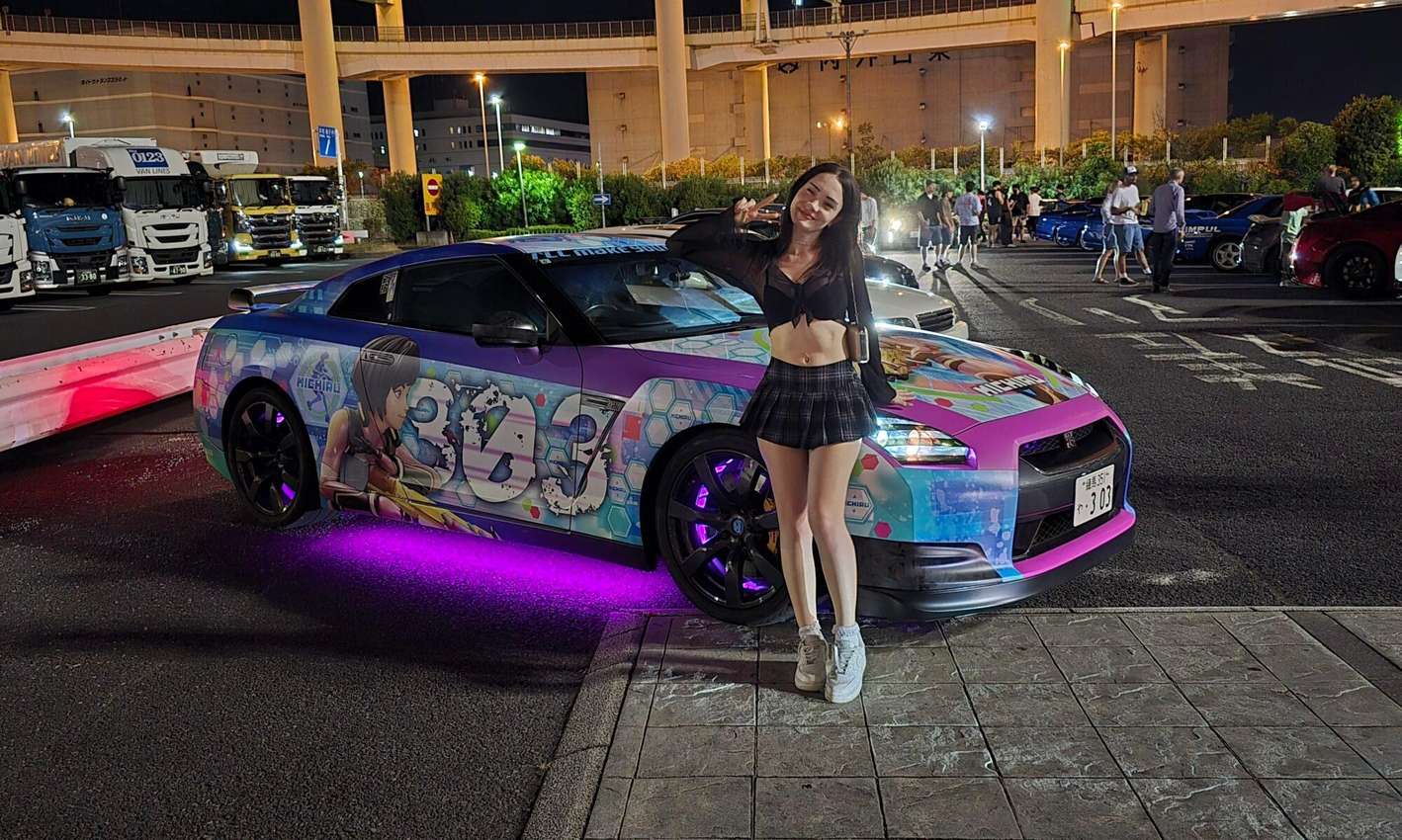
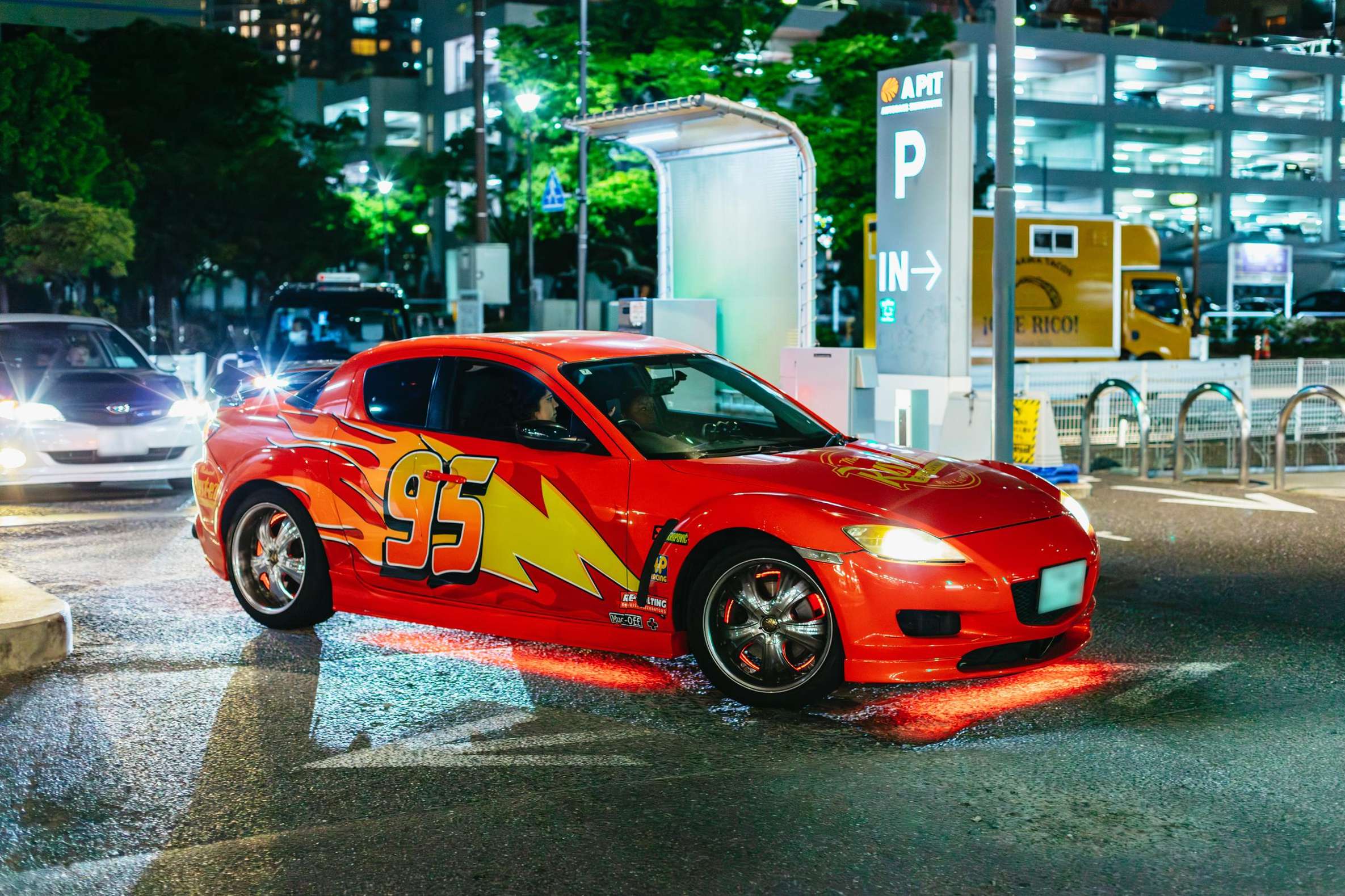
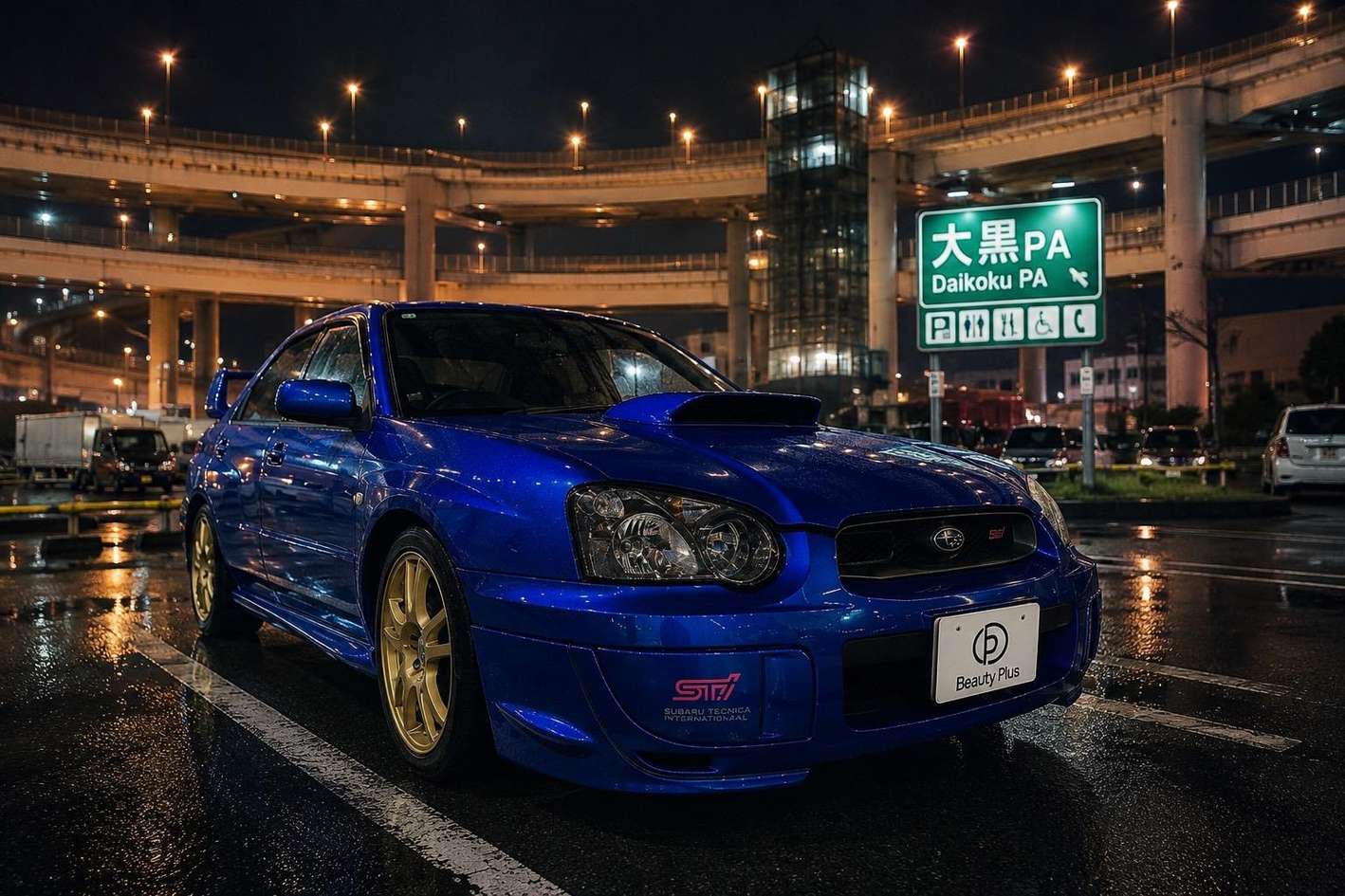
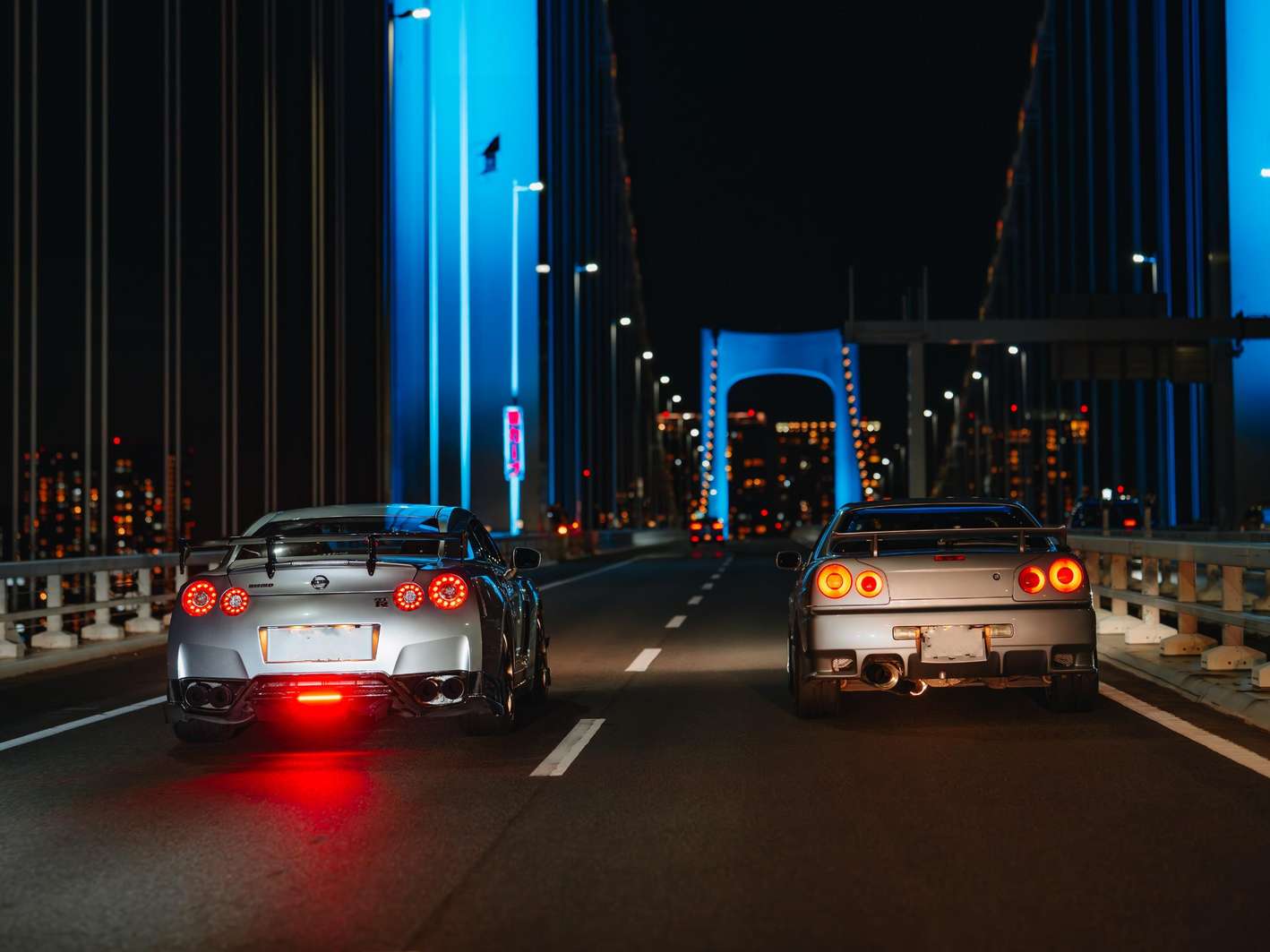
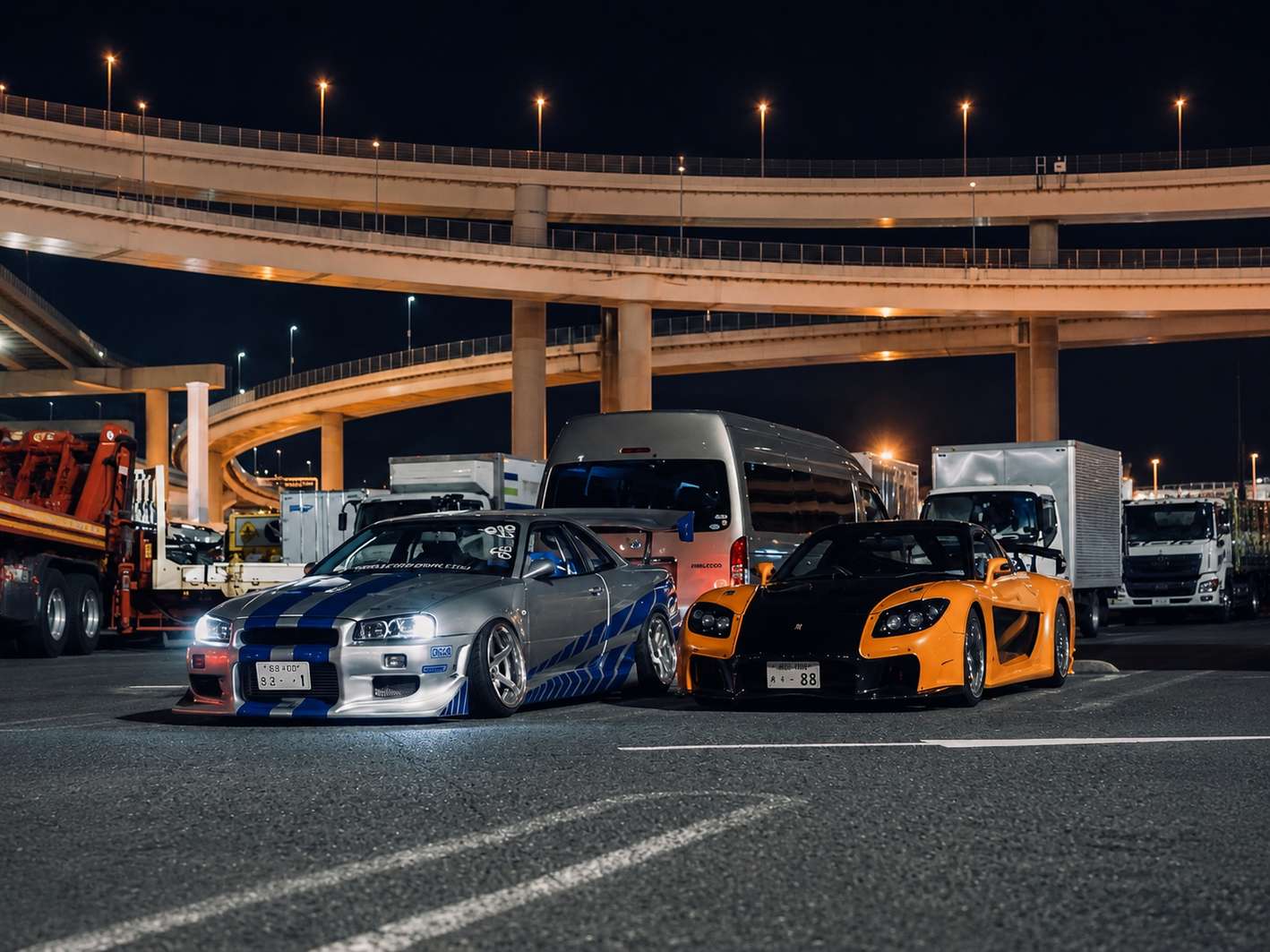
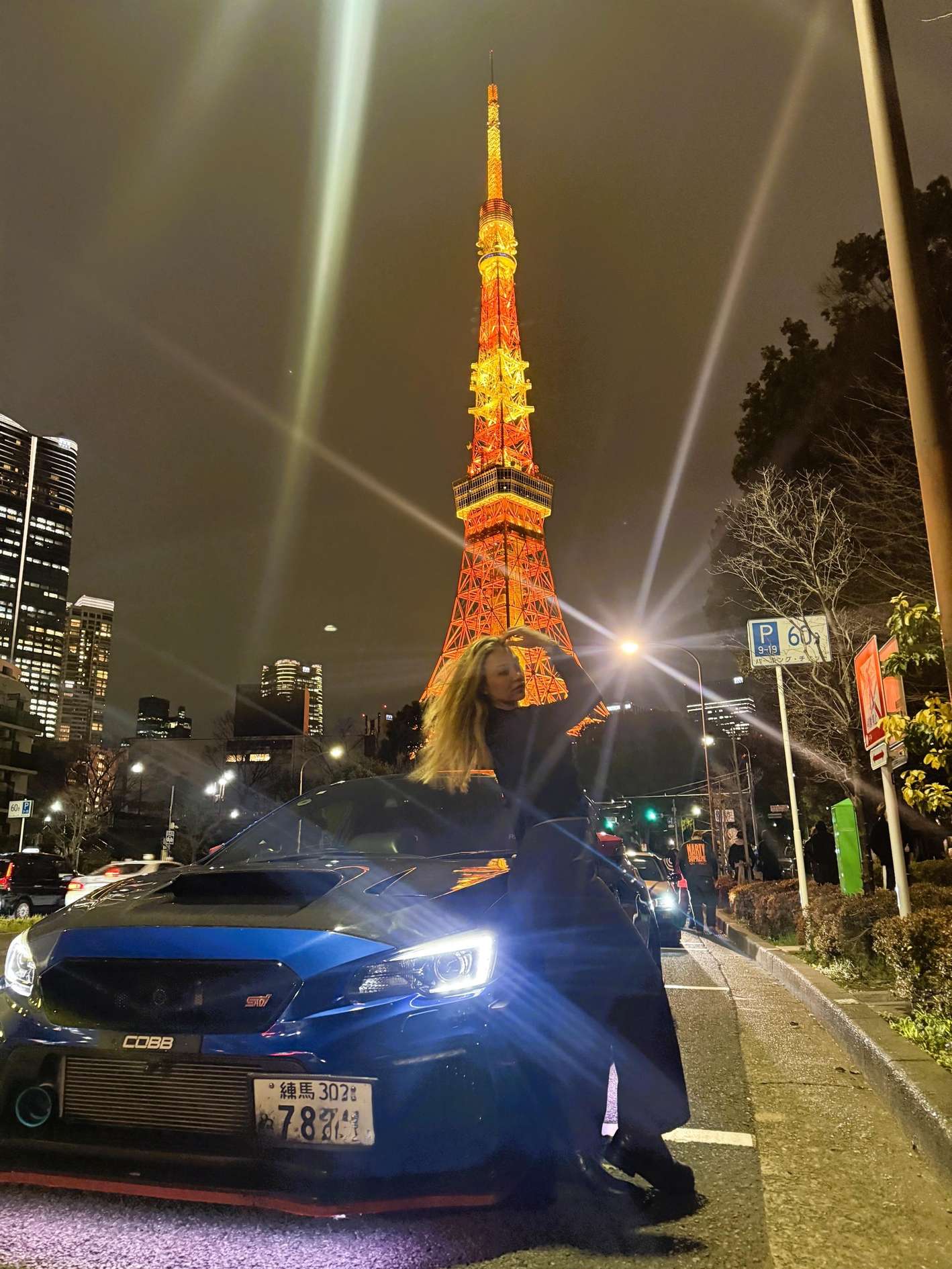
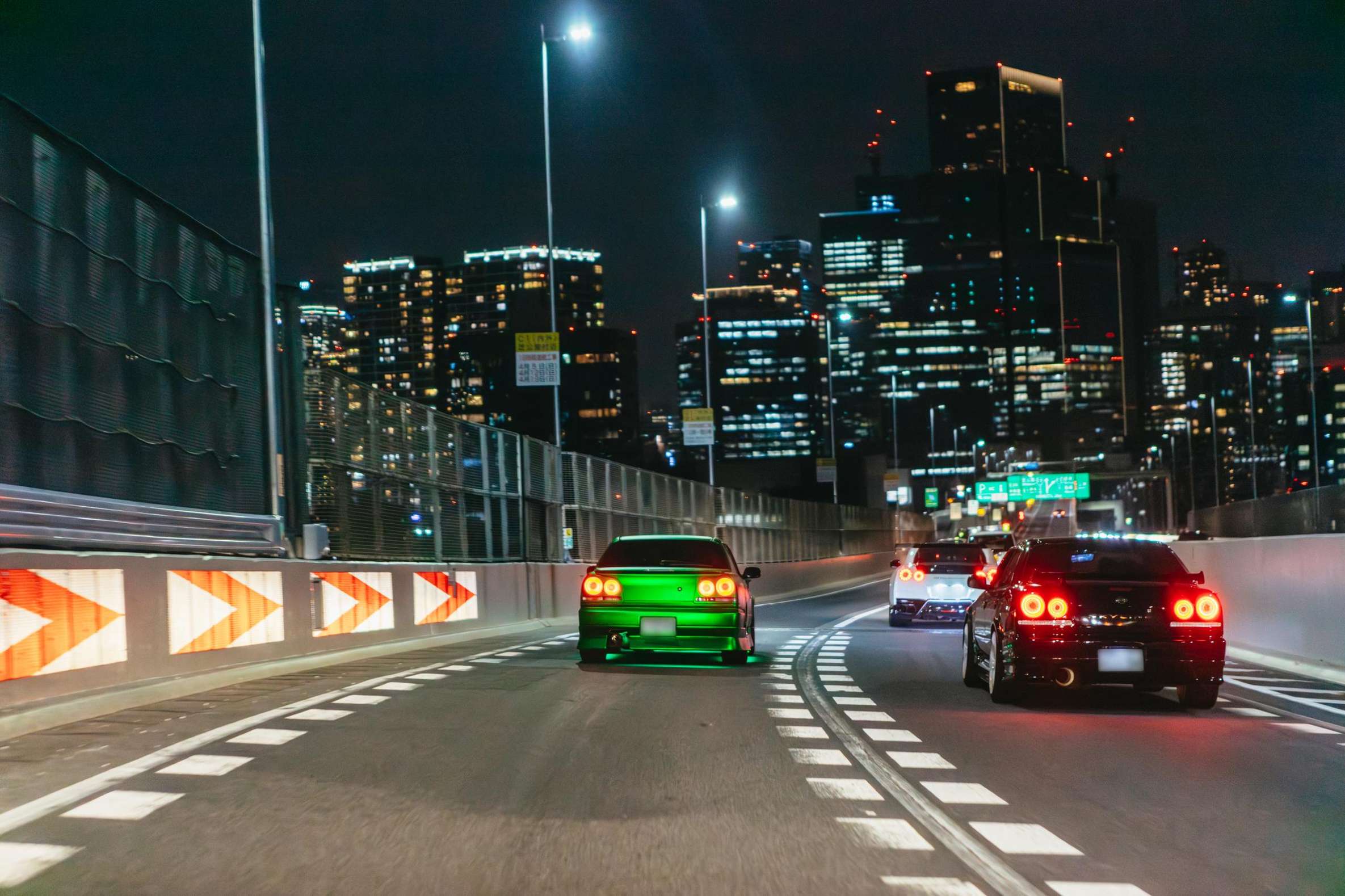
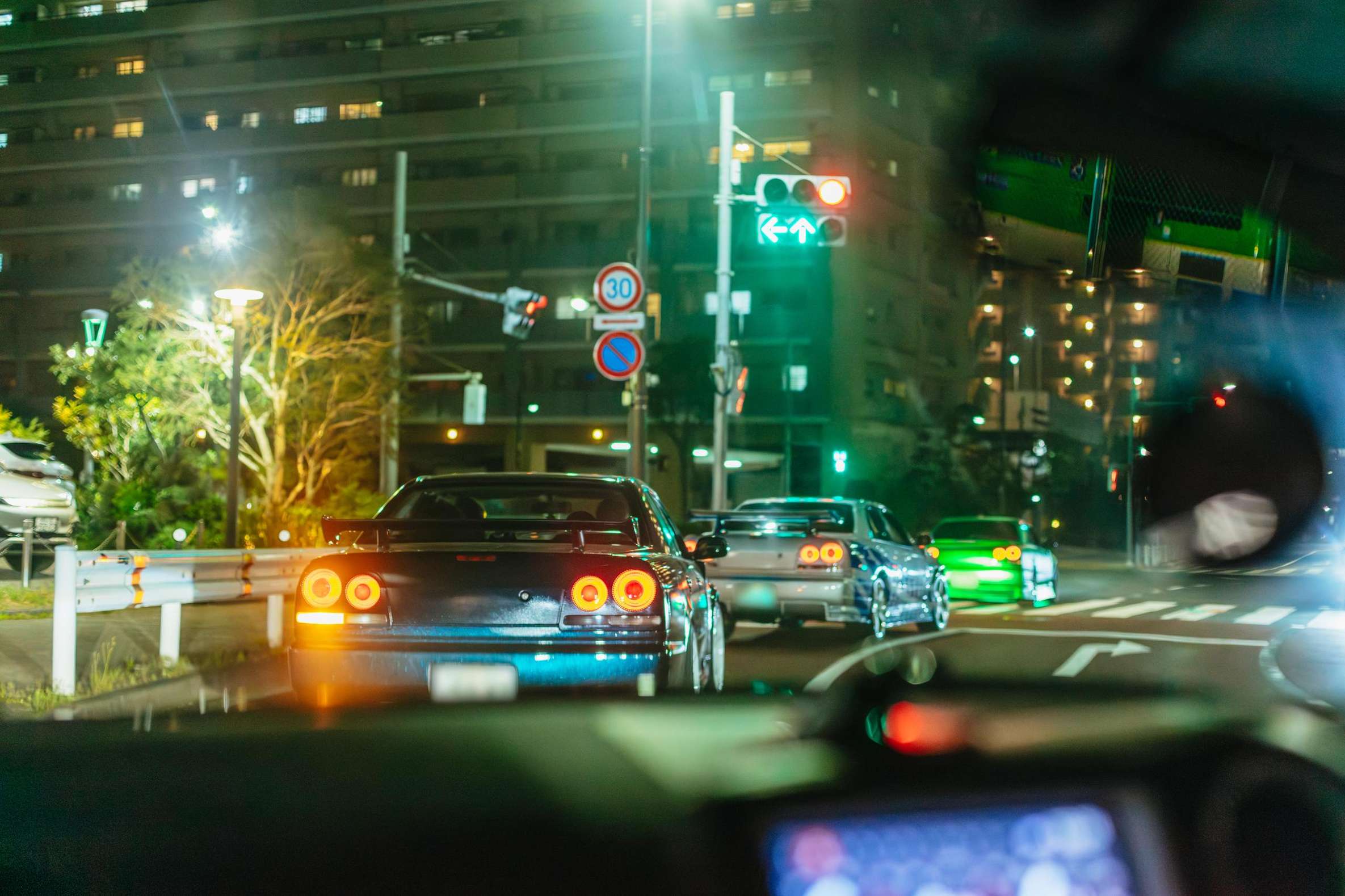
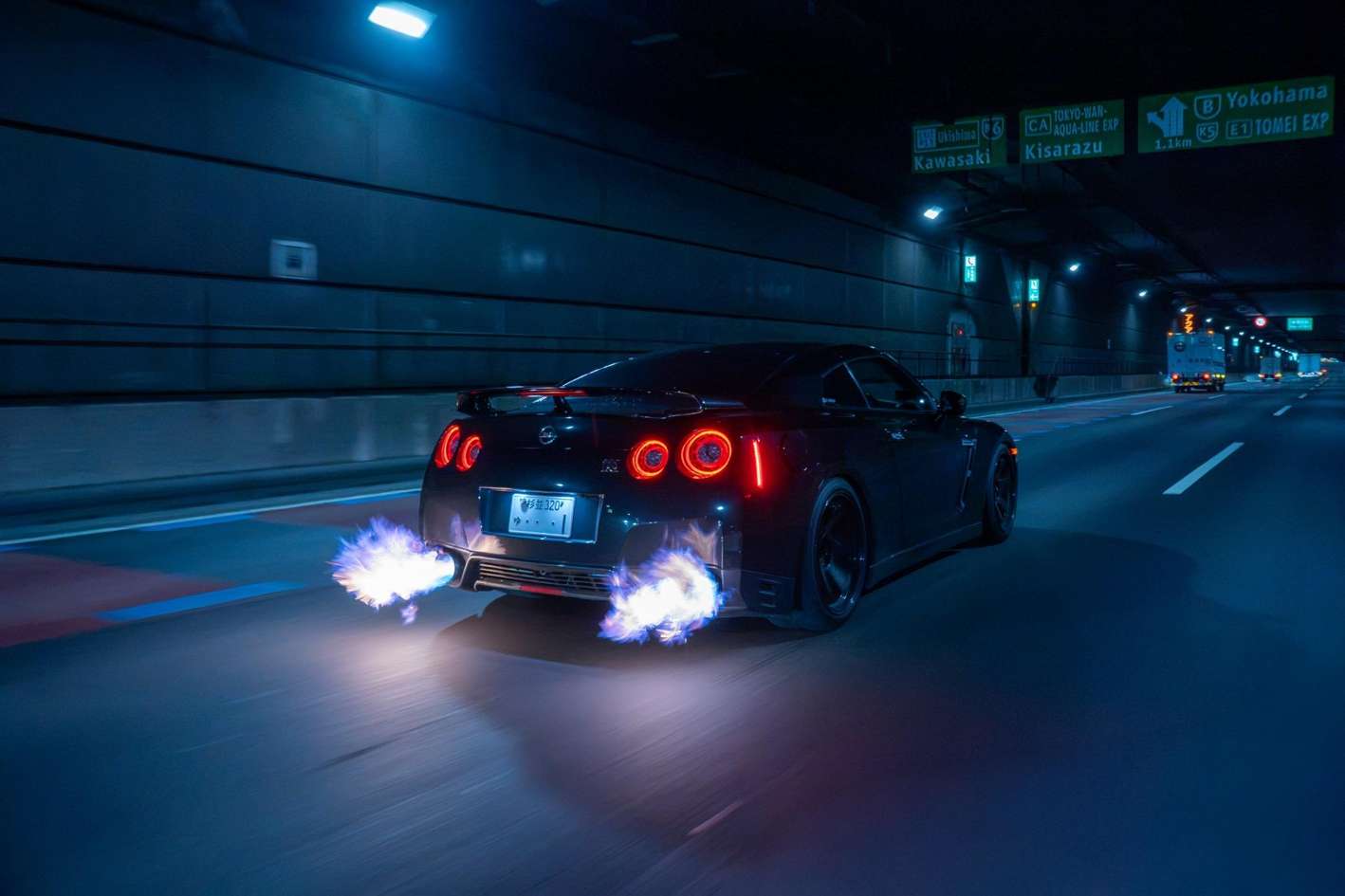
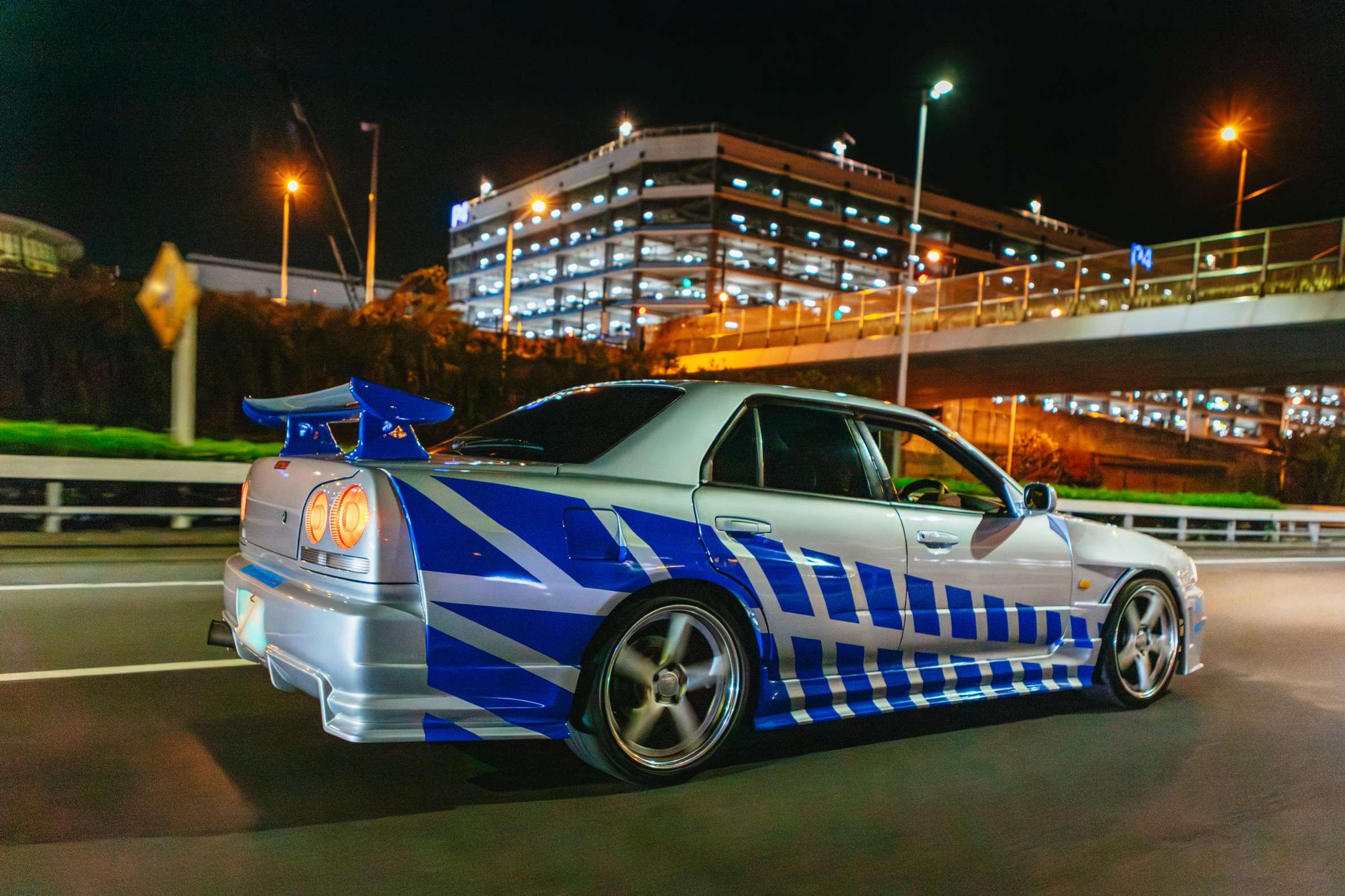
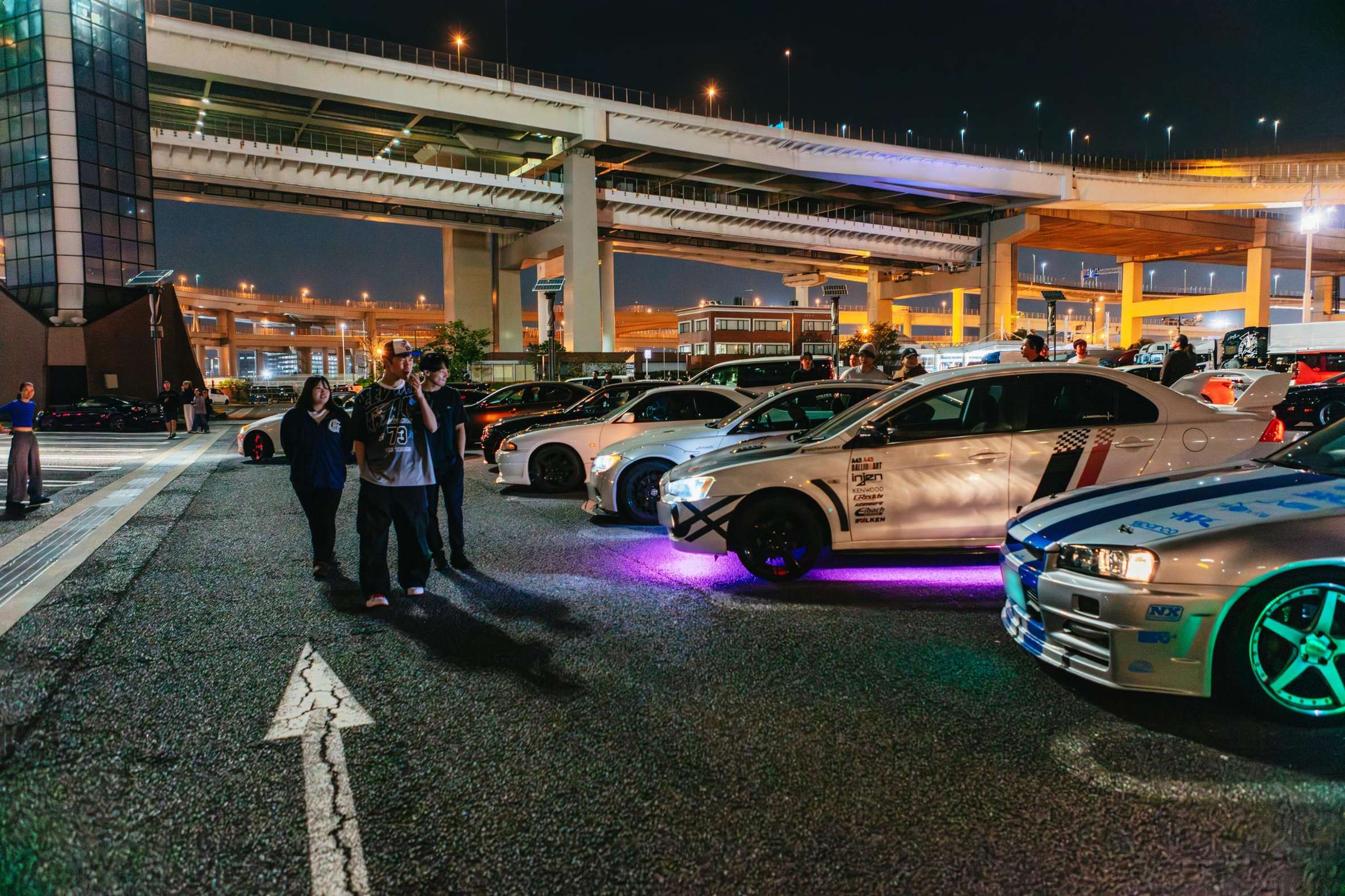
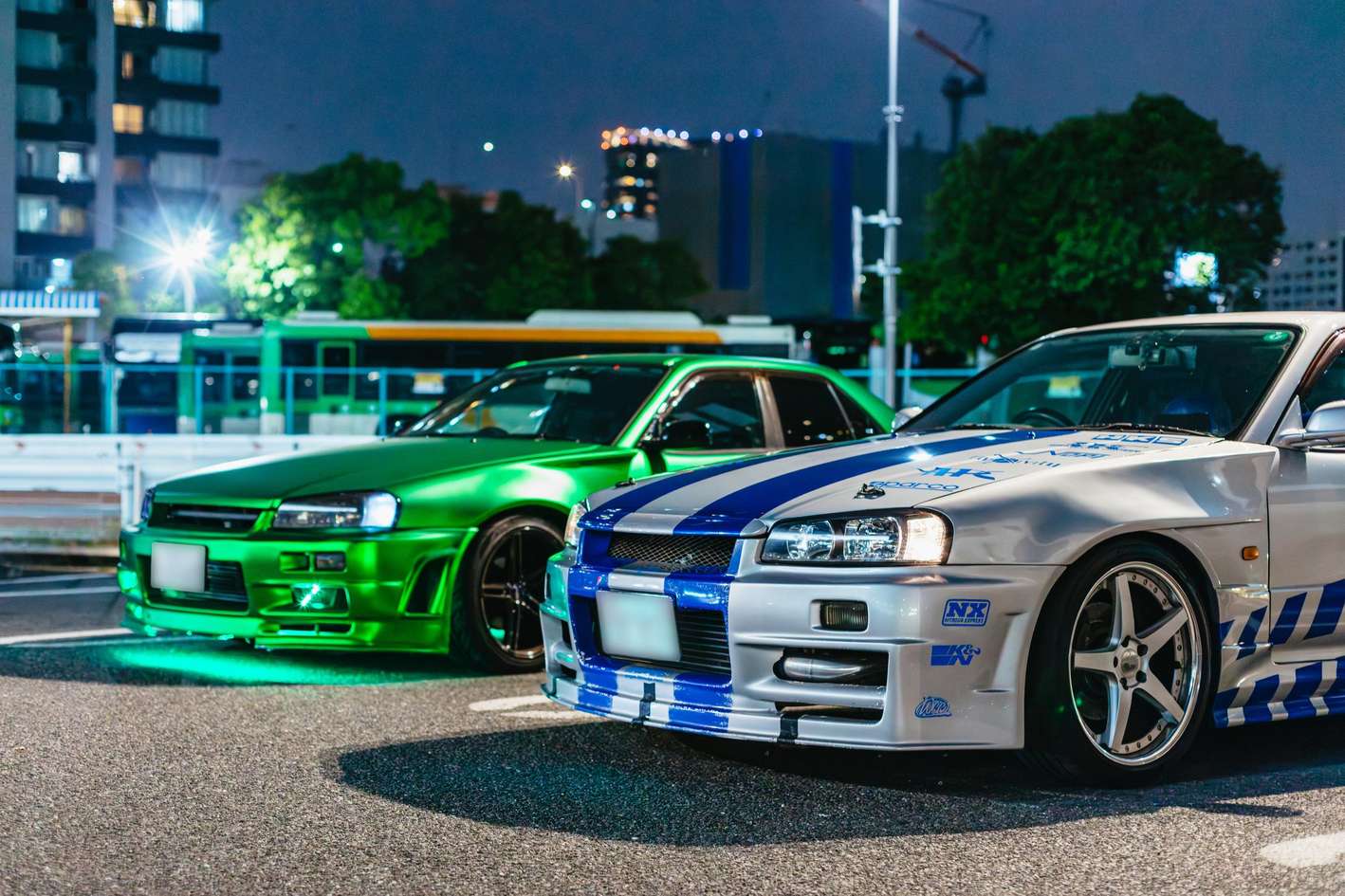
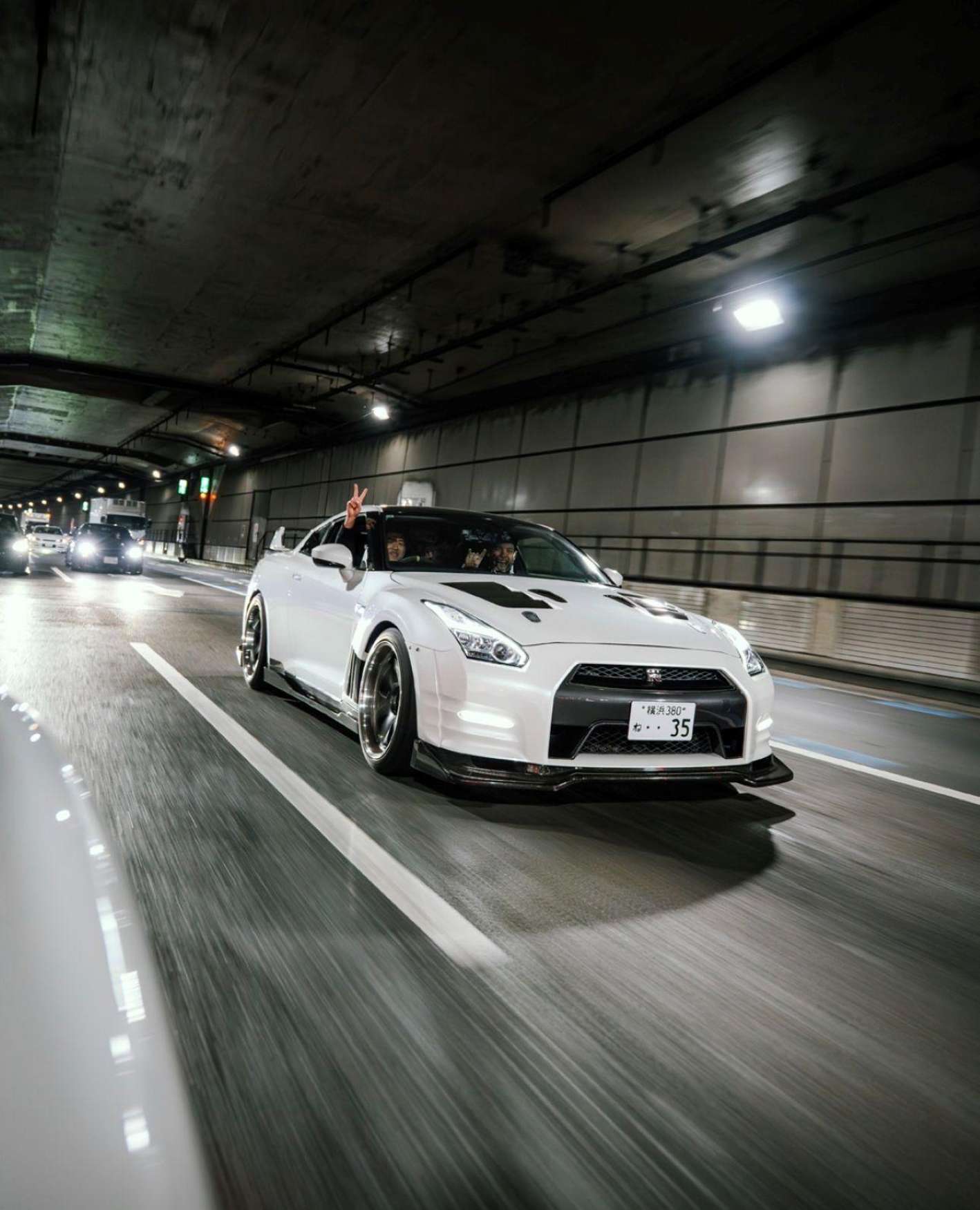
This is the part people remember: sliding into the passenger seat of a manual EVO, WRX STI or Skyline and running the Wangan to the meet with a driver who knows every interchange.
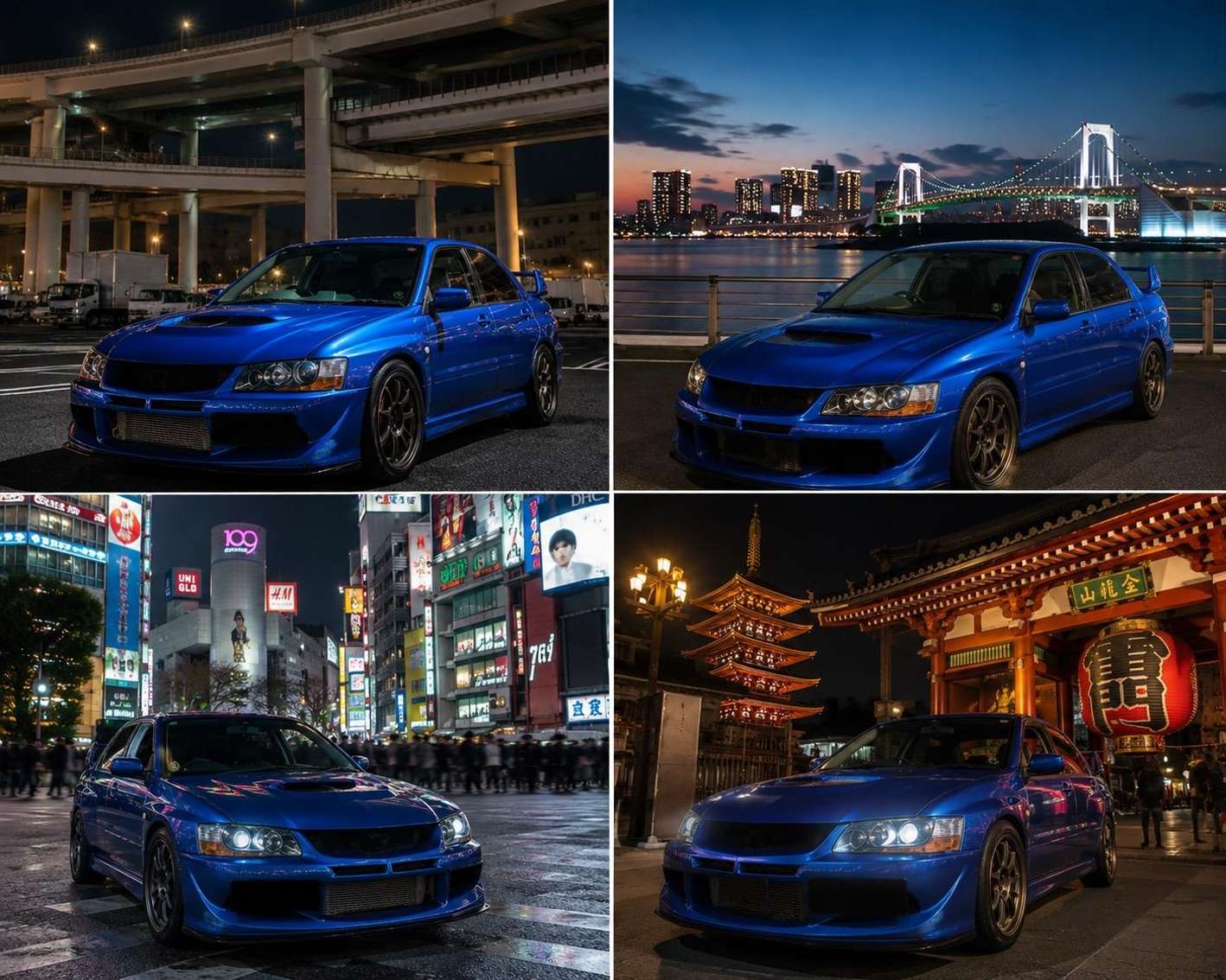
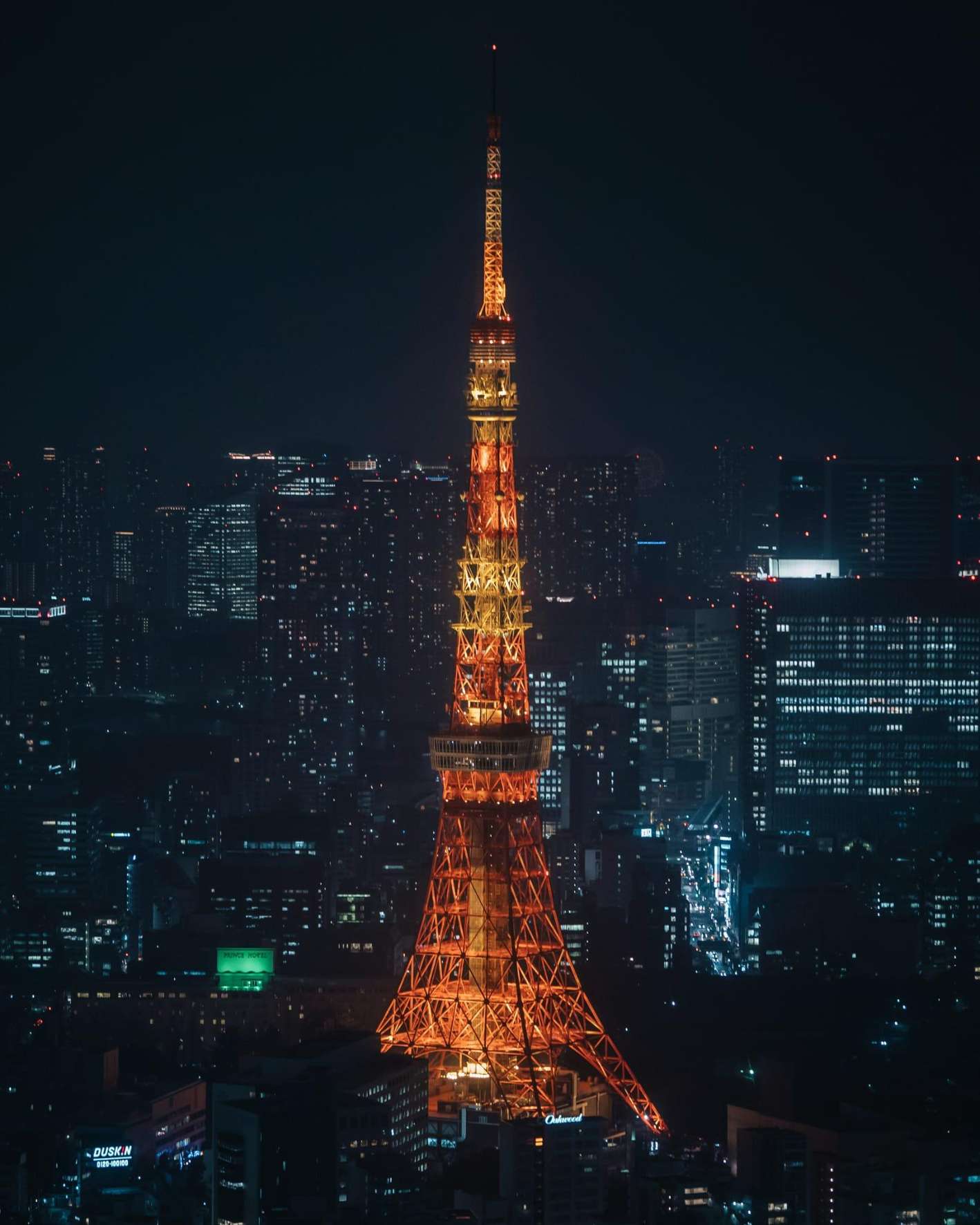
The "Tokyo: JDM Night Run in EVO, WRX & Skyline to Daikoku" tour does exactly that, with stops at Tokyo Tower and Rainbow Bridge on the way, and it runs only Japanese performance cars, no vans and no automatics.
Passengers need no licence and no permit, because a professional driver holds the wheel. The meet itself is free to enter, and tours like this one fold expressway tolls and fuel into the booking price. What you must have is a physical passport or ID card, since drivers check it on arrival.
| Check | Why it matters | Our pick |
|---|---|---|
| Guaranteed return transport | Without it you can be stranded on a highway island at midnight | Hotel drop-off in central Tokyo is included |
| Tolls and fuel in the price | Some self-drive rentals bill them separately | Included in the booking price |
| No licence needed | Lets you join even without a 1949 permit | Professional driver, passengers just ride |
| Language on the night | Some local drivers speak basic English only | English-speaking host throughout |
Tipping is not expected in Japan, and if you do offer one, it goes in an envelope. One more practical note: most tours cap passengers per car at three or four, so groups may split across two cars in the same convoy.
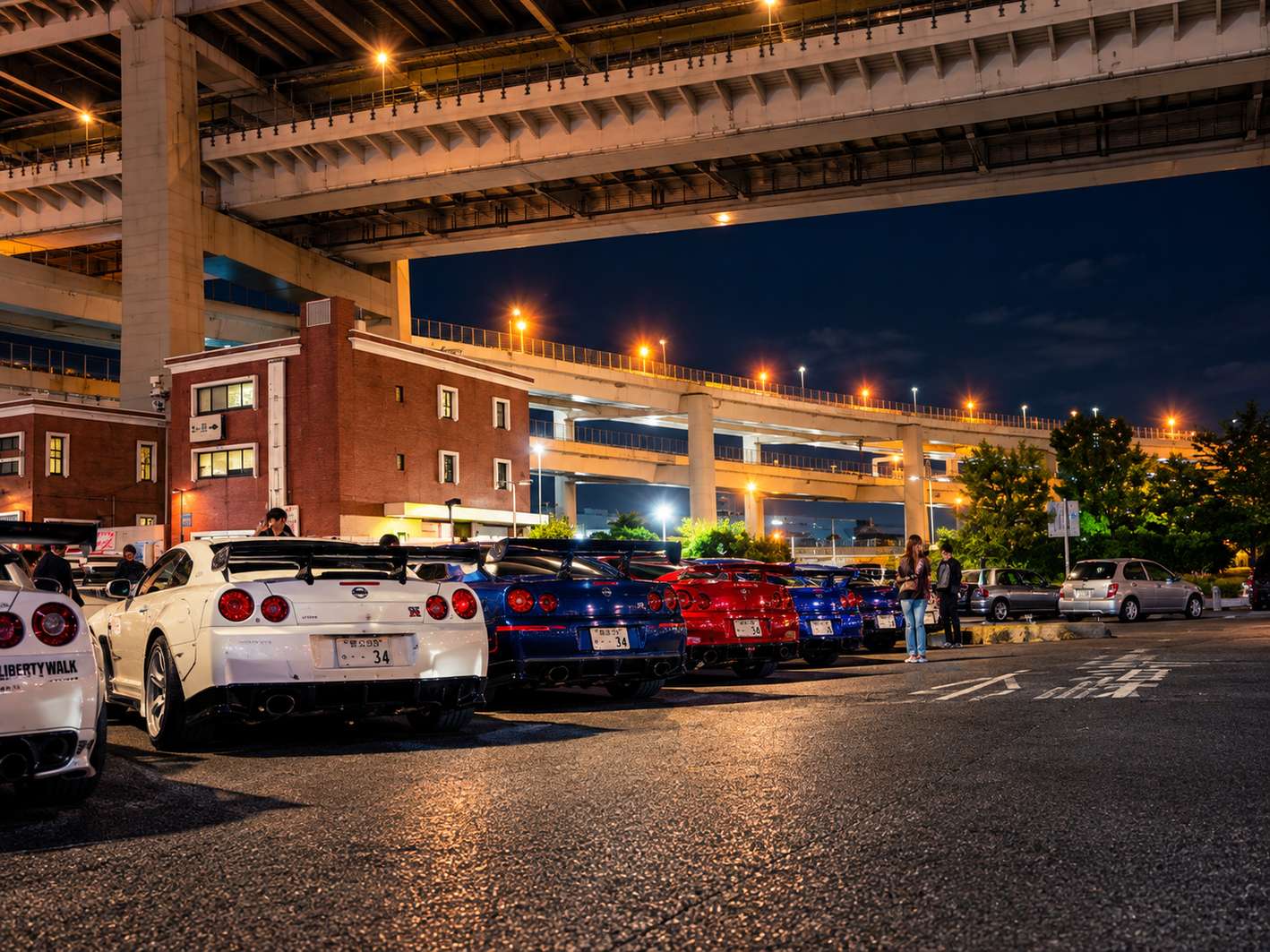
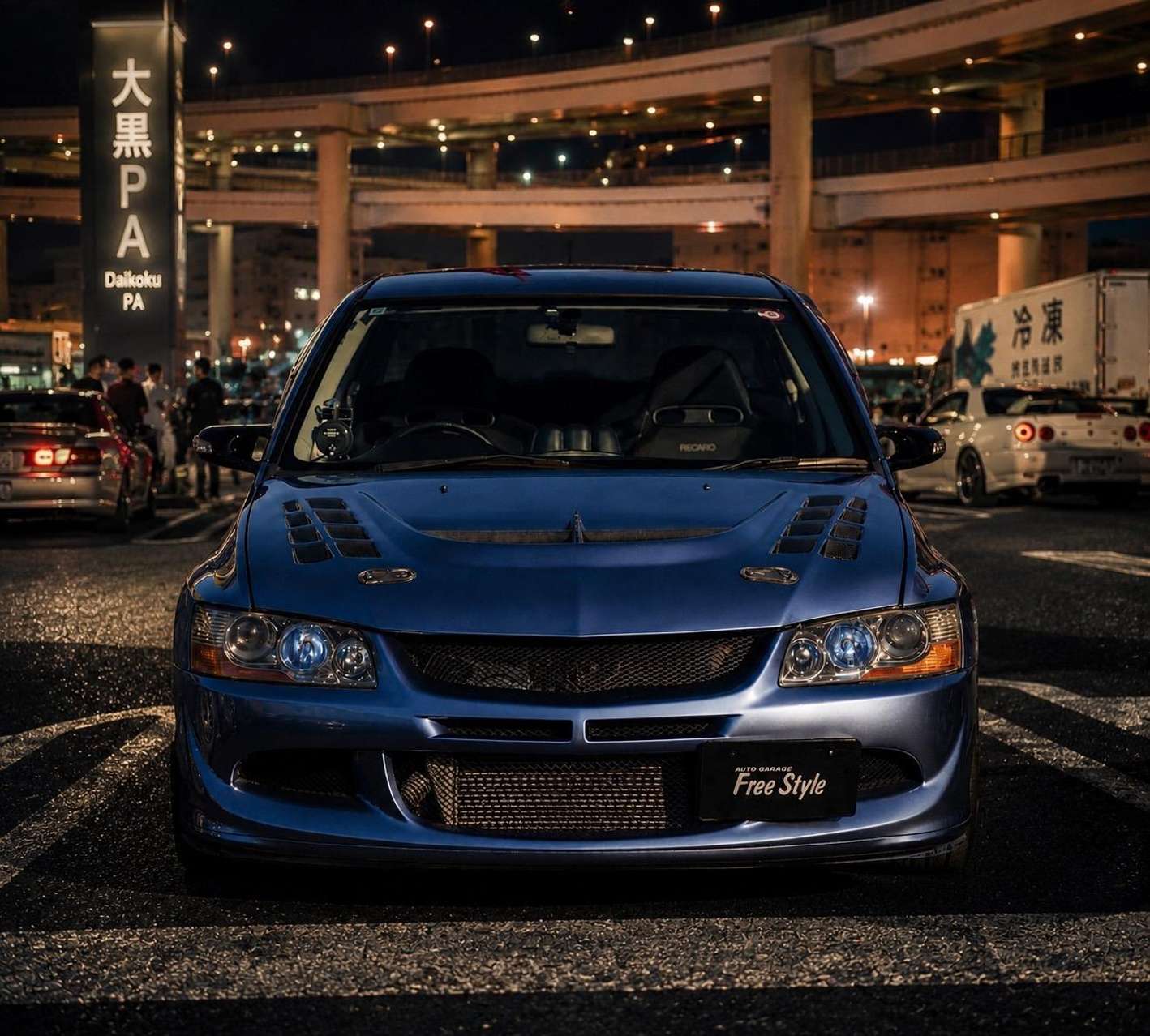
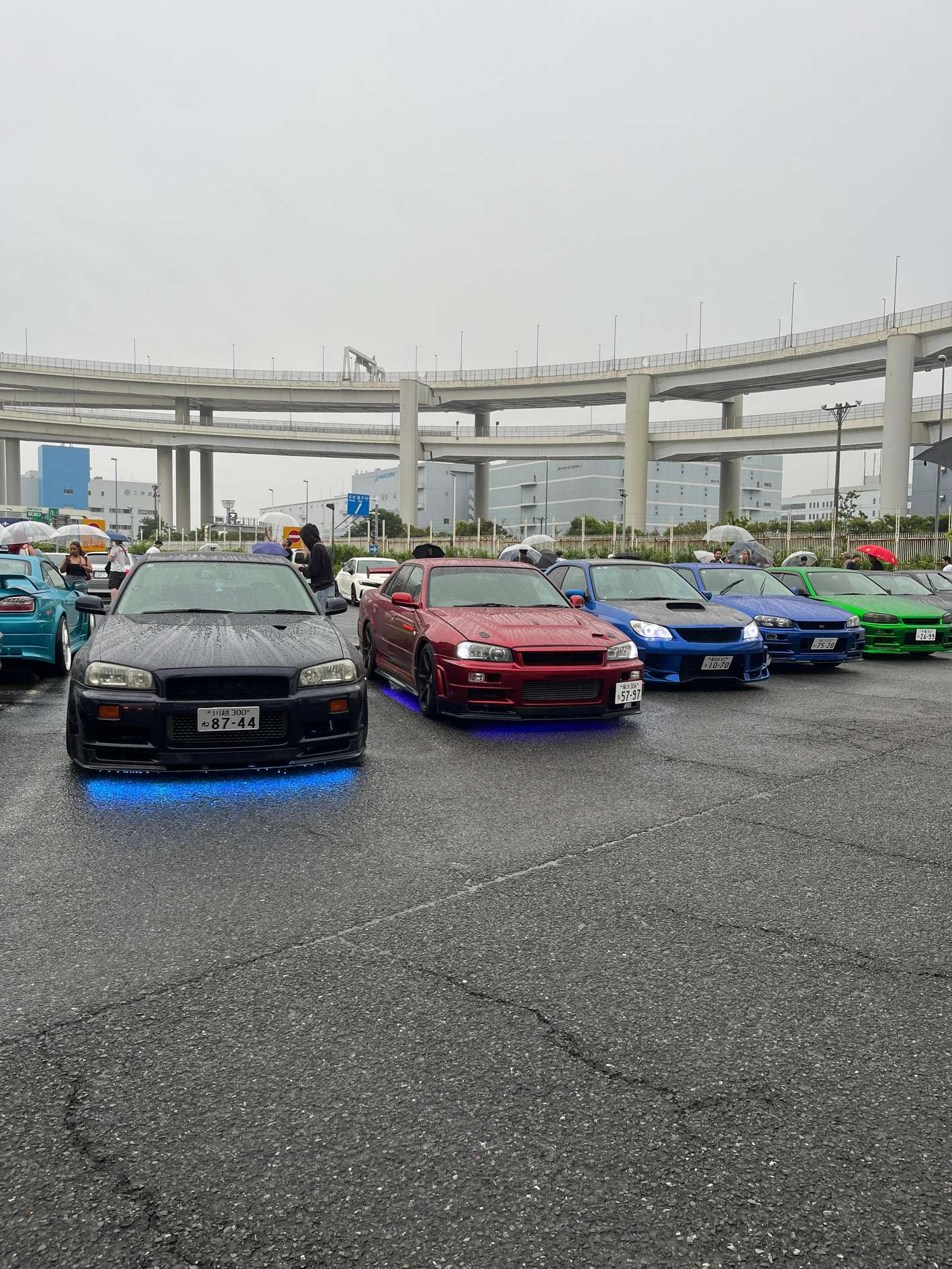
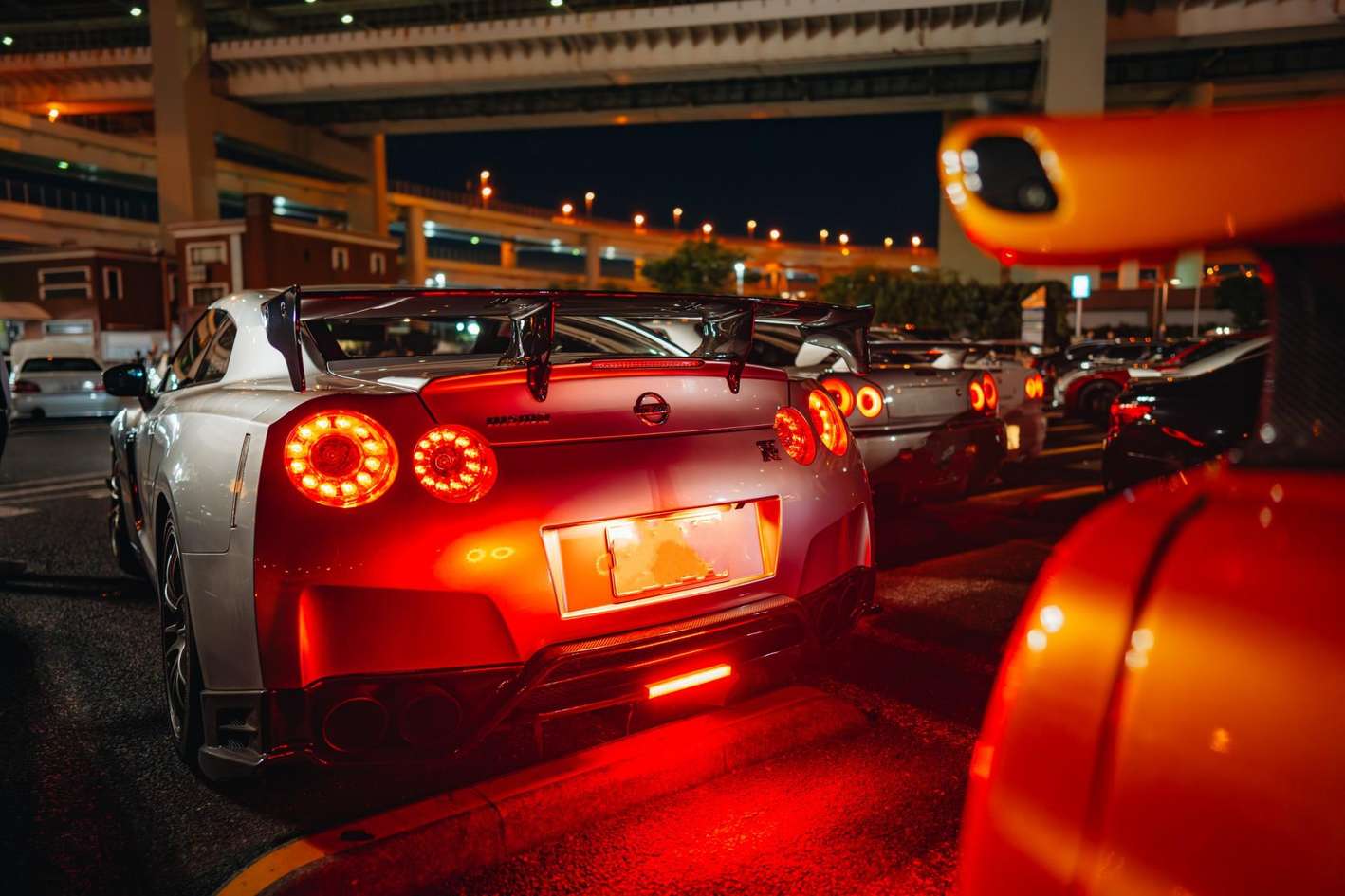
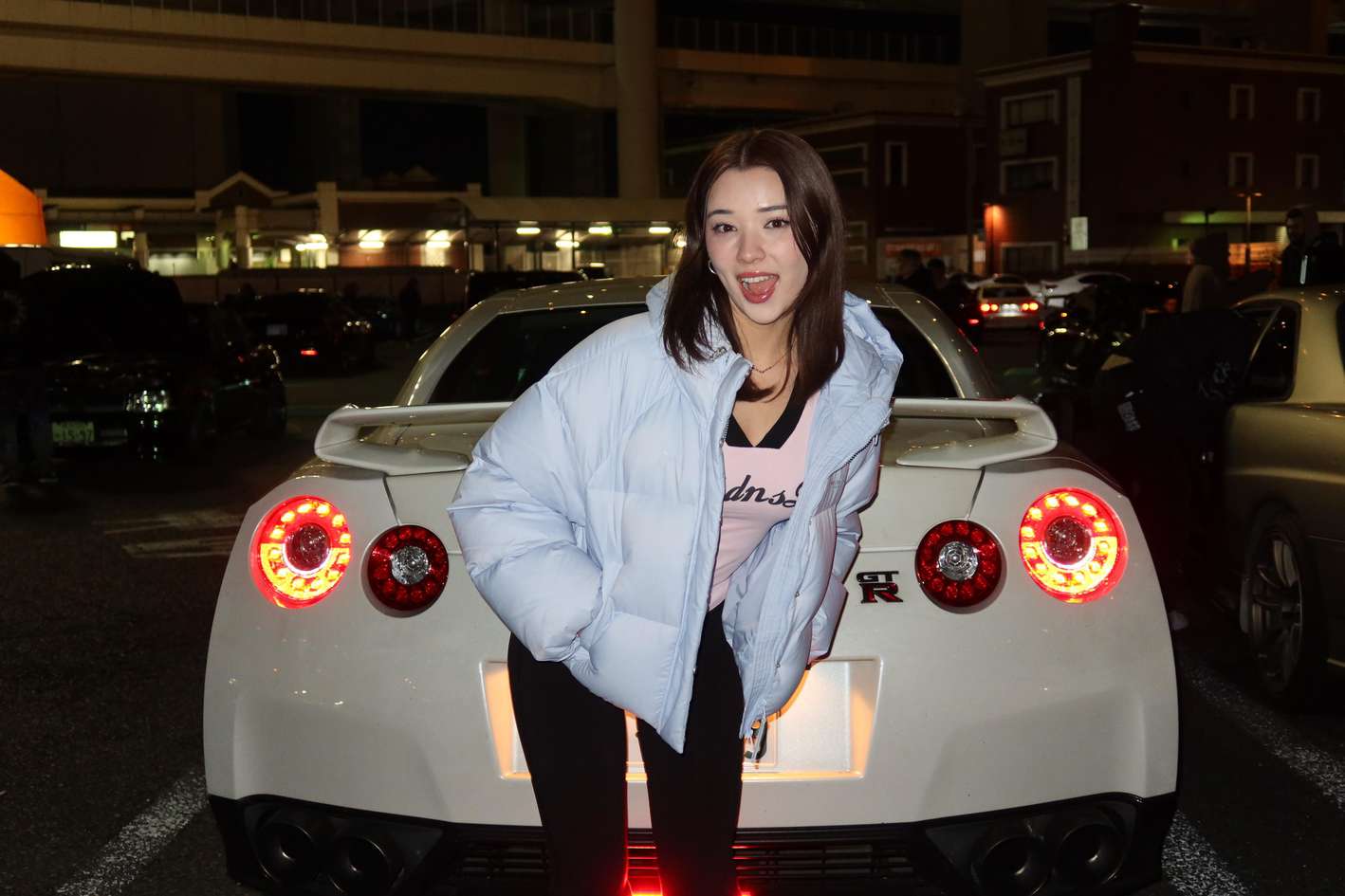
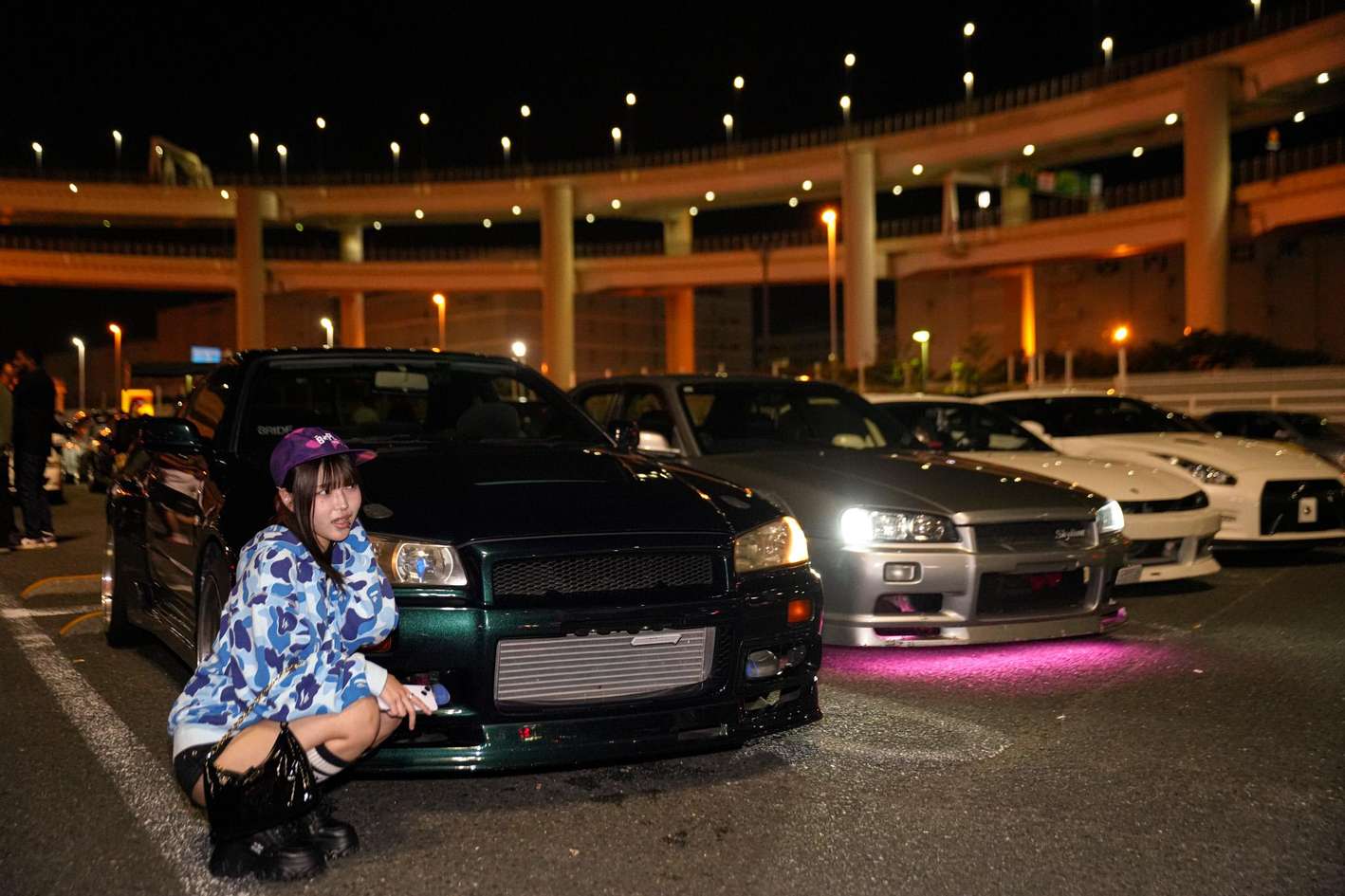
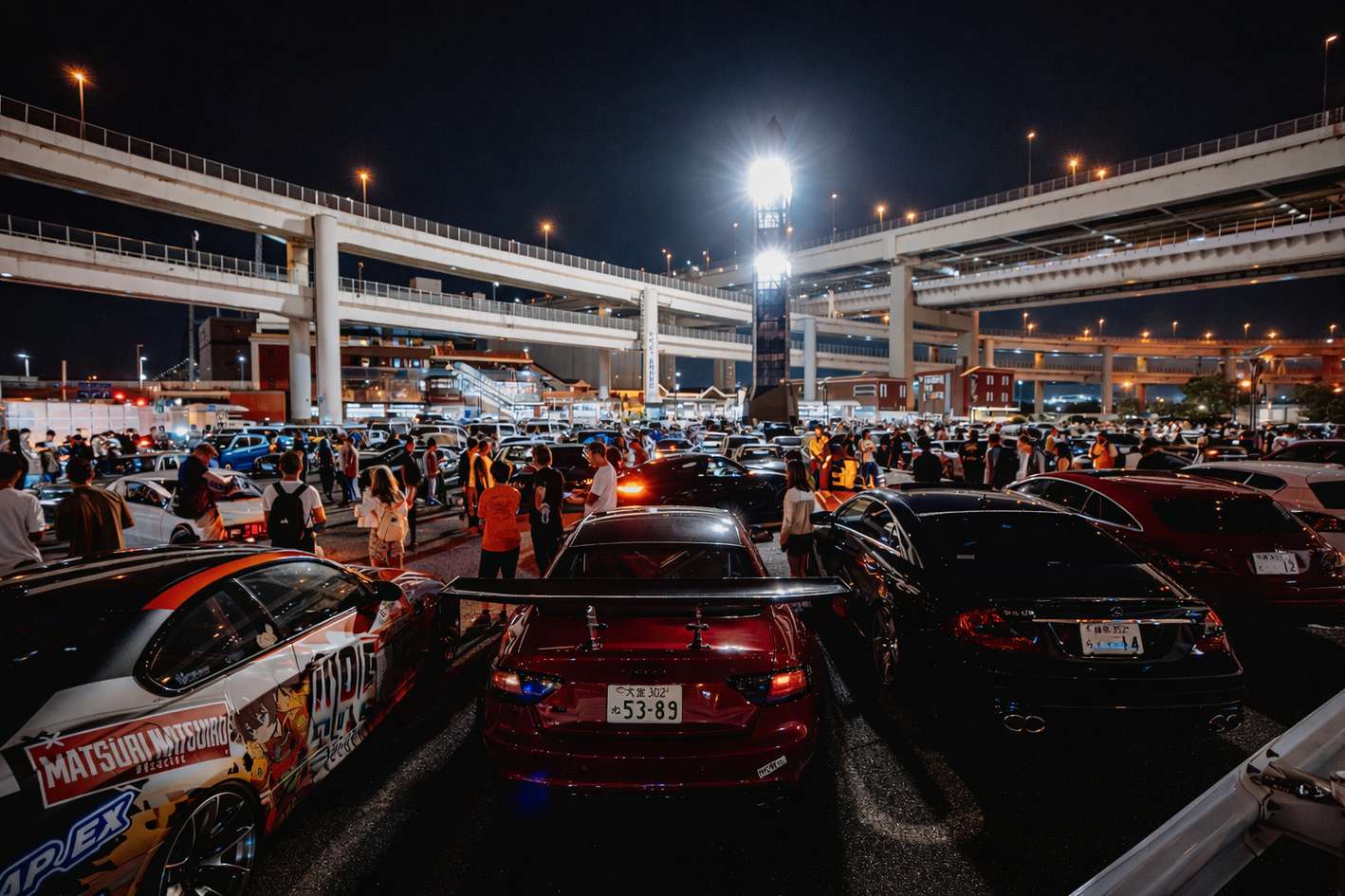
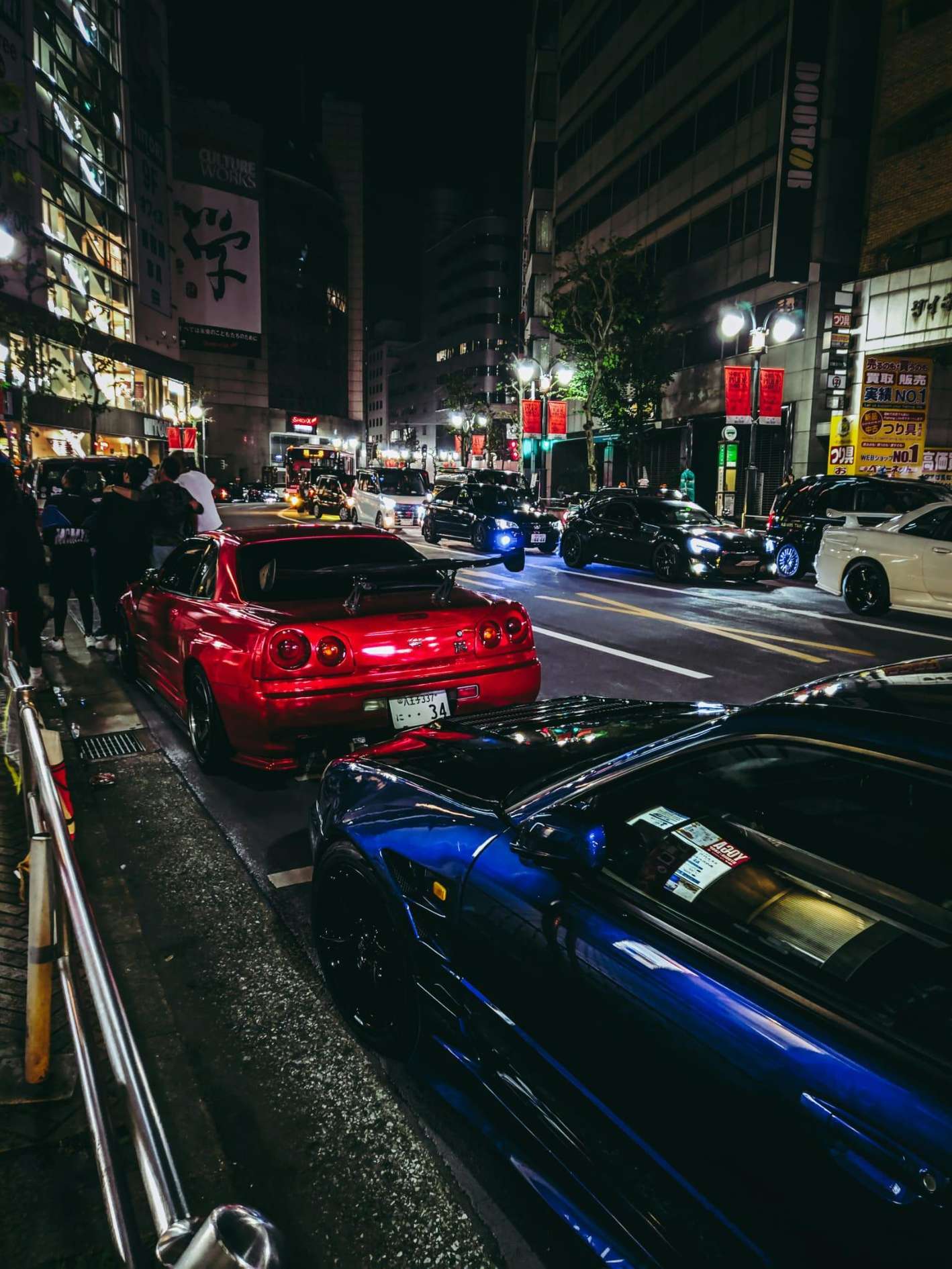
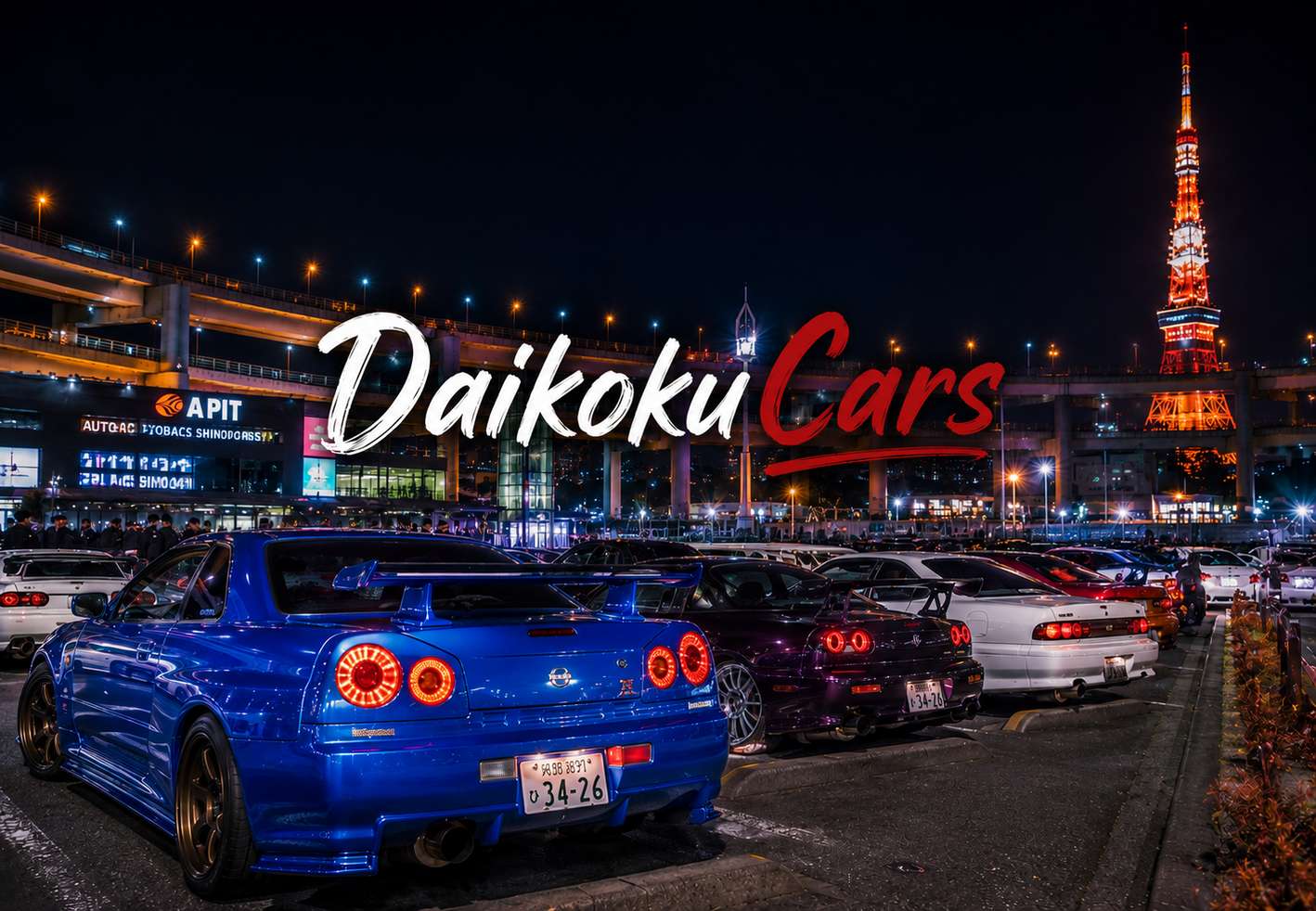
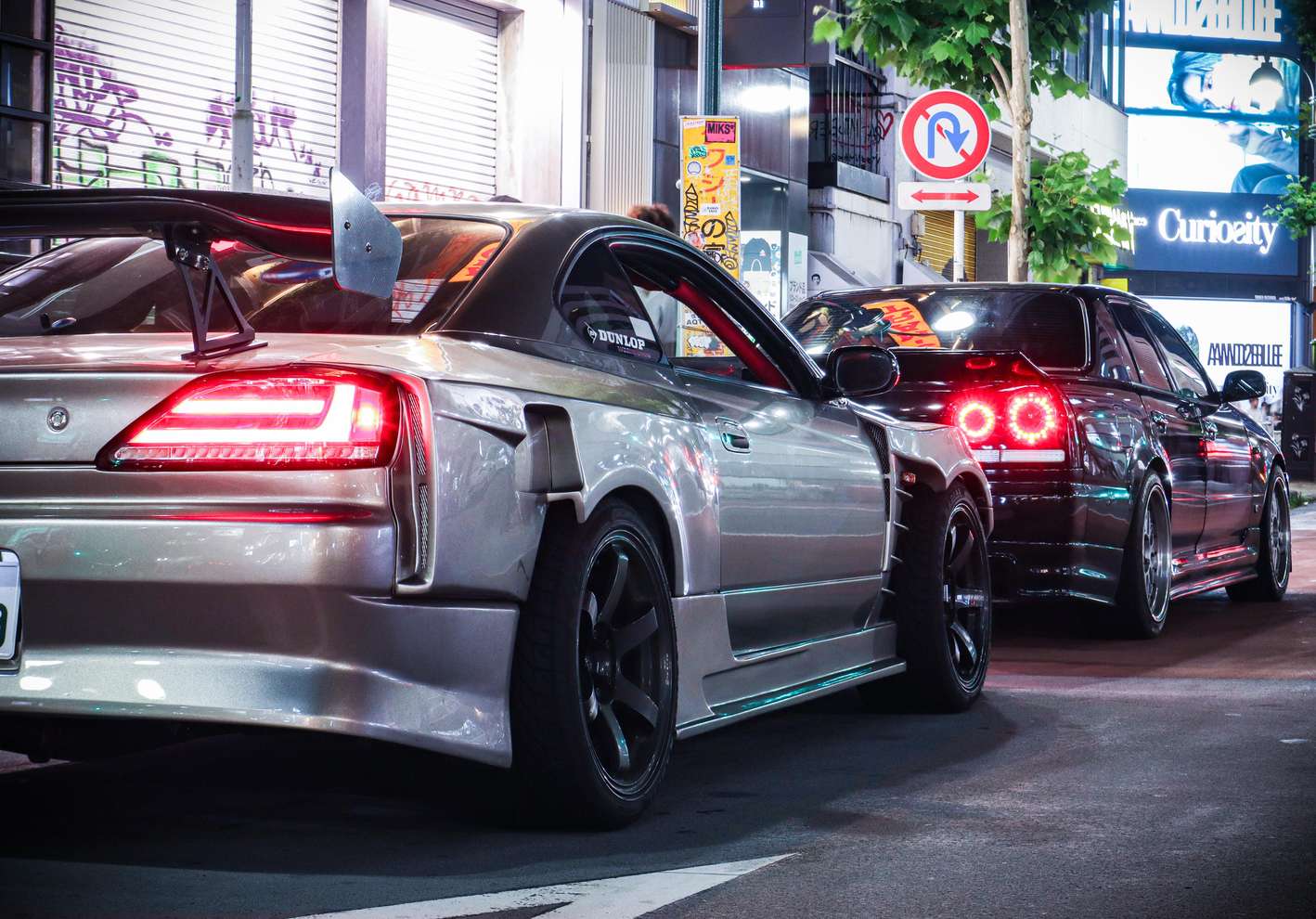
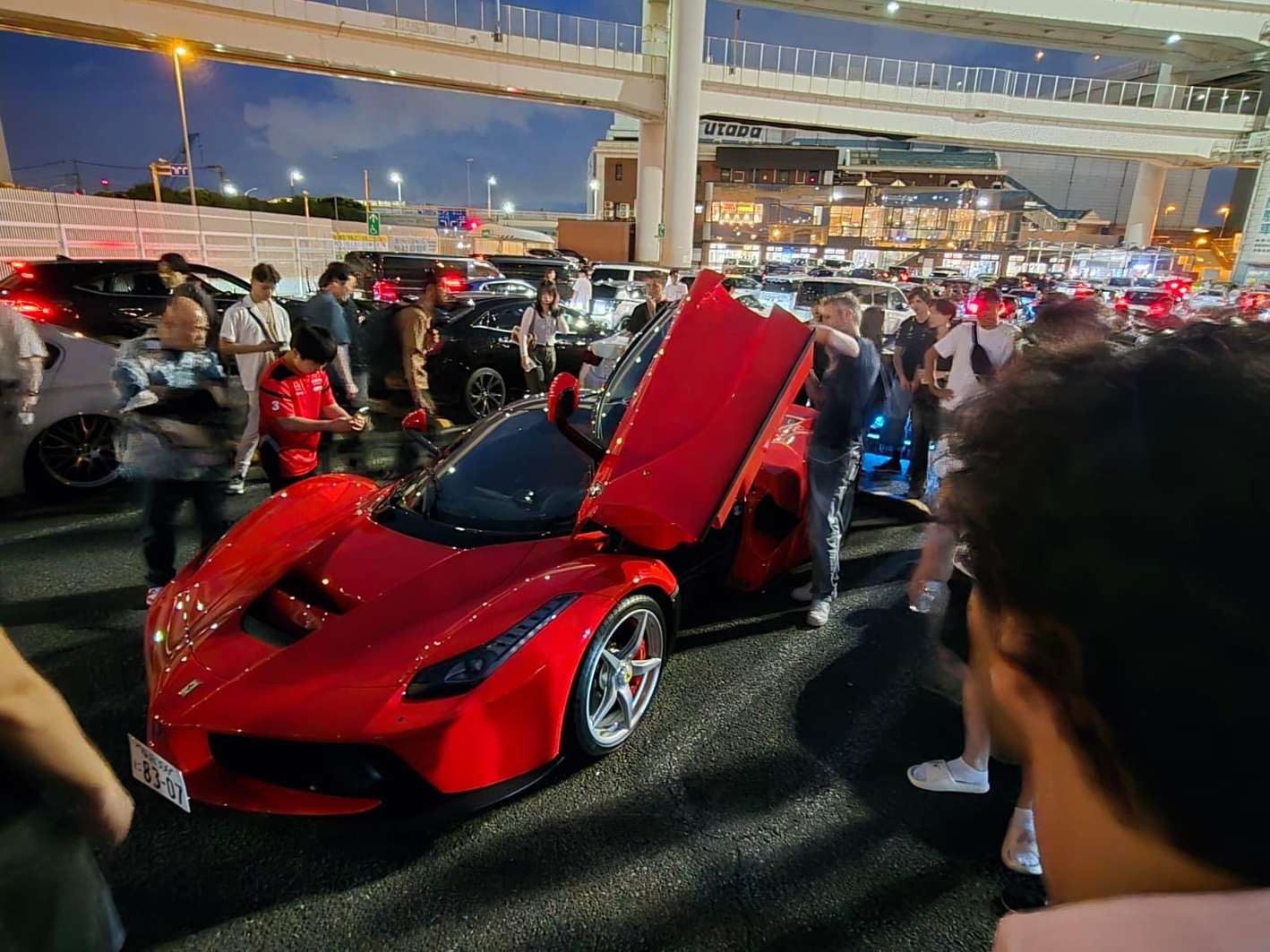
The Skylines and Supras you came for are there, parked in crews by model. Then you walk another row and a Lamborghini idles next to a shakotan build sitting inches off the ground on widebody arches. Ferrari, Koenigsegg and McLaren turn up regularly, alongside VIP sedans on deep chrome, American muscle, lowriders and hot rods.
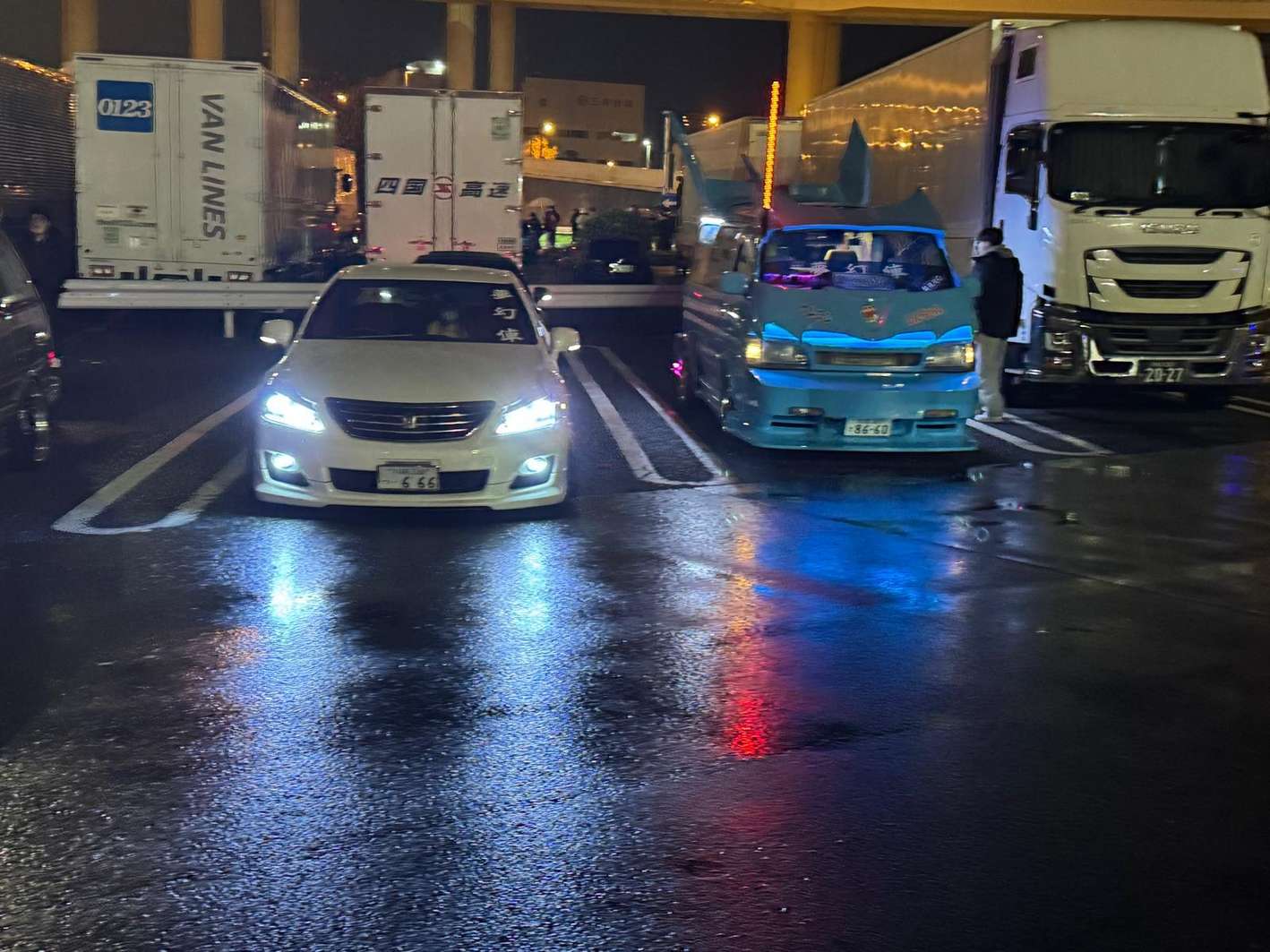
Some of the best sights are not cars at all. Kaido Racers and Kyushakai motorcycle crews roll through, dekotora trucks arrive wearing lights like travelling shrines, and at night the custom vans park up with rear speaker walls, neon and lasers.
JDM, by the way, just means Japanese Domestic Market, and owners happily talk you through their builds.
This is an informal gathering, not a show: owners come simply to park alongside each other, and most are glad to talk about their build
Truckers and families sleep here, which is why noise stays low and why the venue tolerates the meets at all
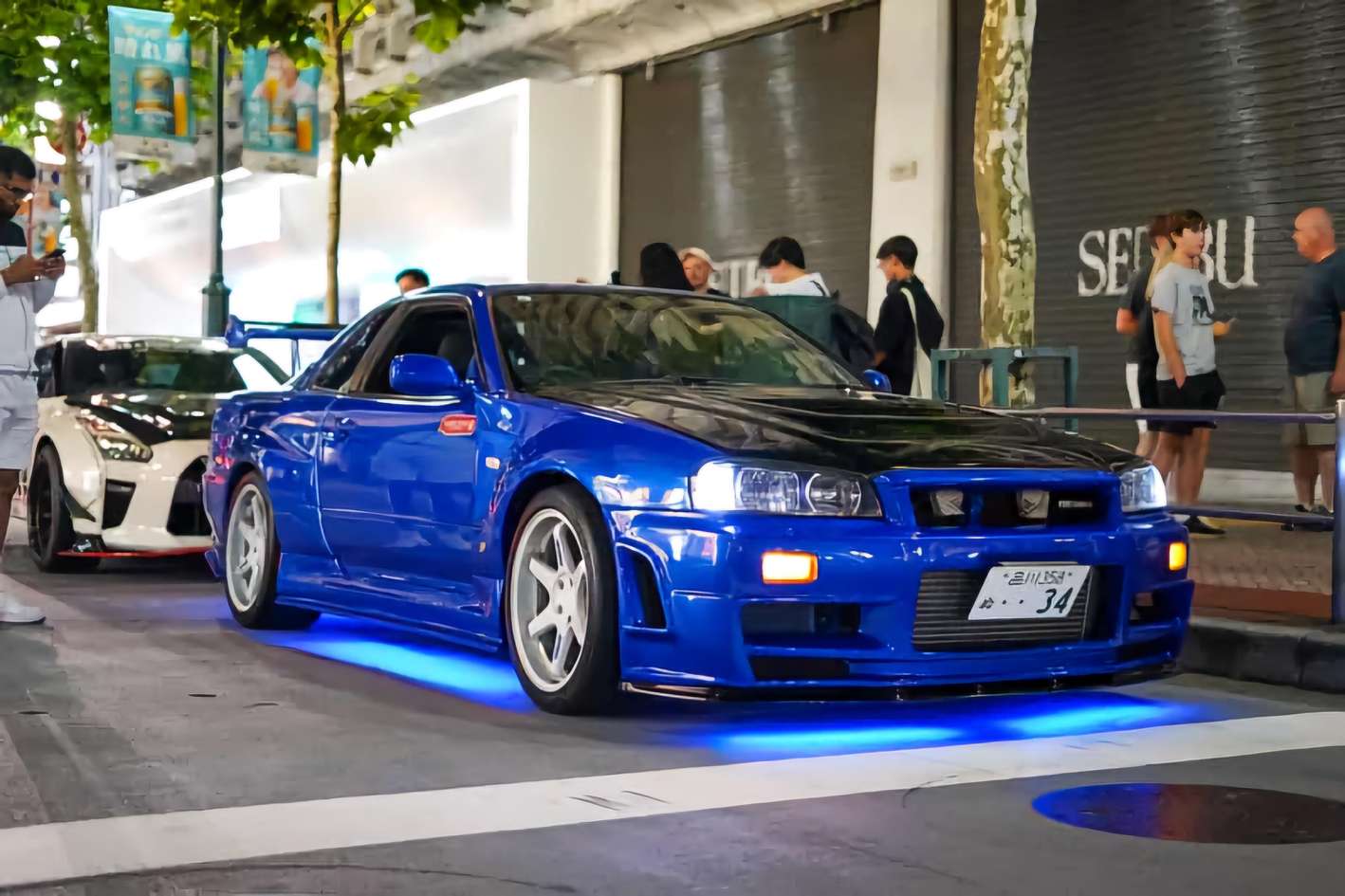
Underglow and LED-decorated cars light up the elevated highway bays, which is why the photos look the way they do
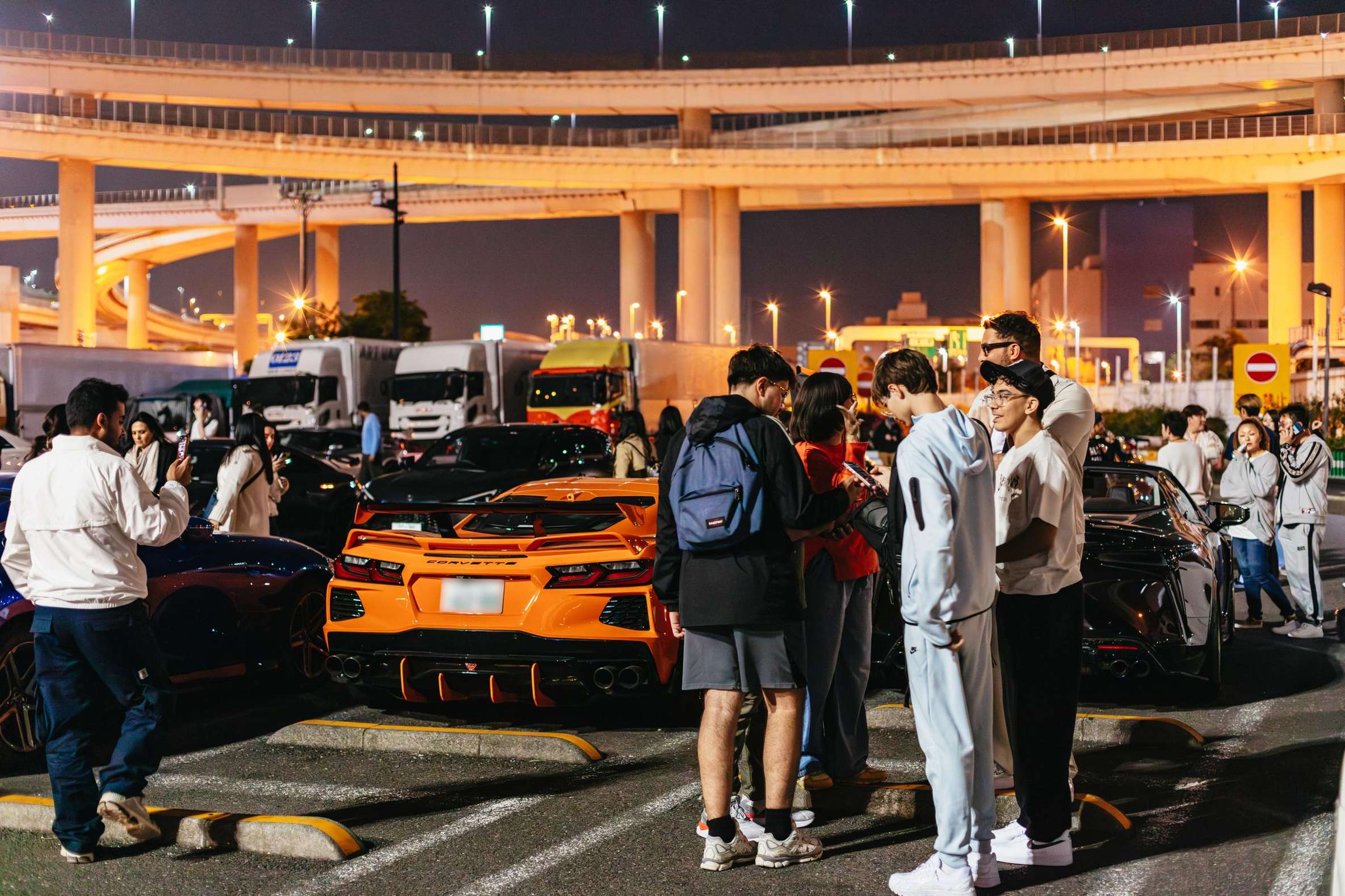
Daikoku is legally a rest facility for drivers, not an event venue, so the meets run with no schedule and no permit. Police move in when noise builds, when crowds block the truck bays, or when nuisance drivers draw a stream of emergency calls.
Revving a engine, doing burnouts or playing loud music does not just risk a fine, it shortens everyone's evening by pulling the closure forward.
When the loudspeakers announce dispersal, everyone clears out, peacefully and without argument. That is the whole response, and the right one.
The night does not end there. The crowd migrates across the bay to Umihotaru PA on the Tokyo Bay Aqua-Line, or fans out to Tatsumi Dai-ichi PA on Route 9 and sometimes Shibaura PA.
Tours plan for it: drivers reroute to Umihotaru, Tatsumi or A PIT Autobacs Shinonome, and some operators skip the Friday and Saturday closure window entirely. One tour even refunds you outright if Daikoku is closed and you would rather not continue to the alternative.
| If this happens | What happens then |
|---|---|
| Police announce dispersal over the loudspeakers | Everyone clears out peacefully, no argument |
| Daikoku closes early on a Friday or Saturday | Drivers and tours move to Umihotaru PA first |
| Umihotaru fills or the detour does not suit | Tatsumi PA or A PIT Autobacs Shinonome takes the overflow |
| Your tour prefers not to reroute | One operator offers a full refund instead of the alternative stop |
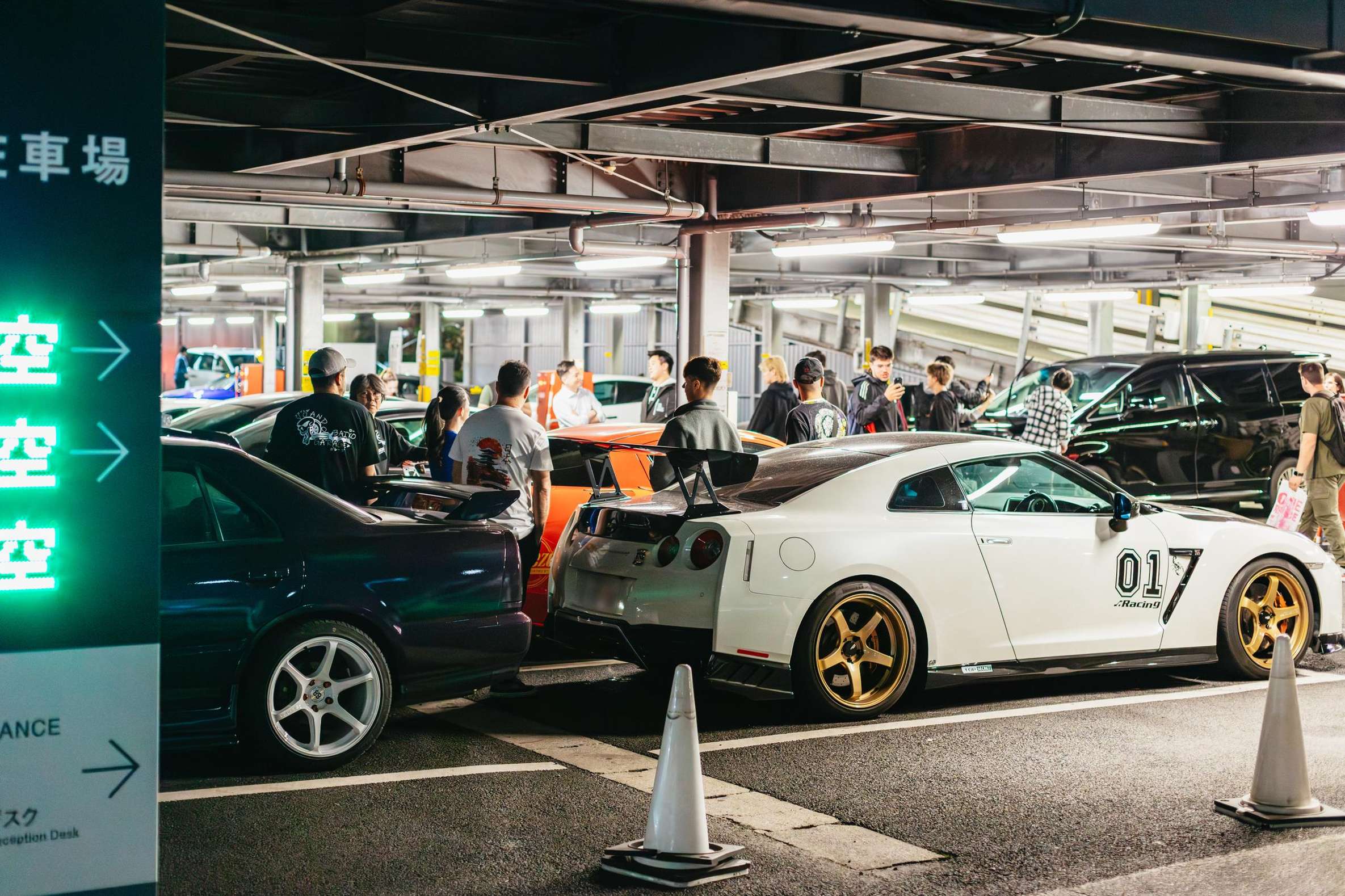
Exteriors are usually fair game without asking; interiors, engine bays and close-ups need the owner's nod. Never touch, lean on, sit on or climb on any car, and keep your watch away from the paint.
Plates on tuned cars stay out of your frame, and a declined photo is a declined photo, no second angle from a distance. Watch the noise. Flash in faces, shouted conversations and loud stereos all land on truckers trying to sleep, and noise complaints are what bring the police in the first place.
Drop your trash in a bin, and buy your coffee from the rest-stop shop; that small purchase is part of what keeps the venue tolerant of the meets. The language barrier is smaller than it looks.
Owners are welcoming and will happily talk about their cars through translation apps on a phone, and exchanging contacts over LINE is a normal part of the night. ::quote How the conversation gets going "My driver pulled out a translation device and suddenly I was getting the full story on his build, turbo by turbo."
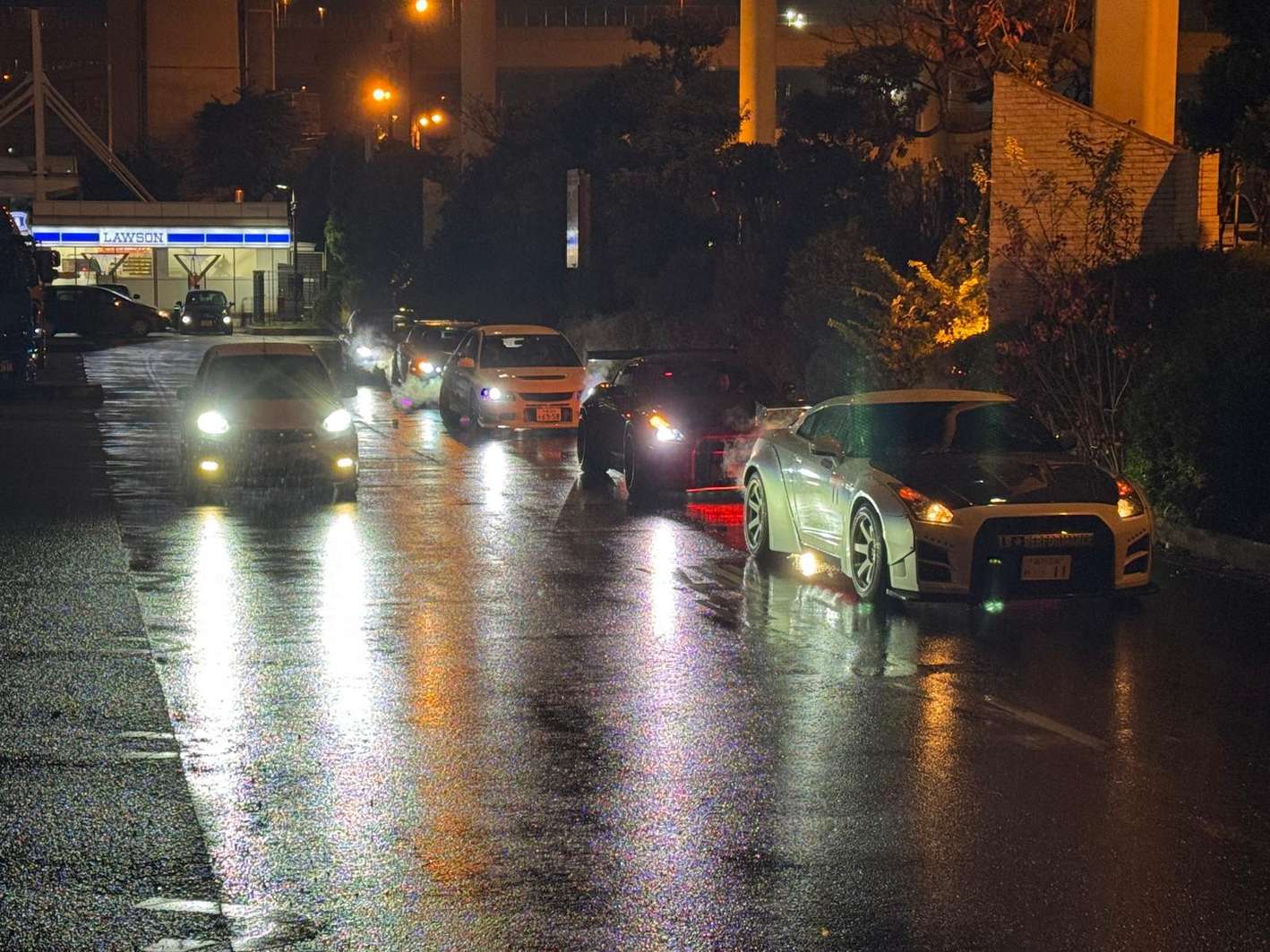
Rain changes the guest list, not the event. The meets are informal, so there is no organizer to cancel anything, and the lot stays open. Most guided tours run as scheduled through ordinary rain.
What thins out is the hardware: exotic supercars and pristine show builds stay home in wet weather, leaving the committed regulars and their domestic tuner cars.
A typhoon warning is a different animal. Turnout collapses, the lot empties, and operators adjust routes or reschedule, usually with a new date or a full refund.
Rain falls hardest in the touring season: from March through October expect wet weather on roughly one day in two, peaking in May and June, against only five or six wet days a month in winter.
There is a silver lining regulars will tell you about. Wet pavement doubles every neon reflection in the lot, and some of the best photos from Daikoku are taken in the drizzle.
April: 5 out of 5 for how busy it gets.
Tap a month to read it.
Spring and late autumn stack the busiest months, which matters if you want the packed-lot energy, but winter nights are the real packing problem, and they come next.
You will spend an hour or two standing on open concrete by the bay, so plan the body before the cars.
Restrooms sit inside the rest stop, and the Lawson convenience store runs 24 hours, which matters more than it sounds: after 9 pm it is the only food outlet still open, so a hot coffee and an onigiri from its shelves is the late-night menu. Vending machines dispense hot drinks around the lot.
Winter is where first-timers get caught. Nights at Daikoku drop to between 1 and 5 degrees Celsius, and the sea wind off the bay pushes it close to freezing.
Layers beat bulk: a thermal base, a fleece or packable down, and a windproof shell. Keep the coat compact, because trailing scarves and heavy overcoats make getting in and out of a low sports car cabin genuinely awkward.
Safety worries fade fast on the ground. The lot is brightly lit, solo travelers and couples join night tours alone and report feeling completely welcome, and watching and photographing cars is no crime at all.
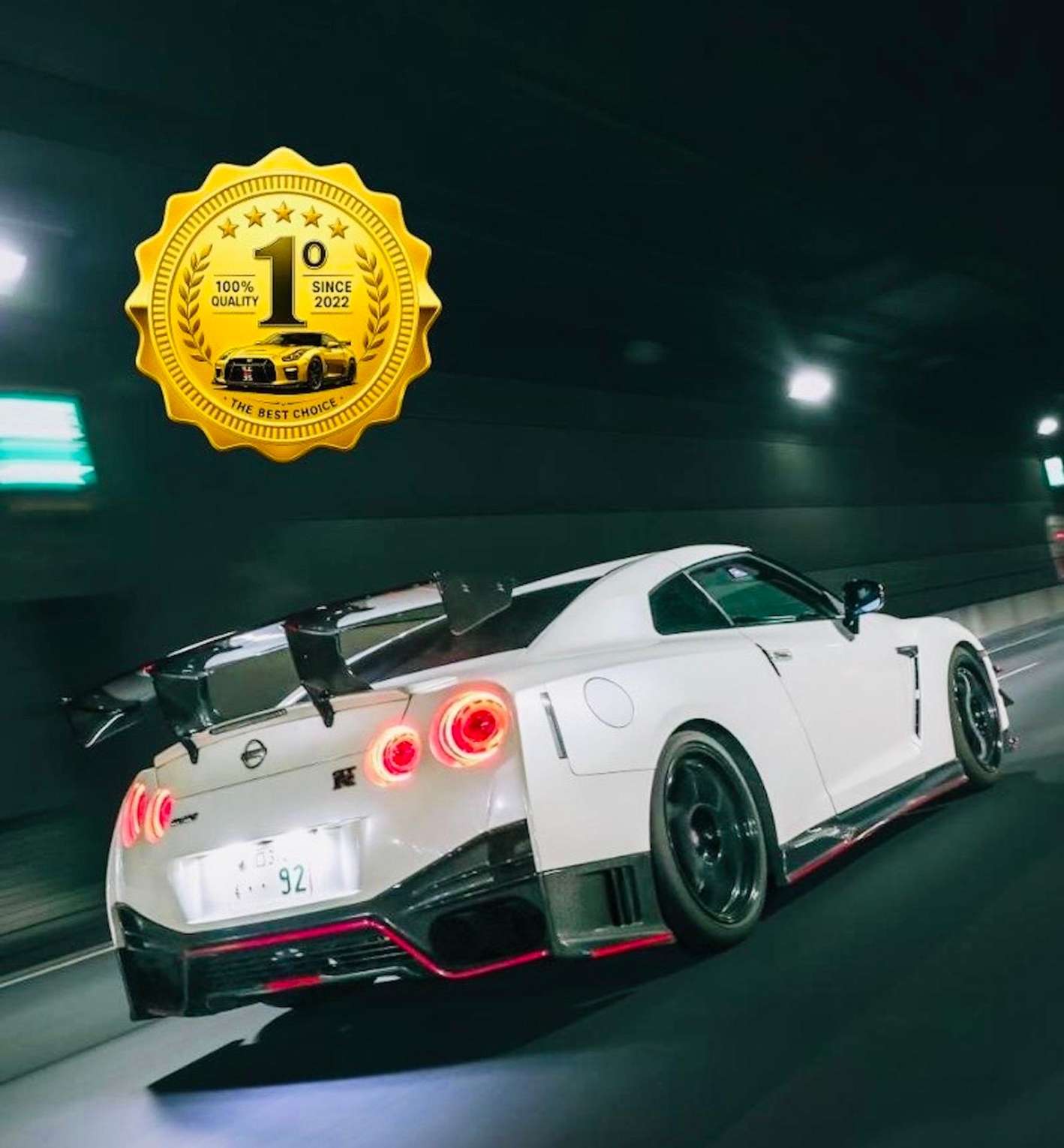
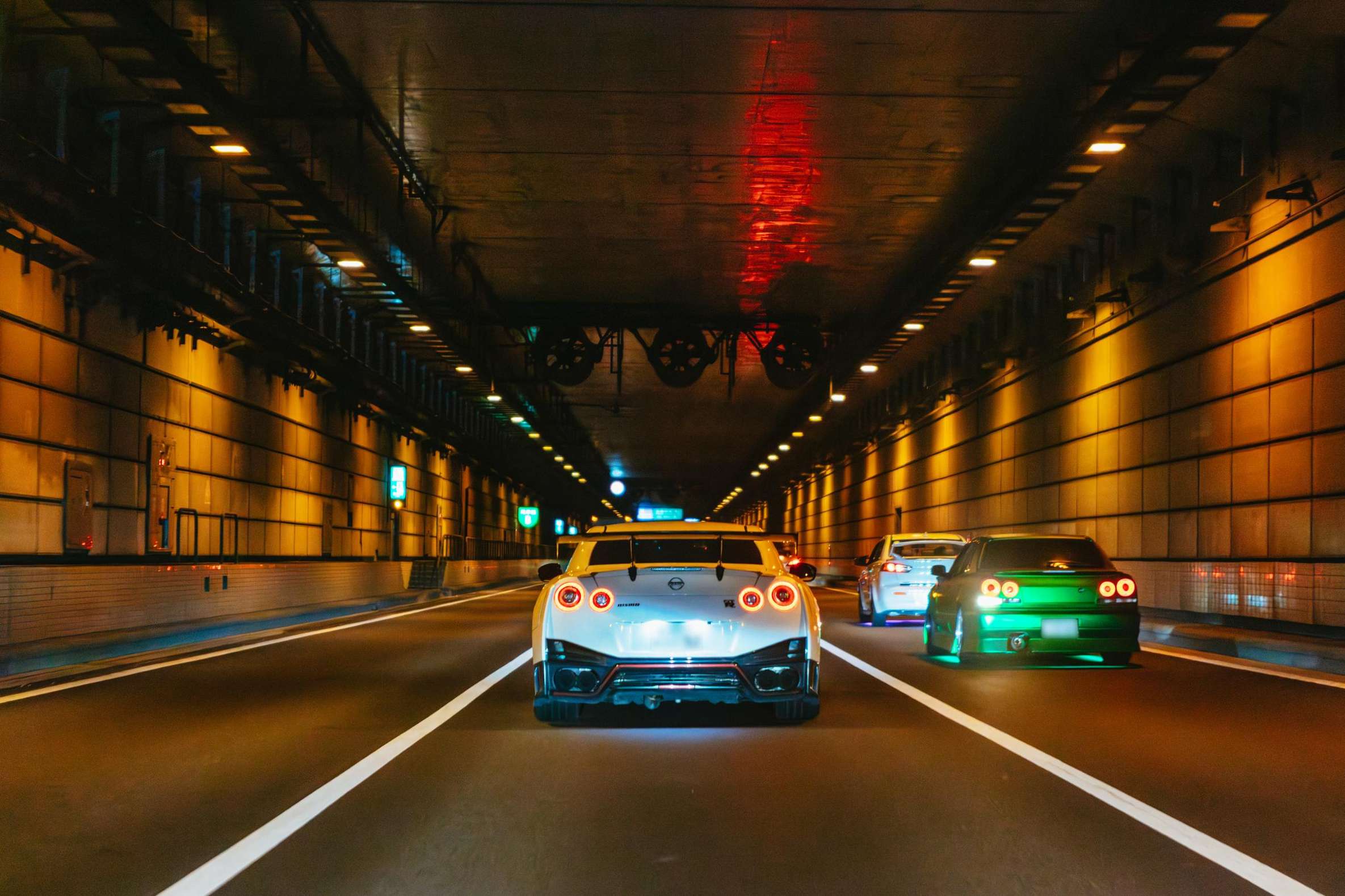
Be honest about the cabin before you book. Modified sports cars run tight bucket seats, firm suspension and roll cages, and rear seats in 2+2 coupes like the GT-R or a 86 are occasional-use at best, with rear legroom tight enough that most adults feel cramped.
Several tours enforce limits around 100, 110 or 120 kilograms, or height caps at 180 and 200 centimeters. Pregnant travelers and people with back or heart problems are excluded on certain tours, and motion sickness is a real factor on expressway runs.
Kids face their own gate. Late-night highway meets are not a young-child environment, and tours exclude children from under 1 up to under 12 depending on the operator.
Japanese law requires a child seat under six, and adult belts assume a height of at least 150 centimeters. Minors under 18 generally need an adult with them.
Also worth knowing before you set your heart on a car: most operators cannot guarantee a specific model, and maintenance or group size can force a substitution. Only some private plans guarantee the car. If you miss the last train after the tour, a booked ride home takes about half an hour to central Tokyo.
Most operators cannot guarantee a specific model and may substitute for maintenance, group size or breakdowns; only select private plans guarantee the car
Many tours exclude children under 4 and up to under 12, and late-night highway meets are not suited to young children
No cab may pick up inside Daikoku and no app finds drivers there; your return ride must be arranged in advance
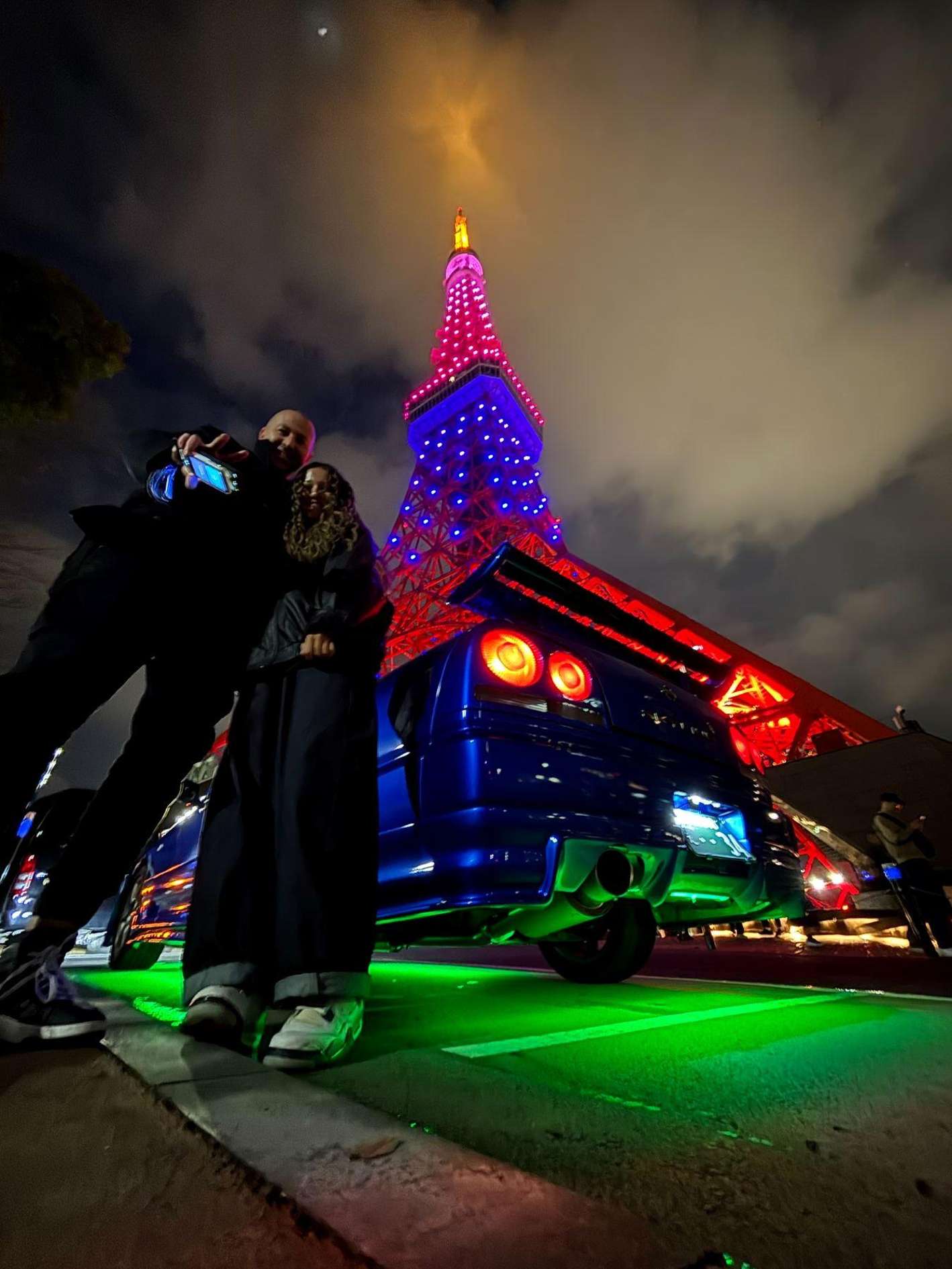
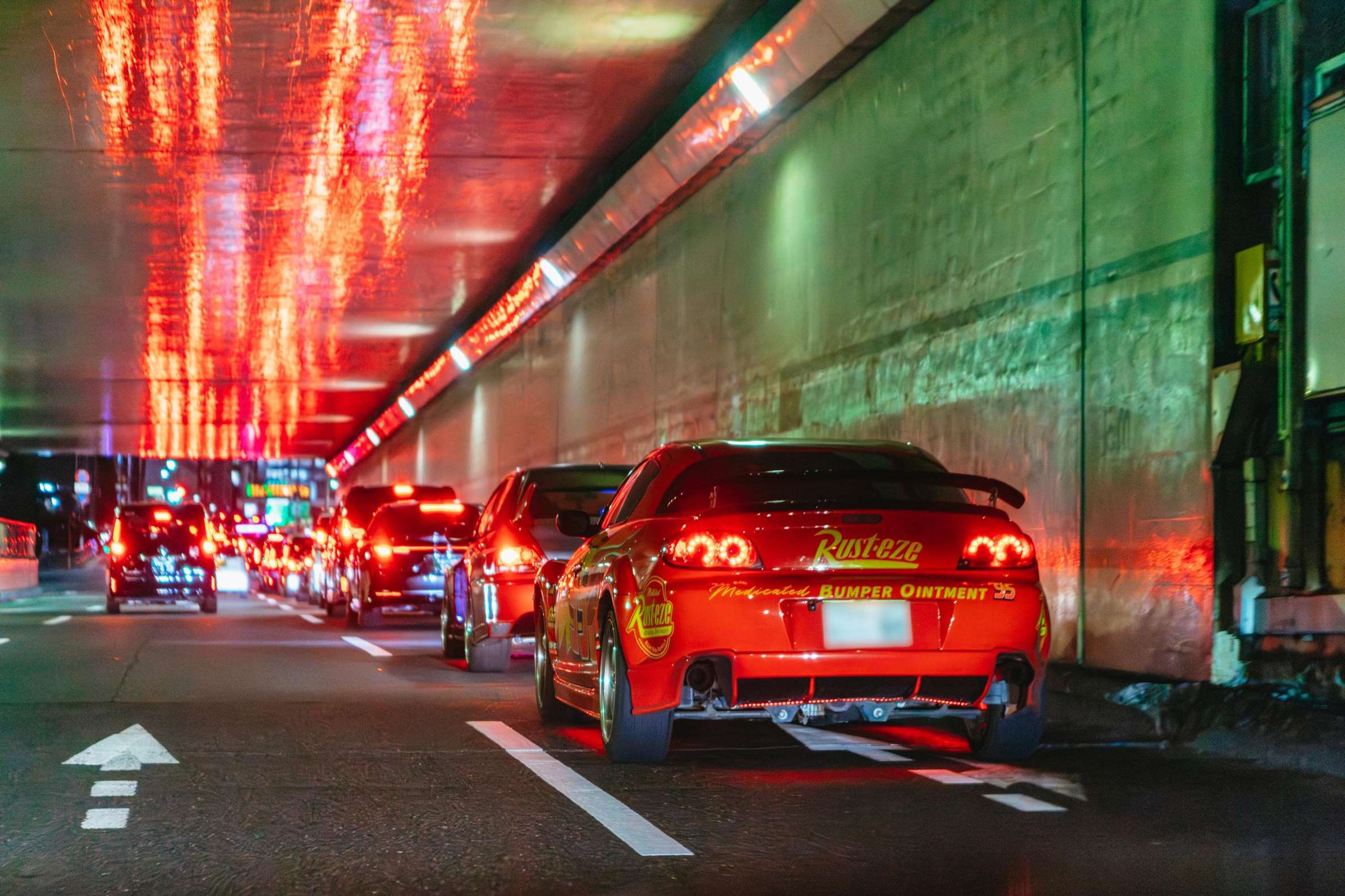
Daikoku pairs well with a car-culture day that needs no car at all. Walk into the Akihabara UDX underground garage, free on foot, right next to the station, and you can find modified cars and itasha parked there on weekend afternoons and Friday and Saturday evenings.
Shibuya Carjack takes over the streets near Tower Records on Saturday nights around 9 pm, a short walk from the Scramble Crossing, and the Daikanyama Morning Cruise fills the T-SITE car park on themed mornings a five-minute walk from Daikanyama Station.
Daytime hours belong to the shops. A PIT Autobacs in Shinonome stacks three floors of tuning parts and gear, and hosts its own enthusiast meets; Liberty Walk Harajuku, Nissan Crossing in Ginza and the STI Gallery in Mitaka are all train-accessible.
Arcades in Akihabara and Shibuya run Initial D and Wangan Midnight cabinets if you want to try the roads yourself.
A few of those stops sit close to the Yokohama side of the bay, worth a look if your tour starts or ends near the pier rather than in Tokyo.
Daikoku delivers the scene the clips promise, as long as you respect the two rules that shape it: get there by motor vehicle with a booked ride home, and behave like a guest on the lot. Go midweek or early on a weekend, ride in with a guided tour, and the night works.
Skip the improvisation, not the meet.
Compare every guided night ride to Daikoku PA, from budget shared convoys to private cars, and book one.
See how a chauffeured private JDM trip works, with hotel pickup, flexible stops and no shared passengers.
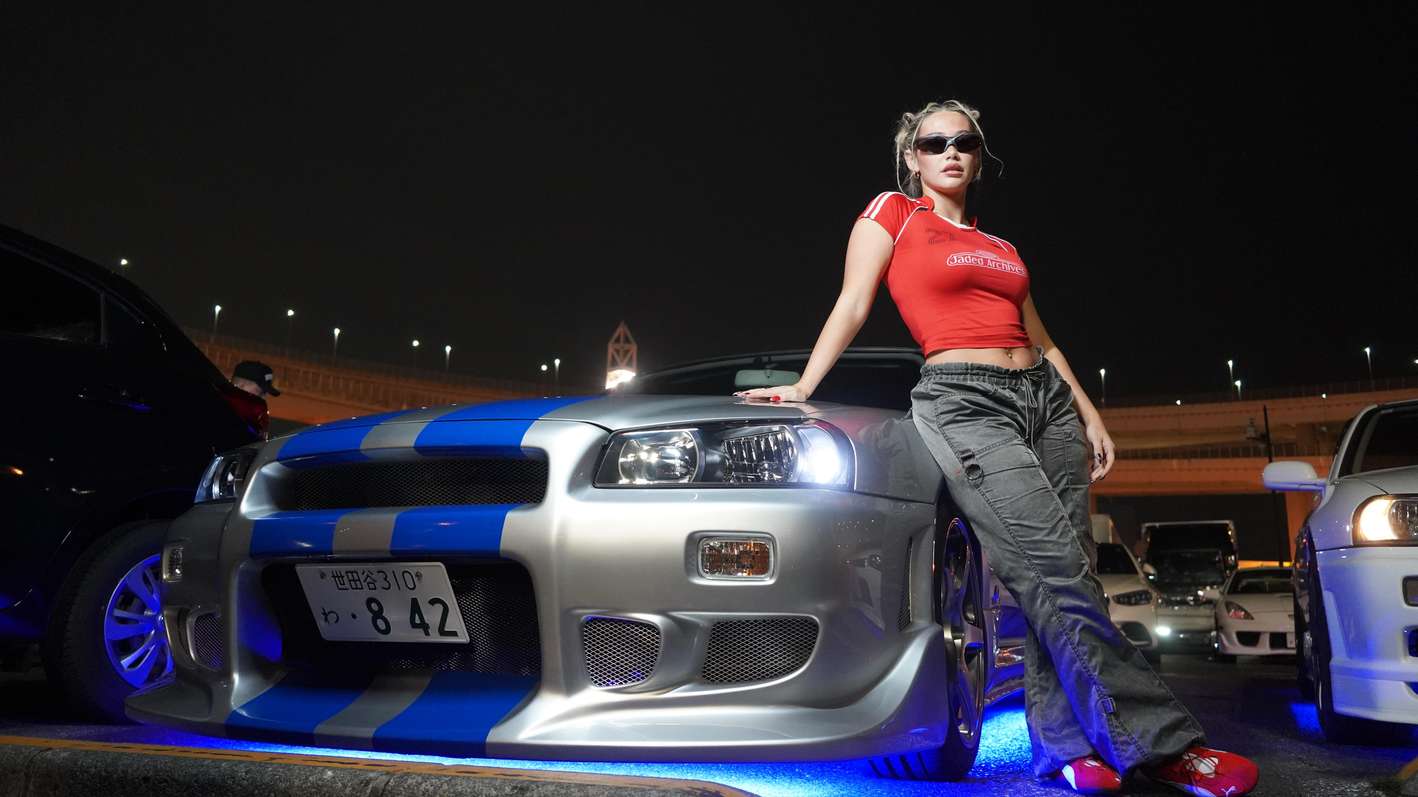
Learn what a self-drive convoy to Daikoku PA asks for: permits, deposits, and the tolls you pay yourself.
Find out which nights bring the biggest crowds to Daikoku, and when police close the lot early.
The short answers to what visitors ask most about Daikoku Parking Area, from getting there to what happens when police clear the lot.
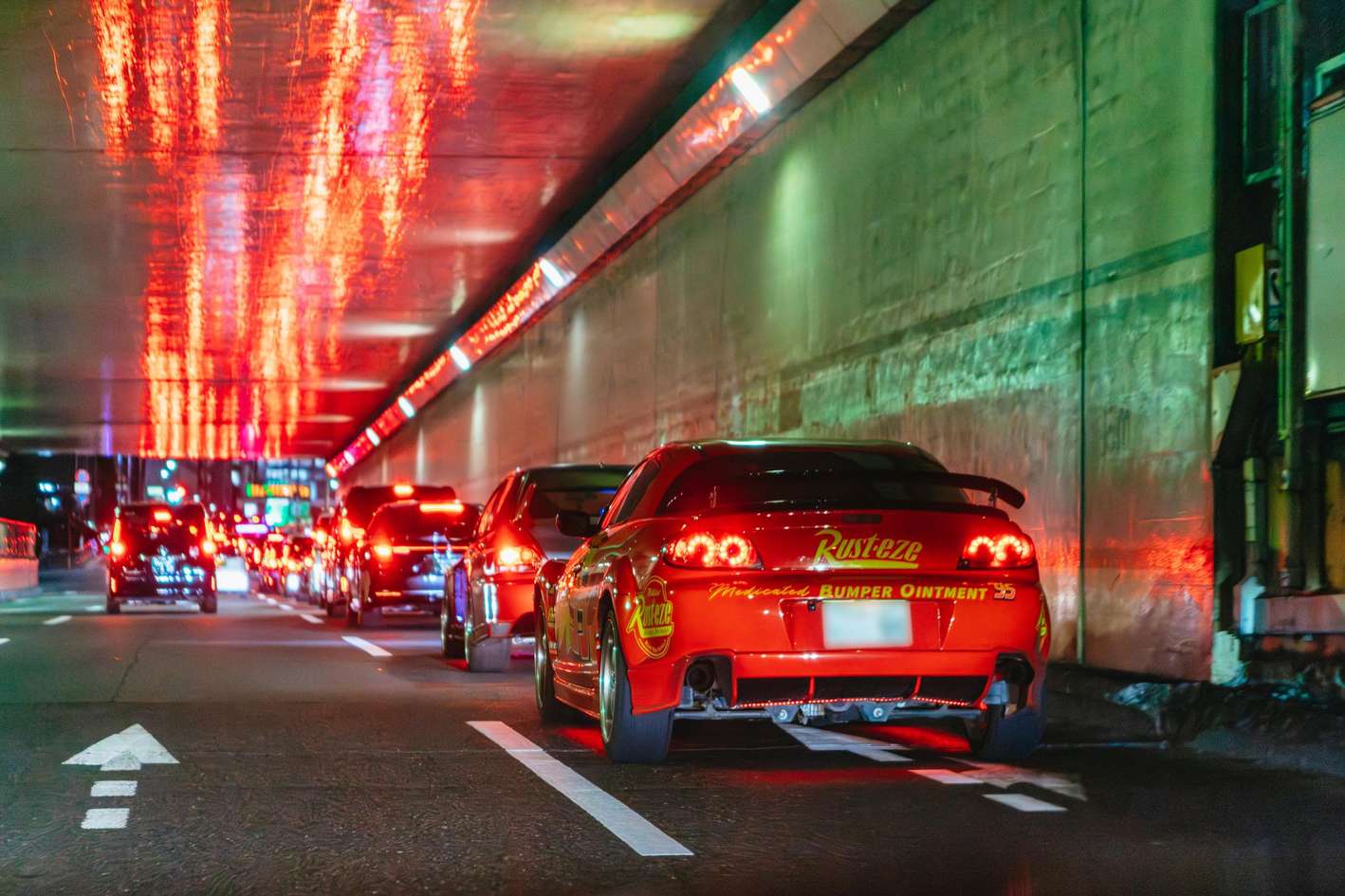 Yokohama2026
Daikoku Parking Area sits on Daikoku Pier, an artificial island in Yokohama Bay. It occupies the decks of an expressway interchange connected to Tokyo by the Bayshore Route and the K5 Daikoku Line.
No. The parking area has no station, no bus stops and no pedestrian walkways, and the pedestrian gates are locked and fenced off. Walking in is illegal and dangerous. The only way in is by expressway vehicle.
A car or taxi covers the roughly 31 to 34 km from central Tokyo in about 35 to 45 minutes without traffic. Guided tours budget 45 minutes to an hour each way and handle the return trip for you.
No. Daikoku PA is a public highway rest stop, so entry is free for anyone arriving by car. The meet itself is an informal gathering with no tickets or gates.
Cabs are not permitted to pick up passengers inside the parking area, so app bookings and street hails fail there. Visitors who arrive without a pre-arranged ride back can end up stranded on the highway island, which is why most travelers go with a tour.
Modified JDM sports cars from across the Kanto region form the core of the crowd. Depending on the night you can also find European supercars, American muscle cars, lowriders, VIP sedans, itasha, shakotan builds, dekotora trucks and sound vans with neon and speaker walls.
Police sometimes clear the lot on weekend nights when noise, crowds or blocked truck parking build up. When that happens, drivers usually move to Umihotaru PA on the Tokyo Bay Aqua-Line, with Tatsumi PA and Shibaura PA as other backups. Tours reroute to these spots too.
Never touch, lean on or sit in a car without the owner's permission, and ask before close-up photos, especially of interiors and license plates. Keep noise down, never ask drivers to rev or drift, and clear out promptly if police announce a dispersal.
There is no formal schedule to cancel, but turnout drops sharply in the rain because owners keep show cars and exotics at home. Typhoon warnings can empty the lot entirely. Some committed regulars still show up, and wet pavement gives photos a nice reflection.
Not as a passenger. Guided tours put a professional driver behind the wheel, so no International Driving Permit or Japanese licence is needed. Only self-drive rentals require the 1949 Convention permit or an official Japanese translation.
Late-night highway meets are not a good fit for young children. Many of the tours that visit the parking area exclude babies and children below certain ages, so check the age rules on a tour before booking with kids.
Yes. Most owners are happy to talk about their builds, and a translation app on your phone bridges the gap. Swapping contacts over LINE is a common way the conversation continues after the night ends.
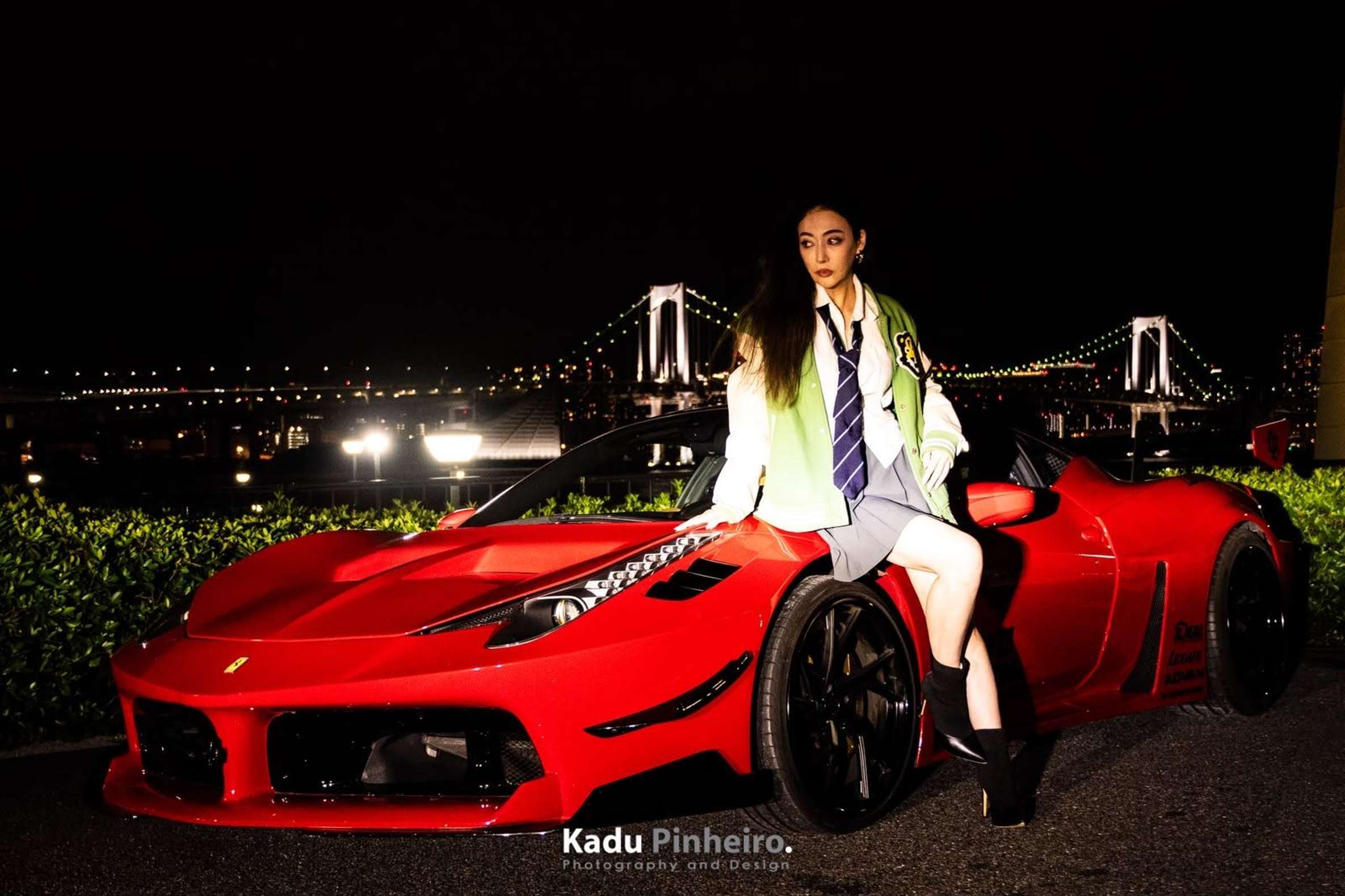
Ride shotgun to Daikoku Parking Area with local enthusiasts, free cancellation up to 24 hours before, and drop-off at your hotel in central Tokyo.