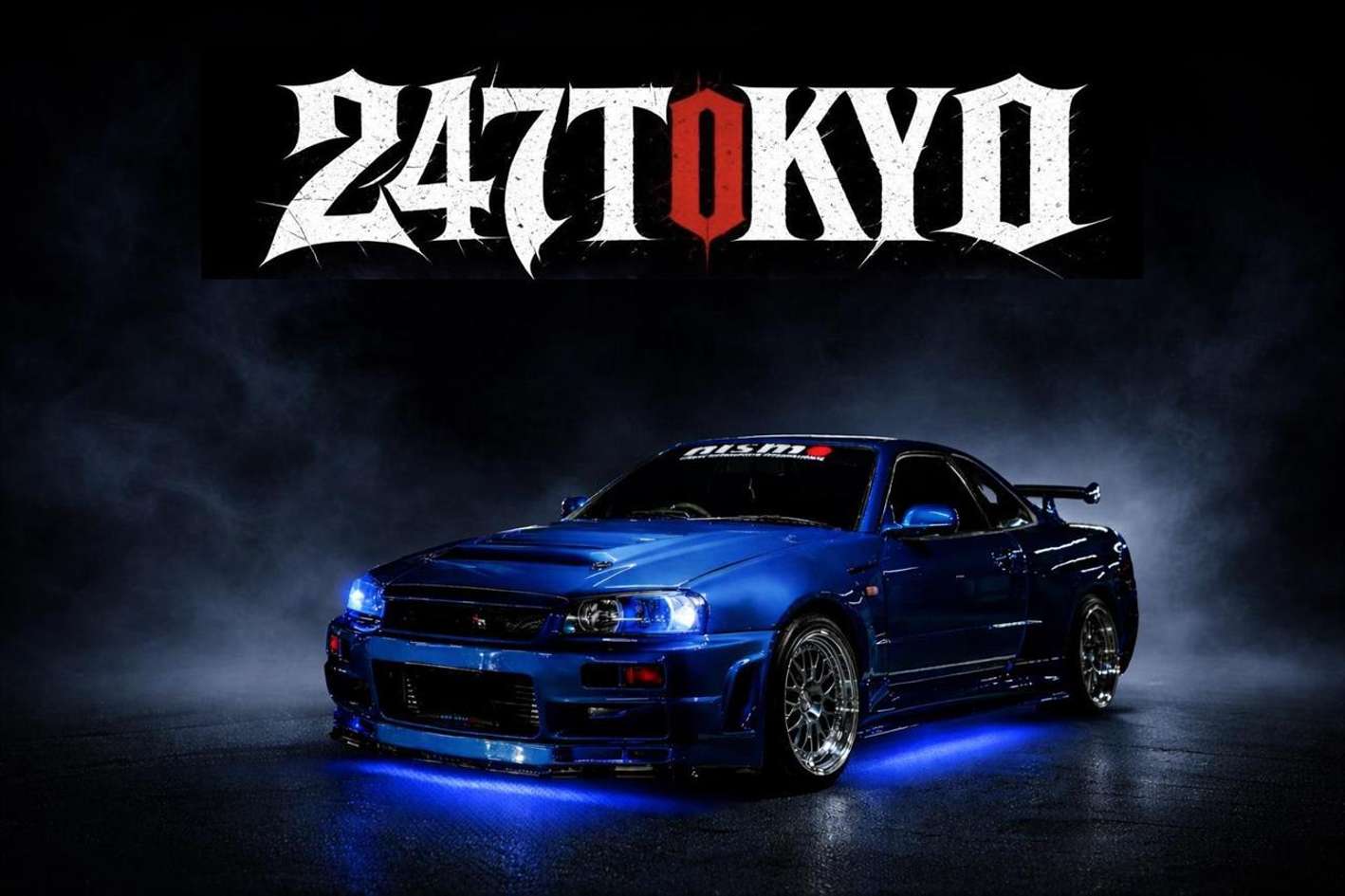
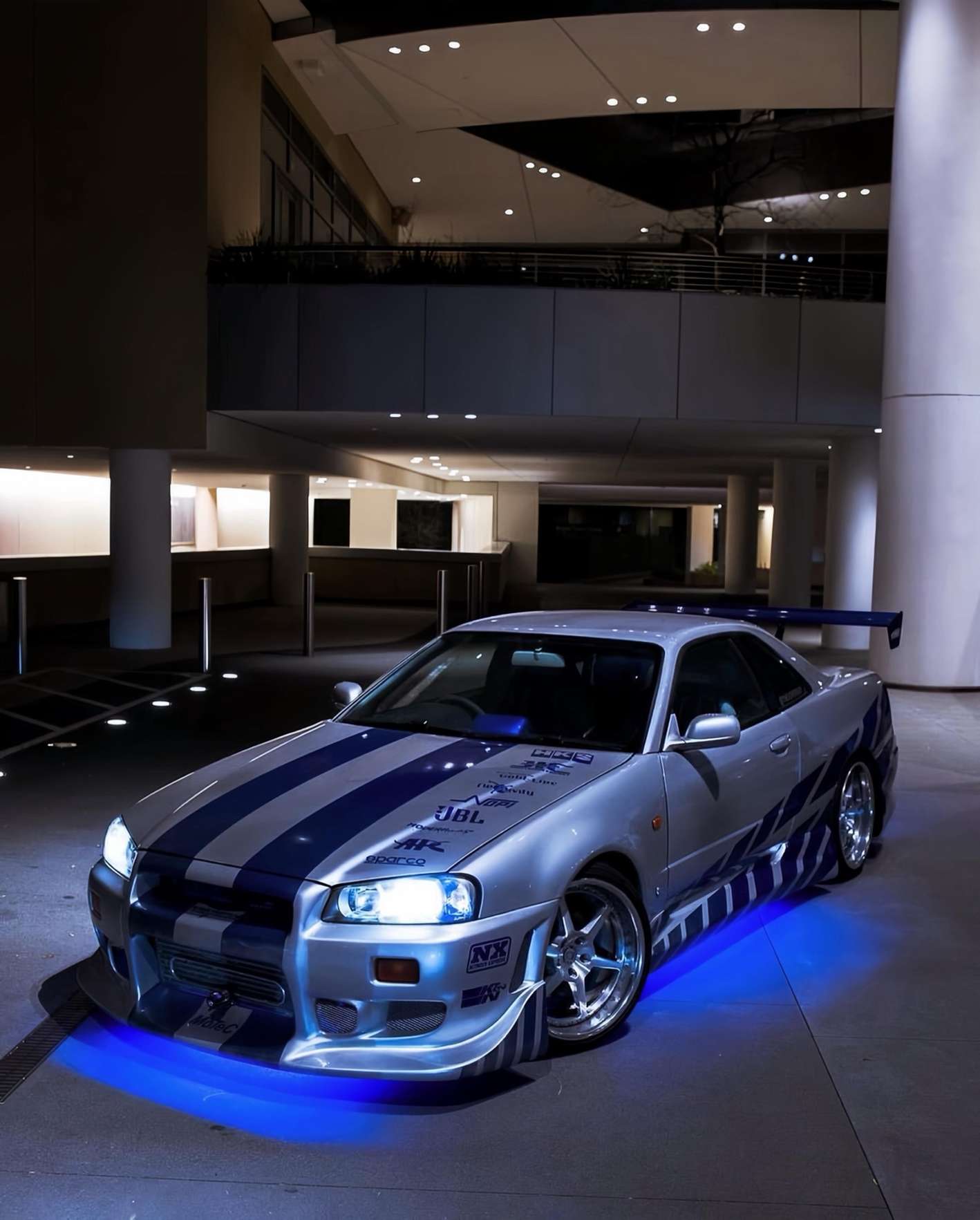
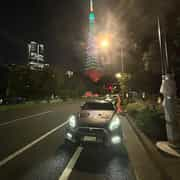
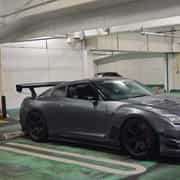
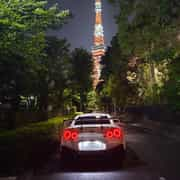
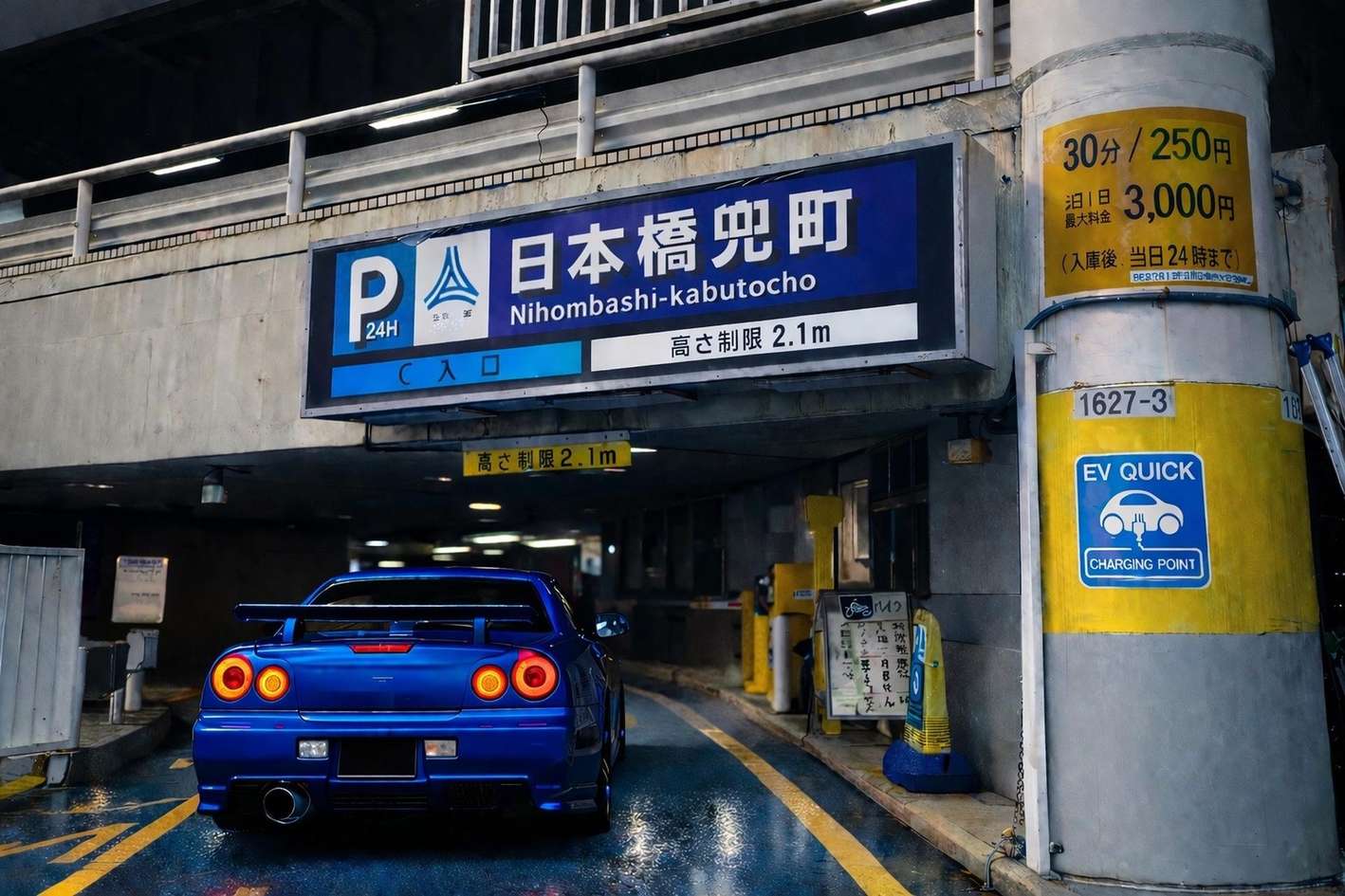
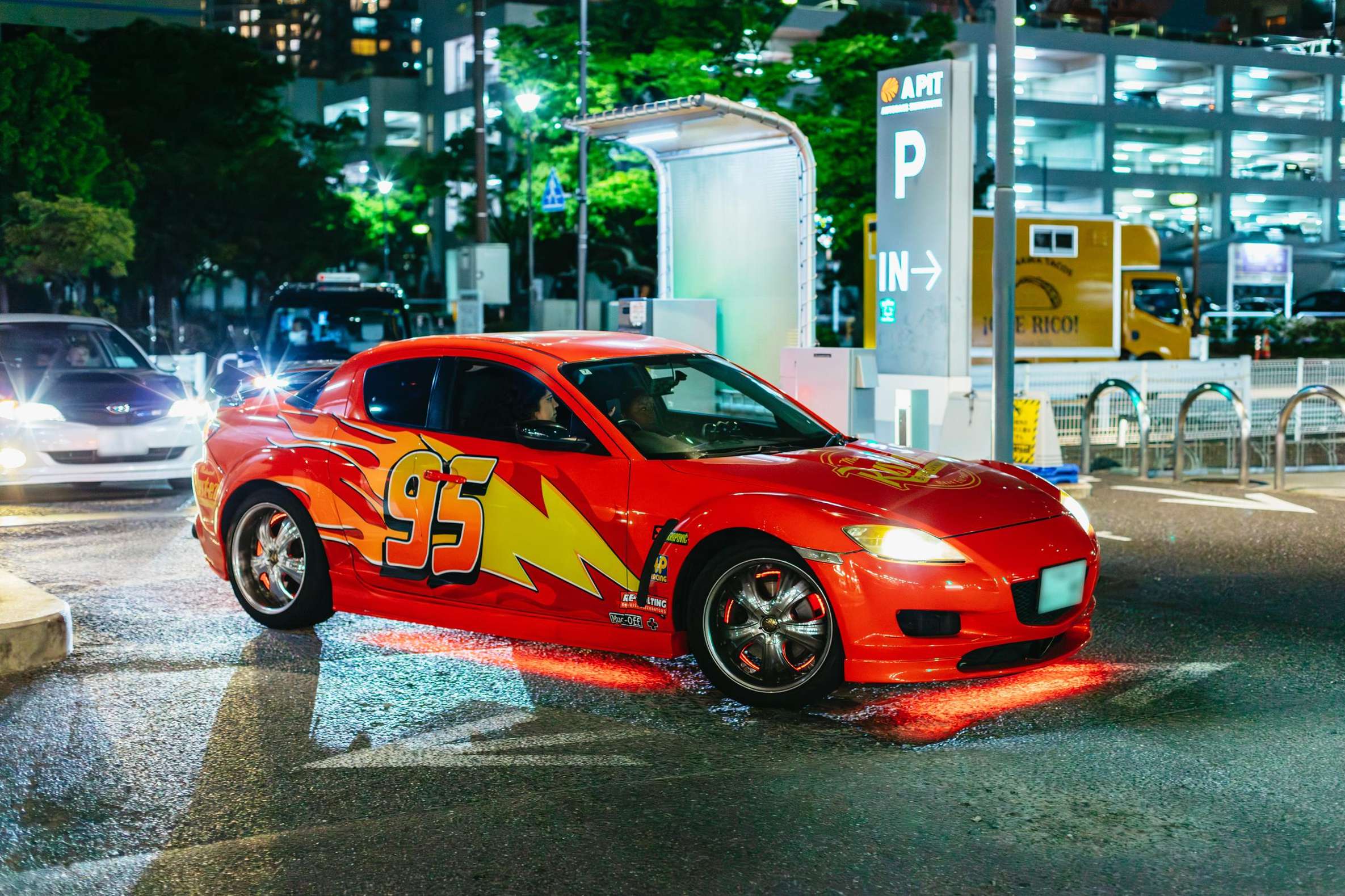
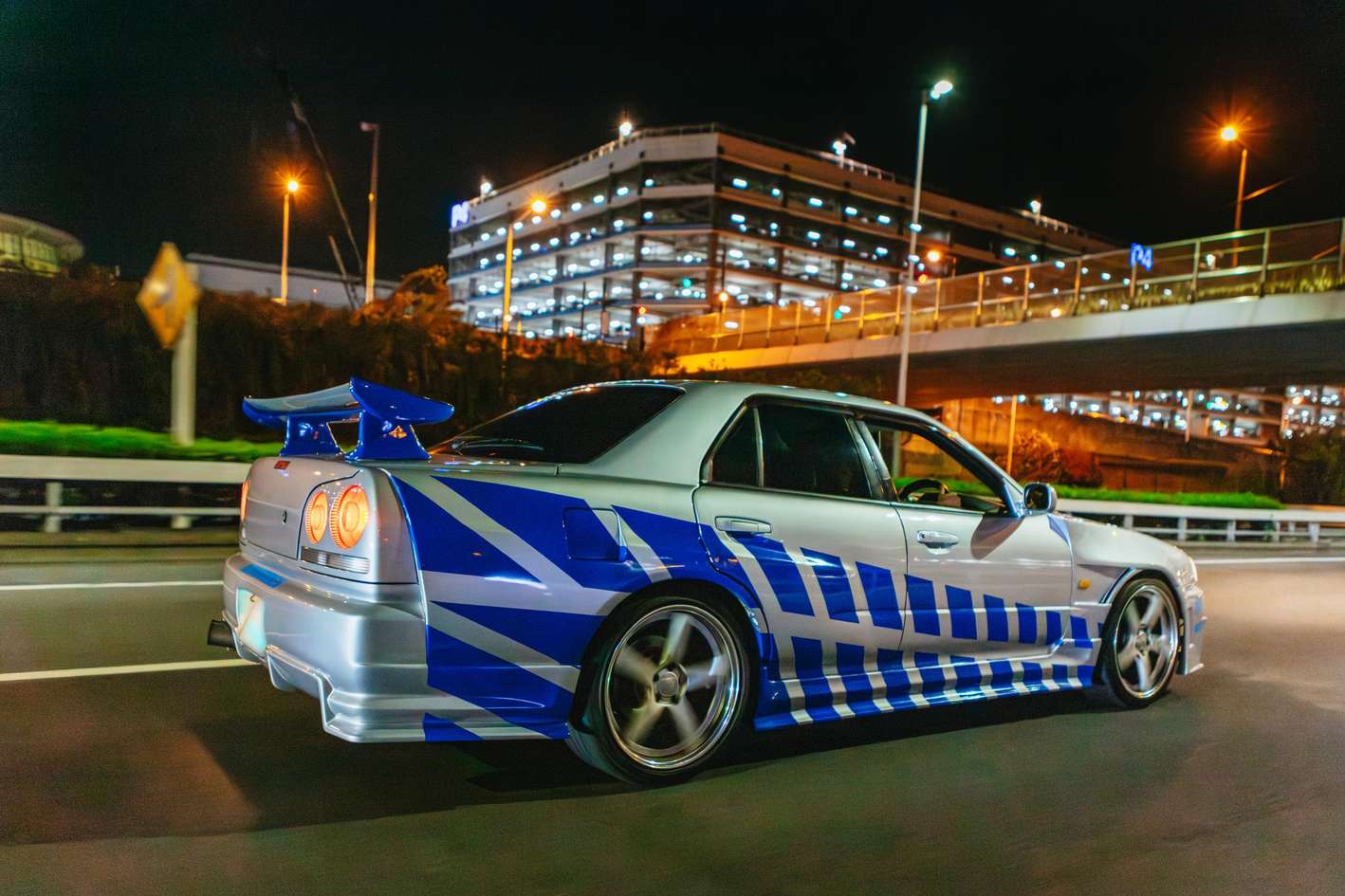
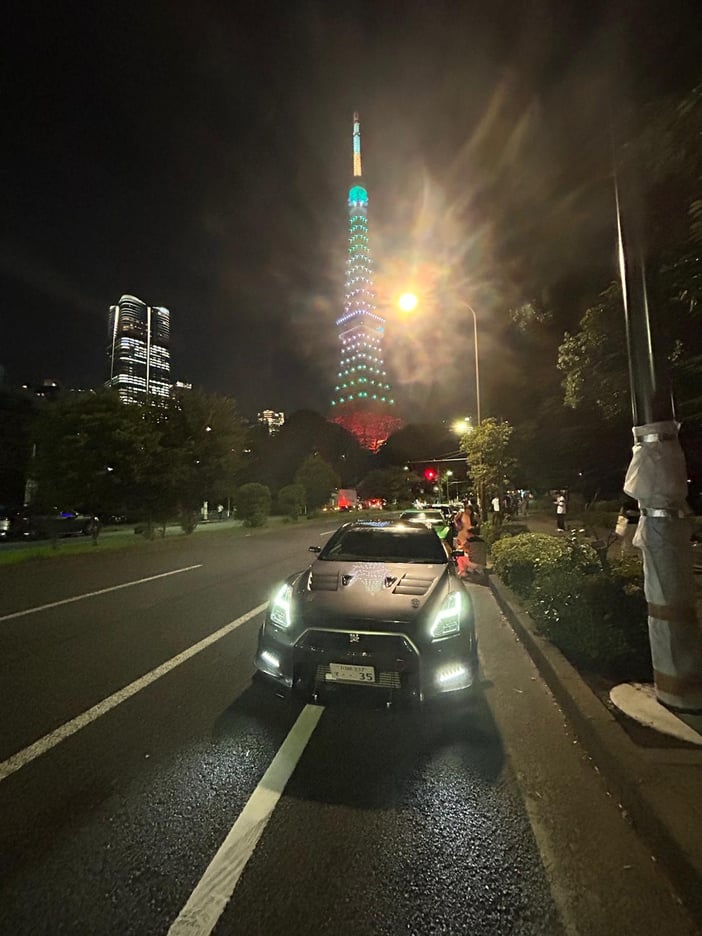
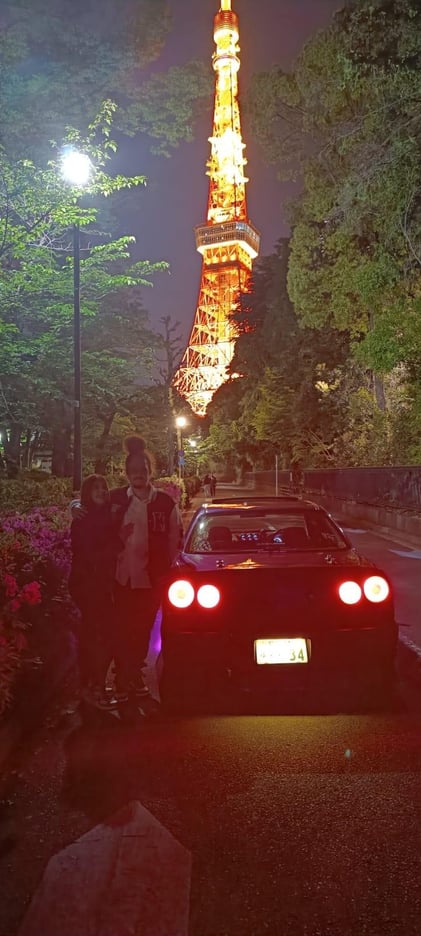
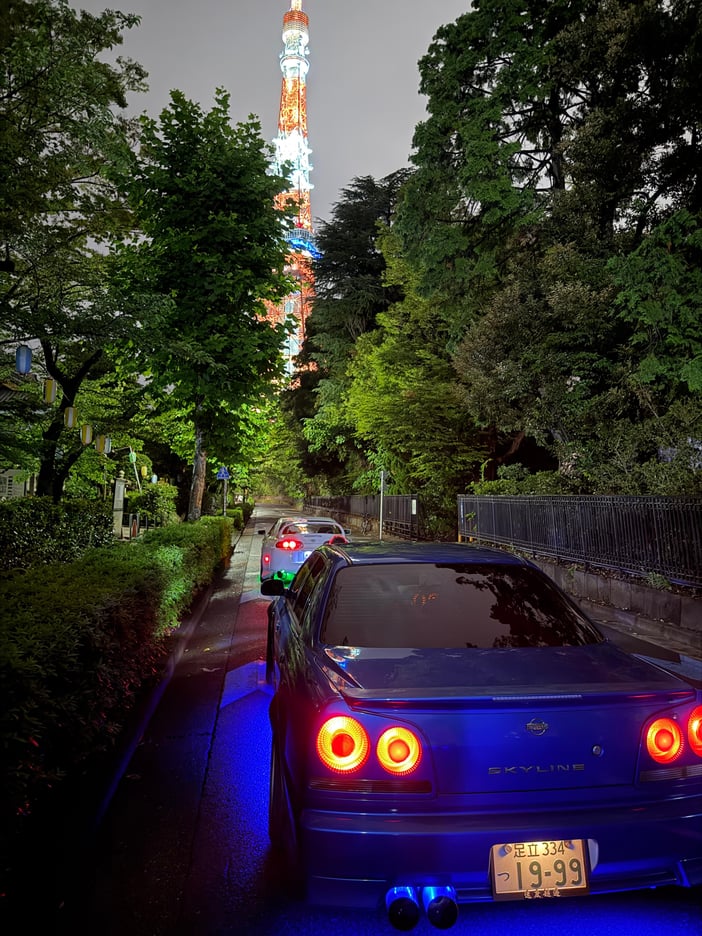
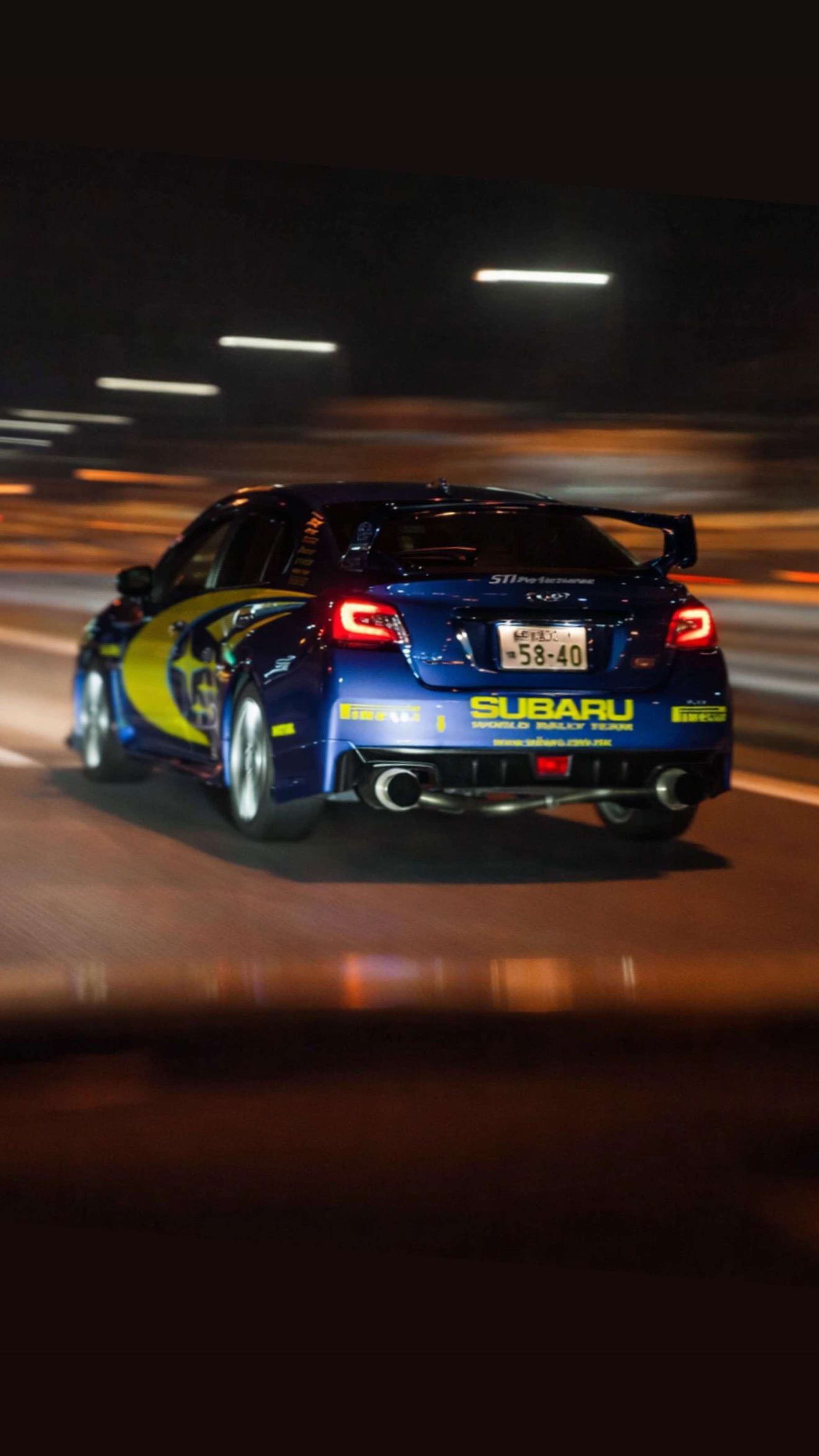
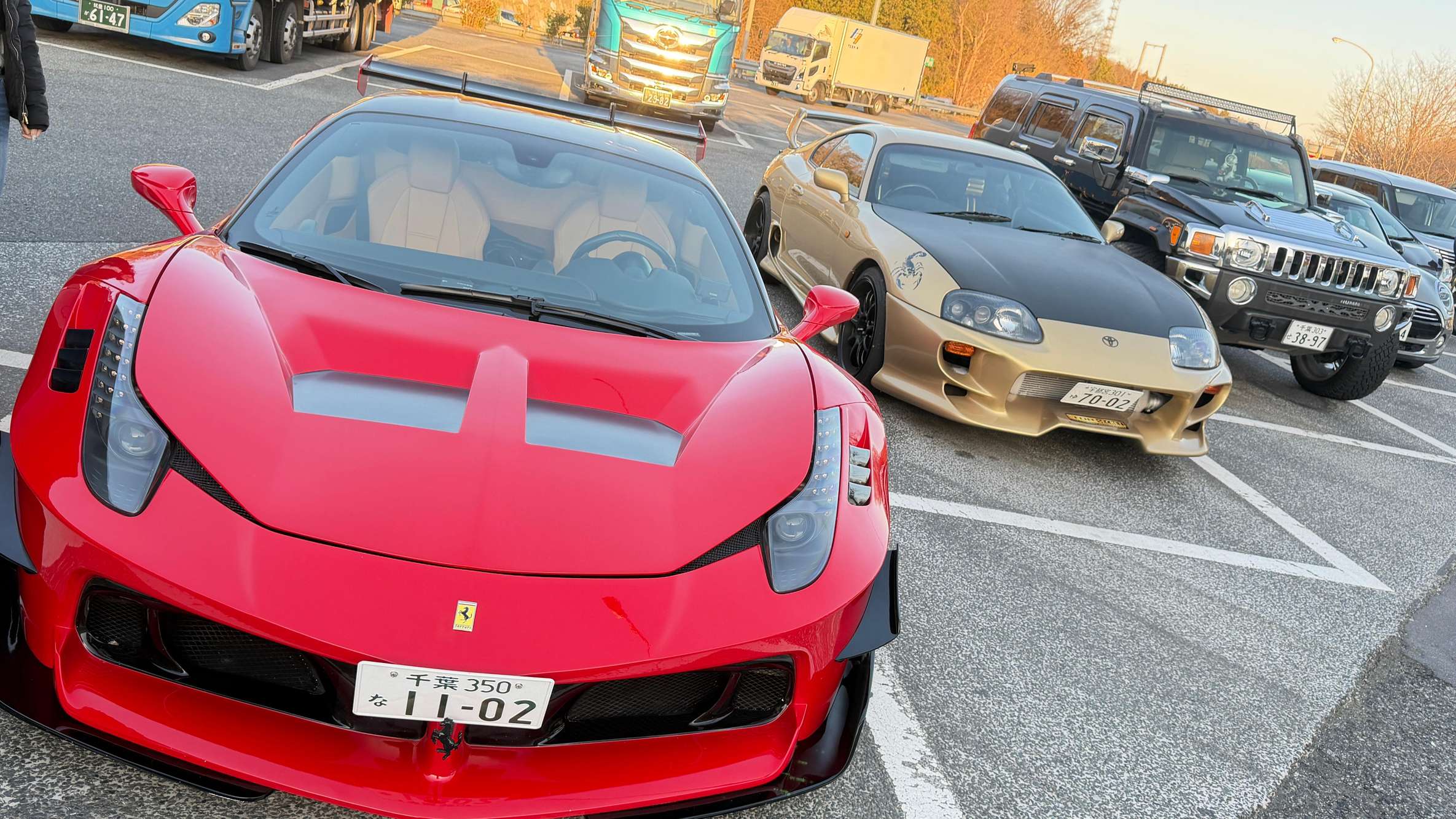
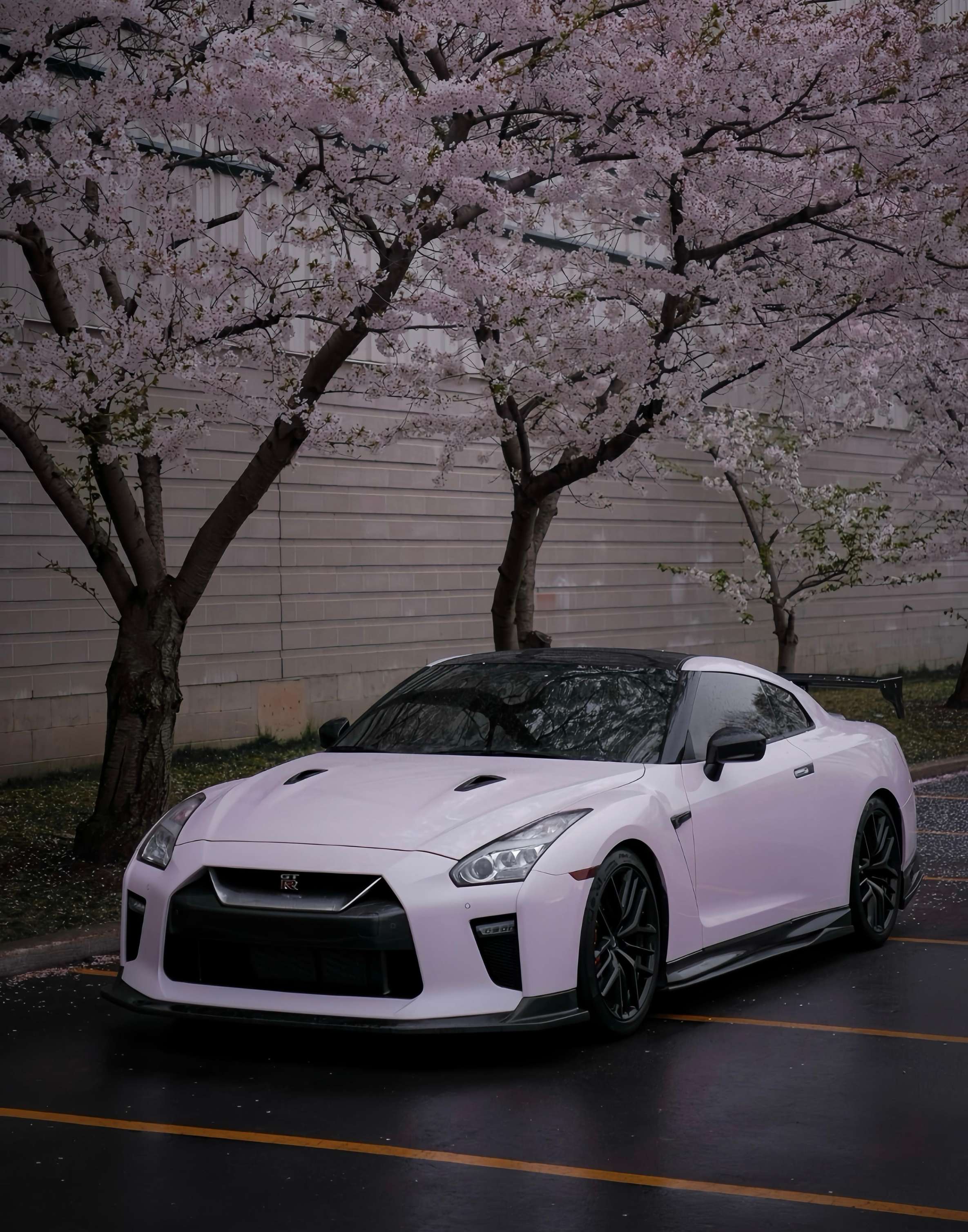
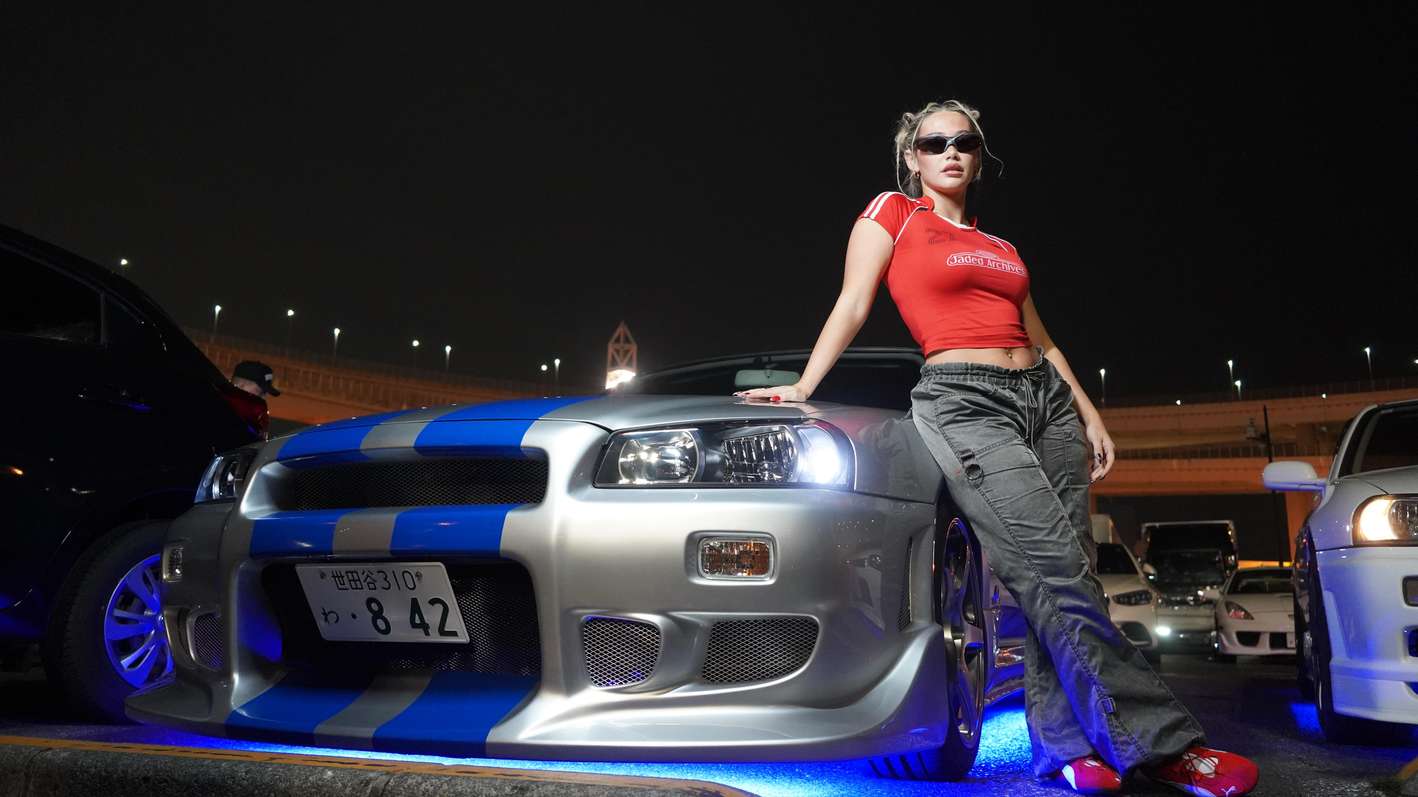
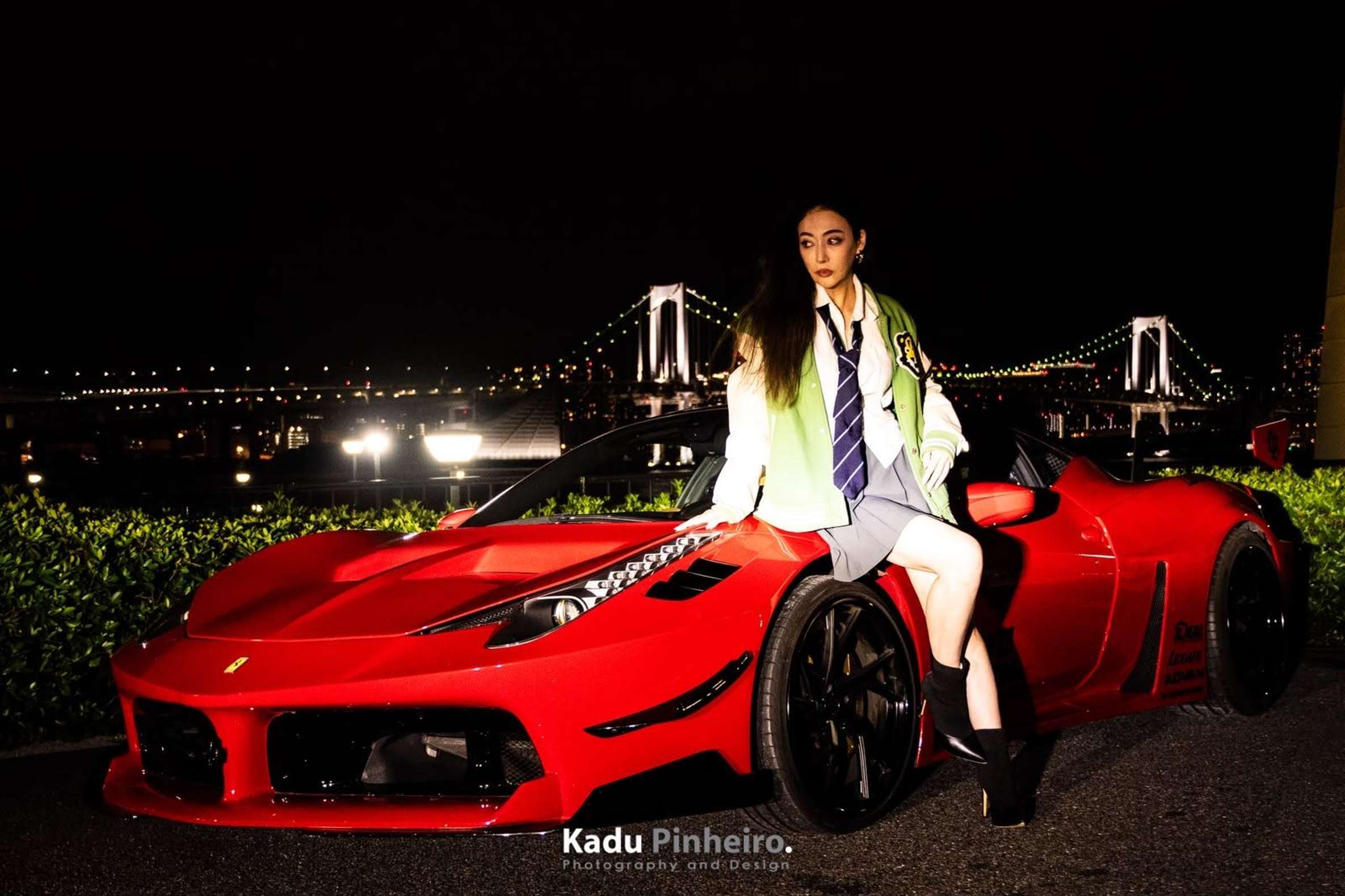
Fast and Furious Tokyo Drift Experience in Tokyo Movie Car Cruise to Daikoku PA
Choose a date and book your Fast and Furious Tokyo Drift ride in a modified JDM car. Thousands of JDM fans have rolled into Daikoku PA with us, with Tokyo Drift routes on the Wangan and Rainbow Bridge. Every tour runs with a pro driver, so no permit is needed.
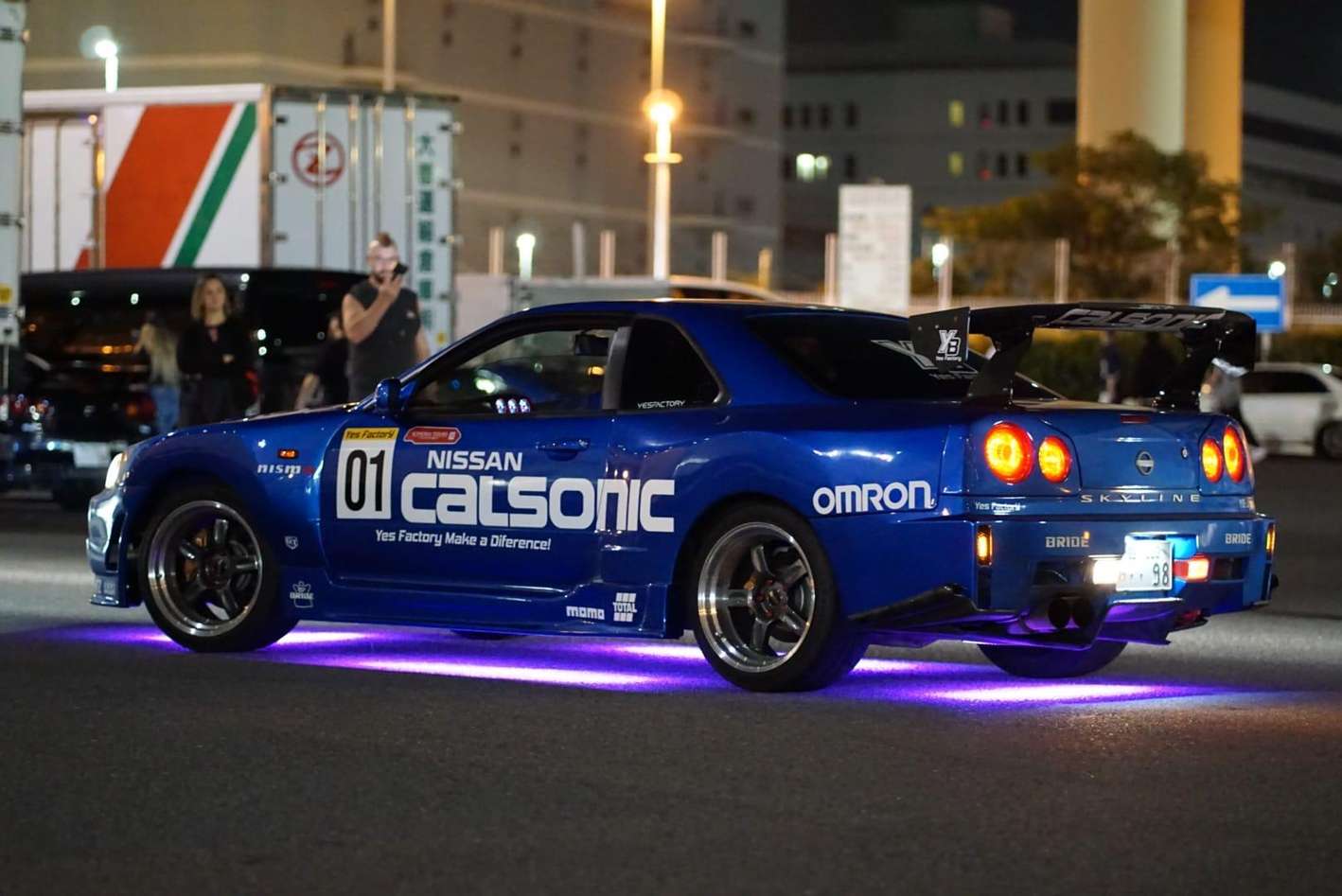
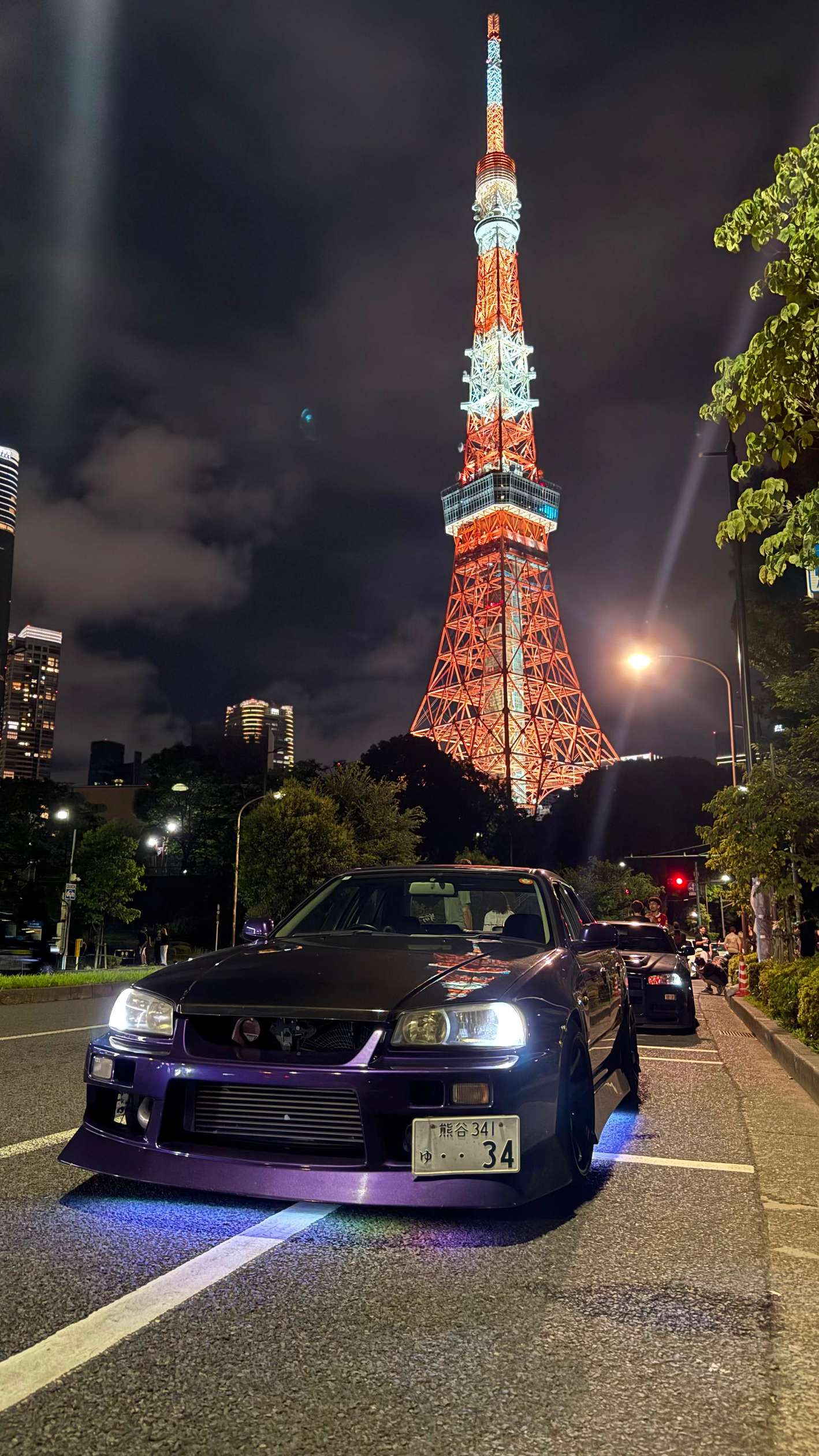
"A dream come true! Our driver Lelis had a purple-pinkish Nissan Skyline R34. Amazing experience, everyone loved it. Best thing I've done in Japan by far, can't recommend enough."
4.8★average rating9,920traveler reviews100%free cancellation62countries travelers came from
Fast and Furious Tokyo Drift tours - which ride books first?
Every ride here puts you in the passenger seat of a modified Japanese sports car with a local driver at the wheel, so no licence is needed. The choice comes down to the shape of the night: a short three-hour run straight to Daikoku PA, a longer cruise with photo stops at Tokyo Tower and Shibuya, or a full convoy of cars.
DocumentsPassengers need no driving licence or international permit, but bring a passport or ID card, since some tours check identification.
BookingPopular tours sell out their small fleets, and one operator's daily capacity reaches 150 customers, so book a day or two ahead in peak season.
DriftingStreet drifting on Tokyo expressways is illegal, so these tours cruise the highways and park at the meets; real drifting happens only on closed circuits.
Police closuresWeekend meets at Daikoku PA sometimes close early between 7:30 pm and 9:15 pm, when drivers move on to Umihotaru or Tatsumi.
WeatherRain lowers turnout because owners leave show cars at home, so a wet night brings fewer cars; check the forecast and keep WhatsApp notifications on.
CarsYou usually cannot guarantee one exact model; tell the crew which car you like and most will try to match it, and private plans can lock in a specific ride.
SeatingRear seats in coupes are tight bucket seats with little legroom, and some tours set weight and height limits, so tall or heavier riders should sit up front.
AgeSeveral tours exclude young children, and minors ride with a parent or guardian; one convoy has a minimum age of 18 unless accompanied.
ConductNo smoking, eating or drinking in the cars, never touch or sit on the vehicles without the owner's permission, and follow staff instructions immediately.
Getting homeEvery chauffeured ride ends with a drop-off at your hotel or a central Tokyo spot, so there is no late-night hunt for a taxi.
Which fast and furious drift experience fits Tokyo?
Answer a few quick questions and the finder lines up the movie car ride that matches your night.
1Who's coming?
2What's your budget?
3What kind of trip?
Your best match
match
Tokyo: Fast & Furious Tokyo Drift III Experience★ 4.8 (6,369) · 3 - 4 hours · Classic passenger cruise
Made for solo travelers. 96% of solo travelers rated it 4 or 5 stars.
Booked 31 times yesterday
Rides from a fleet of 40 sports cars, with drop-off anywhere in central Tokyo.
closurePolice often close the Daikoku Parking Area car meet early on Friday and Saturday nights between about 7:30 pm and 9:15 pm because of noise and overcrowding.
Book a tour with a driver who reroutes the group to a nearby backup meet such as Umihotaru Parking Area when Daikoku shuts, and avoid revving engines or loud behavior at the meet so the lot stays open.
Fast and furious drift experiences in Tokyo - pick your ride
cheapest
3 hours·English, Portuguese
5.0(92)
JDM Tour to Daikoku PA Fast and Furious Tokyo Drift Experience
Starts lower than every other drift ride here, and Monday-to-Thursday hotel drop-off across Tokyo's 23 wards is included.
Visit the legendary Daikoku Parking AreaRide in a real sports car/JDM
Fast and Furious Tokyo Drift Experience in Tokyo - what you see and get
6 stopsabout 2 h12 places
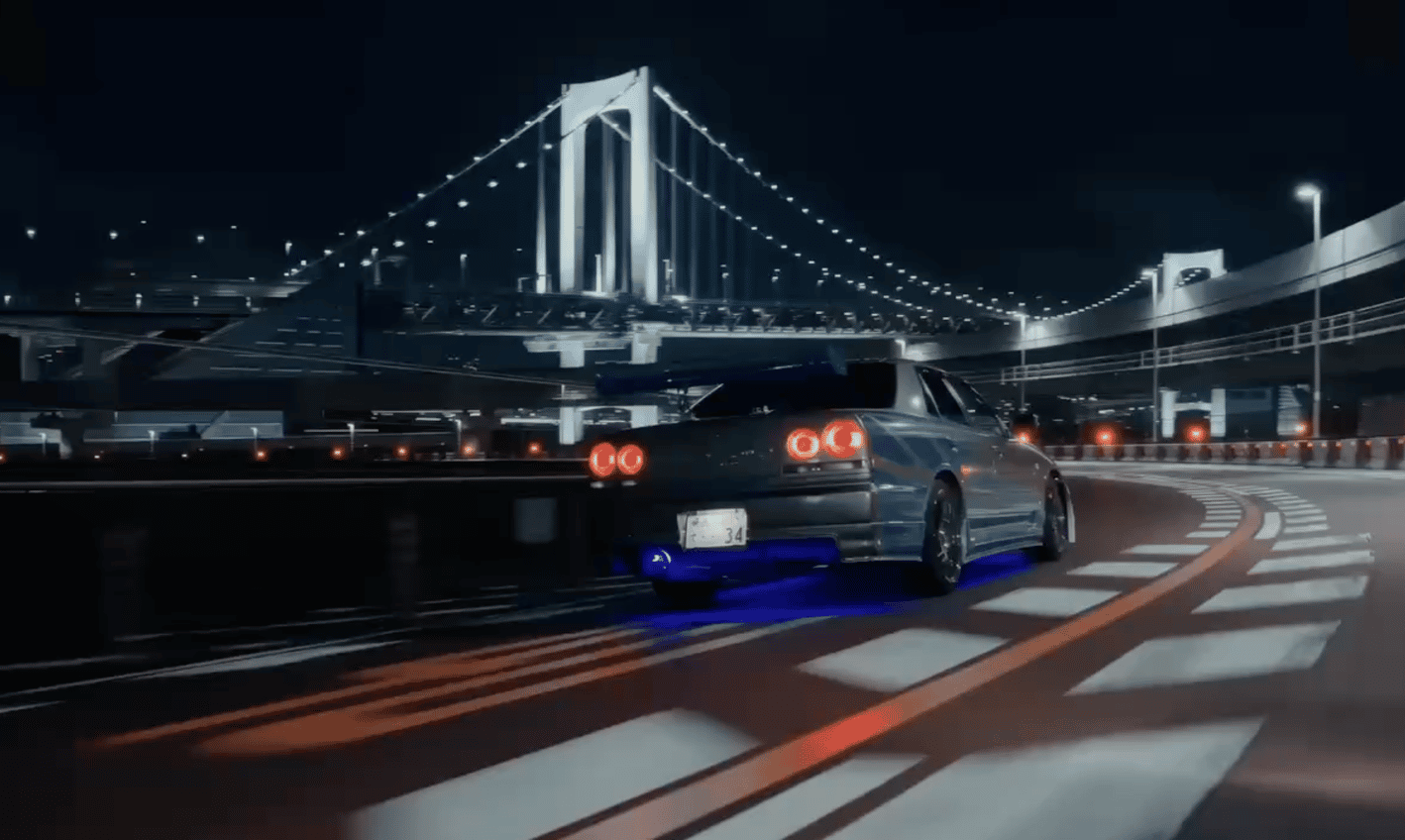
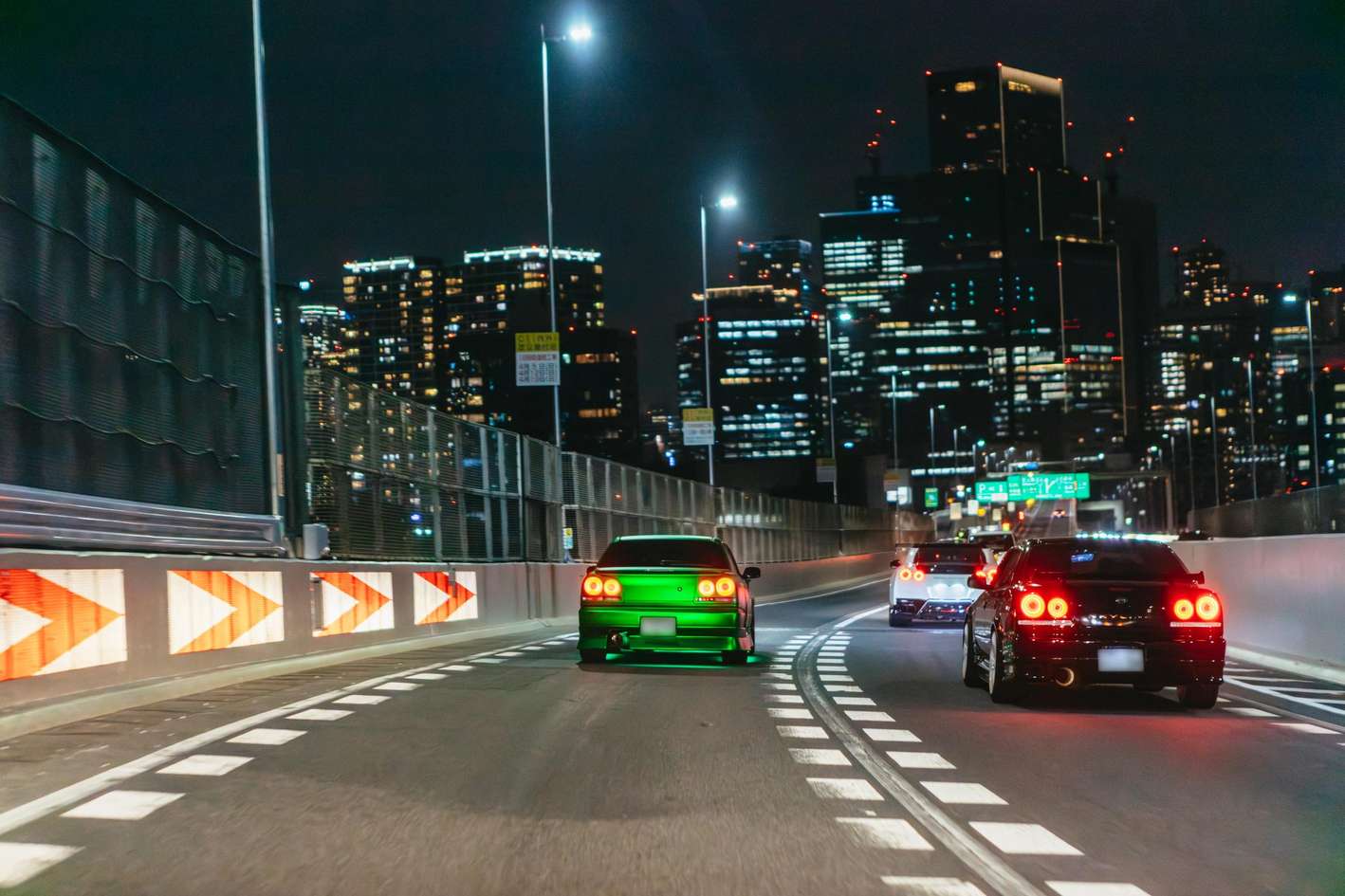
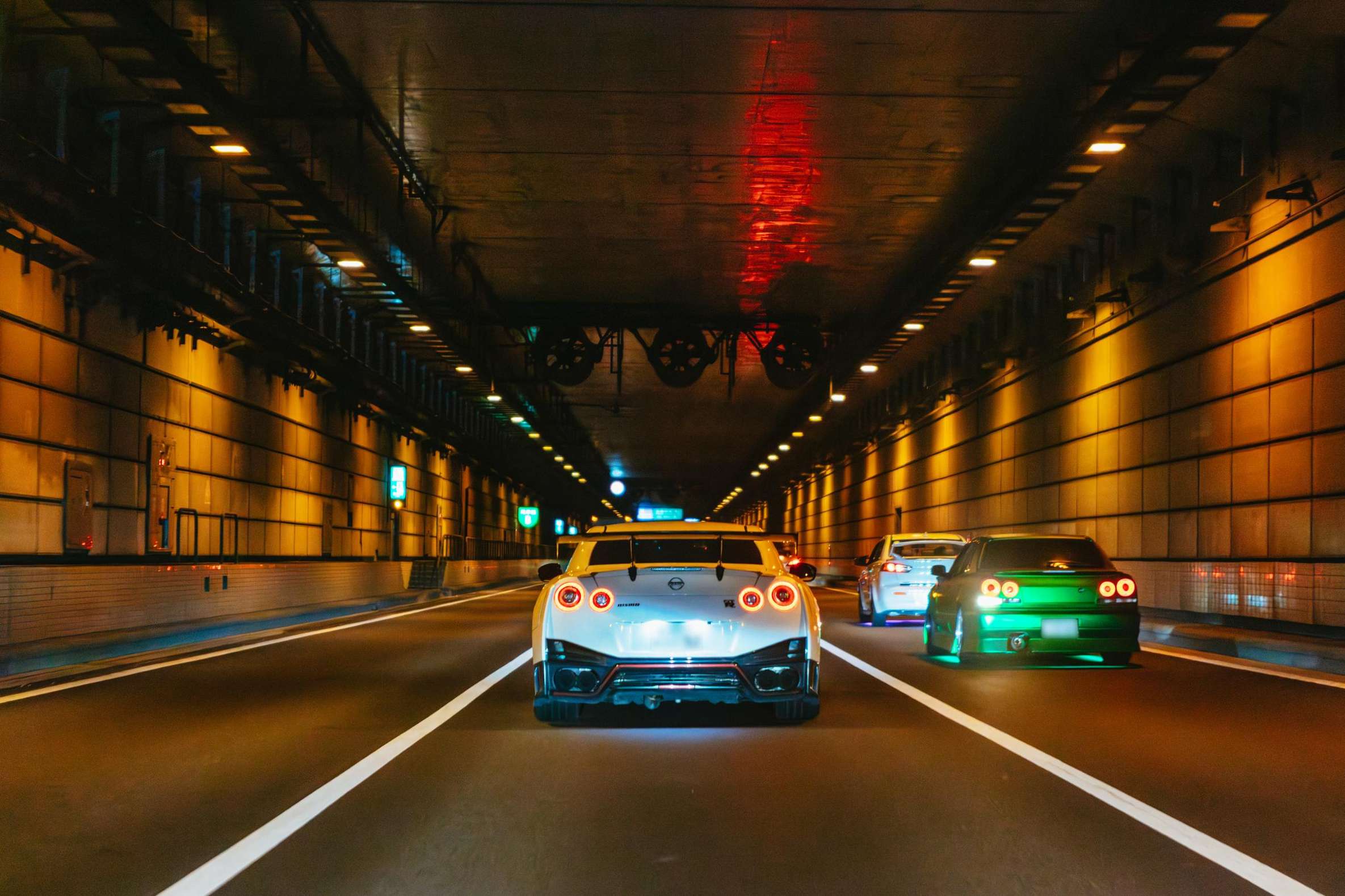
Rainbow Bridge first: the cars roll over it with Tokyo Bay lit up below, then the Wangan Route carries you out toward Daikoku.
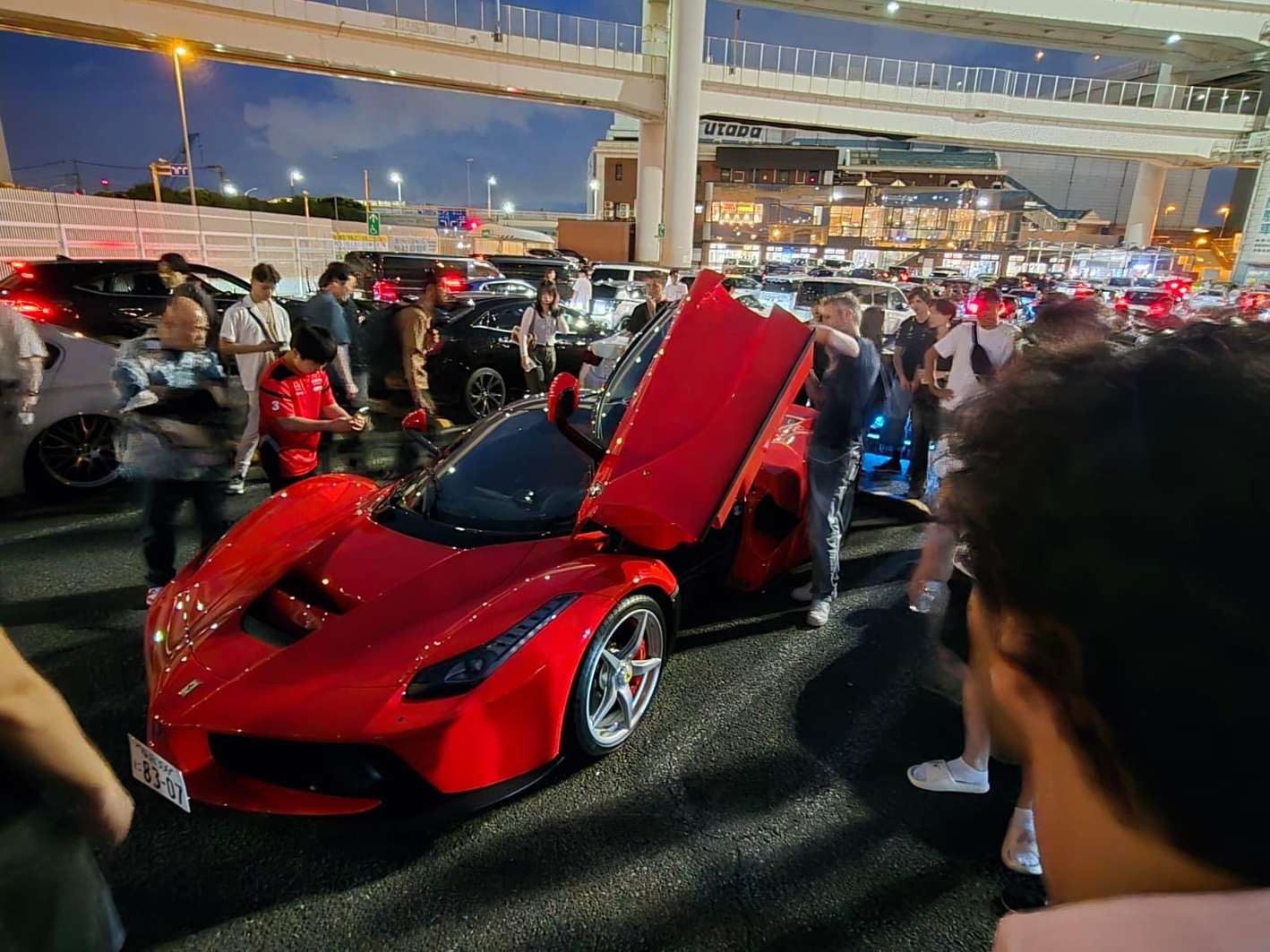
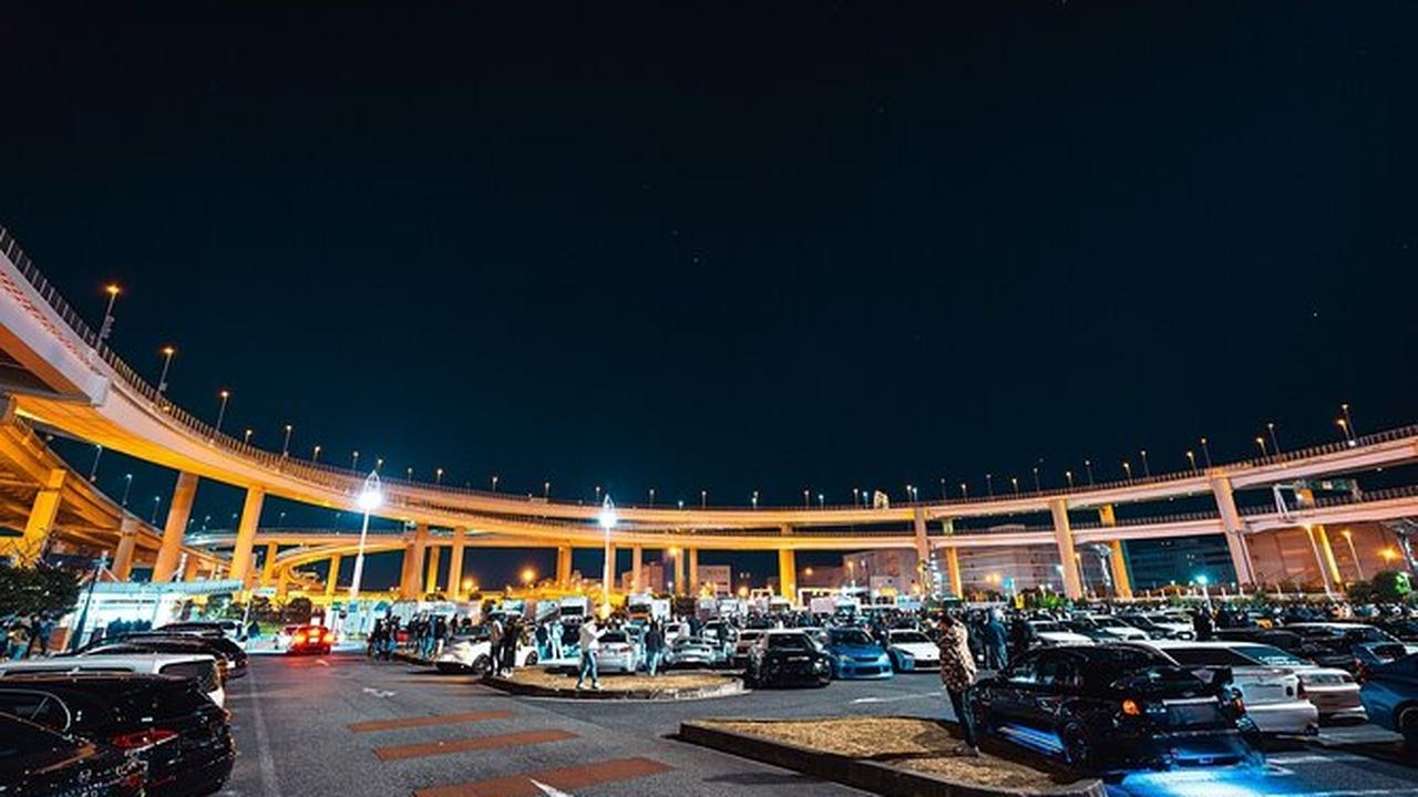
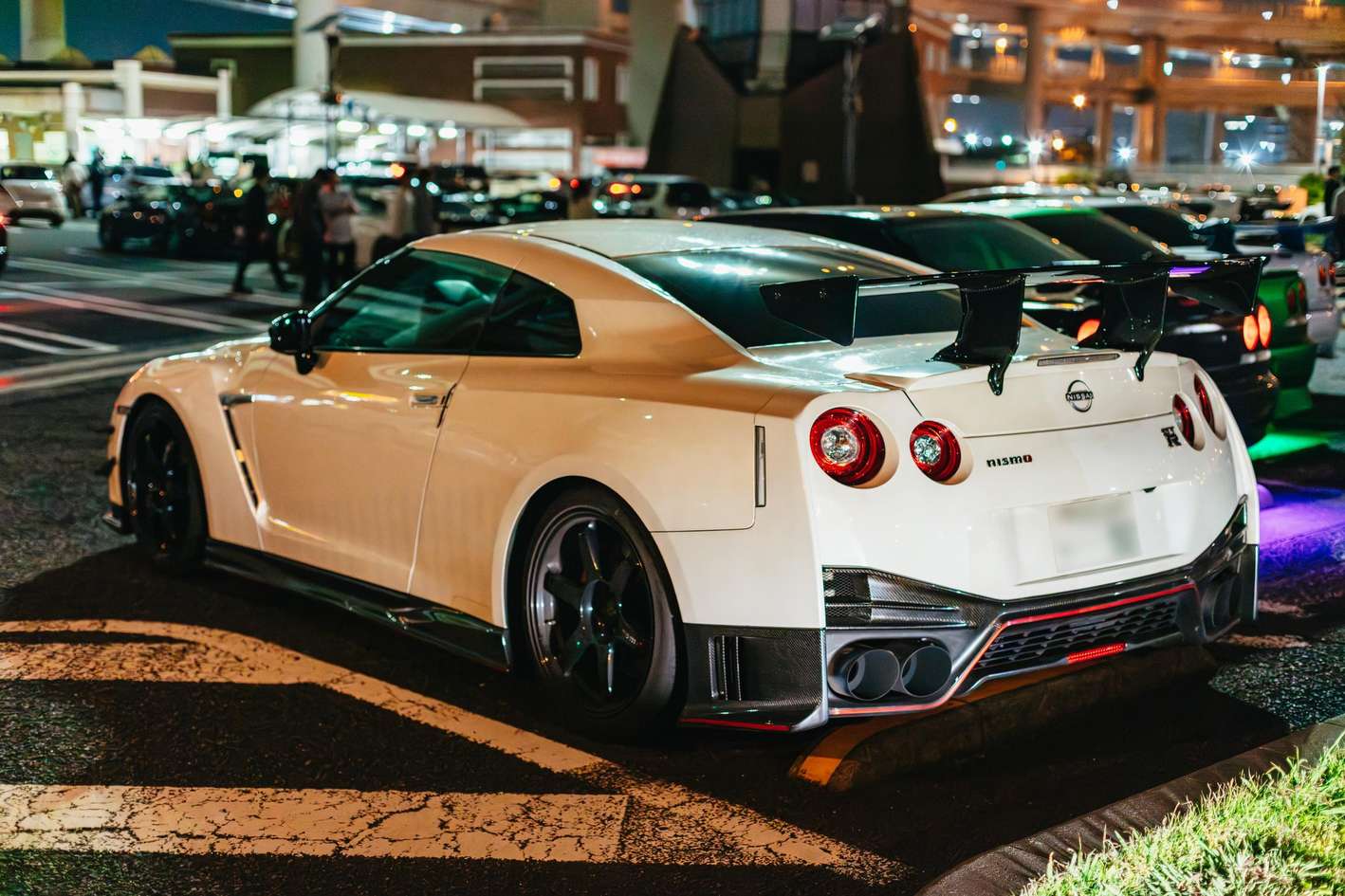
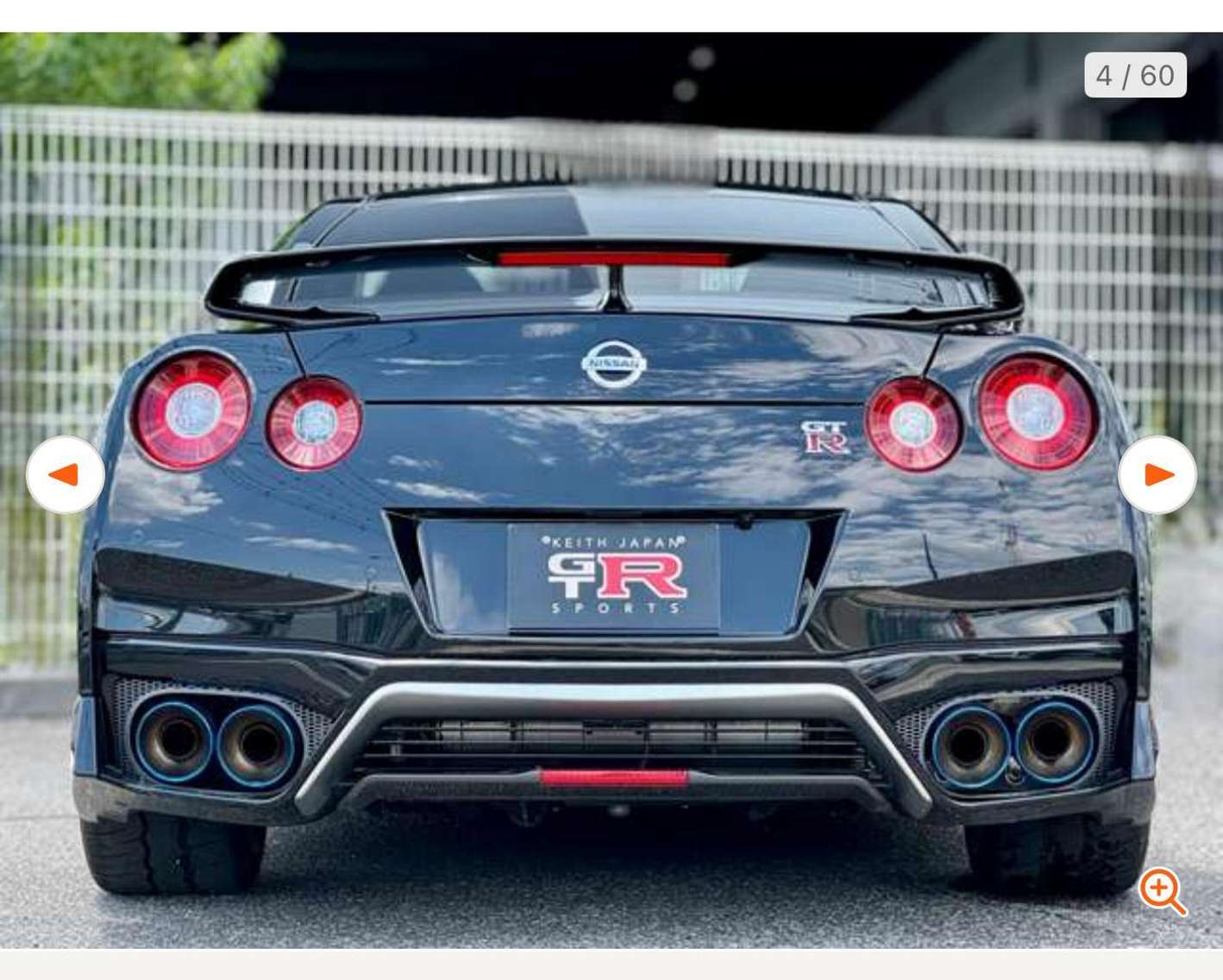
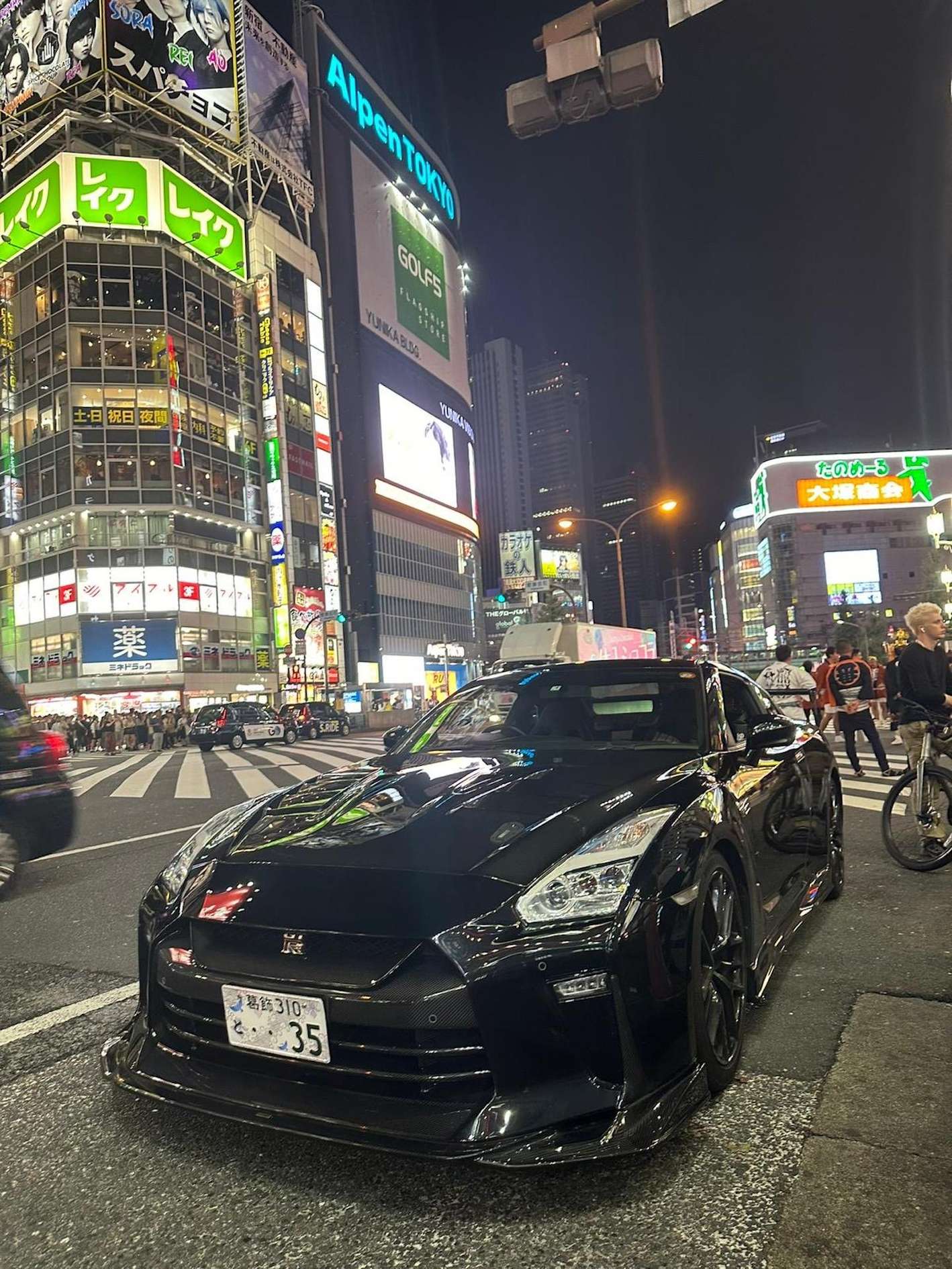
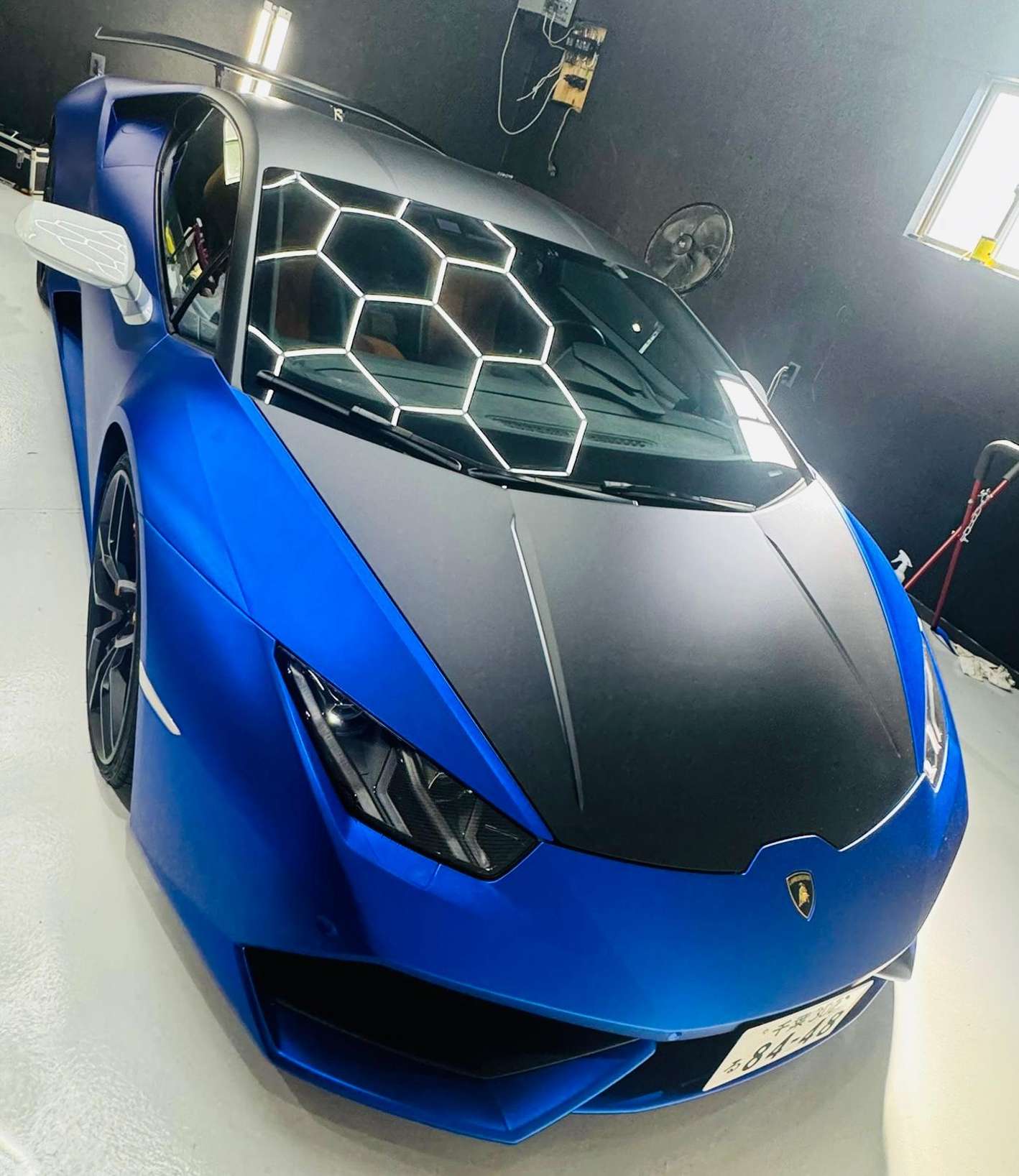
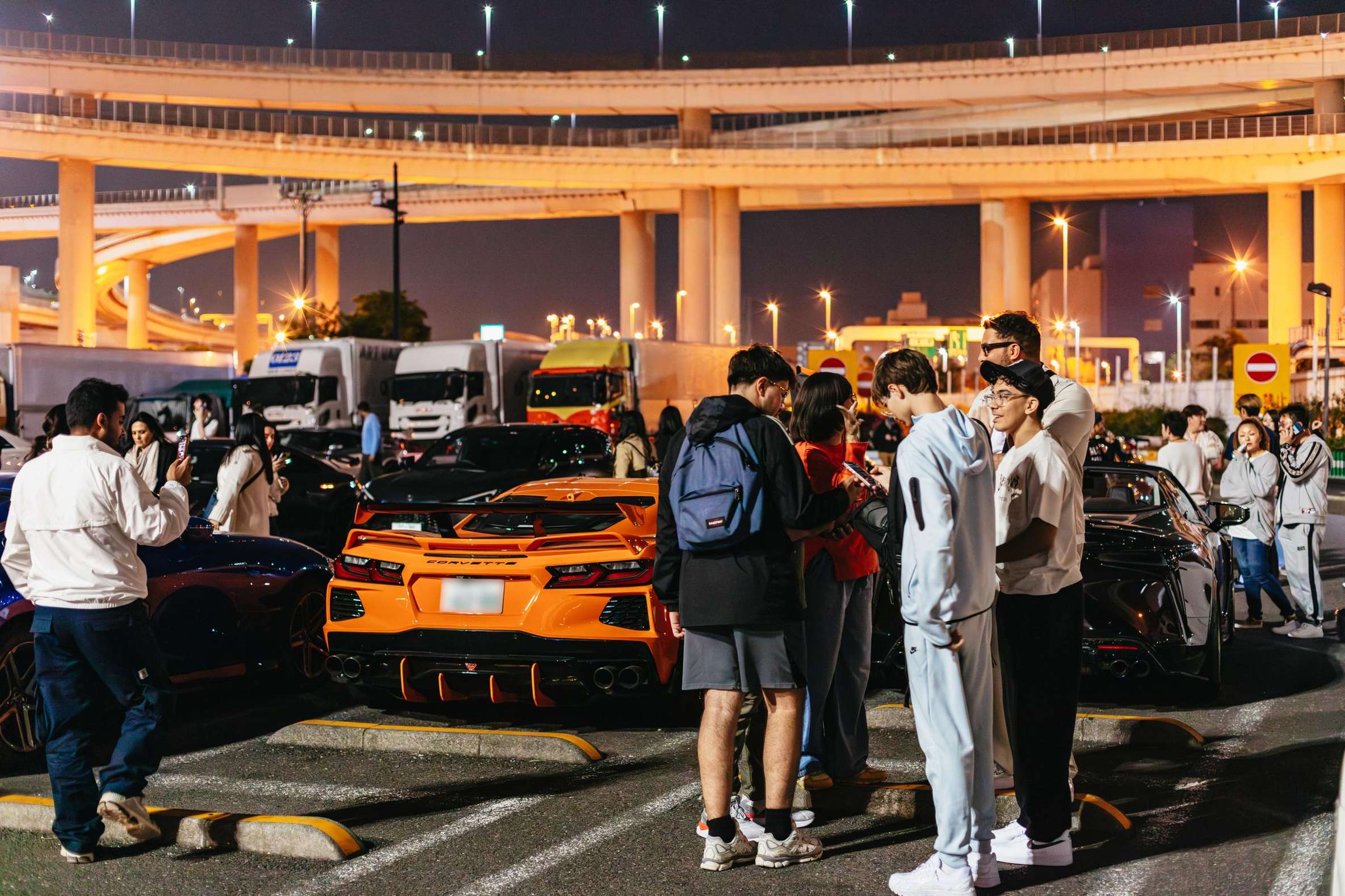
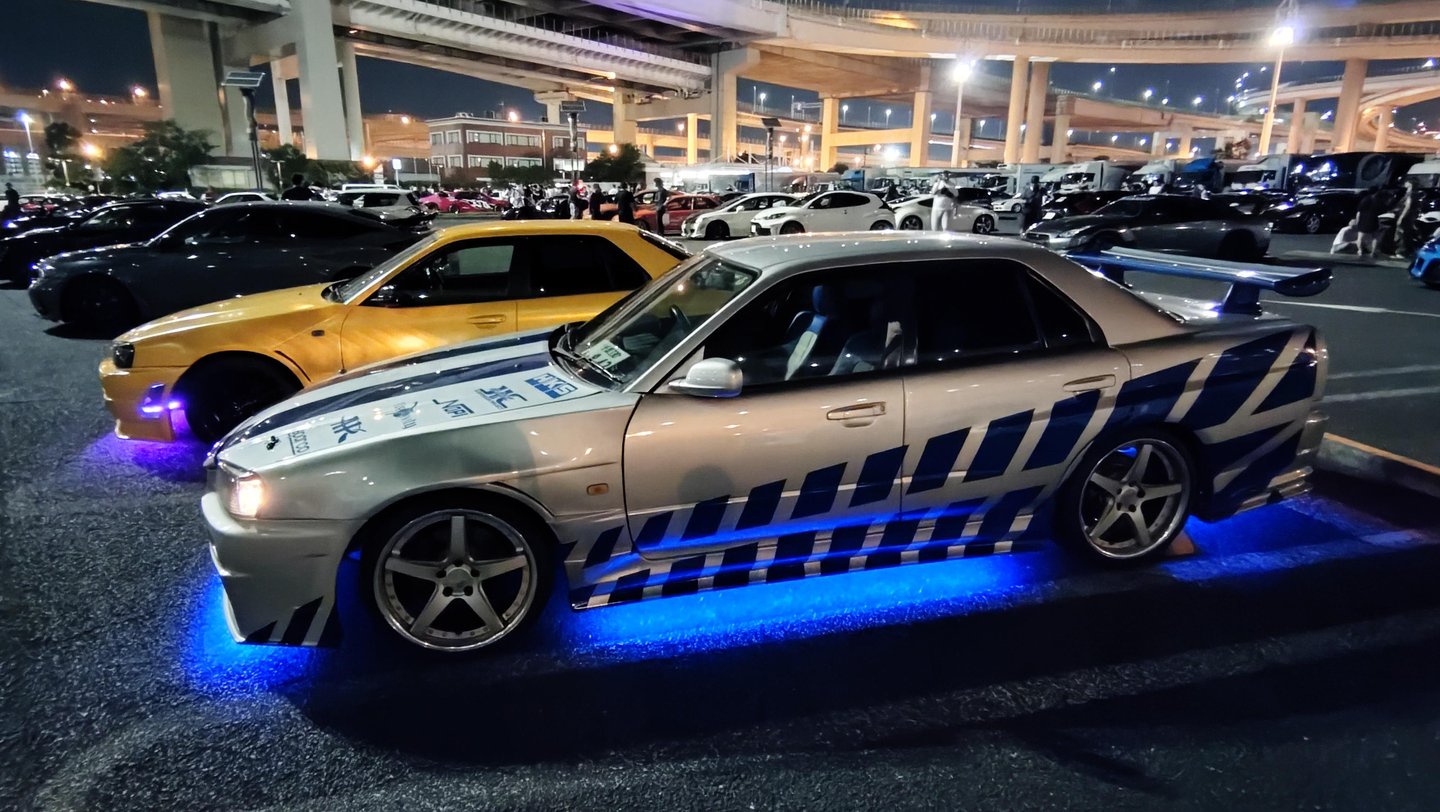
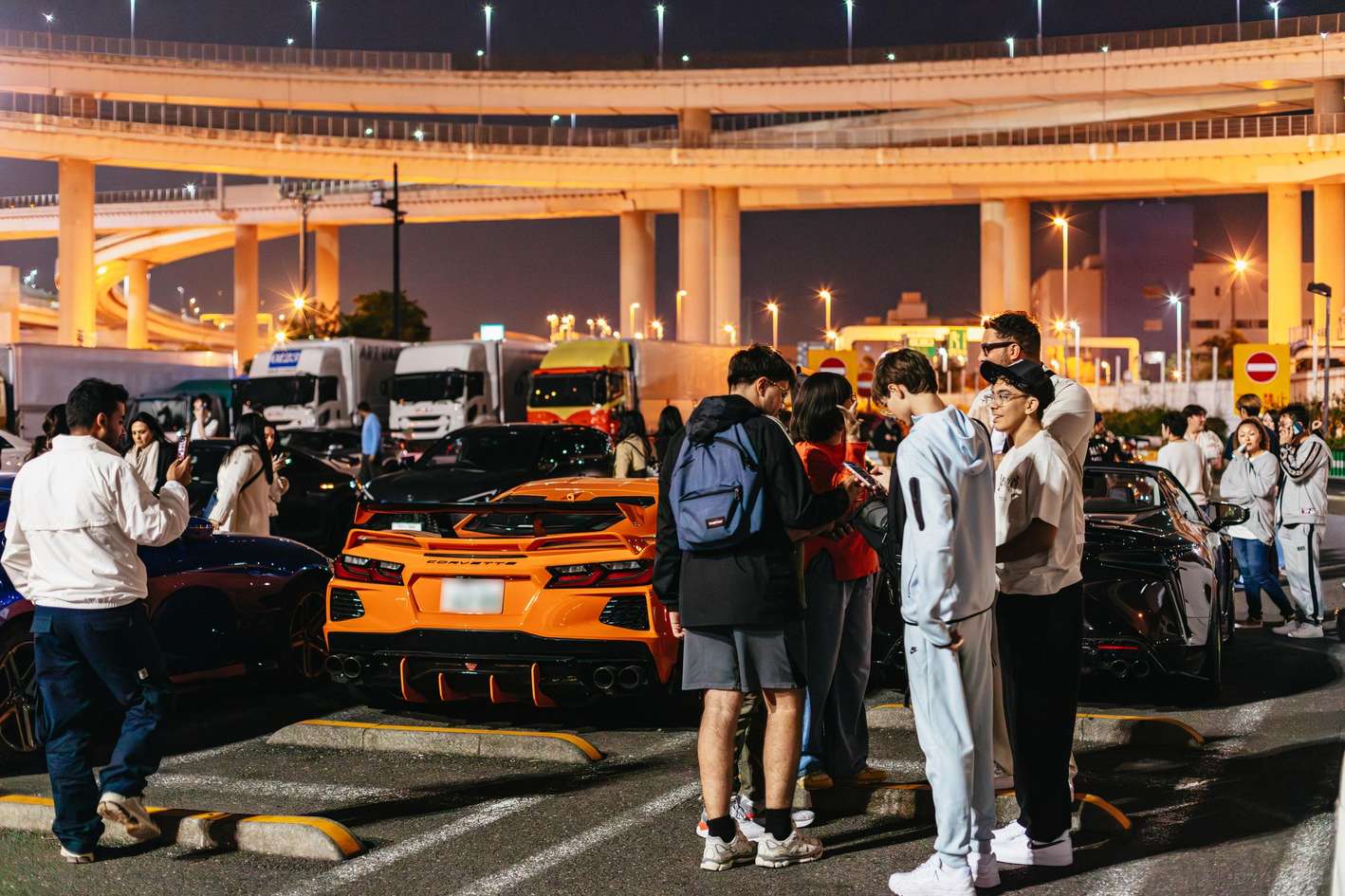
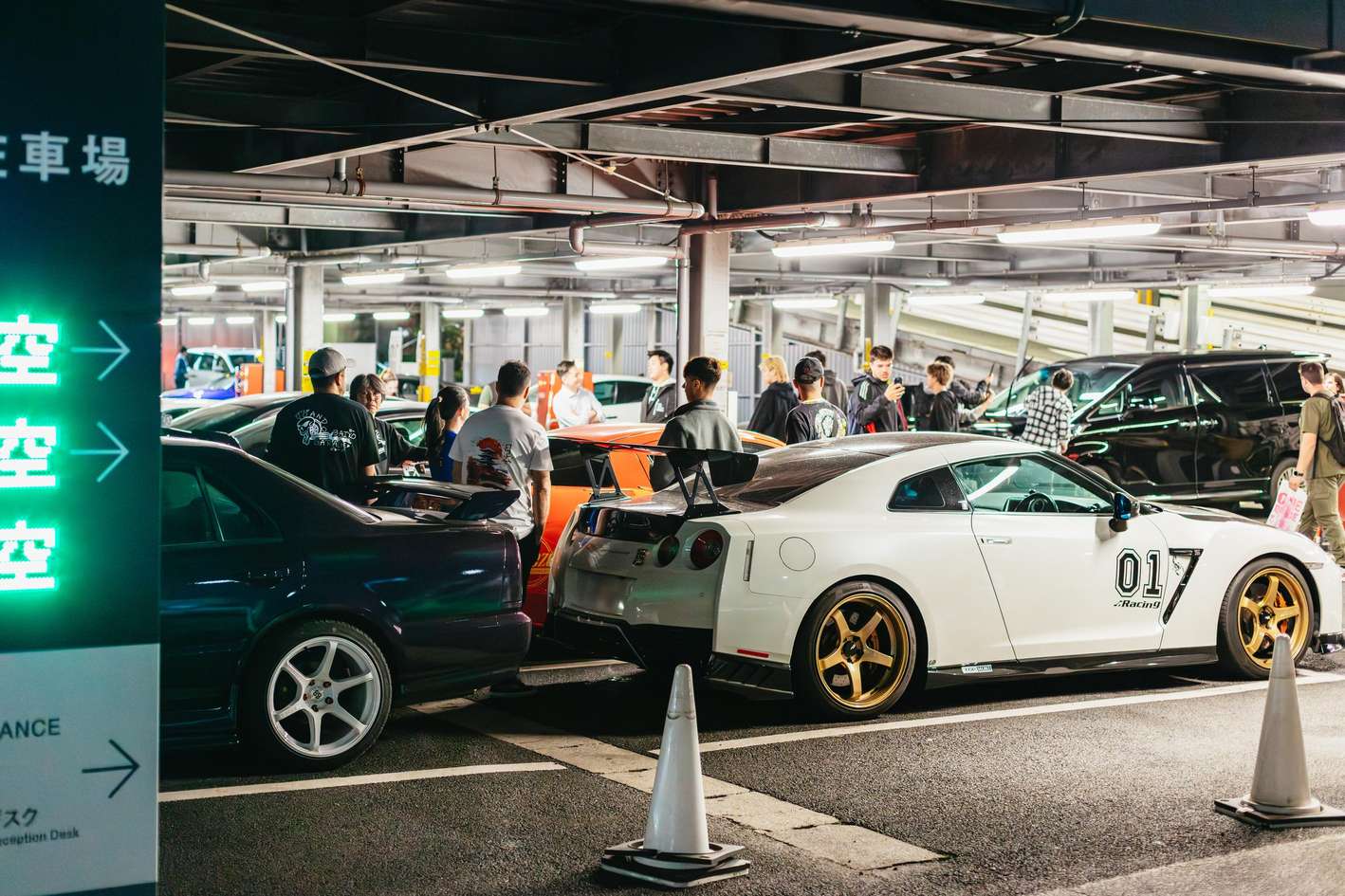
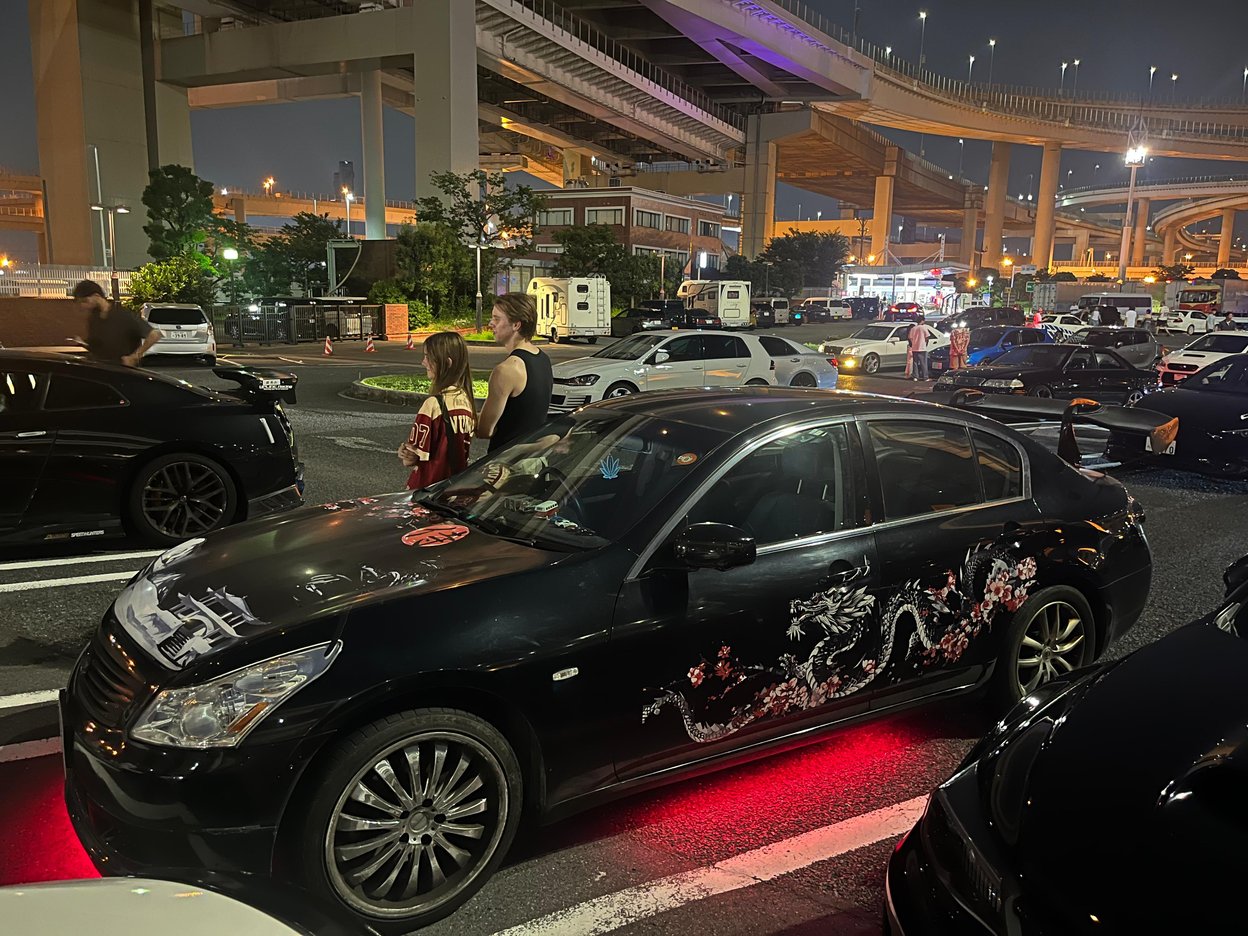
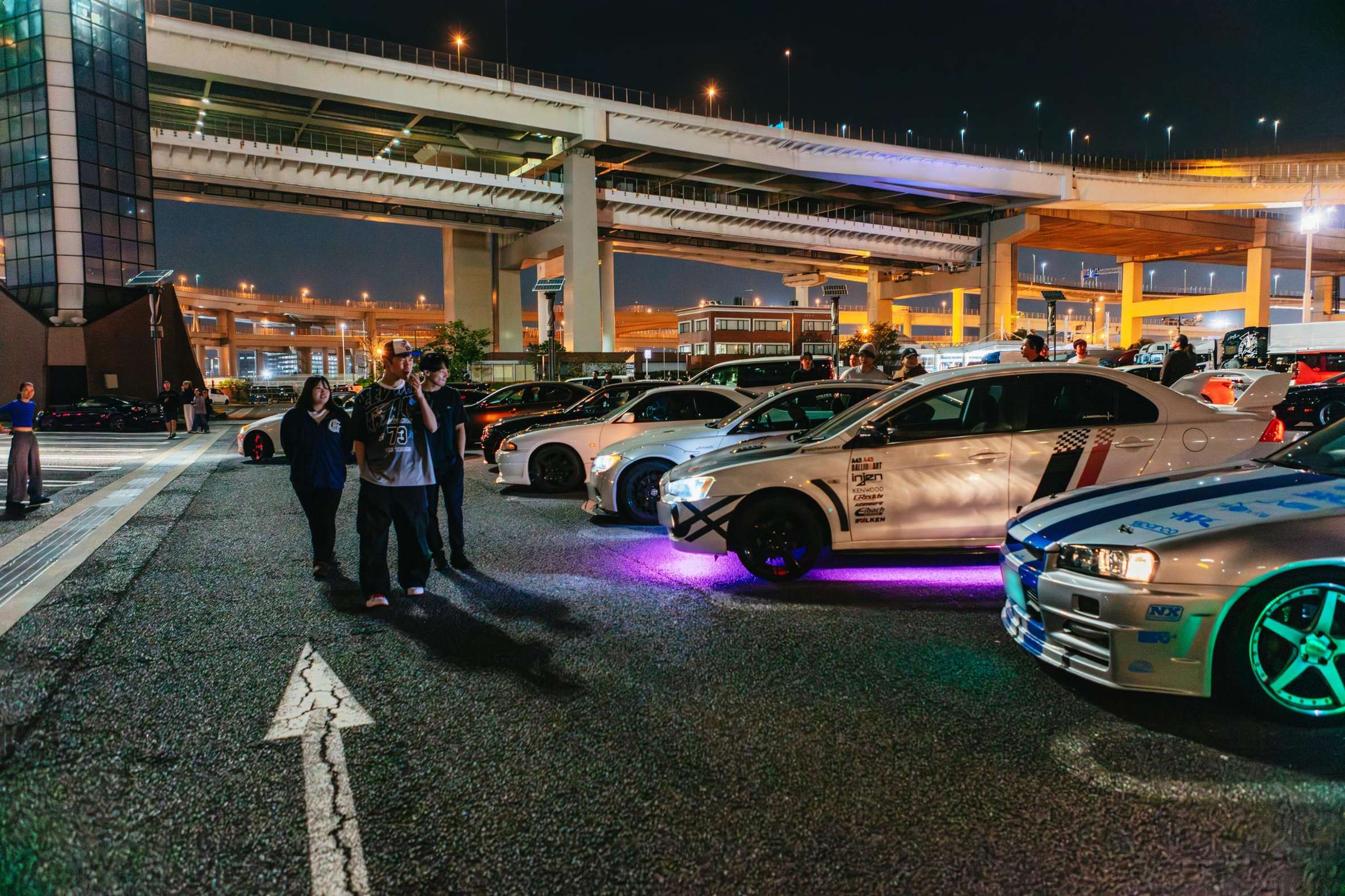
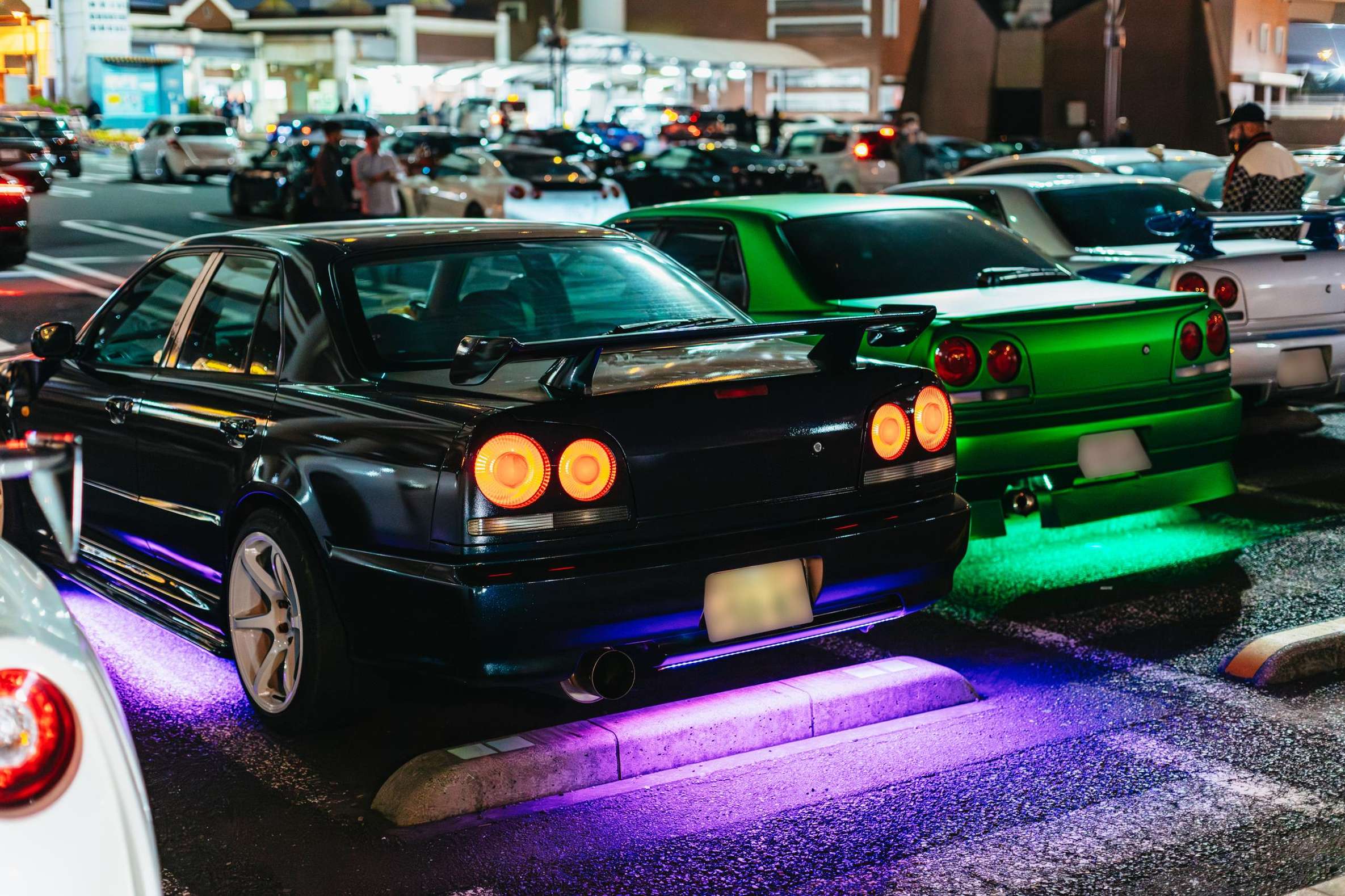
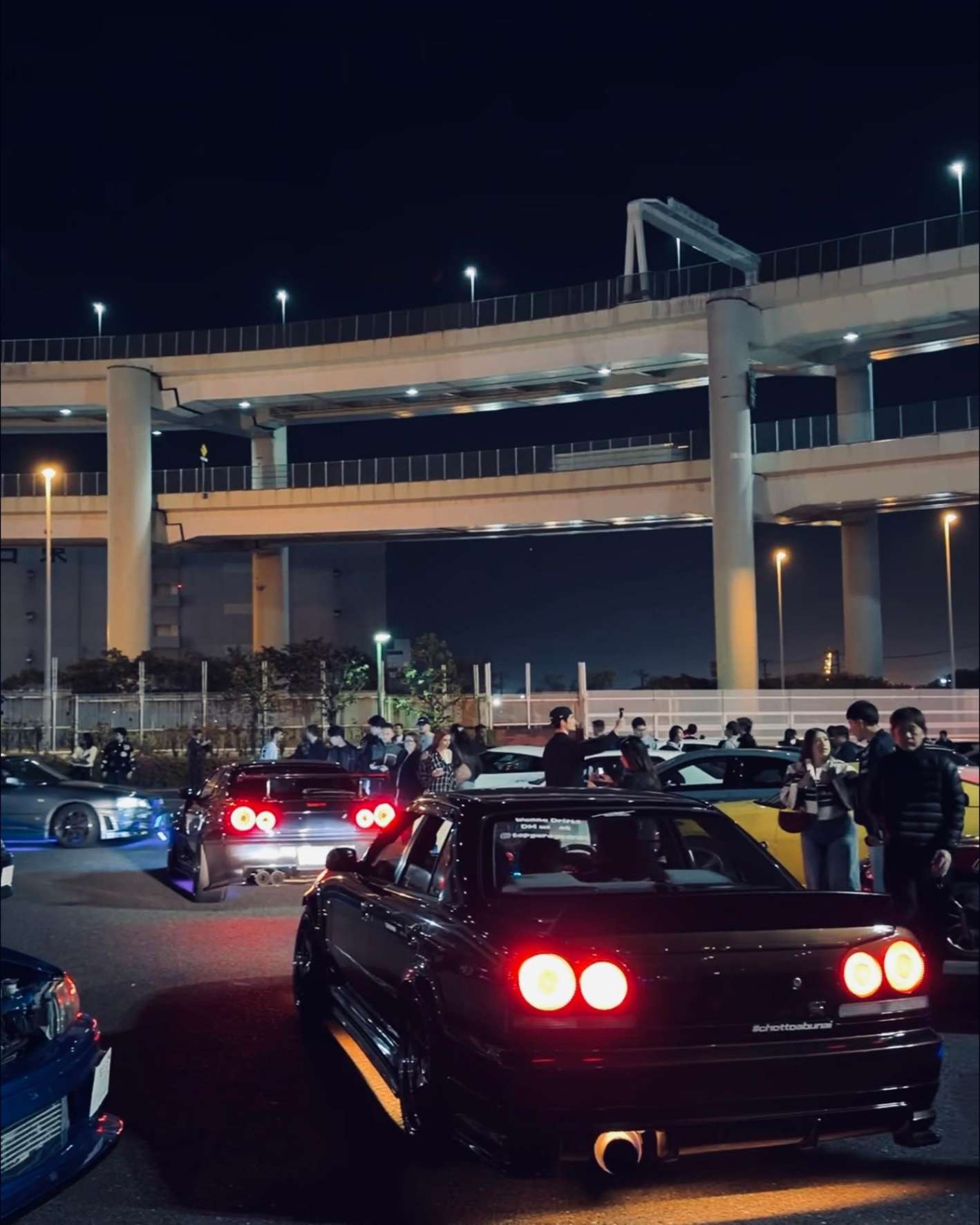
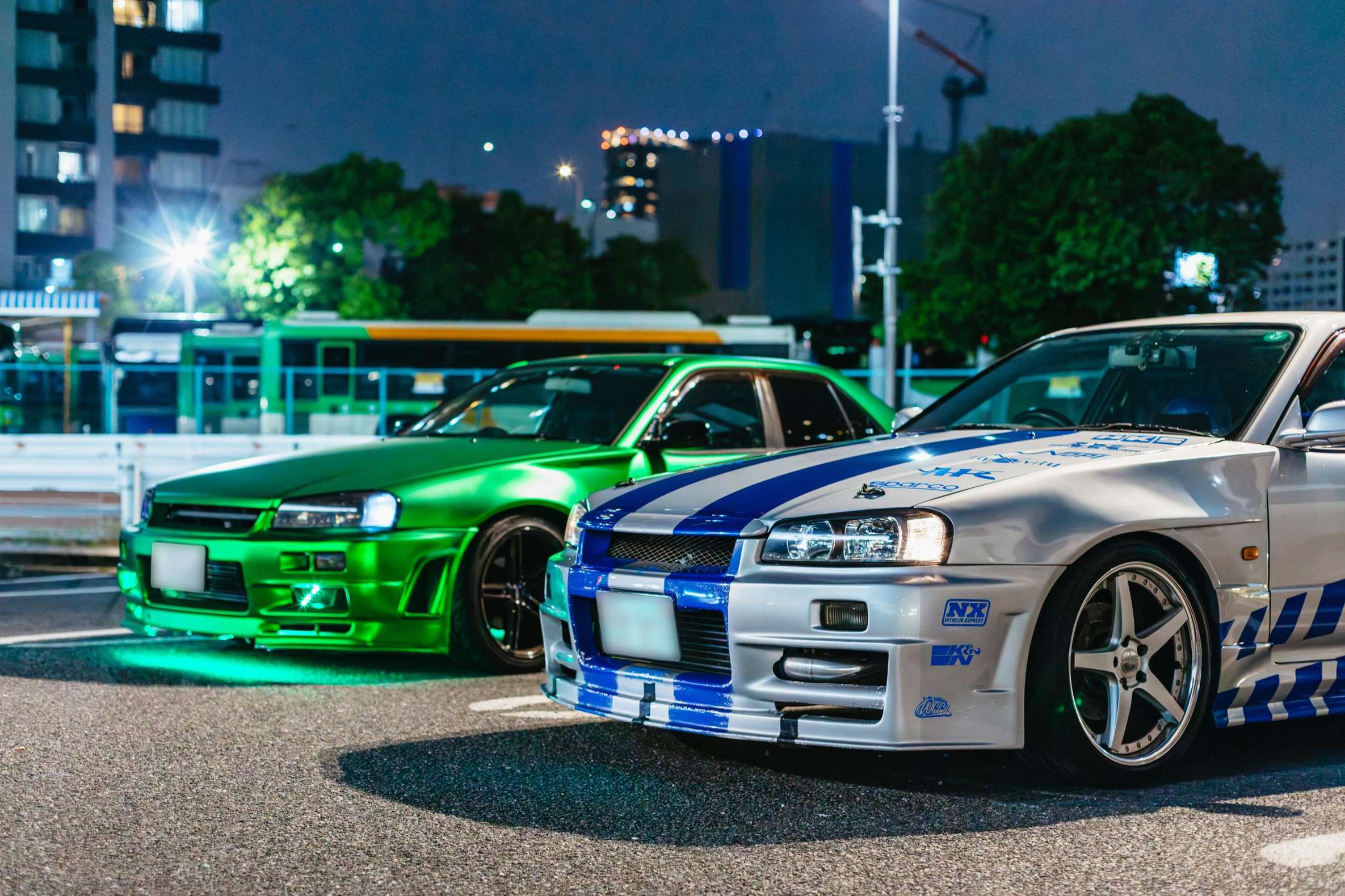
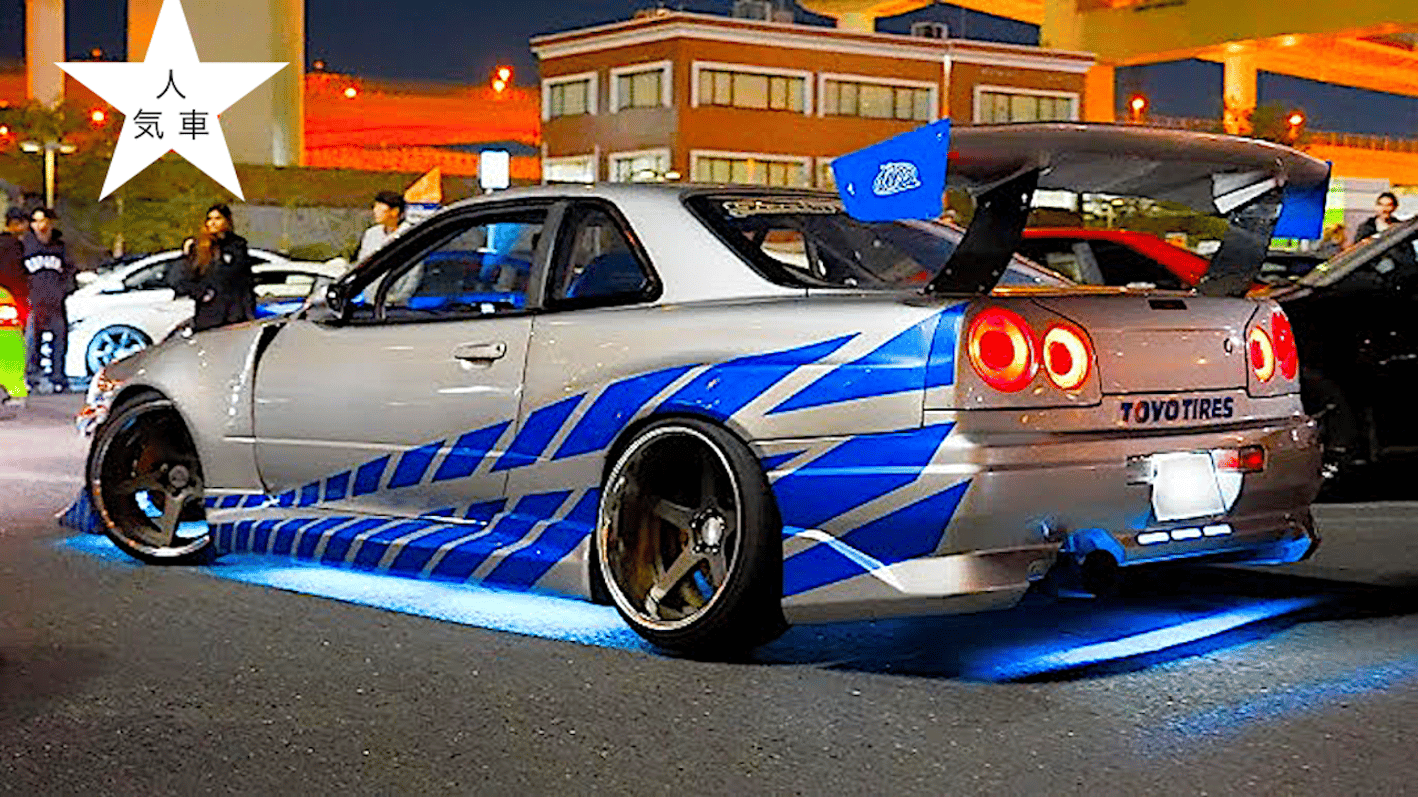
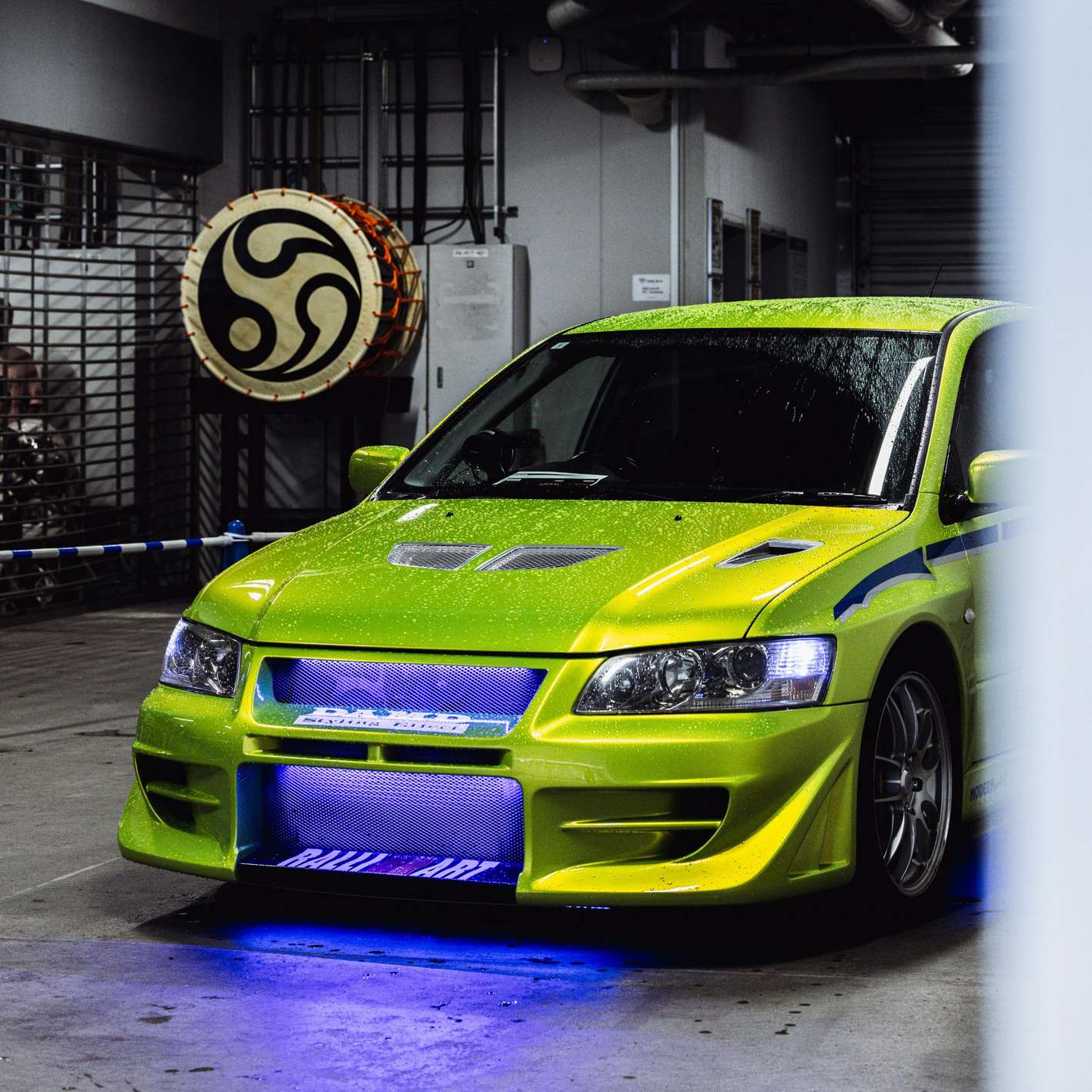
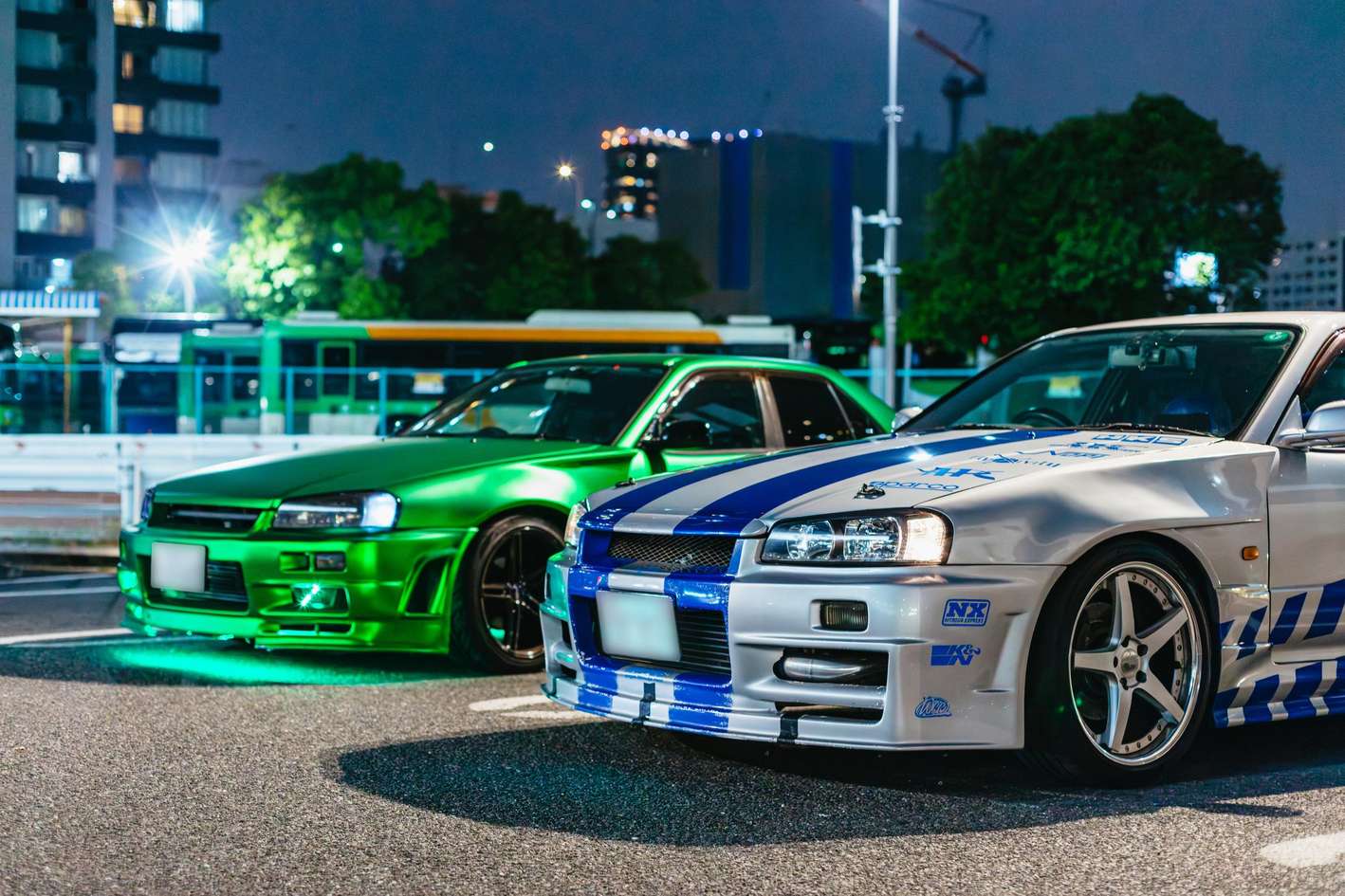
Waiting at the parking area are hundreds of modified Skylines, Supras and GT-Rs, parked and free to walk among. Tours last three to four hours and end with a drop-off at your hotel.
On the way back, most itineraries add a half hour of shopping at A-PIT Autobacs, a Tokyo Tower photo stop and a cruise through Shibuya. Fuel, tolls and a driver who handles the highway are all included, so you only need a passport or ID card and comfortable shoes.
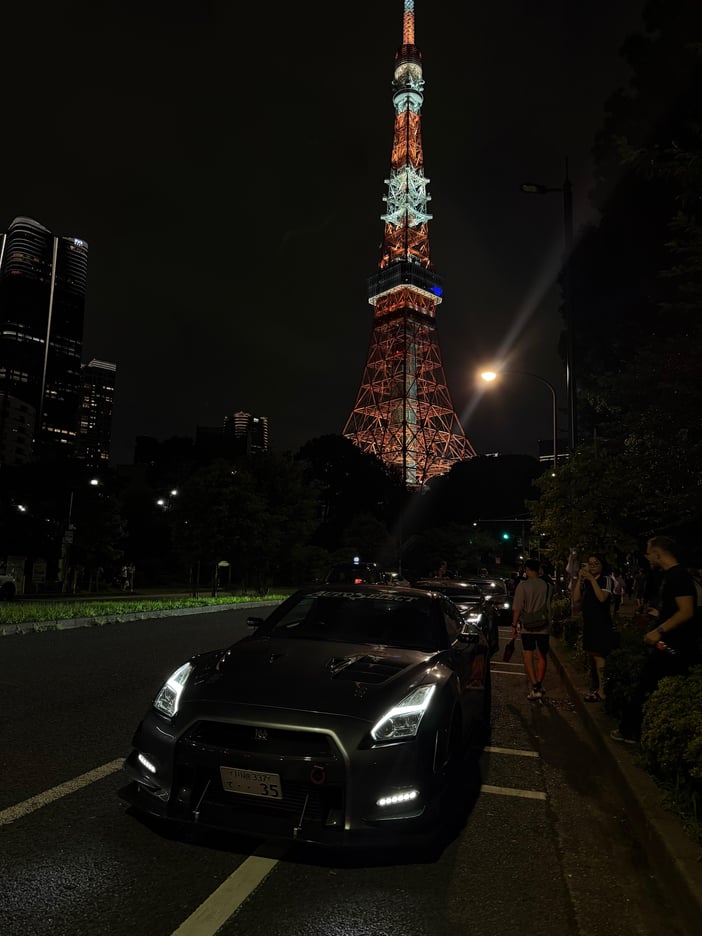
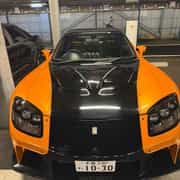
Meeting point3 places, depending on your optionDrop-off back at the starting cafe in Shibuya.Street View2autobacs Shinonome· 30 minA-PIT Autobacs is the largest car-supply shop in Tokyo, spread over three floors of tuning parts, wheels and gear. You get 30 minutes of free time to browse and shop.3Daikoku Parking Area· 60 minJapan's most famous JDM car meet, reached down a long spiral ramp off the expressway. Entry is free and you spend about an hour walking among modified Skylines, GT-Rs and tuner builds.4Tokyo Tower· 20 minA 20-minute photo stop at the illuminated tower, where guides help capture souvenir shots of you with the car.5Shibuya City· 10 minThe convoy cruises past Shibuya Crossing, the intersection where Han drifted his Veilside RX-7 in Tokyo Drift.From this tourDrop-off4 places, depending on your optionA drop-off point in central Shibuya, a short walk from the Scramble Crossing.Street View
Where the other tours go
Tokyo Drift Ⅲ: Fast·Furious Daikoku PA Modified JDM Car Ride
Drop-off at accommodation inside Tokyo central area.Exclusive selection of JDM sports carsProfessional drivers/guides available in English, Portuguese, Japanese, SpanishFuel and toll feesStops at iconic sightseeing spots
Not included
Personal expensesWe cannot guarantee that your driver/guide will be fluent in a foreign language such as German, Italian, French, or ArabicEach driver only takes three people, and there are many daily customers. Some Japanese speak basic English for the tour, not for a long conversation where personal topics or curiosities about random subjects come up
Comparing Fast and Furious Tokyo Drift experiences - which ride suits your night
Green marks the lowest price. Prices per person.
Tour
Price
Duration
Pickup
Languages
Best for
Our pick
Tokyo: Fast & Furious Tokyo Drift III Experience
4.8★ (6,369)
from $135per person
3 - 4 hours
no
English, Portuguese, Spanish
first-timers who want the full night, hotel drop-off and a huge fleet
The driver made the night, praising guides who drove safely, shared car knowledge and took photos.
Best surprise
Many travelers who knew little about cars say the night drive and city views won them over anyway.
Most common wish
Several wished they had more time at the Daikoku car meet before the night ended.
How to book a Fast and Furious Tokyo Drift Experience
01
Pick your date
Choose an evening slot three to four hours long, since most cruises run from central Tokyo pickup to drop-off in that window. Late slots from around 8 pm onward get the clearest expressway run.
Pro tipFriday and Saturday nights bring the biggest meets, but police sometimes close Daikoku PA early, so keep your plans flexible
RecommendedBook for a weekday if you want the same cars with a quieter lot and far less chance of an early closure
02
Choose the option
On the featured Tokyo Drift tour you pick from four plans: the classic four-hour JDM cars experience, a three-hour Midnight Run without sightseeing stops, a Sunday morning exotics meet, and a daytime drive.
Common mistakeFirst-timers book the midnight option expecting Tokyo Tower and shopping stops, but that plan skips both and focuses purely on the night drive
03
Pay and wait for confirmation
After payment you get a booking confirmation with the meeting details. One operator sends a WhatsApp message before the start time if anything changes, so activate your notifications when you book.
Pro tipYou can cancel up to 24 hours in advance for a full refund, so locking a date early costs you nothing if plans shift
04
Sort the meeting point
Tours with pickup collect you at your hotel or Airbnb in central Tokyo, then drop you back after. Tours without pickup meet at central spots near Shibuya, Akihabara, Tokyo Station, Shinjuku or Harajuku, all reachable by subway.
Common mistakeReaders assume they need an international driving permit, but passengers never do because a professional driver runs the car
ImportantBring your physical passport or ID card to the meeting point, since tours check identification
05
On the day
Wear comfortable shoes and clothes for standing outside at the car meet, and bring a camera. Shared cars fit three to four guests, and drop-off lands wherever you like within central Tokyo.
RecommendedBring a light jacket even in warmer months, since the meet is outdoors at night and bayside wind bites
Pro tipTell the operator which car you like when you book, because you cannot choose one, but the fleet often listens
Booking a fast and furious drift night in Tokyo - what to know first
Can stop the dayGood to knowGood news
01
ChoosingWhat it is, who it suits, when to go
5
Your car
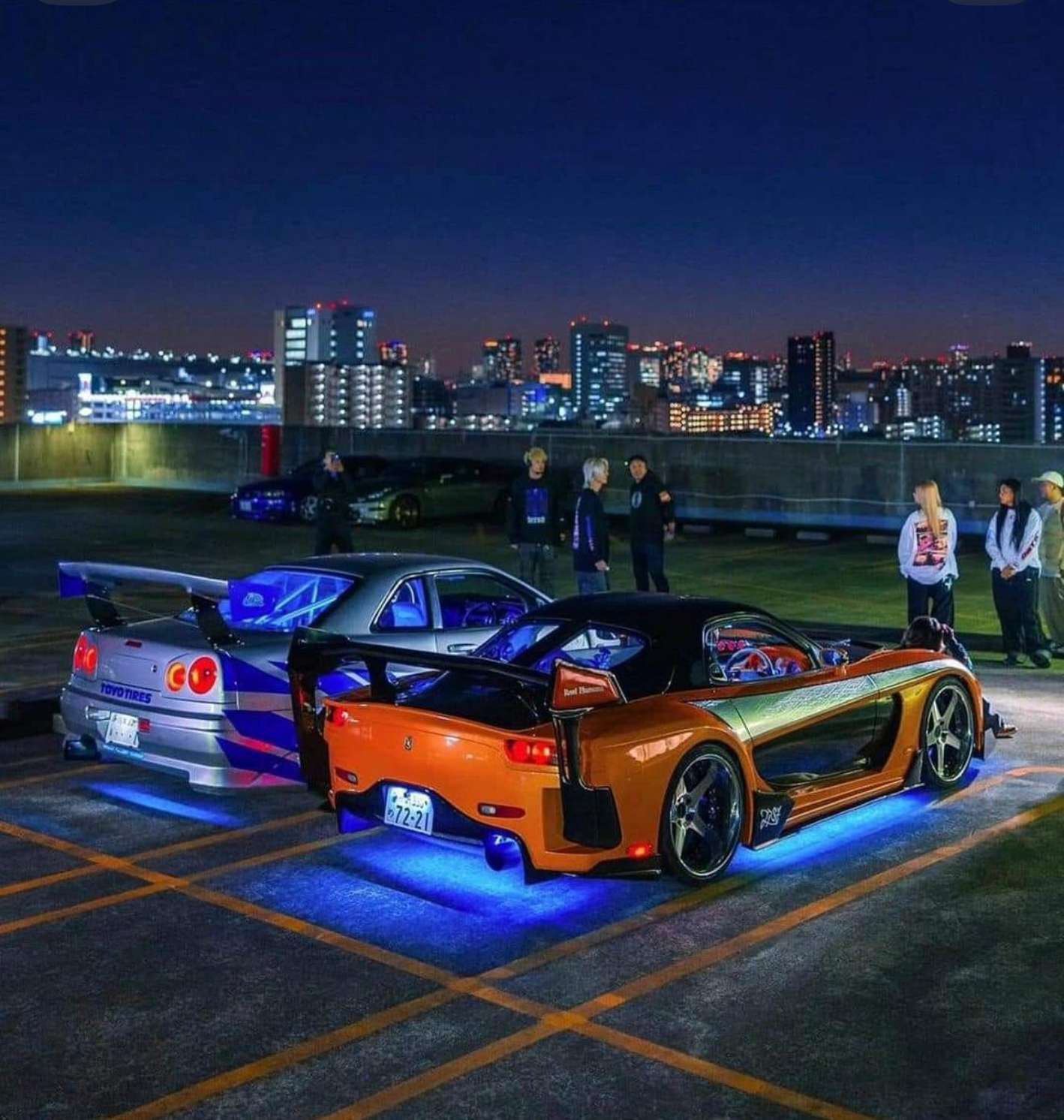
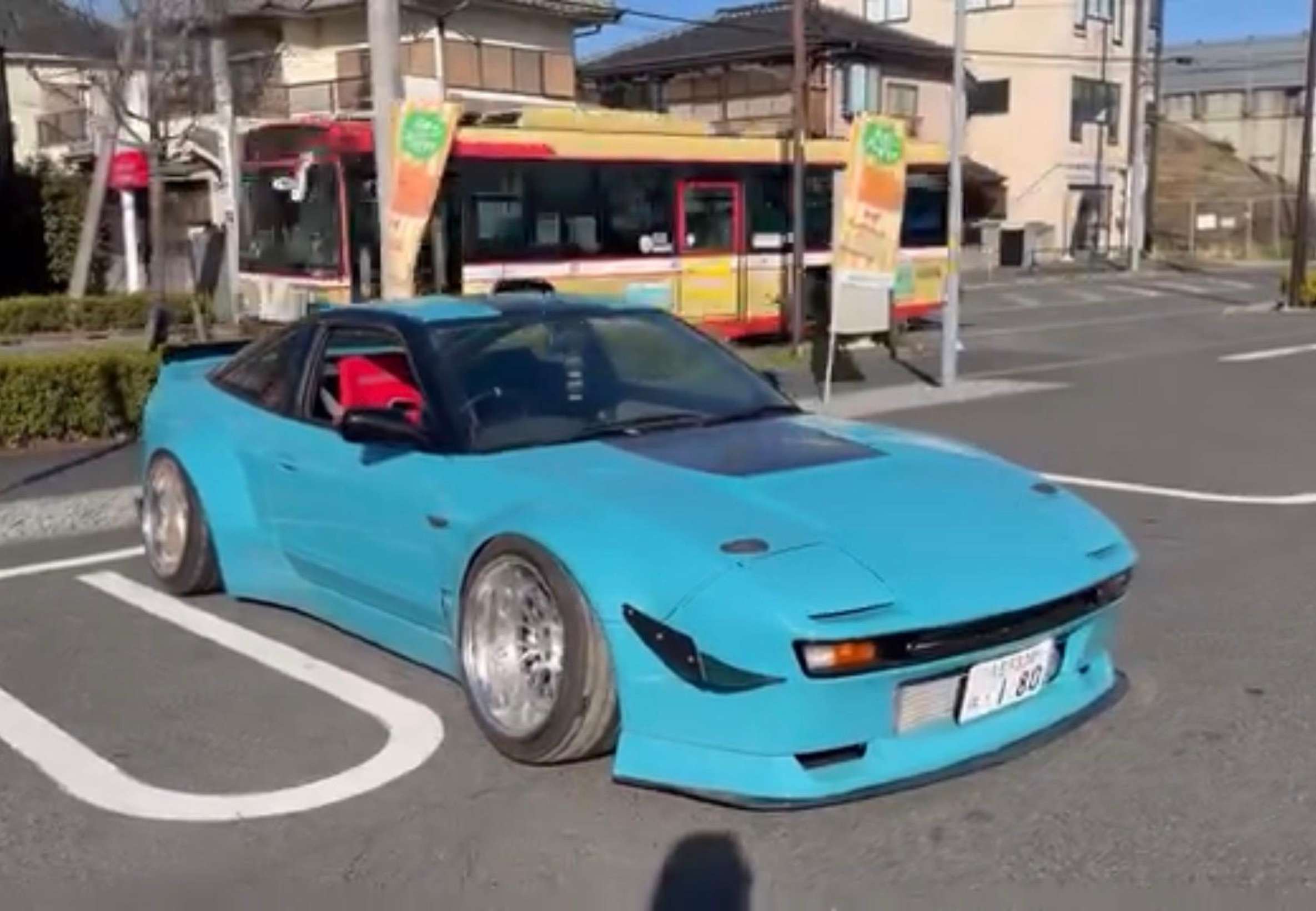
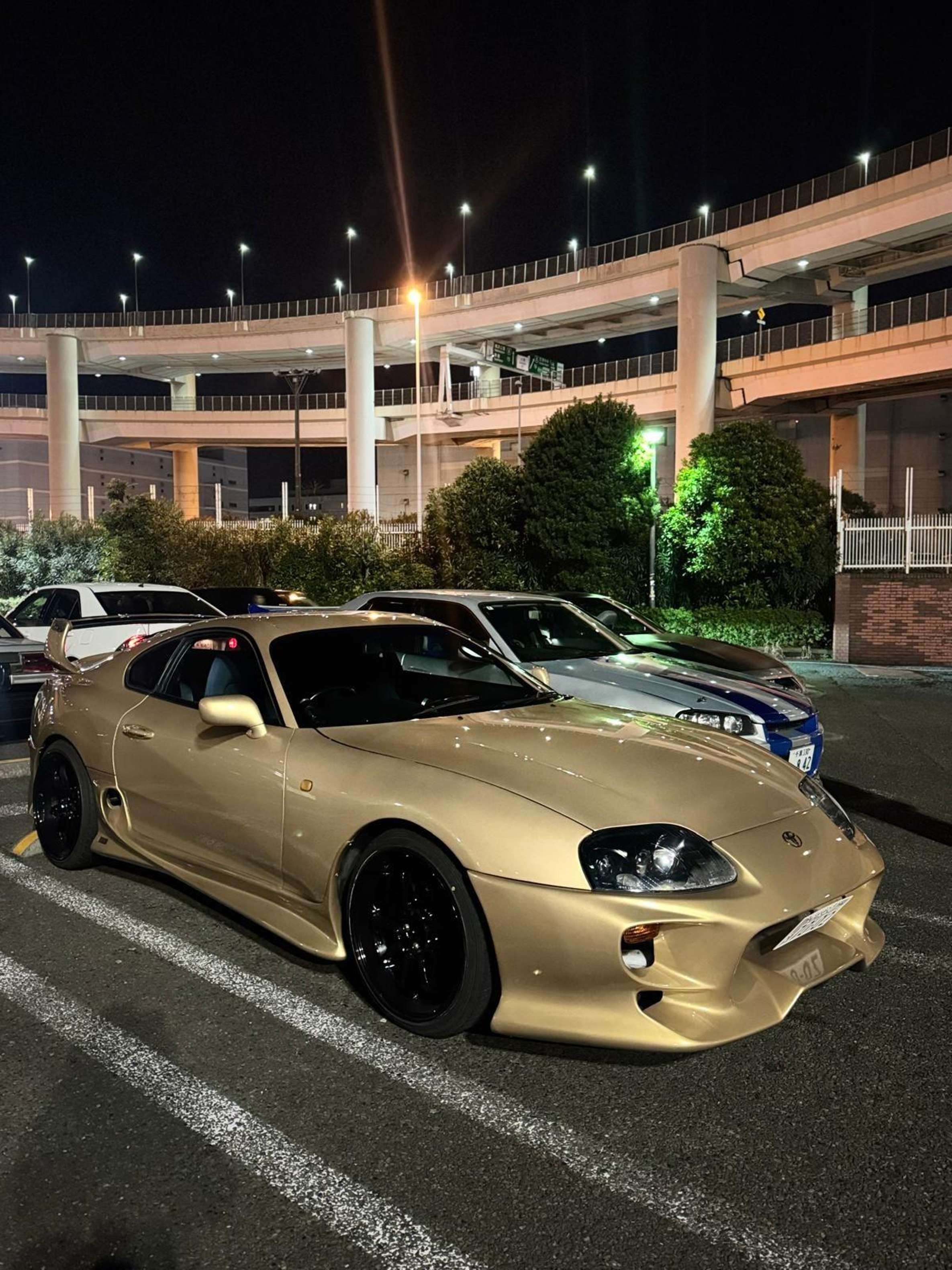
You cannot choose the exact car you get, though you can tell the operator which one you would love. Fleets run Skylines R34 and R35, Supras, Evolutions, Silvias, RX-7s and more. Some tours assign cars at random from the fleet, so a friend in your group can book a different option and swap stories after.
Group size
Shared rides put JDM fans from around the world in the same car, usually three to four people per vehicle. On non-private tickets, seating can split your group across two cars, which drive and park together the whole night. Private options keep the whole car for your group only.
Included
The tour prices cover the full run, and these extras are built in: Meals and personal expenses are not included.
Fuel and expressway tolls
English-speaking enthusiast drivers
Photo support at the best spots
Drop-off at your accommodation in central Tokyo
Booking
Weekend nights sell fastest, so book a few days ahead for Friday or Saturday. Operators do take last-minute bookings when seats exist, and travelers report the quality stays the same. Same-day requests for a specific model may not be available.
Timing
Departing at or after 8 pm means clear expressways. On Friday and Saturday nights police often close Daikoku PA between 7:30 and 9:15 pm, so operators shift departures earlier or reroute to spots like Umihotaru. Weeknights bring smaller crowds and almost no closures.
02
BookingHow far ahead, and what happens if plans change
1
Cancellation
Every tour on this page lets you cancel up to 24 hours before the start for a full refund. That window also covers rescheduling, so a change of plan costs nothing as long as you act a day ahead.
03
Before you goPapers, health, what to bring
2
DocumentsCan stop the day
Bring your passport or ID card to the start; some operators accept a copy. As a passenger you need no driving licence or international permit, because a professional driver does the driving. A licence only matters on self-drive tours, which this page does not cover.
Health limits
These tours exclude pregnant women and people with heart problems, and some exclude children under 15. Modified sports cars have tight bucket seats and little rear legroom, so taller passengers may be cramped. Check age and size limits with the tour operator before booking.
04
On the dayWhere to be, when, and how you get there
1
Pickup
Most of the drift-themed tours on this page include hotel pickup, and every one drops you off at your hotel or Airbnb in central Tokyo at the end. Drivers are happy to take you wherever you prefer. Some smaller tours meet at a central spot instead, given as an exact address when you book.
05
During the tourWhat is expected of you
3
On boardCan stop the day
Smoking and vaping inside the cars is banned and costs a cleaning fee. Alcohol and drugs are not allowed, and no food or drink in the vehicles on some tours. Seat belts stay fastened for the whole ride.
Photos
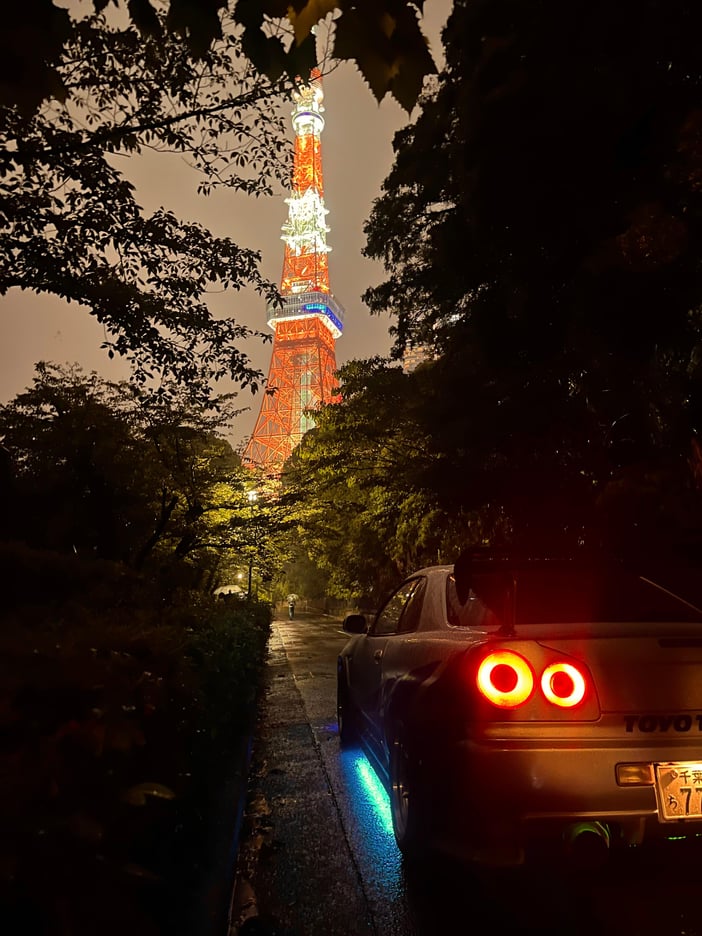
Guides actively take souvenir photos of you with the cars, especially at Tokyo Tower. Ask before close-ups of interiors or faces, skip the flash, and never sit on or touch a car. Wet pavement actually gives reflective night shots after rain.
Tipping
Gratuities are not expected in Japan, for guides or drivers, though a tip is appreciated. If you offer one, the custom is to place the money inside an envelope rather than hand over cash.
Fast and Furious drift fans - the whole Tokyo story
The tuned Skylines, the meets and the neon expressways of Tokyo Drift are all real; only the drifting is fiction. Which car you book, which night you pick and how you play the lot decide how close to the film the evening gets.
Yokohama· 35.66° N, 139.70° E
If you only remember three things
1
Rides take 3 to 4 hours door to door, with about an hour each way on the expressway.
2
Police often shut the weekend lot down early, so weekdays run later and calmer.
3
No drifting happens on public roads; real drifting lives on closed race circuits only.
Is the fast and furious Tokyo Drift fantasy real?
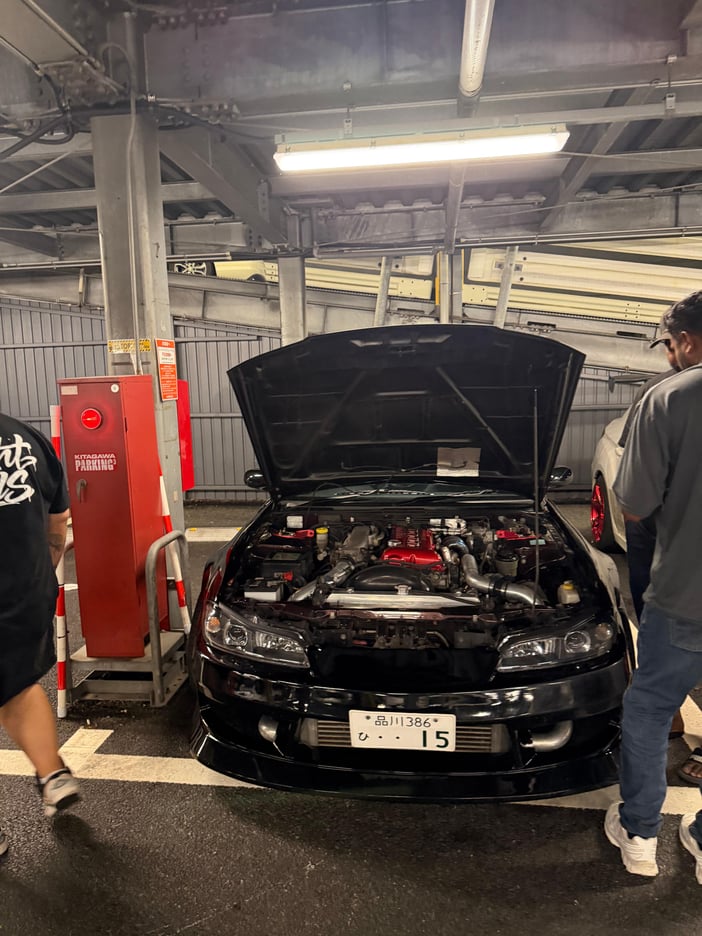
The first thing you notice at Daikoku PA is how quiet it is. Rows of tuned cars sit under the lights, owners chat beside open hoods, and the loudest sound is a shutter.
No one drifts here. Street drifting on Tokyo's expressways and public car parks is illegal, and the gatherings are static displays plus highway cruising, exactly what the tours show you.
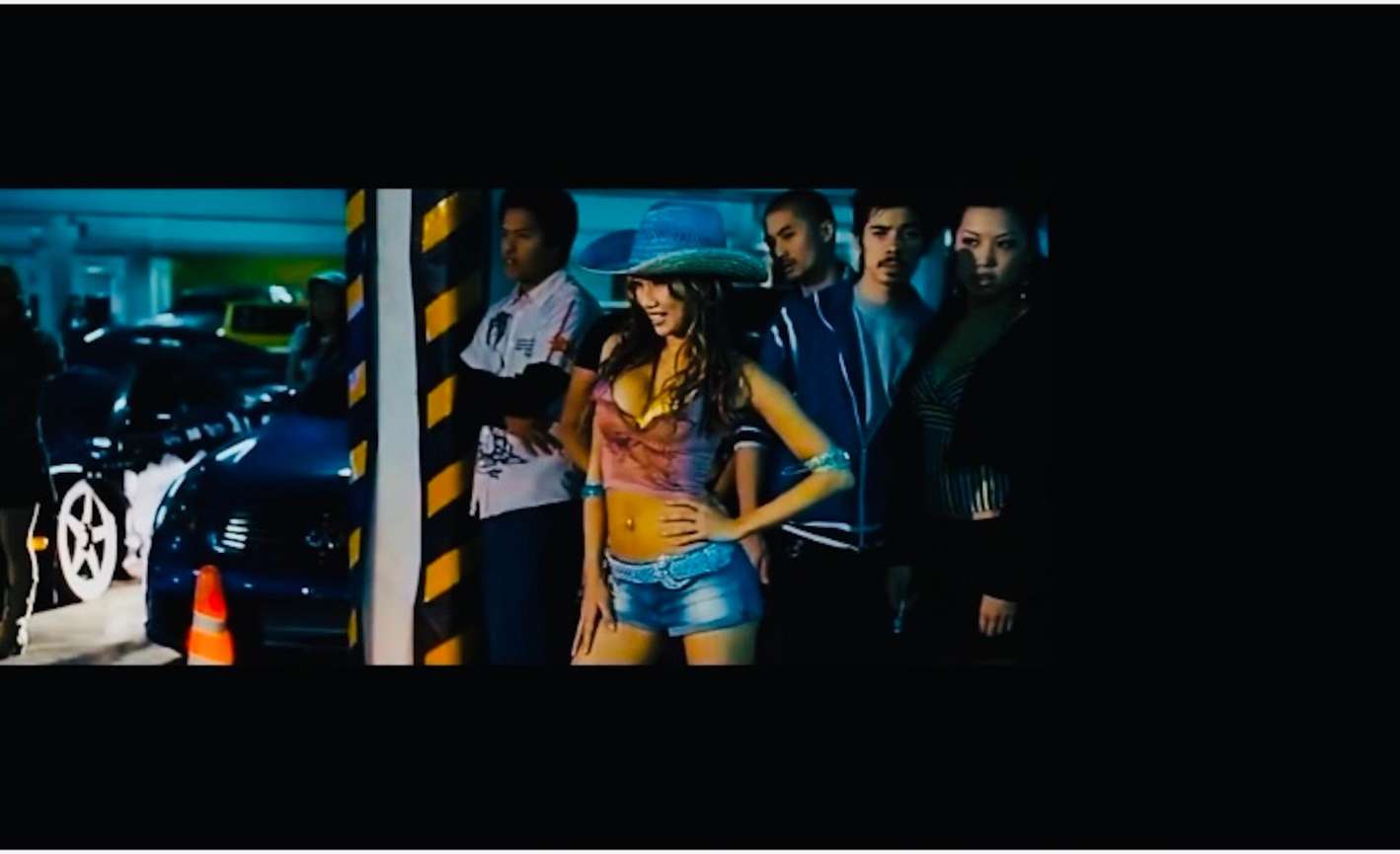
That honesty is the point. The film's parking-structure drifting is movie fiction, and the spots where people might try it are aggressively policed. Serious drifting in Japan happens on closed race circuits, under permit, with instructors.
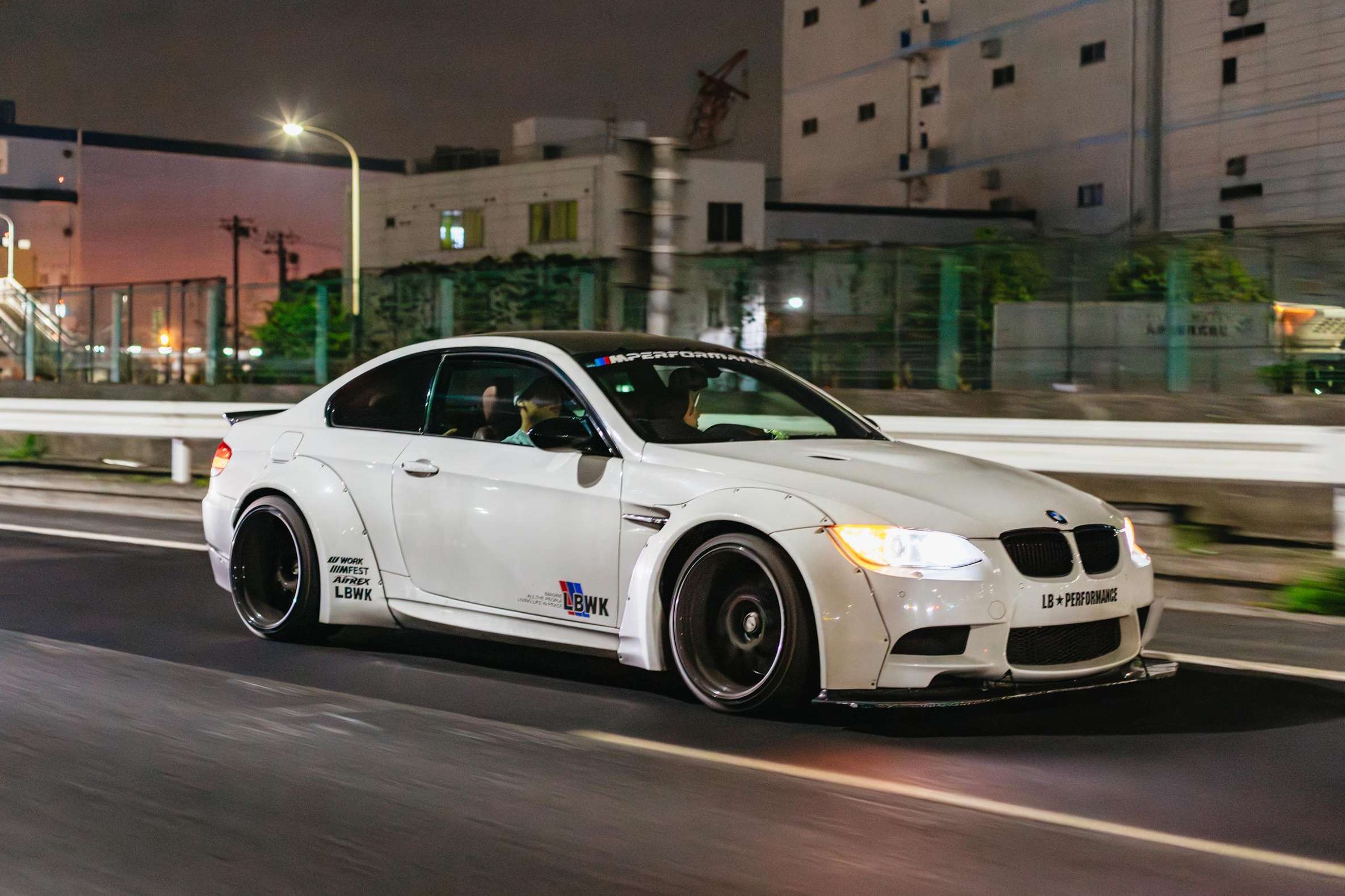
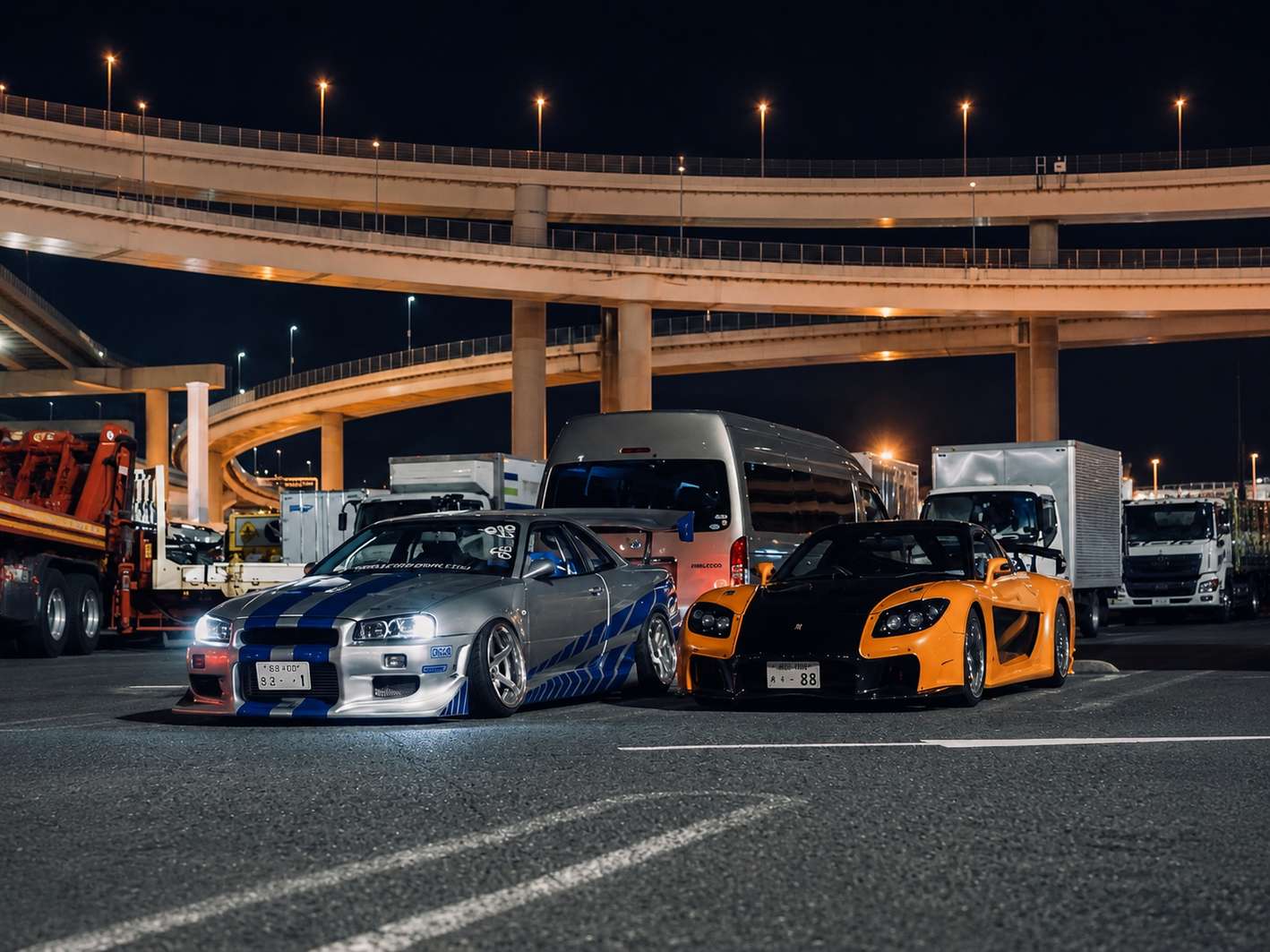
What is real: heavily modified Skylines, Supras and EVOs rolling onto the same highways the film made famous, and a lot the size of a stadium filling with them.
The cruise puts you in that picture, legally. The Fast and the Furious III/Tokyo Tower/Daikoku PA/JDM Car Meet runs 3 to 4 hours with photo support and a classic modified car underneath you.
Two beliefs about the scene clear up fast once you know the rules.
What people get wrong about the Tokyo Drift scene
Myth"Everyone drifts out of the meet like in the film"
Reality
Meets are static car displays and highway cruising; drifting only happens legally on closed circuits
Myth"You can stumble on a street race in Tokyo"
Reality
Street drifting on public roads is illegal and the known spots are strictly guarded and policed
With that settled, the film experience worth booking is the convoy ride, the meet and the expressway runs, which is what the tours deliver.
Tour for this
Fast and the Furious III/Tokyo Tower/Daikoku PA/JDM Car Meet4.8★ (346) · 3 - 4 hours · Free cancellation
Which fast and furious drift cruise should you pick?
Two ways to live the film, and the difference is the car. Dedicated sports car rides put up to three guests in a modified hero car, an R34, an R35 GT-R or a Silvia, with an enthusiast driver talking you through the tuning scene.
Shared van tours carry bigger groups to view the meet on foot instead of riding in one of the cars.
Ask yourself what the evening is for. If it is the sound of an RB26 from the passenger seat, book the sports car.
Tokyo: Daikoku JDM Ride, Request the R34, Supra or GT-R R35 gives you a three-hour run with a one-hour stop at the meet and landmark photo stops, and you can ask for the R34, the Supra MK4 or the R35. Requests are taken seriously, though a specific car is never fully guaranteed.
Private options exist too: a private tour reserves the vehicle for your group alone, typically one to three guests per car. Shared rides mix you with fans from around the world, which some nights turns out to be half the fun.
The two headline rides stack up like this.
Tokyo Drift cruises side by side
Request the R34, Supra or GT-R R35
JDM Tokyo Fast and the Furious convoy
Featured cars
R34 Skyline, Supra MK4, GR86, WRX
Supra 80, Skyline R34, convertibles, movie replicas
Daikoku stop
One hour at the car meet
Photo stop at Daikoku PA
Other stops
Multiple landmark viewpoints
Tokyo Tower, Rainbow Bridge, Shibuya Crossing
Length
3 hours
About 3 hours
Good to know
Car requests not guaranteed
Vehicle assigned randomly from the fleet
Request the R34, Supra or GT-R R35
Featured cars
R34 Skyline, Supra MK4, GR86, WRX
Daikoku stop
One hour at the car meet
Other stops
Multiple landmark viewpoints
Length
3 hours
Good to know
Car requests not guaranteed
JDM Tokyo Fast and the Furious convoy
Featured cars
Supra 80, Skyline R34, convertibles, movie replicas
Daikoku stop
Photo stop at Daikoku PA
Other stops
Tokyo Tower, Rainbow Bridge, Shibuya Crossing
Length
About 3 hours
Good to know
Vehicle assigned randomly from the fleet
The car decides the night. If a guaranteed hero car matters most, take the ride with the specific model request and accept the price that comes with it; if the whole spectacle does, the convoy cruise gives you the fleet.
Tour for this
JDM Tokyo:The Fast and the Furious Tokyo Drift Experience4.9★ (205) · 3 hours · Free cancellation
What fast and furious drift rides feel like in the car
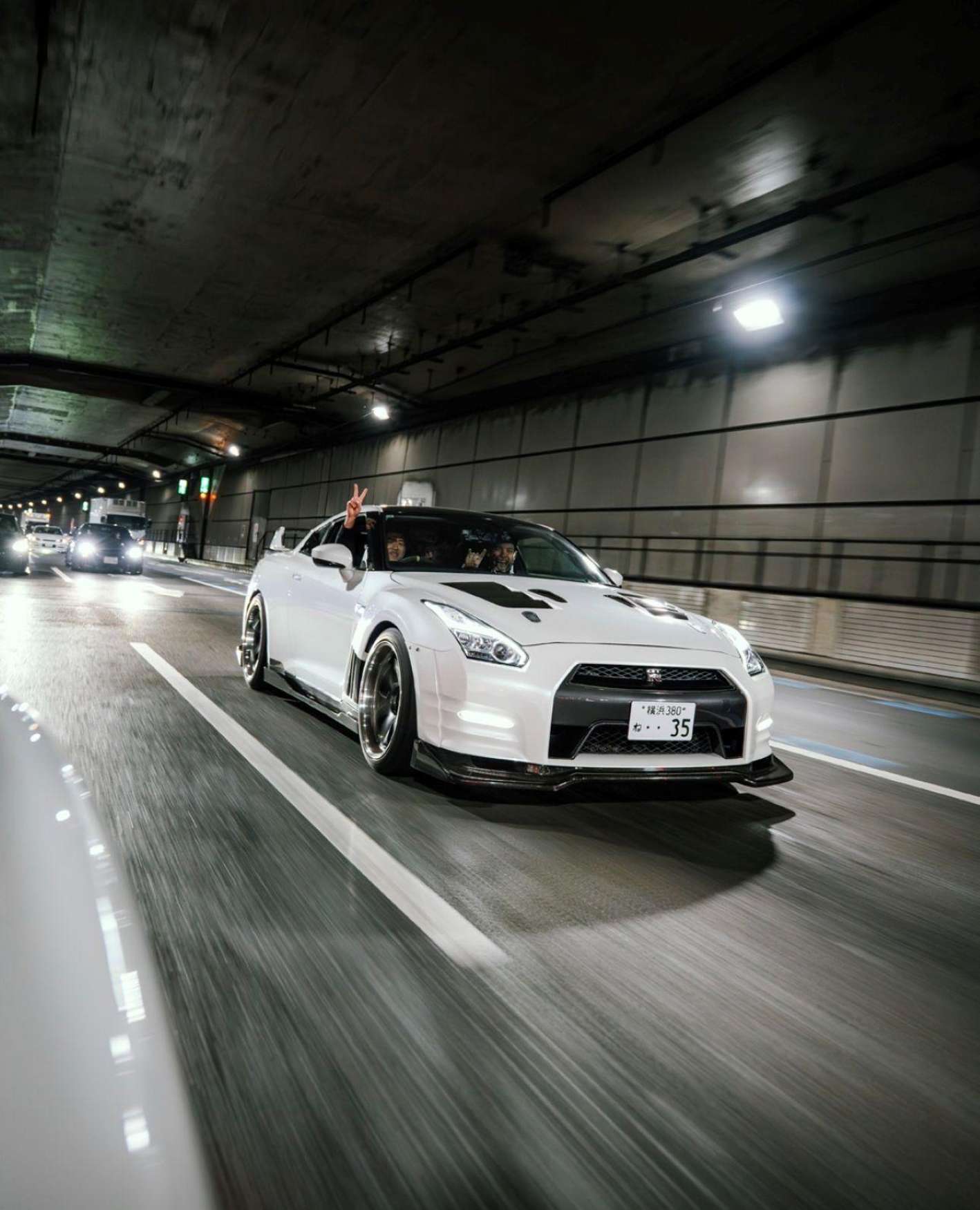
The turbo spools first, a whistle climbing into a whistle, then the exhaust takes over. Passengers on these runs feel tuned engines, turbocharged spool and loud aftermarket exhausts, all from a bucket seat with the city sliding past the window.
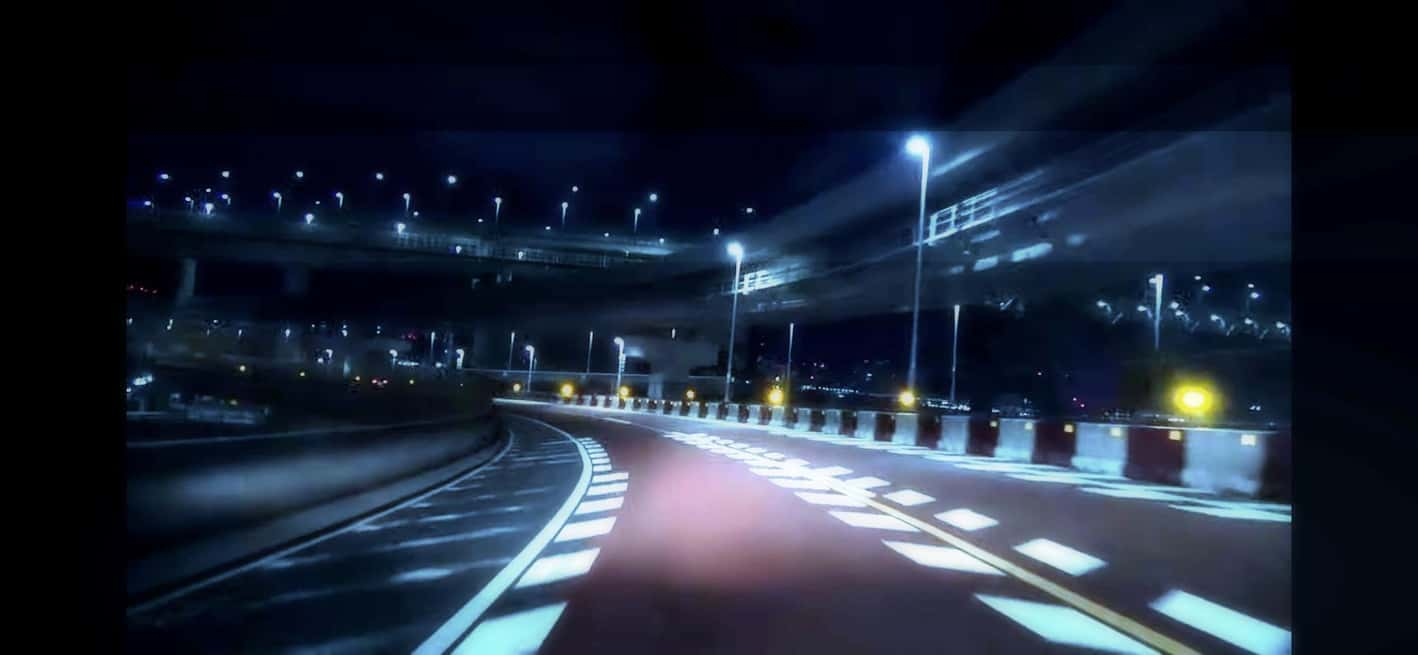
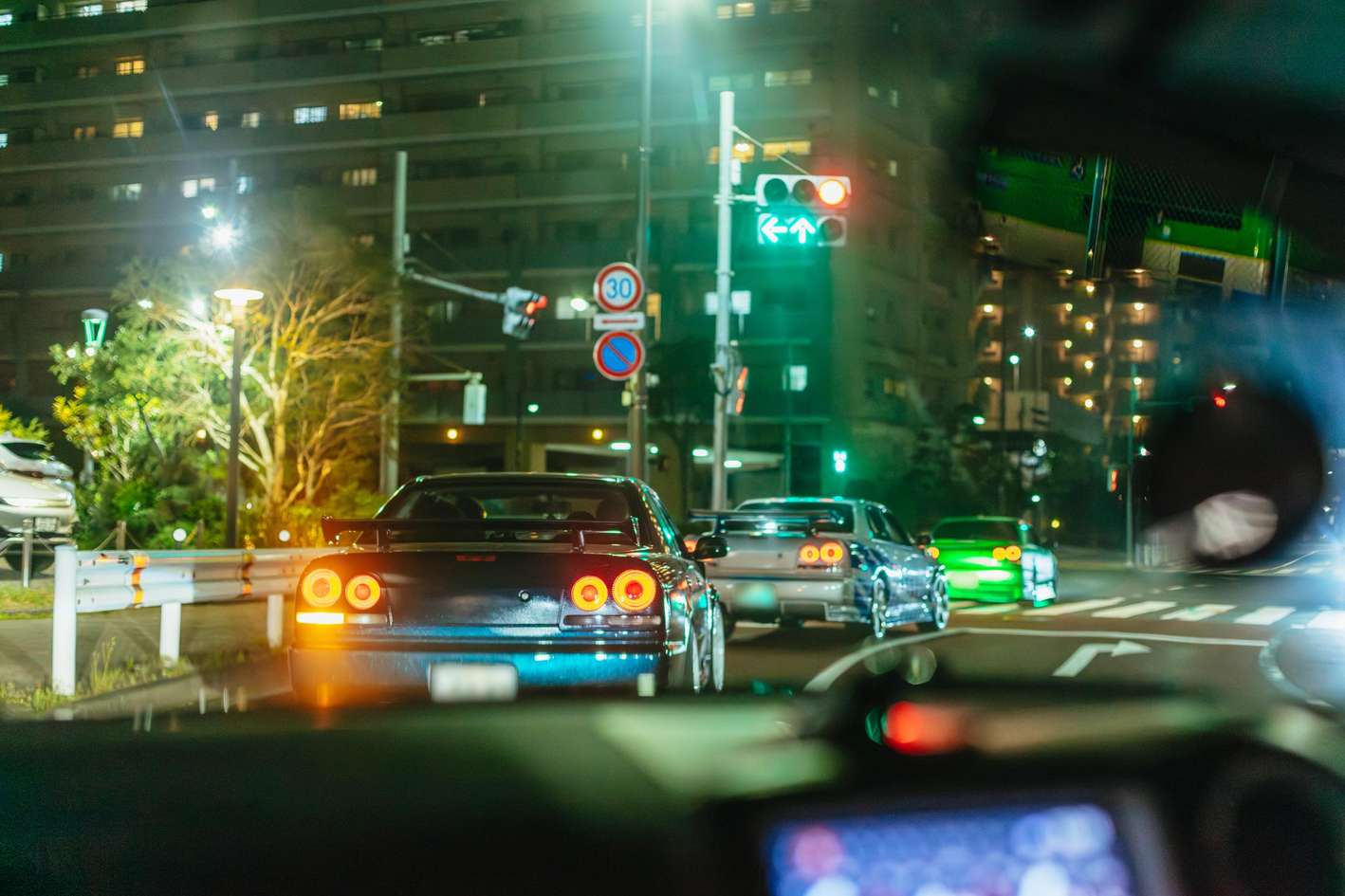
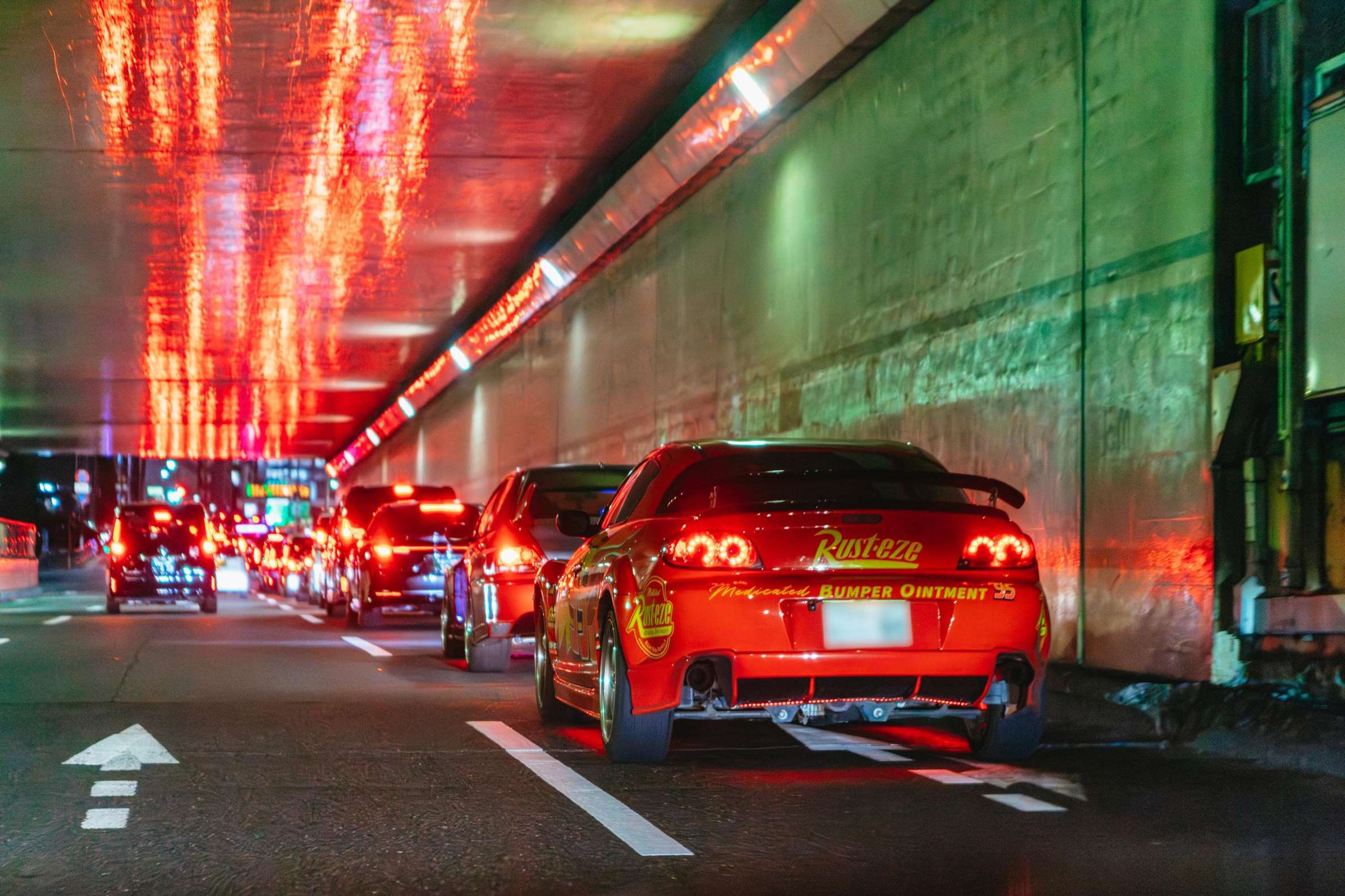
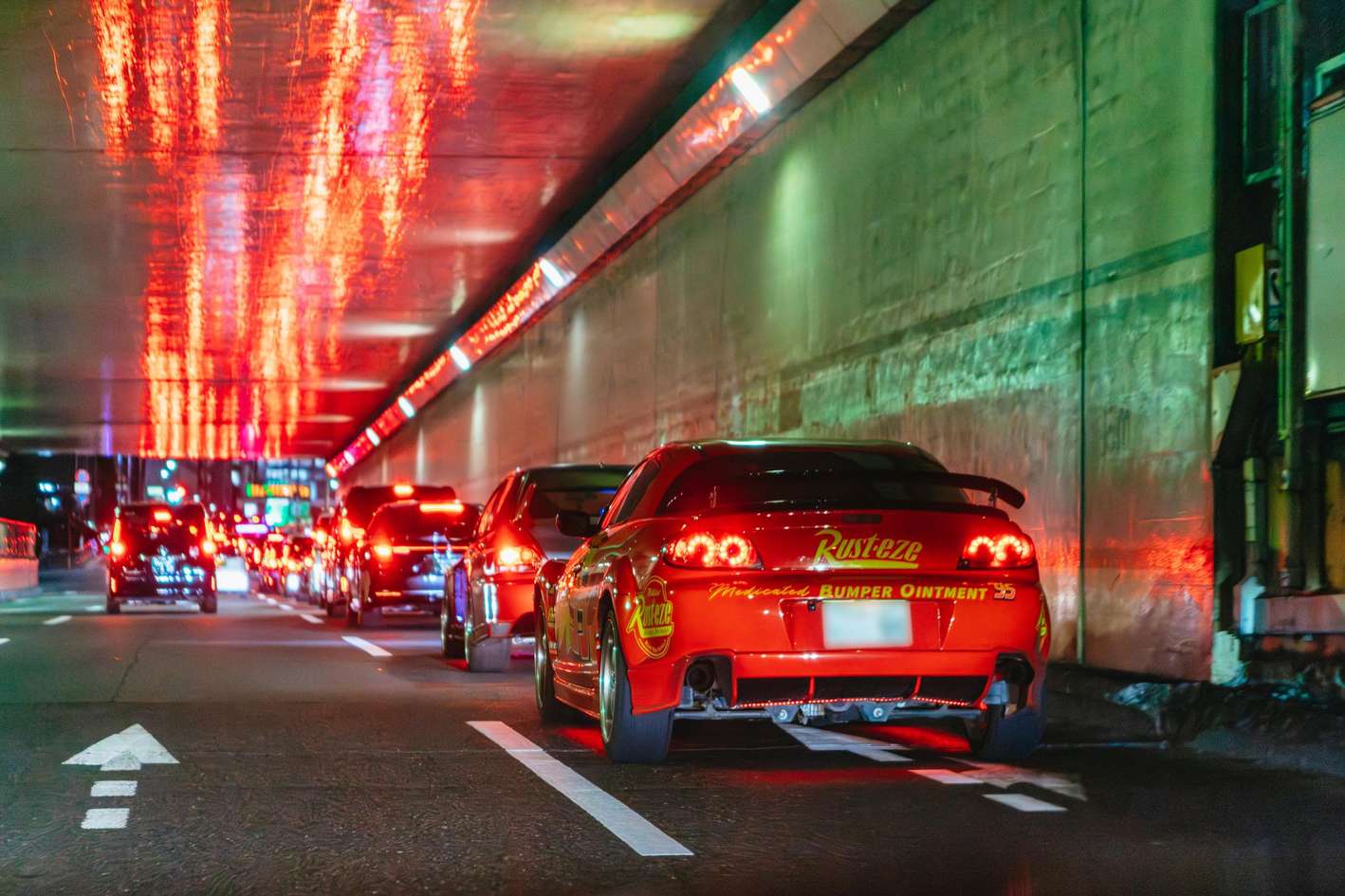
The route does the film work. The walled-in C1 Loop carries you through central Tokyo, the Bayshore Route runs the industrial waterfront towards Yokohama, and Rainbow Bridge lights up the bay as you cross.
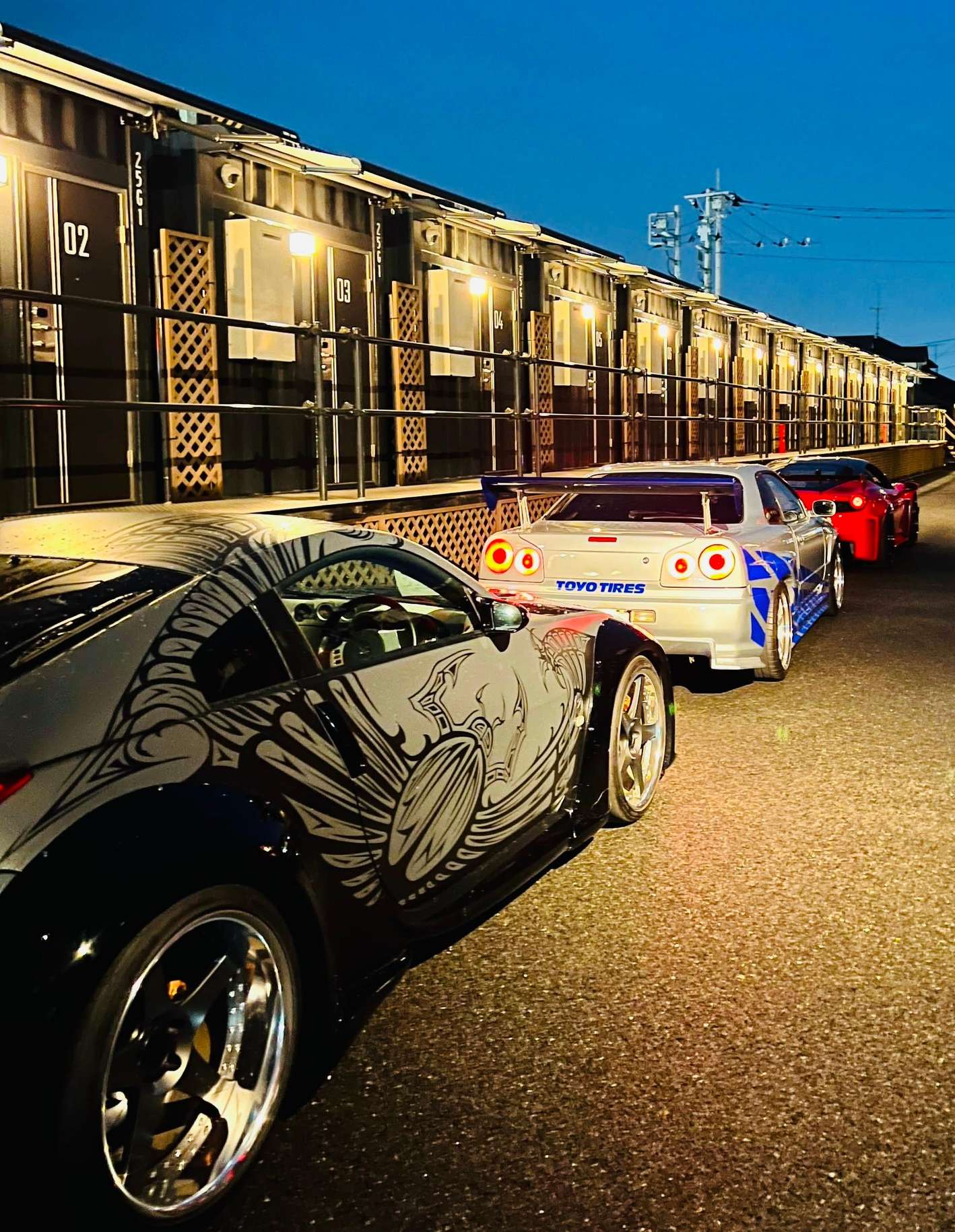
On some tours the whole thing becomes a convoy: one operator, JDM Tokyo:The Fast and the Furious Tokyo Drift Experience, sends its fleet out as a group, Supra 80s, R34s and movie replicas running together.
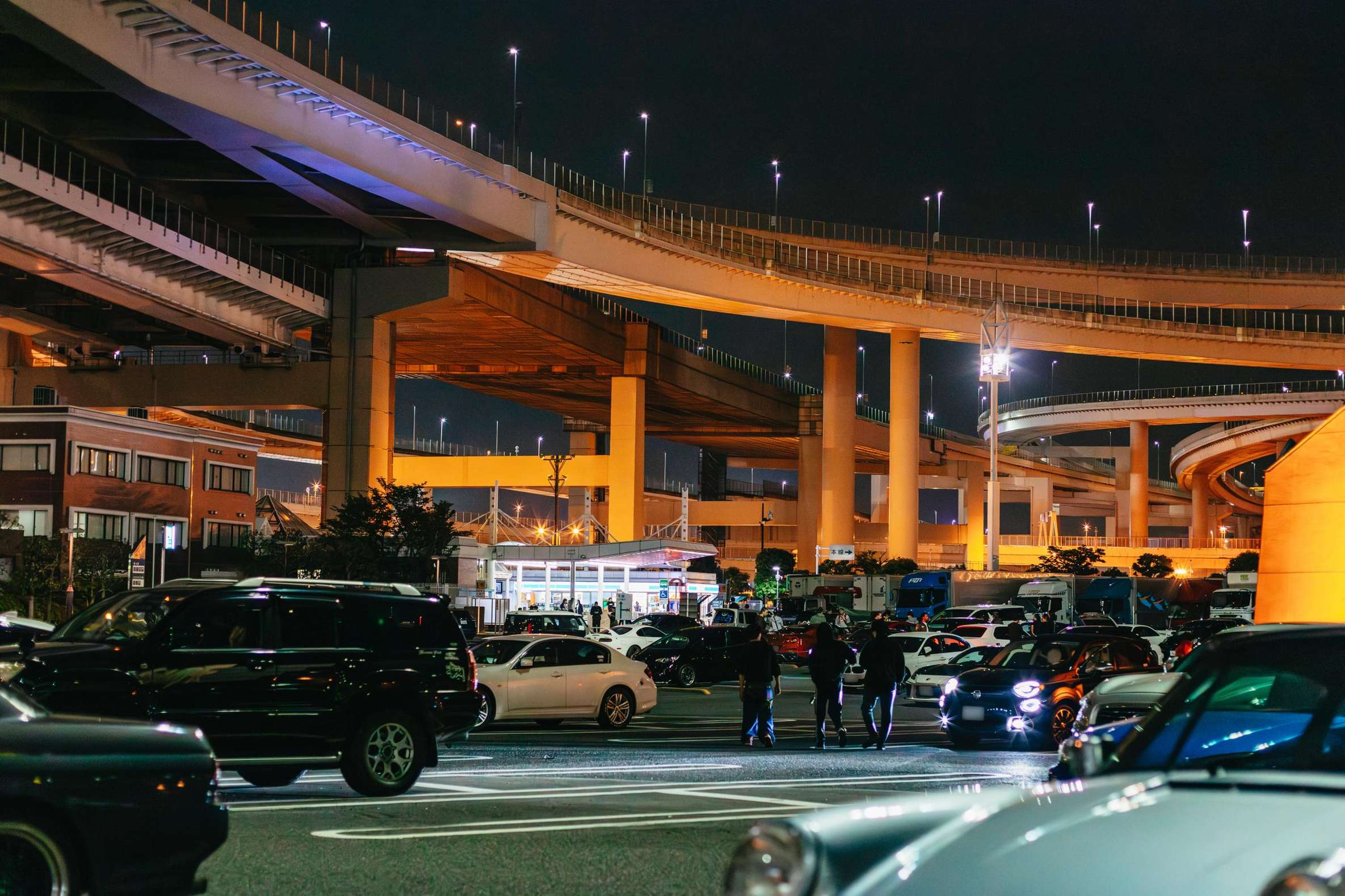
Then Daikoku announces itself. Drivers drop off the highway down a long circular spiral ramp, several of them converging on the entrance, a piece of geometry built to fit connecting roads onto a cramped pier. You arrive at ground level, on an island, among hundreds of cars.
Regulars put the feeling plainly.
A traveler's note
Sho, Tsubasa, and Roan made our night amazing! Raced around Tokyo, learned the landmarks, and swapped cars with other groups to ride in different JDMs, each felt unique. Great photos too.
Which night gives the best fast and furious drift meet?
Pick your energy level. Friday and Saturday draw the biggest crowds and the highest-energy tuner builds, and also the earliest closures: police often clear the lot somewhere between 7:30 pm and 9:15 pm once it gets crowded or noisy. First cars roll in from 5 pm, with the main wave from 7 pm onward.
Weeknights tell a different story. Monday through Thursday bring smaller turnouts and a relaxed vibe where closures are rare, and plenty of rare and tuned cars still show up.
Sunday morning is the sleeper choice. From 6 am to 10 am, peaking around 8 to 10, the lot fills with vintage Japanese classics and European supercars in calm daylight, owners mingling before weekend drives. Almost no chance of a shutdown.
One practical note: when police close Daikoku on a weekend, cars and tour groups move on. Regulars know the drill, and drivers reroute smoothly to whatever meet picked up the crowd.
How the days stack up against each other:
Weekdays can be quieter; weekends often bring a livelier meet
Sat: the busiest. Friday and Saturday can be buzzing, but police closures may change the stop.
Bar height: how busy each day is, from very quiet to the busiestThe busiest: Sat
Tap a day to read it.
Read those two ratings as a trade: the weekend buys you the biggest show at the cost of a curfew, the weekday buys you a calm lot and almost no chance of a reroute. For most first visits, a weeknight is the safer bet.
Tour for this
JDM Tour to Daikoku PA Fast and Furious Tokyo Drift Experience5.0★ (92) · 3 hours · Free cancellation
Why fast and furious drift fans need a guide to reach Daikoku PA
Daikoku PA sits on an elevated expressway island in Tokyo Bay, and it is reachable only by motor vehicle on the expressway. No station, no bus stop, no taxi rank. Pedestrian gates are locked and fenced, and walking in is illegal and dangerous.
The return is where plans fall apart. Taxis are not permitted to pick passengers up inside the parking area, rideshare apps have no drivers there, and visitors who arrive without a booked ride back risk being stranded late at night on the highway island.
A guided cruise solves all of it: the driver handles the Bayshore Route or the K5 Daikoku Line, the tolls, the route, and guarantees your ride home. Entry to the lot itself is free; the driving is what you pay for.
Ways of getting in, ranked by how much of the night they leave you with.
How each way in ranks
Guided tourDriver handles tolls, routes and the guaranteed return trip
Easy
Self-drive rentalNeeds a 1949 convention IDP or official translation, plus expressway tolls
Difficult
Taxi or rideshareCabs cannot pick up inside the parking area, so the return strands you
No access
Unless you are set on driving the route yourself, the guided tour is the option that ends with you back at your hotel.
Tour for this
Tokyo Drift with GTR35-R 700HP Fast & Furious Experience4.7★ (200) · 3 - 3.5 hours · Free cancellation
How a fast and furious drift evening unfolds, hour by hour
Door to door, count on 3 to 4 hours. The highway run from central Tokyo to Daikoku takes about an hour each way, which leaves one to one and a half hours at the meet itself, plus photo stops at places like Tokyo Tower or Rainbow Bridge along the way.
Departure timing matters more than anything on the itinerary. Friday rush hour, roughly 4:30 pm to 8 pm, adds 15 to 30 minutes each way, so operators push Friday departures earlier, around 4:30 or 5 pm, to catch the lot before it fills.
On standard nights they leave around 7:30 or 8 pm. Anything after 8 pm misses the worst of the outbound commuter peak, and a late-night slot near 11:45 pm has the clearest roads of all.
The two numbers that shape the whole evening:
Key figures for an evening Daikoku car cruise
1 hourdrive from Tokyo to Daikoku
1.5 hourstime at Daikoku car meet
The arithmetic behind those two figures is simple: the drive is fixed, the meet is the variable, and the closure clock decides how much of it you get.
Tour for this
Tokyo: Fast and the Furious Tokyo Drift III JDM Car Tour4.8★ (880) · 3 hours - 1 day · Free cancellation
Bucket seats and kids on a fast and furious drift night
The hero cars are 2+2 coupes, and the two rear seats are children's territory. Rear legroom in these cars is minimal, the GT-R's rear seats are cramped even for kids, and headroom suffers from the sloping roof.
Taller and heavier passengers feel it in the front bucket seats too: several tours enforce weight and height limits, and a few exclude guests over 100 kg or 180 cm.
Bringing children changes the plan. Some tours rule out kids under 15 or babies under 1, minors under 18 must ride with a responsible adult on certain tours, and a child aged 5 to 7 who needs a booster seat means contacting the operator first.
Certain tours also exclude pregnant women and people with back or heart problems, which makes sense once you have felt a firm sports suspension over a Tokyo expansion joint.
No licence needed for any of it. A professional driver runs the car, so passengers need no International Driving Permit and no Japanese licence.
A quick checklist before you commit to a ride:
What to check before booking a ride-along
Check
Why it matters
Our pick
Car guarantee
Only private plans promise a specific model
Request the R34, Supra or GT-R R35 takes requests, no guarantee
Seat fit
Tight buckets and cramped rear seats
Rides seat up to three guests comfortably in shared plans
Children
Age limits vary by operator
Under-15s excluded on some rides; check before booking a child
Licence
Passengers need none
Fully covered, the driver is a professional
Health fit
Firm suspensions and roll cages
Not suitable for pregnant women or people with heart problems
Tour for this
Tokyo Drift Ⅲ: Fast·Furious Daikoku PA Modified JDM Car Ride4.7★ (1,510) · 3 - 4 hours · Hotel pickup · Free cancellation
Rain and police closures on the fast and furious drift run
Rain trims the crowd, and the plan holds. Tours run rain or shine through normal rainfall, and meets have no organizer to cancel anything.
What thins is the lot: exotic and show cars stay home, leaving committed regulars and tuner cars, sometimes fewer, and the night still happens. A typhoon warning empties the lot entirely, and that is when operators adjust itineraries or reschedule.
Police closures work the same way. When Daikoku closes early, drivers reroute to the alternative meets the crowd flows to, Umihotaru PA out on the bay or Tatsumi, and the evening continues with a different backdrop. Regulars say the reroute runs so smoothly that the night barely loses a step.
Spring is the wet season: March through October sees the most rain days, peaking in May and June. Book any time; pack for the forecast.
How the year maps onto the crowds:
How busy it gets, month by month
April: 5 out of 5 for how busy it gets.
HighestMar to May, Nov
In betweenJun
LowestJul to Oct, Dec to Feb
Darker: a higher how busy it gets score, out of 5
Tap a month to read it.
April, May and November carry the fullest lots and the fullest streets around them, so those months book out first; midsummer and midwinter leave you the same cars with more elbow room.
Tour for this
Tokyo: Fast & Furious Tokyo Drift Location Tour with Photos4.7★ (8) · 2.5 hours · Free cancellation
The lot is a public rest stop where truckers sleep, and the rules follow from that. Keep your voice down, keep off the cars, and never touch, lean on or sit in a vehicle without the owner's permission.
Exterior photos are usually fine; interior and close-up shots wait for a yes, and a no is respected on the spot.
The one that trips first-timers: never ask an owner what the car cost or whether it is for sale. Compliments on the build land well, price questions do not. Avoid flash in people's faces, skip close-ups of licence plates, and bin your trash.
Anything that draws police attention, revving, burnouts, loud stereos, risks the whole lot being closed for everyone, which is why locals sit quietly and let the cars do the talking. Owners here lean quiet and reserved, so soft voices fit the scene.
Language is easier than it looks: most owners speak little English, yet they are happy to connect over the cars, and translation apps or a quick LINE exchange carry the conversation.
A few things regulars wish someone had told them:
What nobody tells you
Compliment the build, never the price
Asking what a car cost is the fastest way to end a good conversation
Translation apps do the talking
Most owners welcome the chat even without shared language
Buy that Lawson coffee
The 24-hour shop runs all night, and patronizing it keeps the meets welcome
Tour for this
Tokyo: Fast & Furious Tokyo Drift III Experience4.8★ (6,369) · 3 - 4 hours · Free cancellation
What to bring on your fast and furious drift night
You are outside on concrete for an hour or two, on a pier in the bay wind, and the air off the water finds every gap in your clothing.
Winter nights at Daikoku drop between 1 and 5 degrees and feel close to freezing, so layer up: a thermal base, a fleece or packable down, and a windproof shell. Compact layers beat bulky coats, which fight the low door of a sports coupe.
Even warm months want a light jacket, since the meets run at night. Comfortable shoes matter more than nice ones; you will be standing and walking the rows. Rain gear pays off in the wet months.
Bring your passport or ID card, which the tours require. If you plan to talk builds with owners, a charged phone doubles as your translator.
One thing worth knowing before you leave:
ImportantBring a light jacket even in warm months Bayside nights on concrete feel close to freezing in winter, and the wind off the bay cuts through thin layers
Tour for this
Tokyo: Daikoku JDM Ride, Request the R34, Supra or GT-R R354.8★ (170) · 3 hours · Free cancellation
A full day for fast and furious drift fans in Tokyo
The night starts late, so the day is yours. Akihabara is the obvious base: the GiGO arcade runs linked Initial D cabinets, other arcades there and in Shibuya carry Wangan Midnight Maximum Tune, and Super Potato hides a retro game arcade upstairs.
Yodobashi Akiba stocks model cars, Mandarake dedicates a floor to vehicle toys, and the Tamiya store in Shimbashi is the flagship for kits and Mini 4WD.
For the real thing on foot, modified and itasha cars park in the underground garage next to Akihabara Station on weekend afternoons, free to walk into, and Shibuya Carjack gathers on Saturday nights near Tower Records. Both are walkable, no expressway needed.
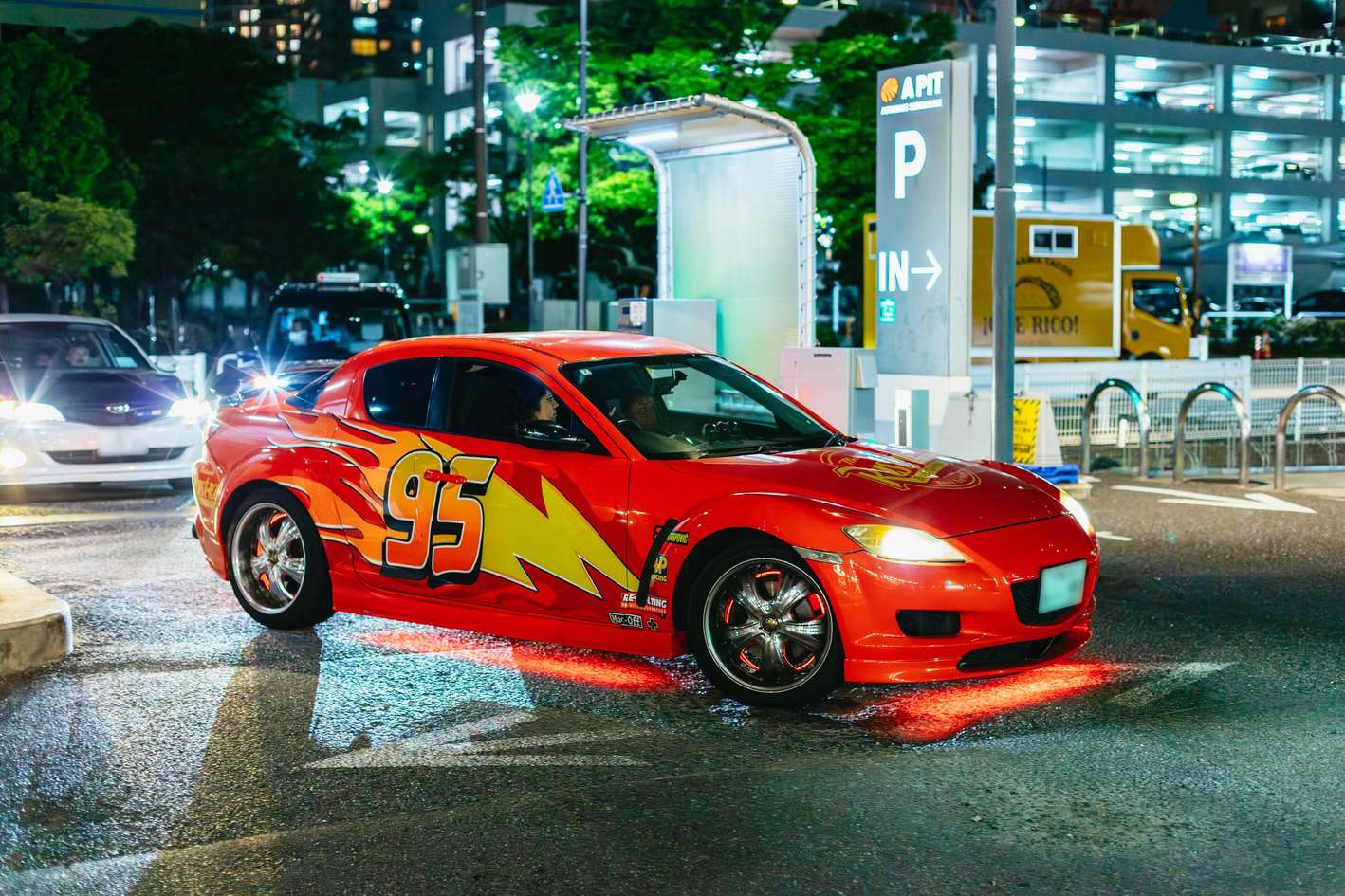
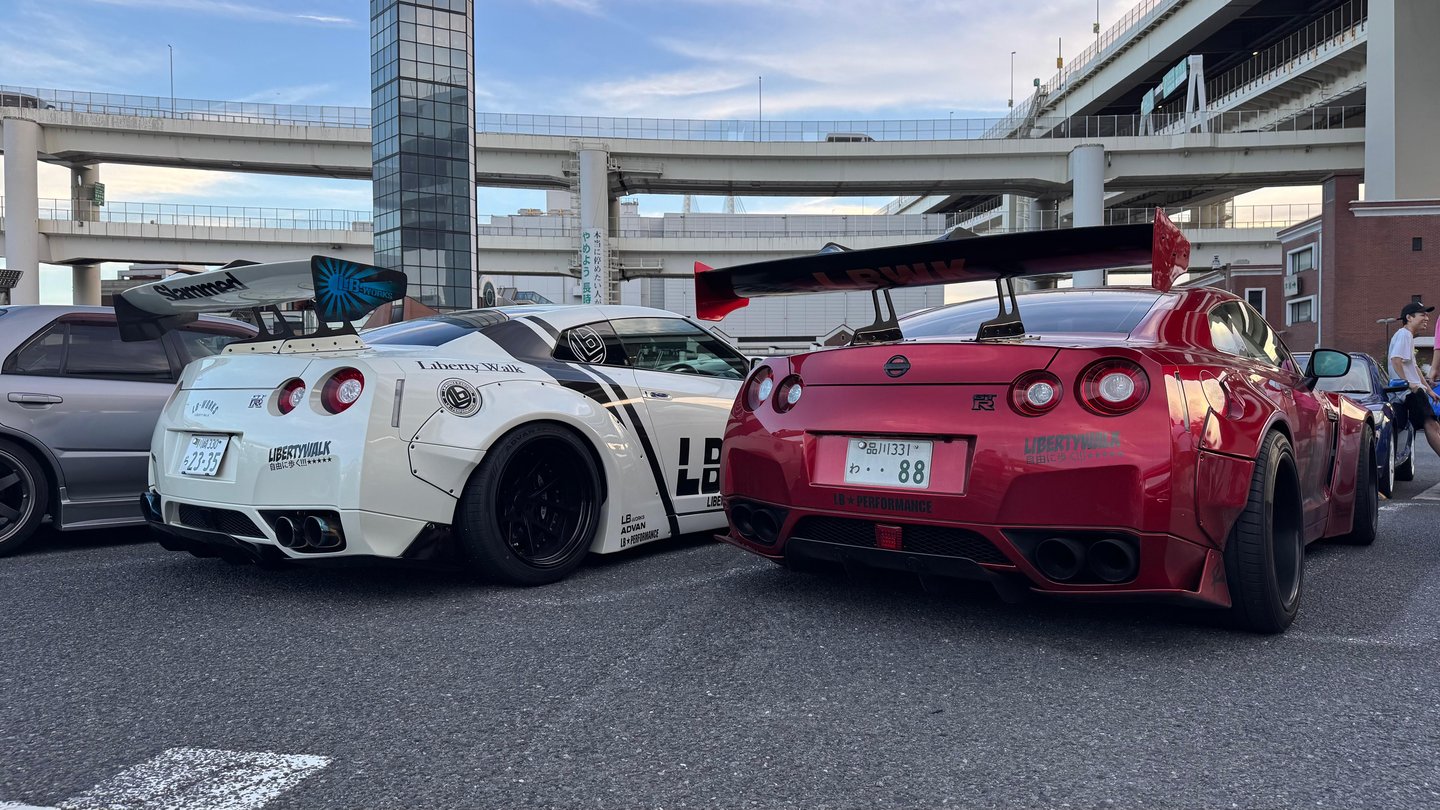
Showrooms round out the daylight hours: Nissan Crossing on the Ginza crossing, admission-free, and Liberty Walk Harajuku for the widebody culture. A-PIT Autobacs in Shinonome does three floors of tuning parts and gear, and several tours stop there on the way to the meet anyway.
Near the Daikoku side, a few places fill the gaps:
Driving yourself to the fast and furious drift meet
Set on your own wheels? Three hurdles decide it. Documents first: your original passport and home licence, plus an International Driving Permit issued under the 1949 Geneva Convention, unless your licence comes from Switzerland, Germany, France, Belgium, Monaco or Taiwan, in which case you need an official Japanese translation instead.
Then the tolls. Cash lanes still exist on general sections, but the Shuto Expressway keeps converting entrances to ETC-only, so check your rental car's setup before you rely on a booth attendant.
Then the math. Police closures on busy weekend nights can start from 7:30 pm, the earliest edge of the usual 7:30-to-9:15 window, so to catch the Friday or weekend gathering leave central Tokyo between 4:30 pm and 5 pm; on quieter weeknights, a 7:30 pm departure lands you with the 8 pm peak.
Allow 40 to 50 minutes without traffic, and know that guided tours budget closer to an hour because their drive includes real evening traffic, which is why their published times run longer than a free-flowing rental.
Japan is zero tolerance for alcohol and driving, any amount, so the driver skips the drinks entirely. Taxi drivers will take you to Daikoku but many refuse to wait inside the lot, so confirm the plan, tolls and meter before you get in.
Driving yourself
Rent a car in TokyoCompare cars from the rental companies in one search, then pick yours.
The Tokyo Drift fantasy is bookable, and it works: tuned Skylines and Supras, Rainbow Bridge lit up over the bay, and a parking island full of cars at the end of the run.
Go on a weeknight for the calmest lot, a Sunday morning for the classics, or a weekend for the biggest show and an earlier curfew.
Ride as a passenger, since the highway, the tolls and the return trip are exactly what you cannot do on your own.
Go ifYou want the film's cars and highways from the passenger seat, licence or notA calm weeknight or a Sunday-morning classics meet suits your scheduleYou are travelling solo and want the whole night handled door to door
Skip ifYou expect live drifting on public roads; that only happens on closed circuitsYou need a car that fits small children or very tall passengersA typhoon warning is in force, when the lots empty and tours reschedule
Our pick to book
Tokyo: Fast & Furious Tokyo Drift III Experience4.8★ (6,369) · 3 - 4 hours · Free cancellation
Your fast and furious drift questions about Tokyo, answered - FAQs
Short answers to the questions people ask before booking a Tokyo Drift car cruise to Daikoku PA.
Yokohama2026
You will remember the tunnel sound on the Wangan most. The whole night runs 3 to 4 hours, and your driver drops you back at your hotel door.
Can I ride in a Tokyo Drift movie car without a driving licence?
Yes. A professional driver handles the car, so passengers on these tours need no International Driving Permit and no Japanese licence. Just bring your passport or ID.
Which JDM cars do the tours actually use?
Fleets run Skylines including the R34, R33, R32 and ER34, GT-R R35s, Lancer Evolutions, Subaru WRX STIs, Toyota Supra A80s, Silvia S15s, RX-7s and more. One operator runs a convoy with movie replica vehicles.
Does the tour include real drifting on the highway?
No, and it cannot: drifting on public roads is illegal in Japan. What you get is tuned engines, loud exhausts, turbo spool and highway cruising, with real drifting only at closed circuits.
Why do I need a tour to reach Daikoku Parking Area?
The car meet sits on an expressway island with no train, bus or pedestrian access. Walking in is illegal and dangerous, and taxis cannot pick up passengers there, so a guided car is the practical way.
How long does the whole evening take?
Plan on 3 to 4 hours from pickup to drop-off. The drive out to Daikoku is about an hour each way, leaving roughly an hour or so at the car meet plus photo stops.
What will I see from inside the car at night?
The C1 Loop and the Wangan Bayshore Route carry the neon night views of the film, crossing lit bridges such as Rainbow Bridge toward Tokyo Bay. Tokyo Tower and Shibuya Crossing are common photo stops.
Can I hail an Uber or taxi back from Daikoku PA?
Virtually no. Cabs are not permitted to pick up passengers inside the parking area and there is no taxi rank. Tours end with a drop-off at your hotel, which is why they matter.
Is a weeknight cruise worth it, or should I book a weekend?
Both work. Weekdays bring impressive cars and fewer closures, while Friday and Saturday often feel livelier and busier, though police sometimes close Daikoku early on those nights. Drivers then reroute to alternatives such as Umihotaru.
Will my English-speaking group be able to talk to the drivers?
Yes, within limits. Some Japanese drivers speak basic English good enough for the tour itself, so long personal chats about builds are harder, and translation apps bridge the gap.
What if I actually want to drift a car myself?
Do it on a closed circuit. Drift lessons run at circuits such as Ebisu, several hours from Tokyo, and at Minami Chiba Circuit about an hour and a half away, with no licence needed.
 Your best match