4.91,552 drivers rolled into Daikoku behind the wheel
Tokyo JDM Driving Tour Self-Drive Rental Convoy to Daikoku PA
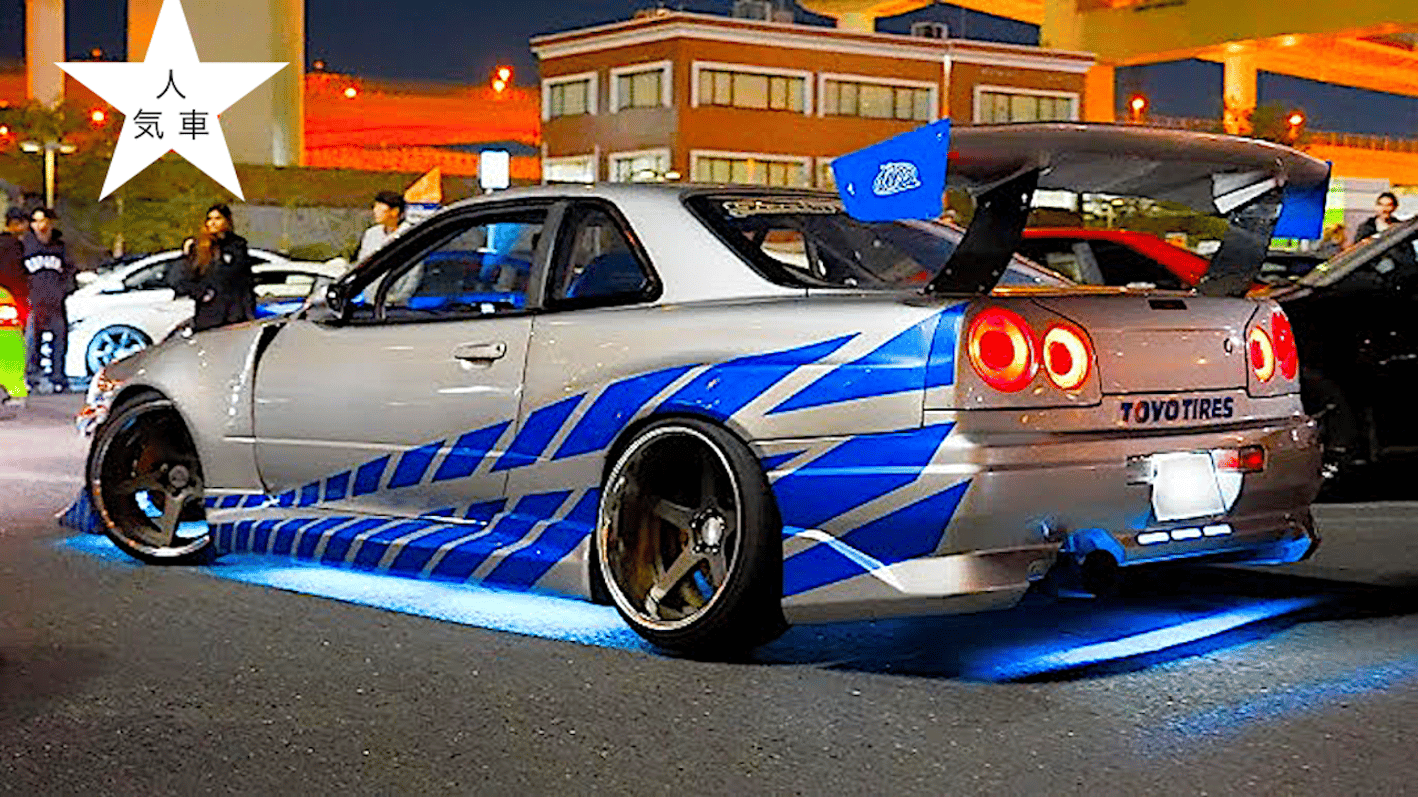
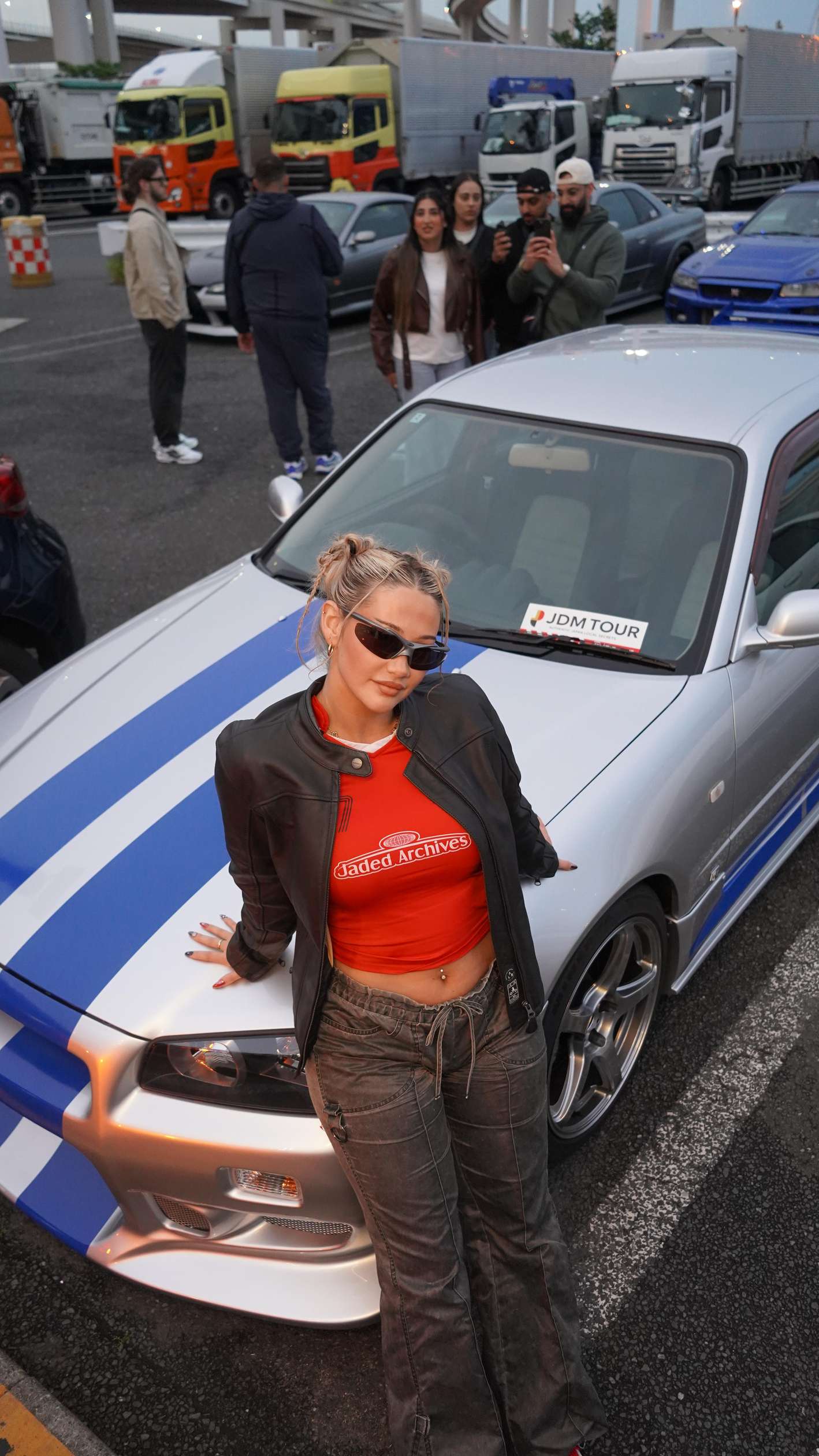
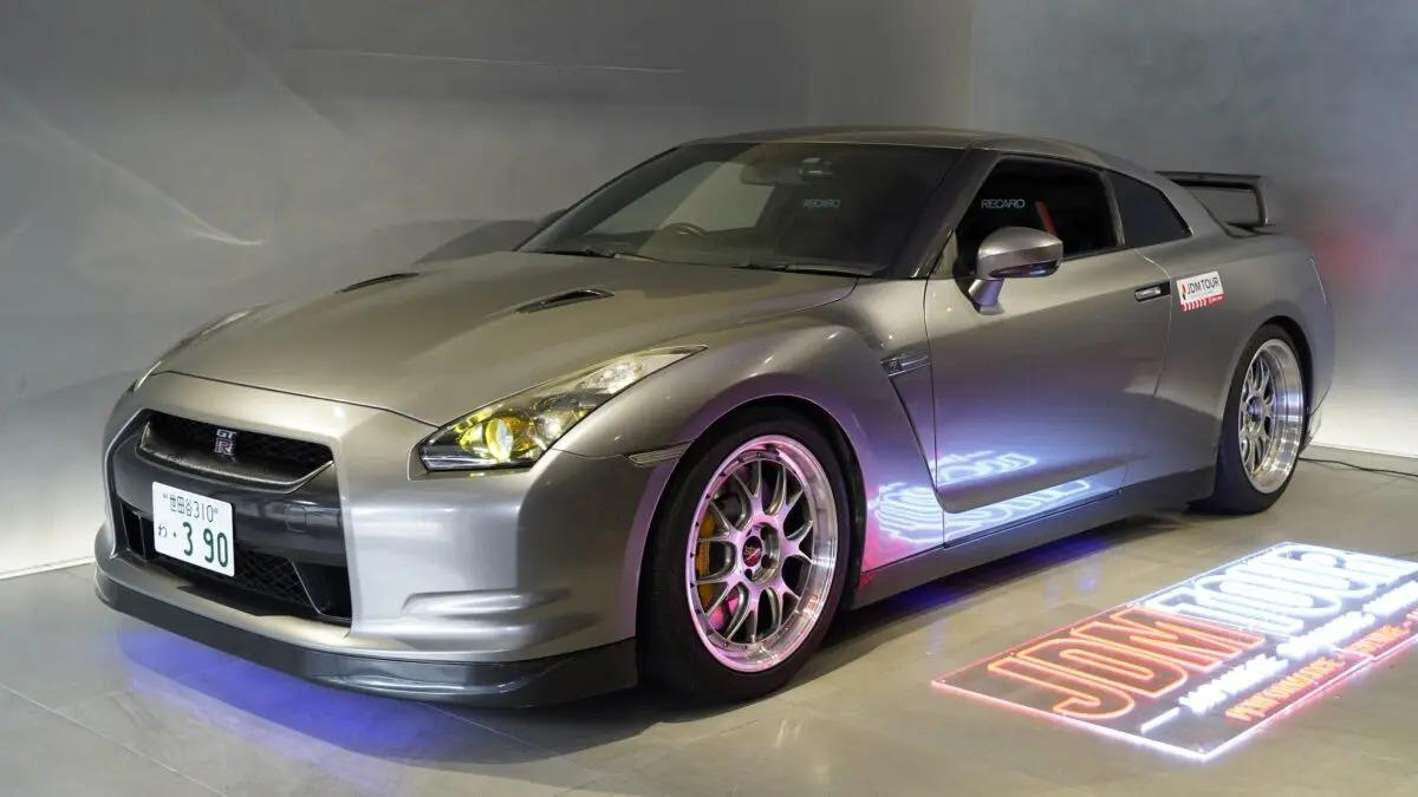
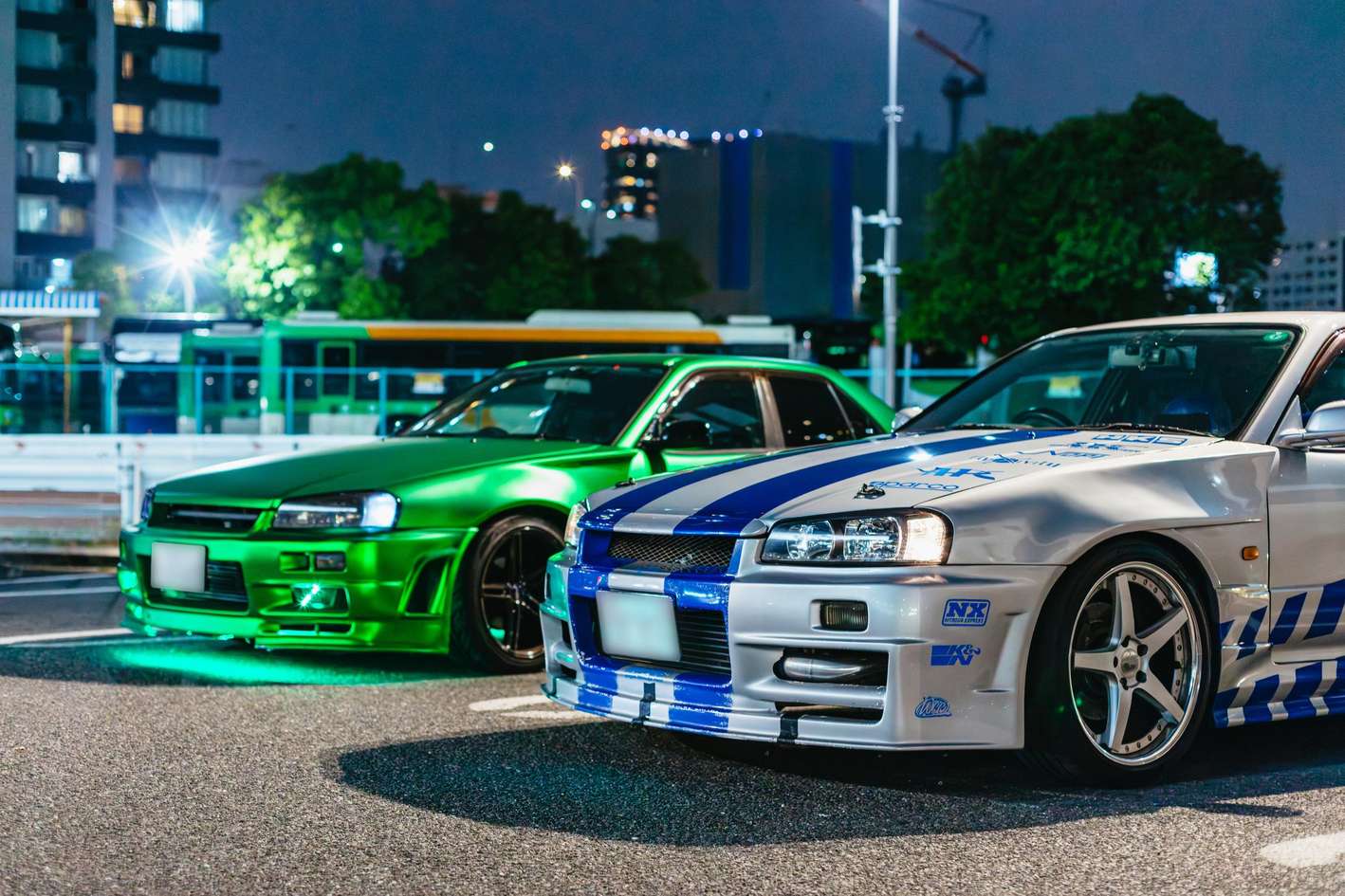
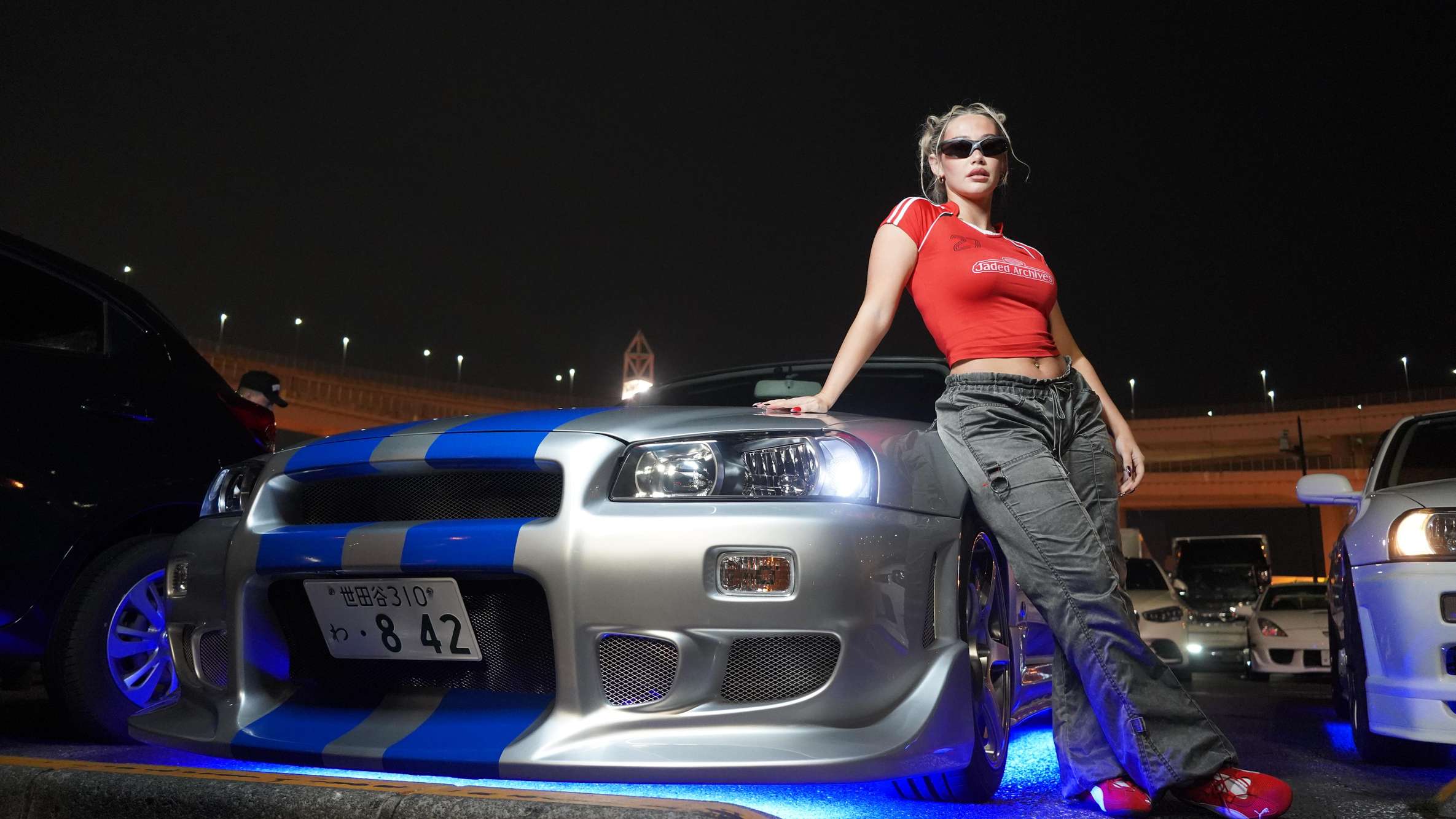
Take the wheel of a real Skyline GT-R R34 or R35 and roll into Daikoku PA with the convoy. A lead pace car guides the way on the Bayshore Route, radios call out every turn and trap, and a photographer captures the night. Drivers 23 and up bring a licence and an IDP, and the engine is yours.
4.9★average rating1,552traveler reviews100%free cancellation42countries travelers came from
Tokyo JDM driving tour - which one fits you
Three ways to meet Tokyo's JDM scene: ride along as a passenger, drive yourself in a guided group, or learn to drift on a closed circuit. The one question is whether you want your hands on the wheel. Passengers need no permit; drivers and drifters do.
DocumentsBring your original passport and home licence. Most countries need an International Driving Permit from the 1949 Geneva Convention; licences from Switzerland, Germany, France, Belgium, Monaco, Austria and Taiwan need an official JAF Japanese translation instead.
Age and depositSelf-drive GT-R tours require drivers to be at least 23, and R34 drivers must bring a credit card, not a debit card.
FootwearJapanese rules ban driving in flip-flops, backless sandals, slippers, geta or high heels, so wear sneakers or shoes with a held heel.
AlcoholJapan enforces zero tolerance, so any alcohol before an evening drive is out.
RainMeets are informal, so nothing cancels on paper, but heavy rain keeps show cars home. Tours run as scheduled unless severe storms force a reschedule or refund.
Police closuresIf loudspeakers announce Daikoku PA is dispersing, convoys clear out peacefully and drivers often move on to Umihotaru or Tatsumi PA.
Getting thereDaikoku PA has no pedestrian access and taxis cannot pick up inside, so book a tour or drive yourself.
Circuit wearDrift lessons require long pants, long sleeves and closed shoes for track driving.
Pick your JDM driving match
Answer a few quick questions and the finder shows the drive that fits you.
1Who's coming?
2What's your budget?
3What kind of trip?
Your best match
match
Tokyo: Fast and the Furious Tokyo Drift III JDM Car Tour★ 4.8 (880) · 3 hours - 1 day · Classic passenger cruise
Popular with solo travelers and friends. 97% of solo travelers and 98% of friends gave it 4 or 5 stars.
Booked 0 times yesterday
The passenger choice with the most stops, from Liberty Walk Tokyo to a Tokyo Tower photo stop.
documentYou cannot drive on these JDM driving tours without your original passport and license in hand, and the R34 GT-R also requires a credit card.
Pack your original physical passport and home-country driver's license. Most licenses need an International Driving Permit issued under the 1949 Geneva Convention. If yours is from Switzerland, Germany, France, Belgium, Monaco, Taiwan or Austria, get an official Japanese translation from the Japan Automobile Federation before you leave home. U.S. military personnel and their families can drive on their SOFA permit and state license instead. Meet these rules or you sit the drive out with no refund.
Compare your JDM driving tour options
Best value self-drive
4 hours·English, Japanese
4.9(18)
Tokyo Drift: Self-Drive R34/35 GT-R JDM Car Tour Daikoku PA
The cheapest way to take the wheel of a real GT-R on a four-hour guided convoy to Daikoku PA.
Free cancellationDrive a 34GT-R and 35GT-R Nissan Skyline ConvoyVisit to Daikoku Parking Area
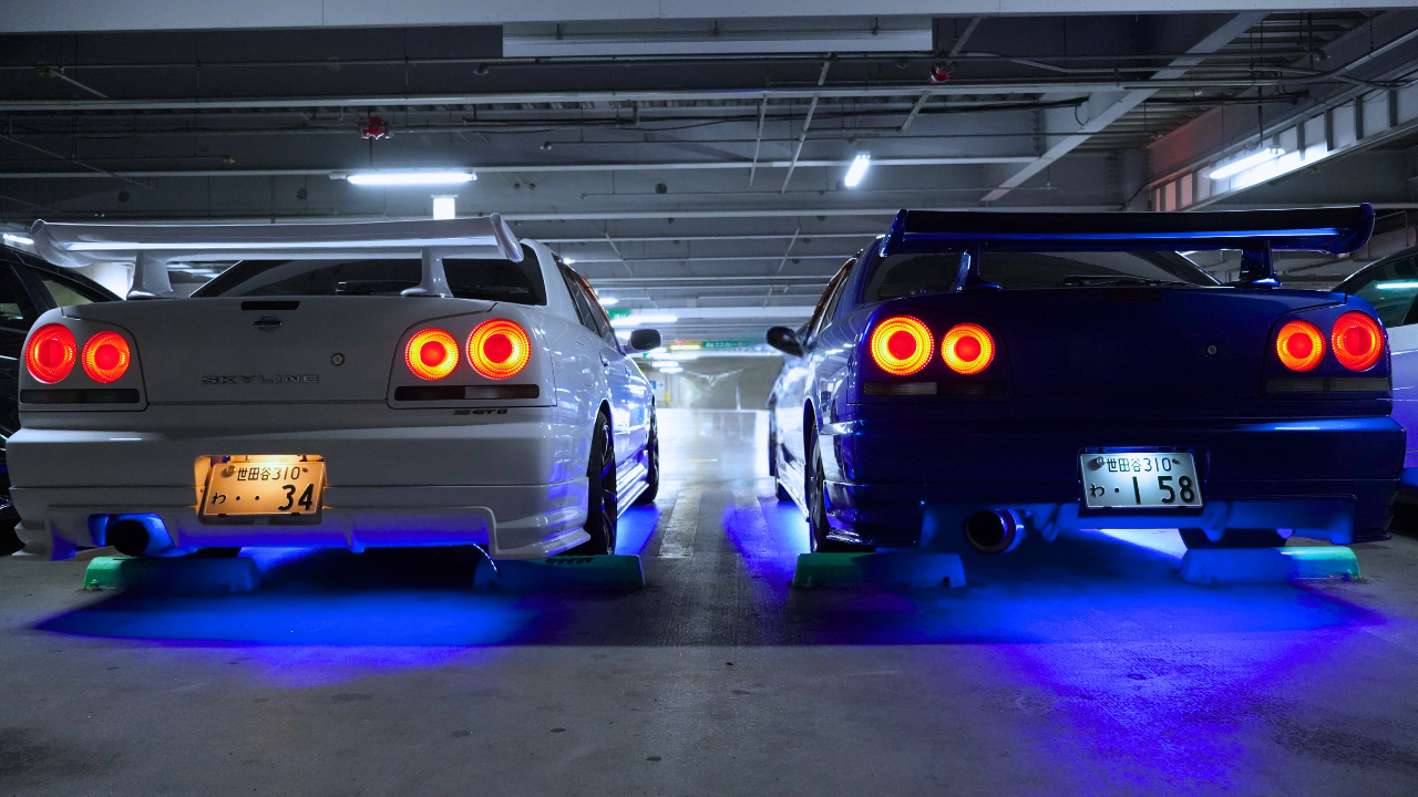
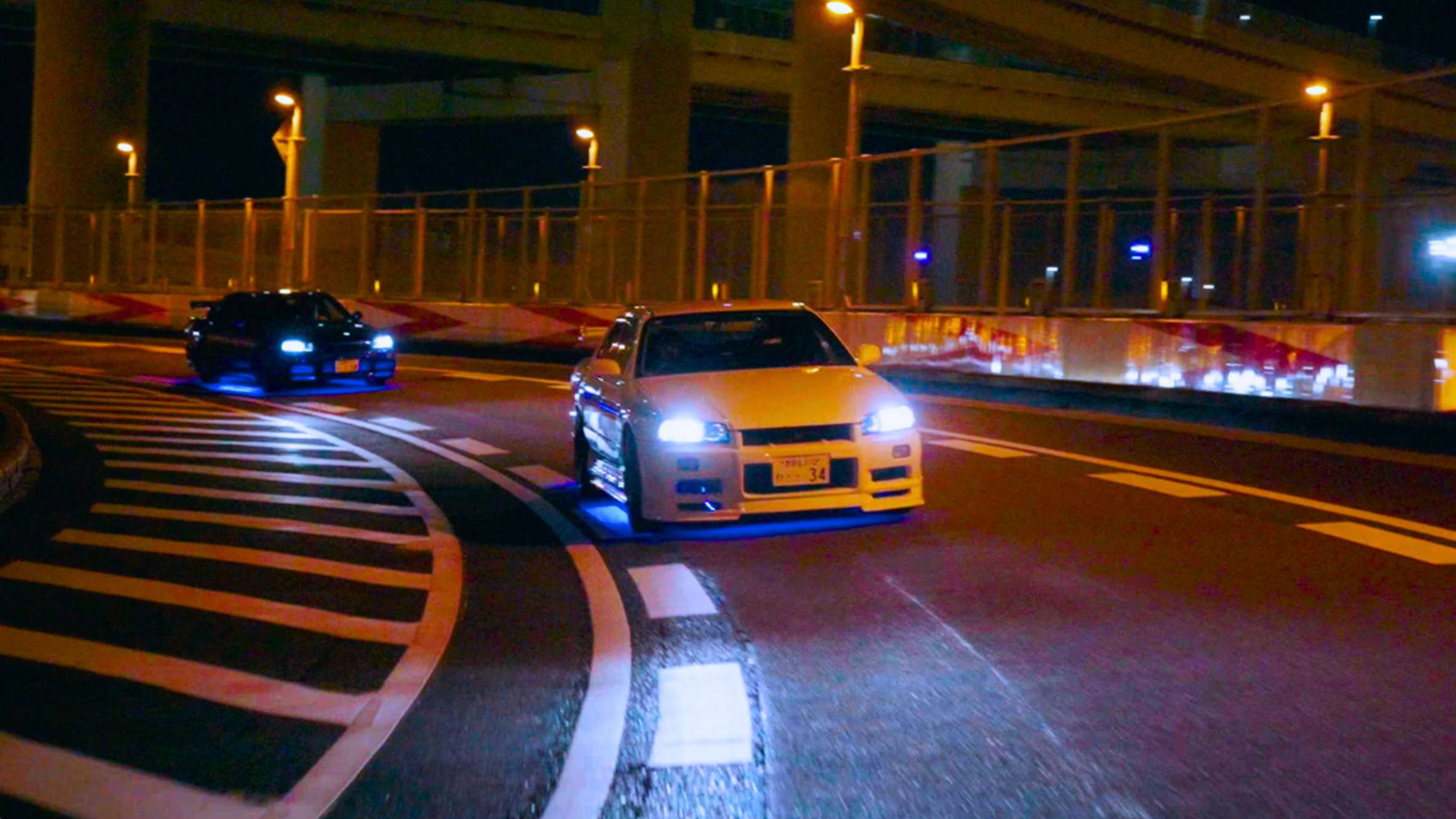
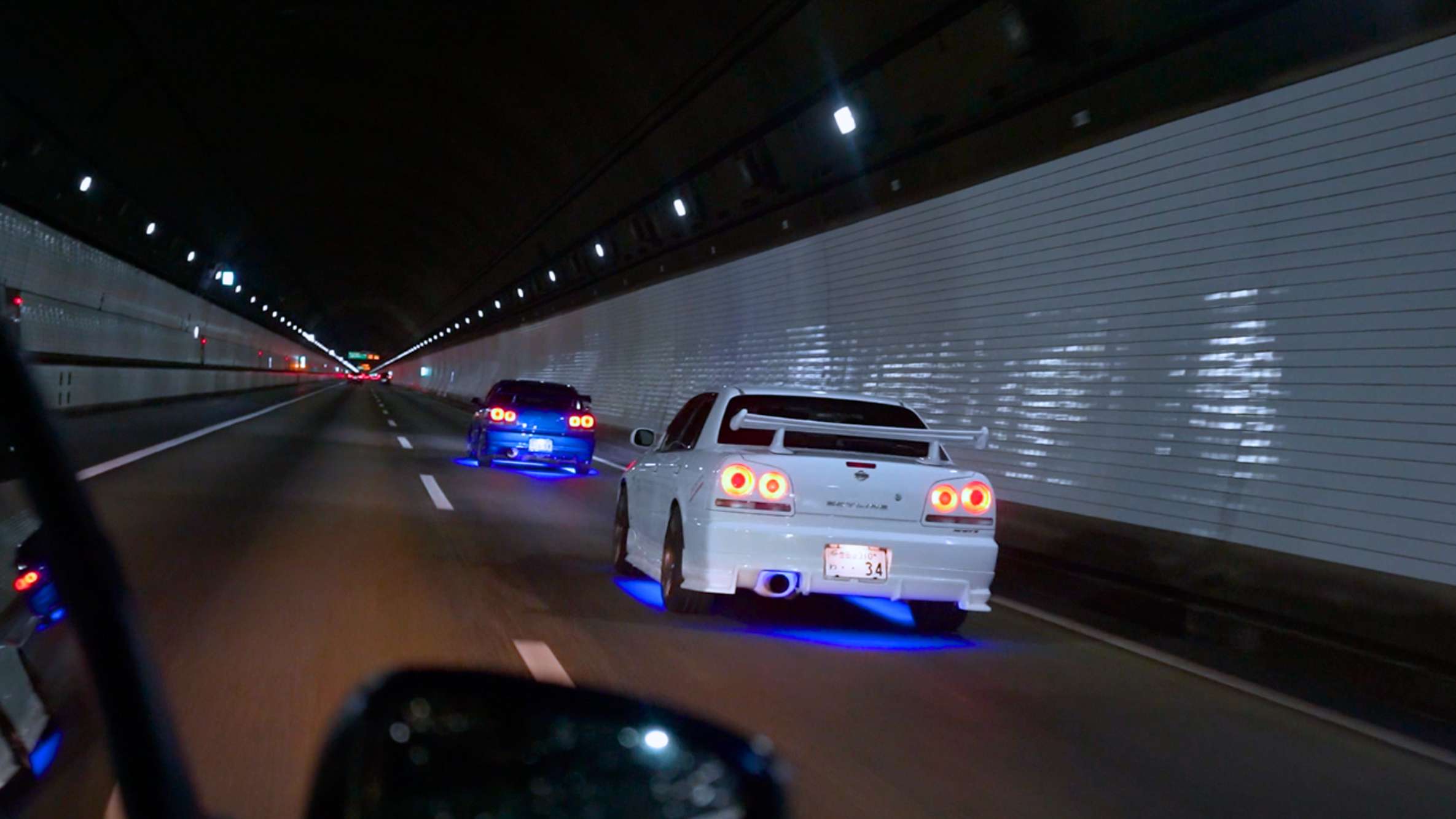
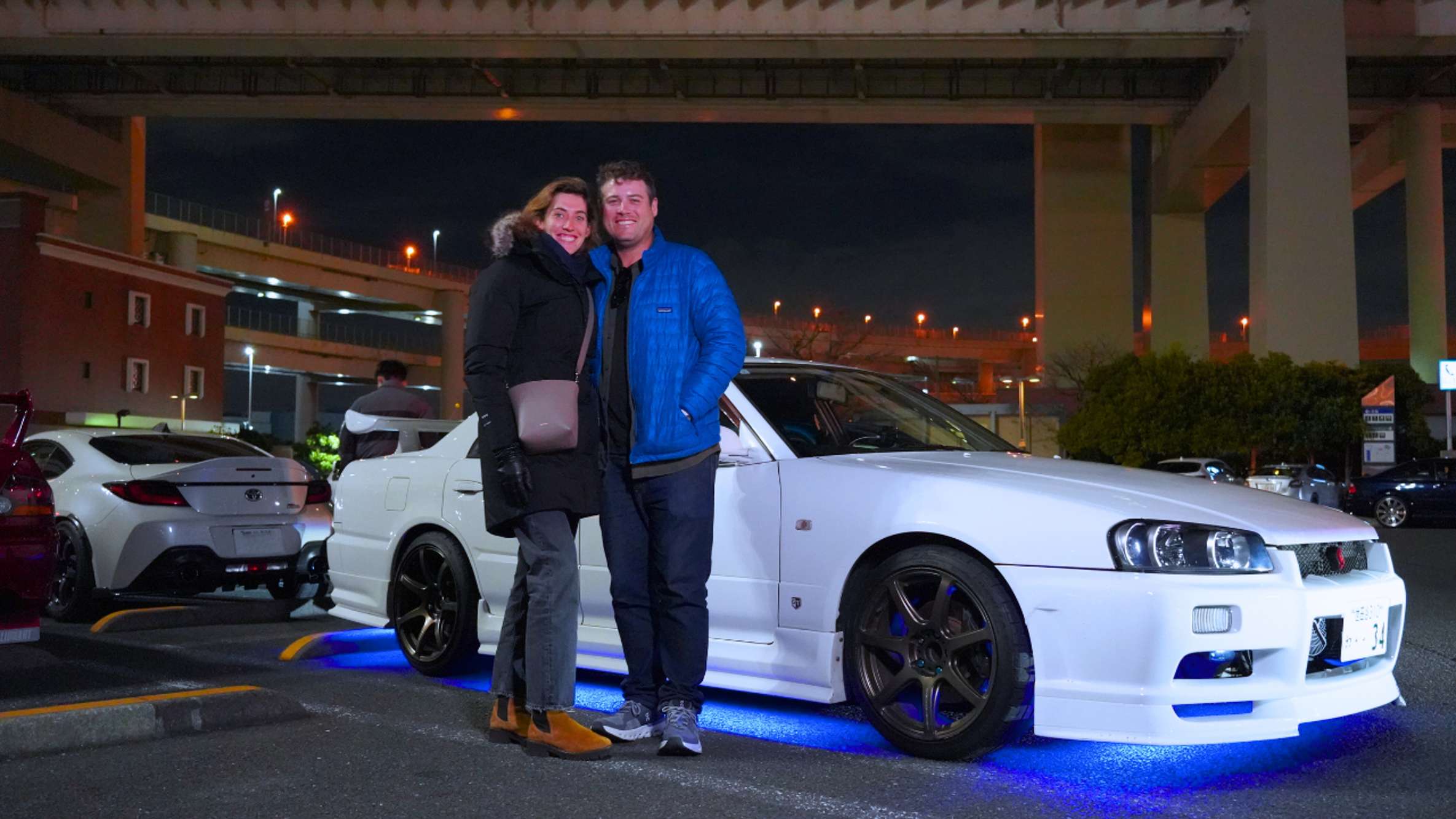
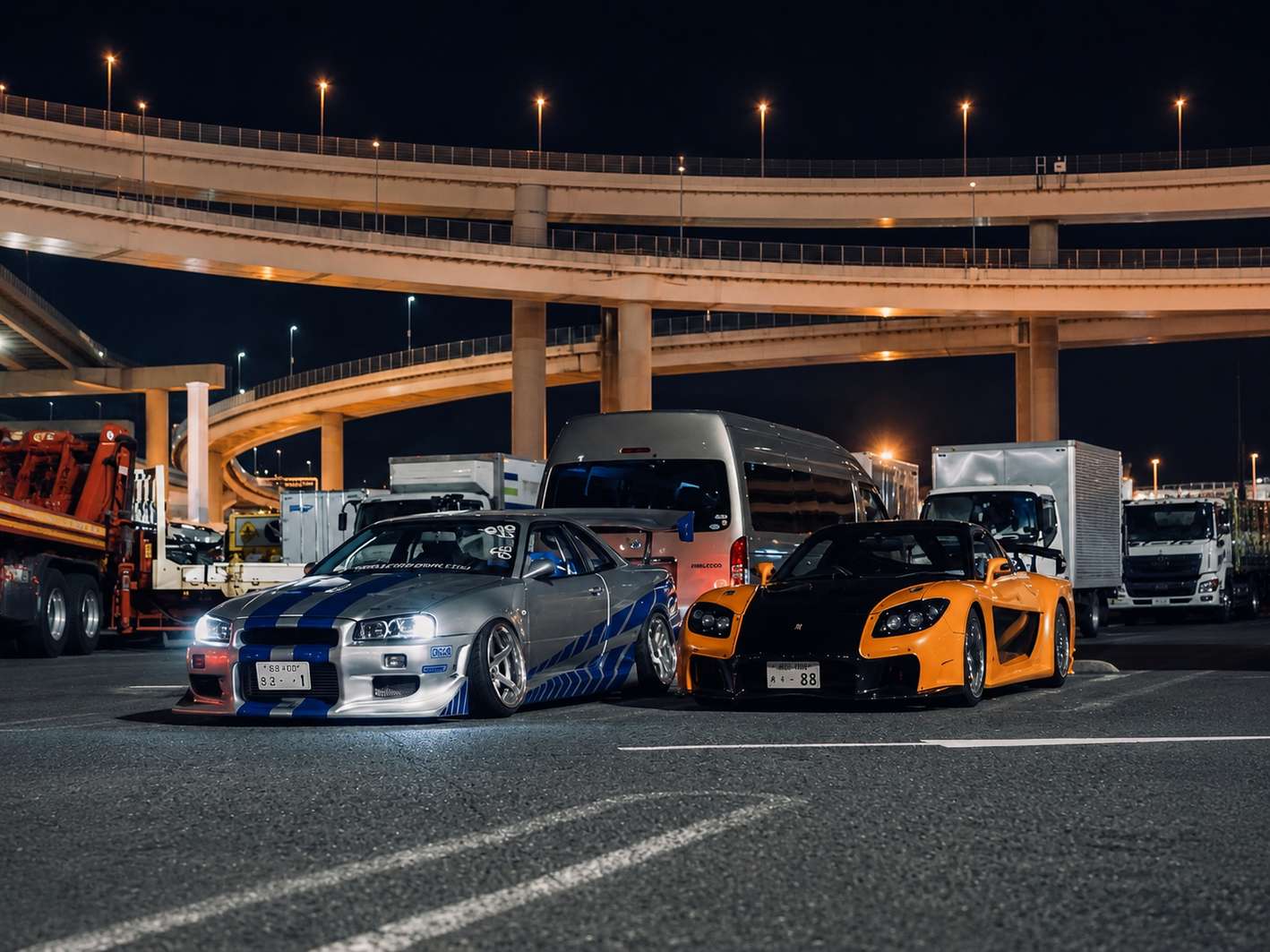
The night starts with keys in your hand. You take the wheel of a real Skyline ER34 or GT-R R35, join a small convoy, and follow a guide leading in a separate car through central Tokyo's expressways.
A two-way radio keeps the group together through toll gates and junctions, and the pace is set to how comfortable you feel behind the wheel.
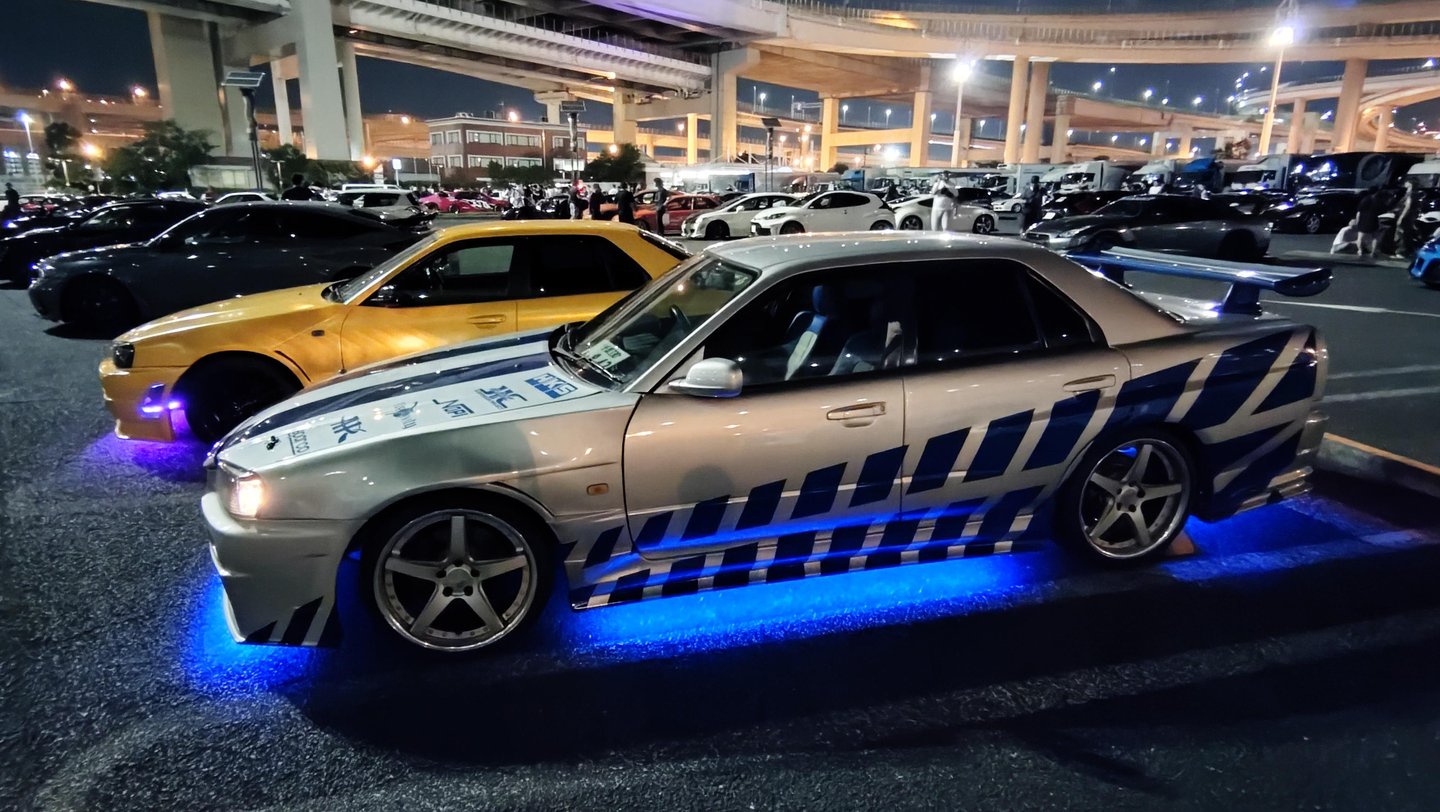
The main stop is Daikoku Parking Area, Japan's most famous car meet spot, where you get a full hour among the builds.
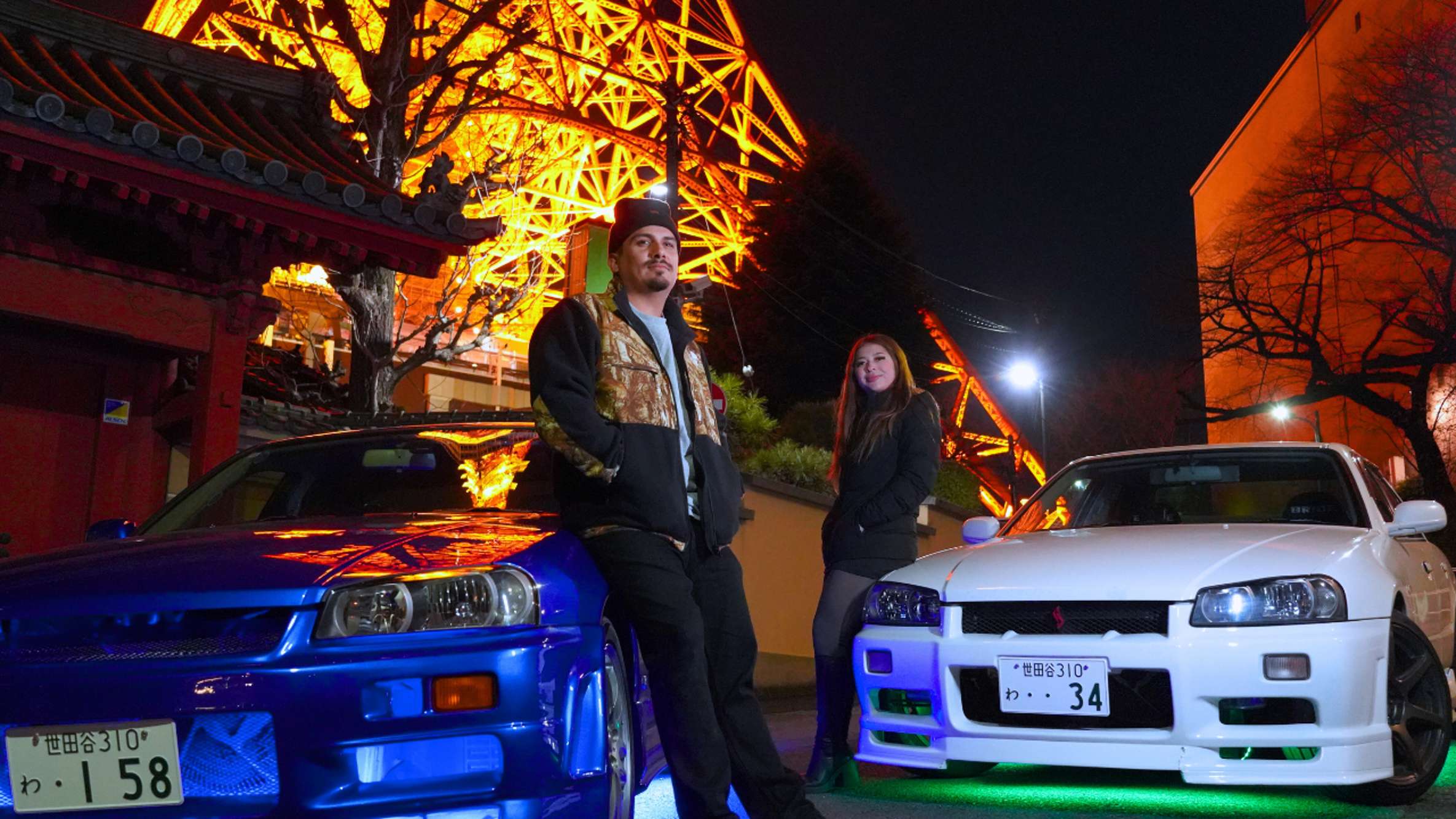
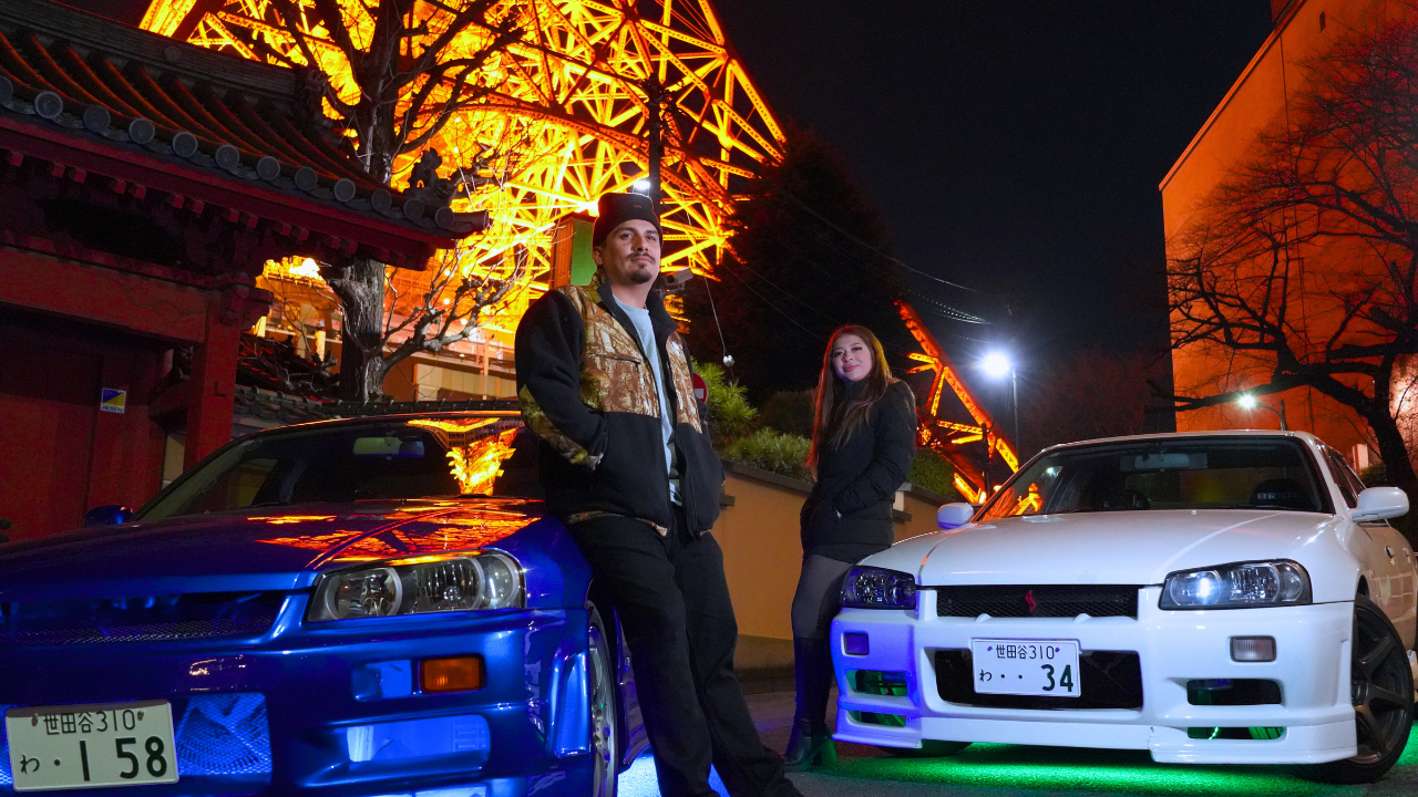
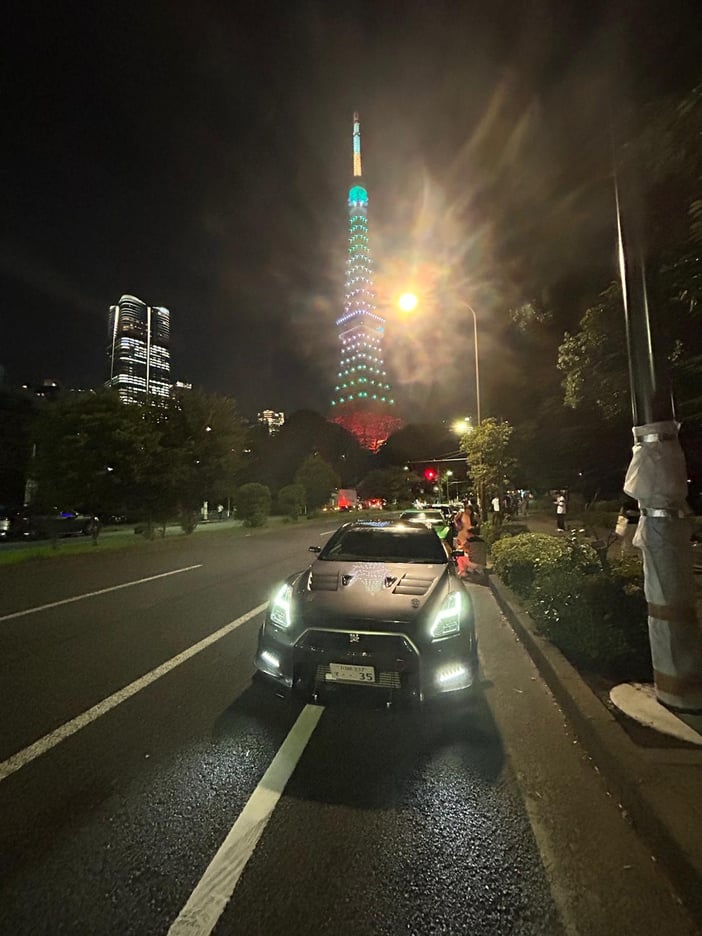
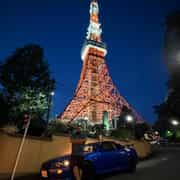
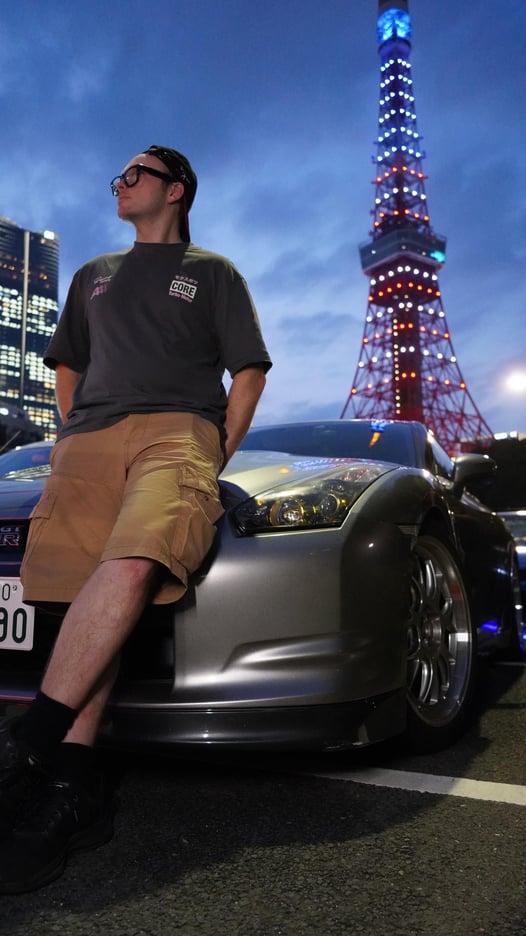
The route home runs over Rainbow Bridge with Tokyo Bay lit up below, then a photo stop at Tokyo Tower before your guide leads the convoy back. A photographer rides along, and you can order a cinematic movie of your drive.
Meeting point2 places, depending on your optionThe final Jiyugaoka drop-off after the convoy returns and the cars are handed back.Street View2Tokyo· 60 minA 30-minute scenic drive back across the city as the guide leads the convoy toward the bay.From this tour3Daikoku Parking Area· 60 minYou spiral down a long circular off-ramp onto the artificial island where JDM meets happen nightly. You get an hour of free time, photos, and a guided look at the cars.4Tokyo· 30 minA 30-minute scenic drive back across the city as the guide leads the convoy toward the bay.From this tour5Rainbow Bridge, Tokyo· 5 minThe convoy crosses the illuminated suspension bridge over Tokyo Bay, the skyline and Odaiba spread out below.Street View6Tokyo Tower· 10 minA 10-minute photo stop beneath the lit tower, with the photographer capturing you with your GT-R.Drop-off4 places, depending on your optionA second drop-off slot at the main meeting point, so you can end the night where the cars were handed over.Street View
The guides made the night, describing them as friendly, knowledgeable drivers who kept everything easy and personal.
Best surprise
Partners and family members with no interest in cars still loved the evening and would go again.
Most common wish
A few reviewers wished the meet had lasted longer after police cleared the parking area early.
How to book a JDM driving tour in Tokyo
01
Choose your car and option
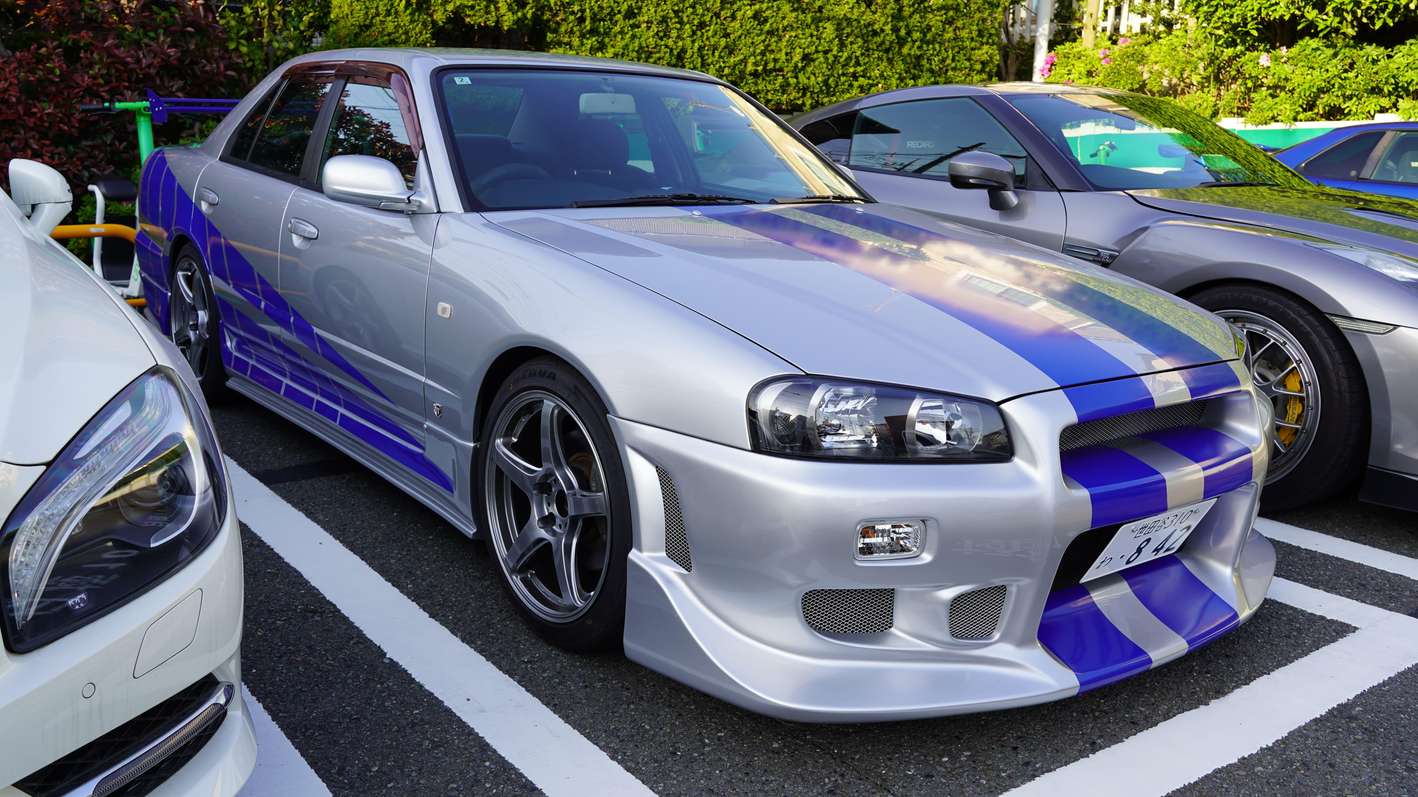
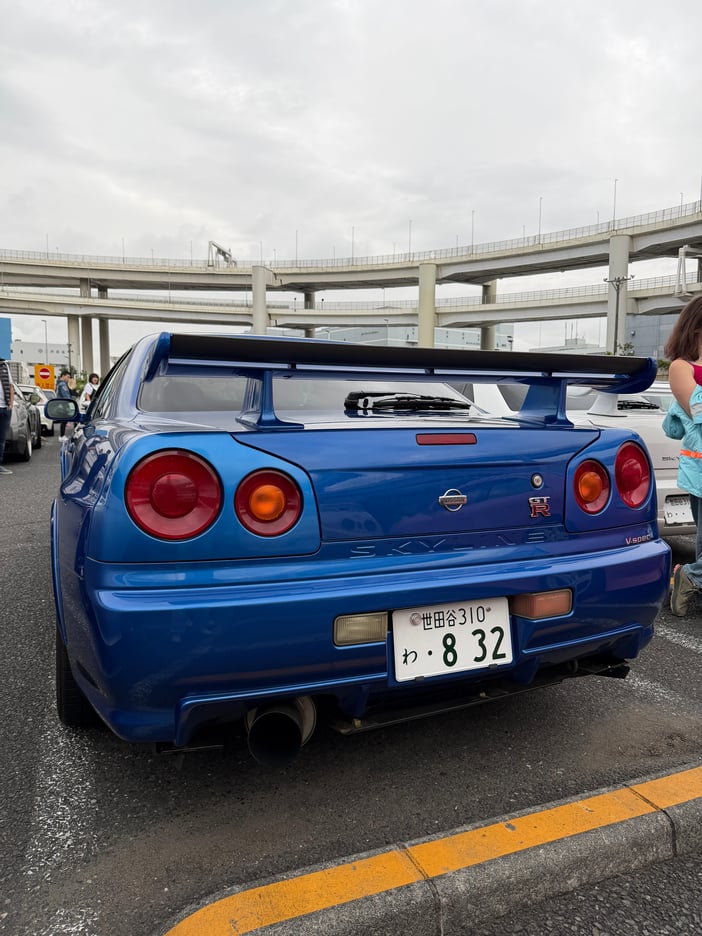
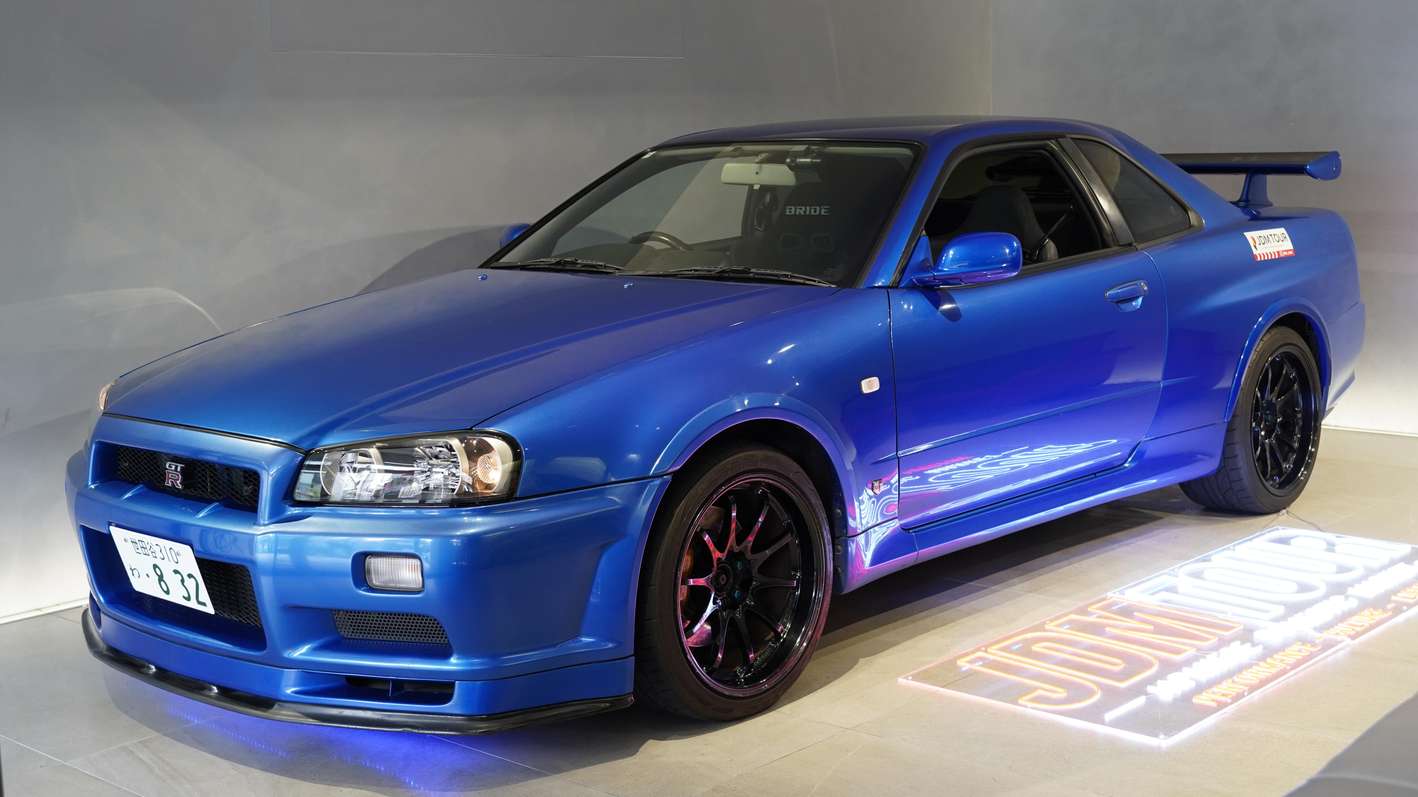
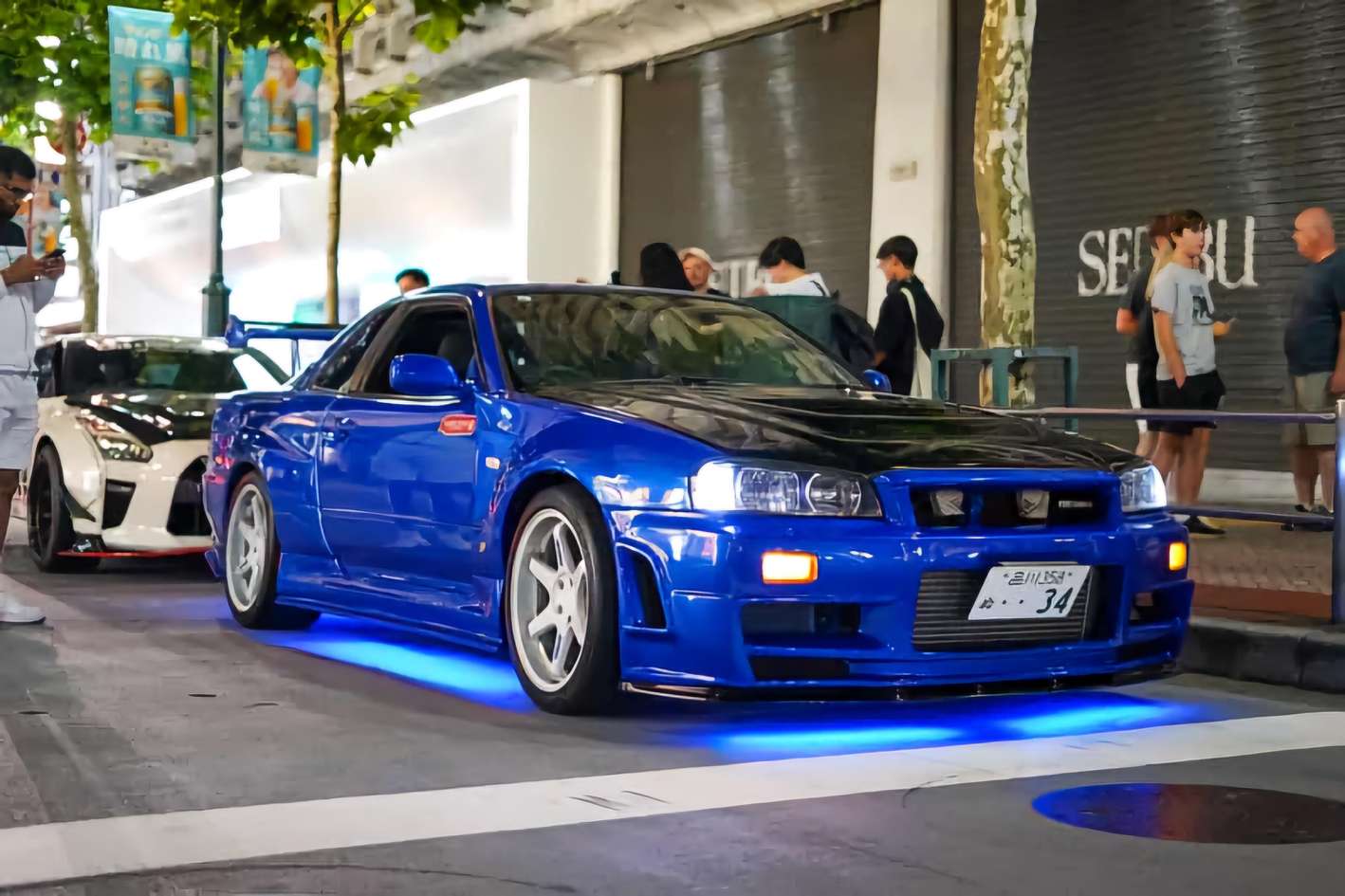
Pick the car you want to drive on the self-drive GT-R tour: the Skyline ER34 in white, Bayside Blue or silver, the R34 GT-R V-Spec, or the R35 GT-R. Each option is a separate booking, so choose before you pay.
Common mistakeFirst-timers book the cheapest option and assume they drive a GT-R. Only the option you select puts that car in your hands.
02
Sort your licence documents
Check what your country requires. US licence holders need an International Driving Permit under the 1949 Geneva Convention. Licences from Switzerland, Germany, France, Belgium, Monaco or Taiwan need a certified Japanese translation instead.
ImportantBring the original physical documents on the day. Miss one and you cannot participate, with no refund.
03
Check the age and card rules
You must be 23 or older to drive on this tour. R34 drivers also bring a credit card, not a debit card, for the vehicle. Have both ready before you book rather than at the meeting point.
Pro tipA debit card is the detail that trips people up. Charge it to a proper credit card and the check-in takes minutes.
04
Book and watch for messages
Reserve your slot and note the terms: cancel up to 24 hours in advance for a full refund. Book at least a few days out so the operator has time to confirm your car and send any updates before the night.
RecommendedCancel up to 24 hours before if plans shift. Inside that window the booking stands, so decide early.
05
Prepare for departure night
Bring your passport, licence and permit, and arrive early for the briefing. The guide leads in a separate pace car and keeps radio contact with every driver, calling out turns, junctions and speed traps along the route.
Pro tipSlot in right behind the lead car if you want the most dynamic run. The convoy sets its pace to the least comfortable driver.
What to know before you book a JDM driving tour
Can stop the dayGood to knowGood news
01
ChoosingWhat it is, who it suits, when to go
4
Right-hand drive
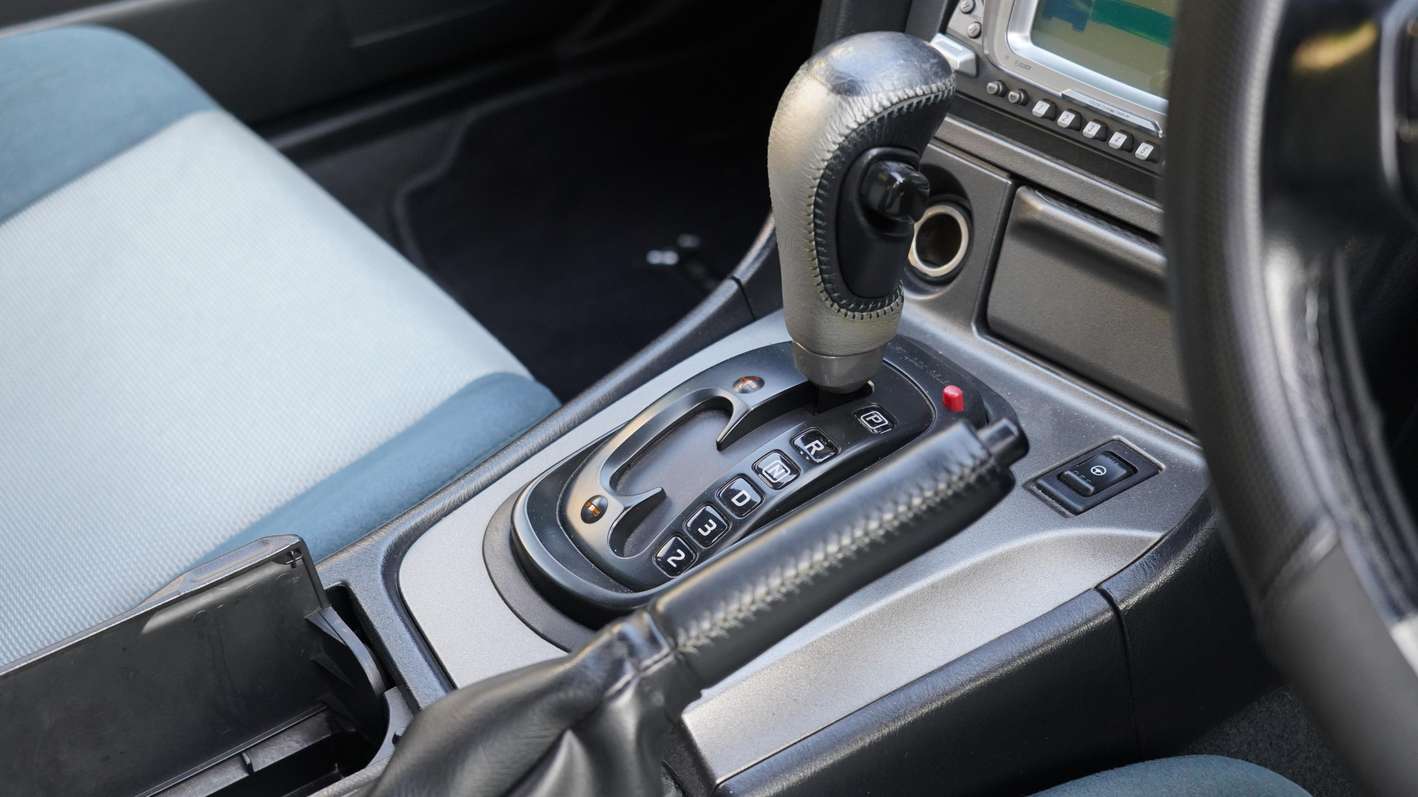
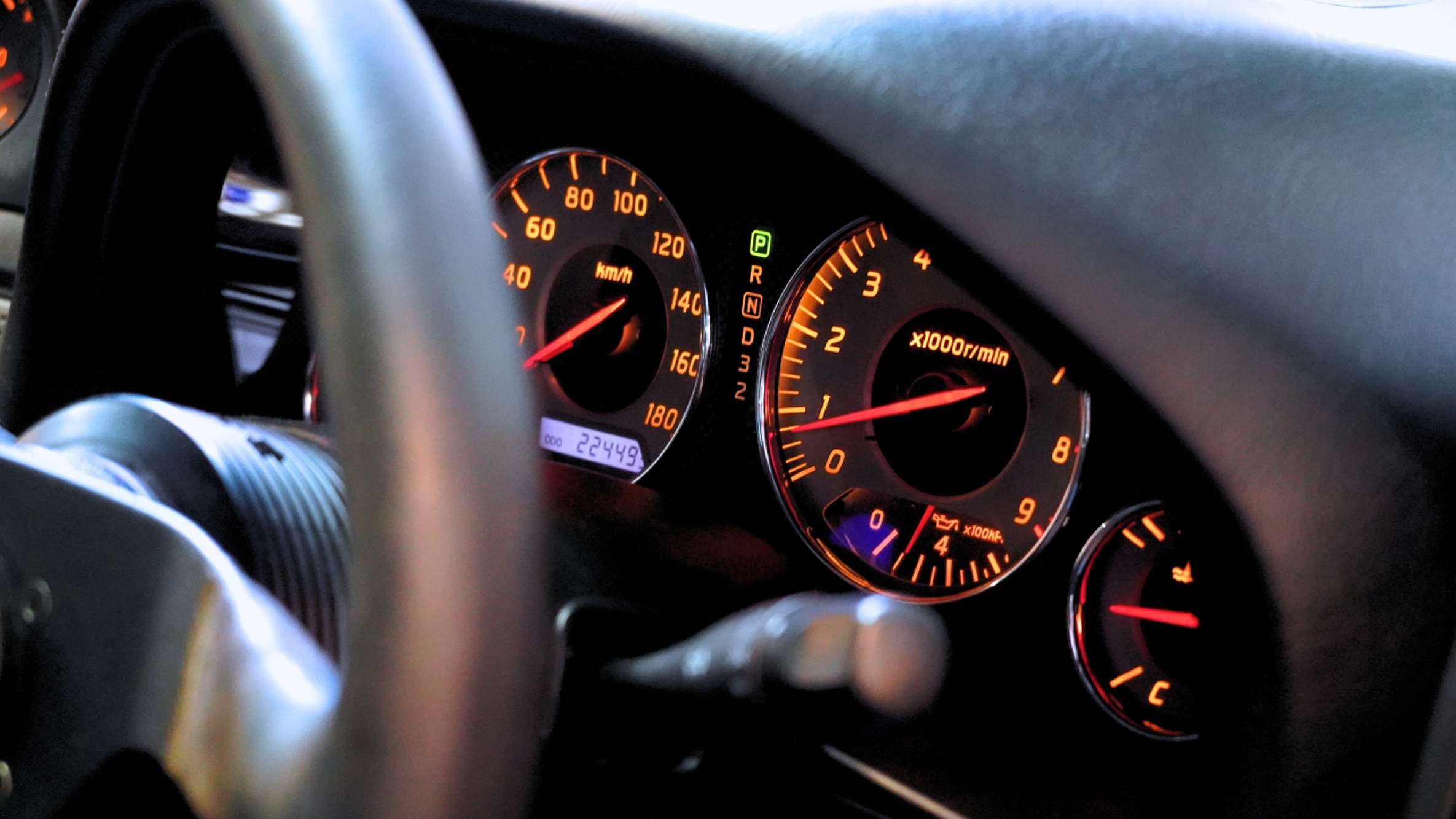
All the cars are right-hand drive. The gear lever sits in your left hand and the turn signal stalk is on the right of the column, the mirror image of a left-hand drive car. The pedals keep their normal order, so the shift pattern itself reads the same.
Convoy system
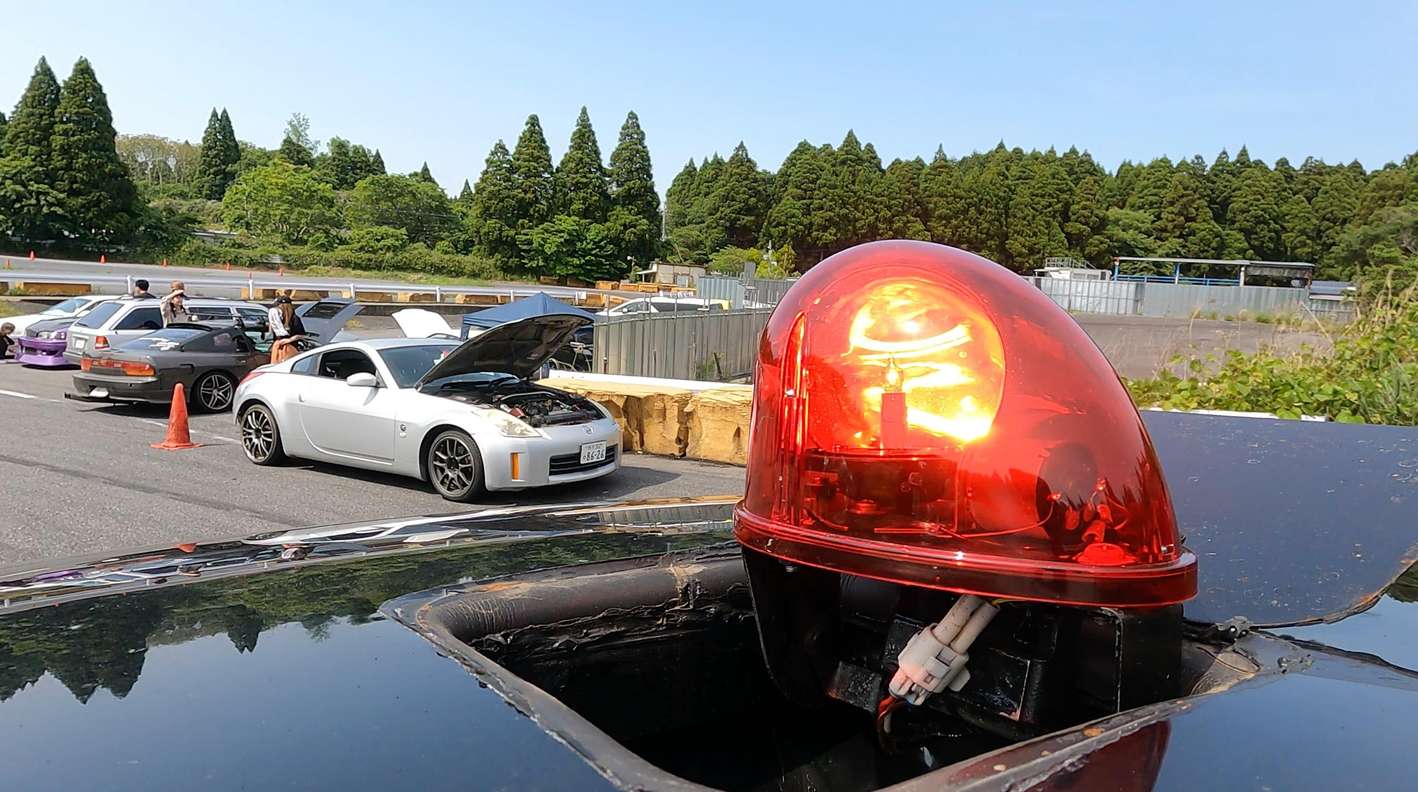
A lead car and a chase car hold the group together through toll gates and expressway junctions, talking to you over two-way radio. The lead car calls out speed traps and sets the pace to match your comfort. The slot right behind it gives the quickest, most dynamic run.
Speed and lawCan stop the day
The Wangan Route limit is 80 km/h, and police generally tolerate up to 19 km/h over. Cameras flash past roughly 39 to 40 km/h over the limit, which becomes a criminal offense requiring a court appearance. Japan also runs a zero-tolerance alcohol law: none before or during driving.
Crowds and closures
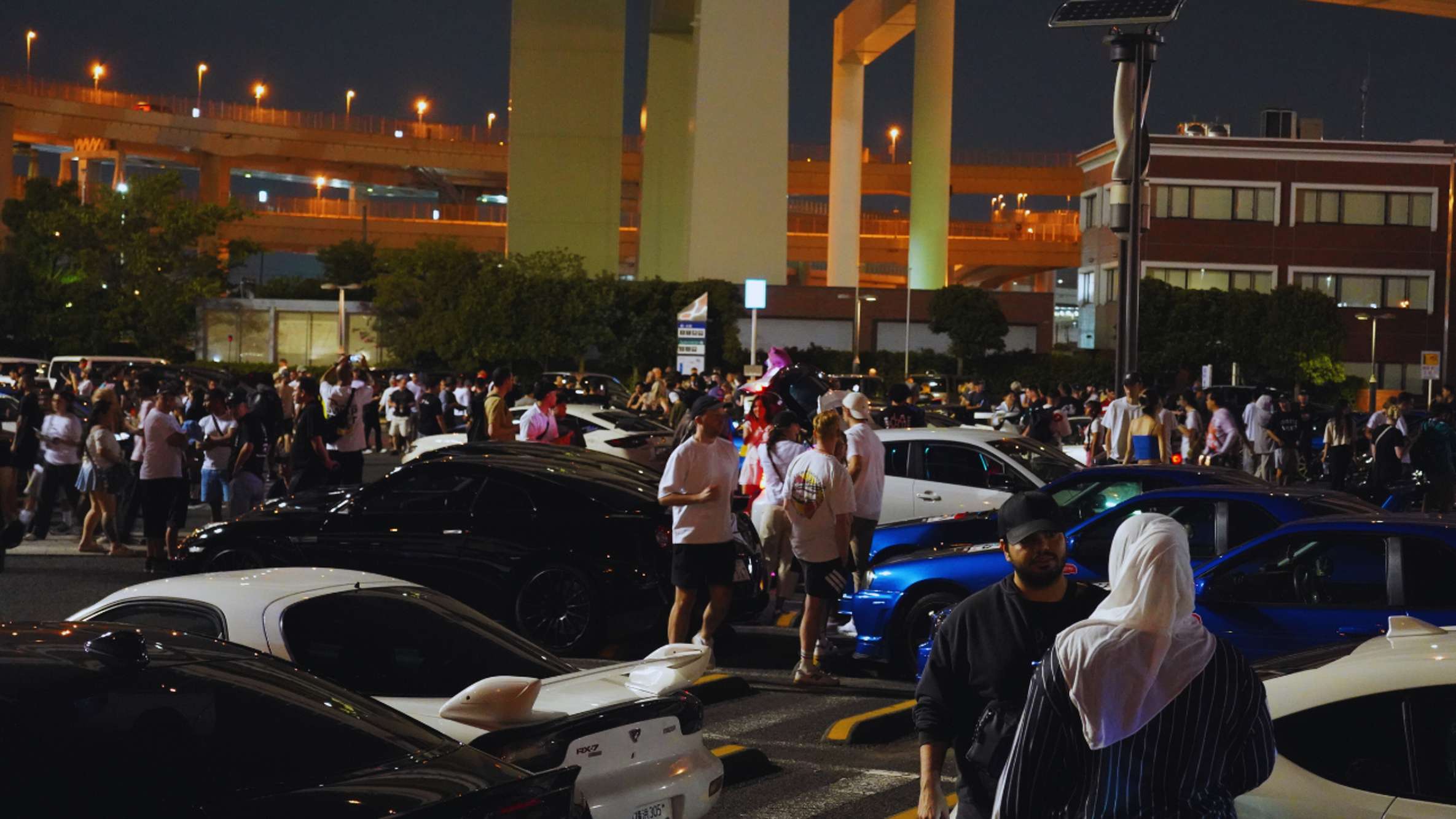
Friday and Saturday nights draw the biggest crowds, and police sometimes close the small-vehicle entrance between roughly 7:30 pm and 2 am. If the announcement comes, everyone clears out peacefully and cars often move on to Umihotaru PA across the bay. Weeknights bring a smaller, relaxed lot with rare closures.
02
BookingHow far ahead, and what happens if plans change
2
Age and depositsCan stop the day
Drivers on the self-drive R34 and R35 GT-R tours must be at least 23 years old. Anyone driving the R34 also brings a credit card, not a debit card, as the deposit guarantee. Arrive without the papers and you sit the day out with no refund.
Cancellation
Every tour on this page lets you cancel up to 24 hours in advance for a full refund. That makes it easy to lock in an R34 or R35 slot early and adjust later if your plans shift. Severe storms that force a reschedule are handled with a new date or a refund.
03
Before you goPapers, health, what to bring
3
Documents
Every driver brings an original physical passport plus their home country license. Licenses from the US and most other countries need an International Driving Permit issued under the 1949 Geneva Convention. Switzerland, Germany, France, Belgium, Monaco and Taiwan licenses instead need a certified Japanese translation.
Military licenses
US military personnel and their family members can drive under a different setup. A SOFA (USFJ 4EJ) military permit or Department of Defense ID works alongside a US state license and passport. Bring all of the pieces in original physical form.
Drift lessons
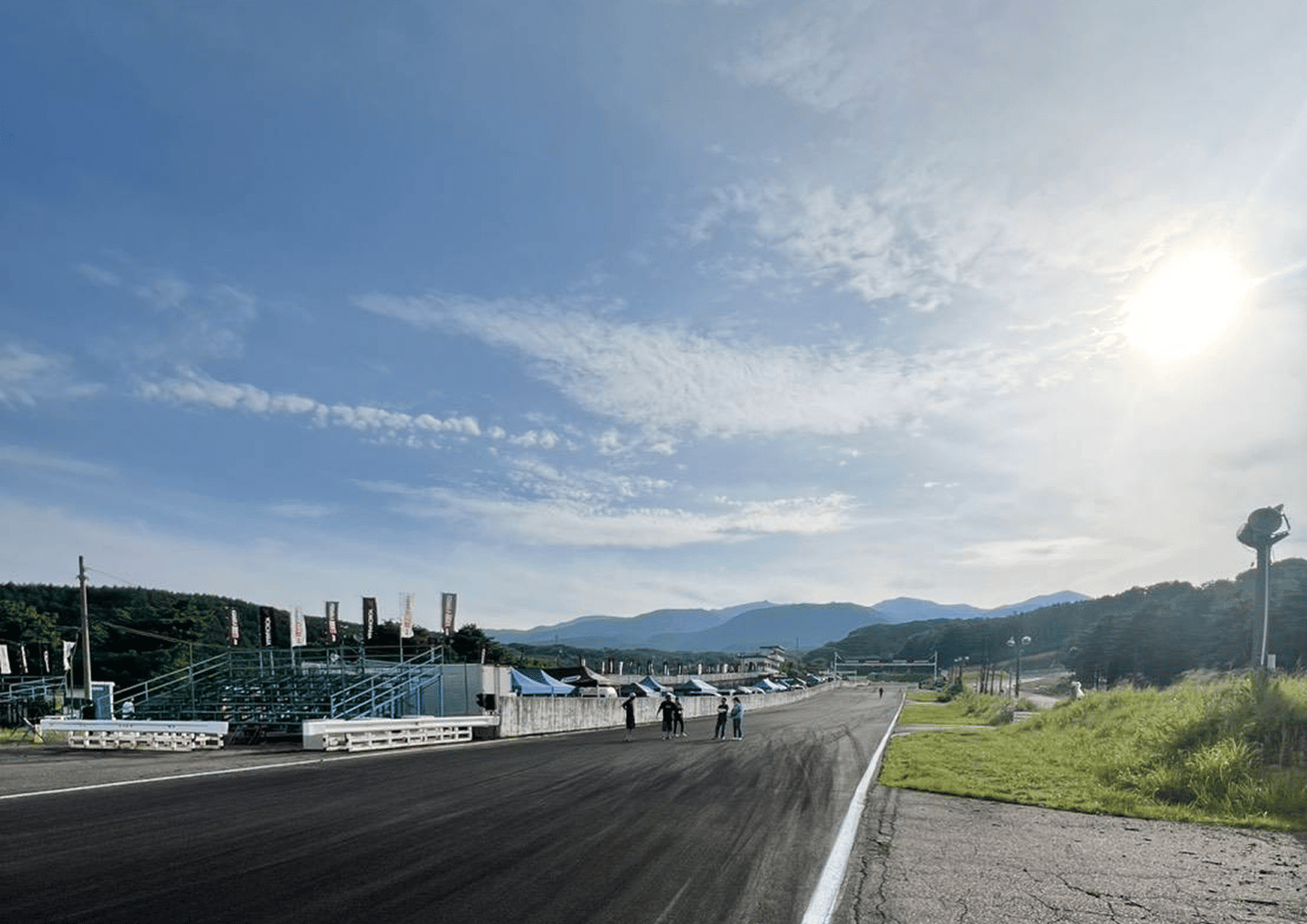
The private drifting lesson runs six hours with about three hours of track time, starting with a donut and building toward a figure 8. No license is needed because it happens on a closed circuit, and helmets and gloves are provided. Beginners drive a Mazda MX-5, more advanced drivers move up to a 350Z, RX-8 or 180SX.
04
During the tourWhat is expected of you
3
Footwear
Wear secure closed-toe shoes such as sneakers, because flip-flops, backless sandals and heels are prohibited for drivers under Japanese rules. Skip loose sleeves and long hems that can snag on the wheel or shifter. For circuit lessons, long pants and long sleeves are required.
Meet etiquette
At Daikoku PA, ask before photographing interiors or faces, and keep your hands off any car unless the owner invites you. Avoid close-ups of license plates and never rev your engine or ask for a burnout. Follow staff or police instructions immediately and keep your voice down near resting truckers.
Tipping
No tip is expected for a guide, instructor or chauffeur in Japan, so you can skip the awkward math after the drive. If you want to thank someone anyway, the local custom is to place the cash inside an envelope. That small gesture lands well.
A JDM driving night in Tokyo - license, convoy, and the lot at Daikoku
The self-drive route exists, it is legal for visitors, and it puts you behind a real R34 or R35 GT-R on the expressway to Daikoku PA. The gaps between wanting that and booking it are licenses, convoy rules and timing. Every one of them closes below.
Tokyo· 35.60° N, 139.67° E
If you only remember three things
1
Self-drive GT-R tours require drivers of at least 23 with a 1949 Convention IDP, or a certified Japanese translation for licenses from places like Germany, France and Taiwan.
2
R34 drivers must bring a credit card on the day, since debit cards do not work for the deposit; show up missing a required document and you sit out with no refund.
3
Leave central Tokyo before 5 pm on Fridays or after 8 pm midweek, because police often clear Daikoku PA between 7:30 pm and 9:15 pm on weekend nights.
Why a JDM driving tour beats the passenger seat
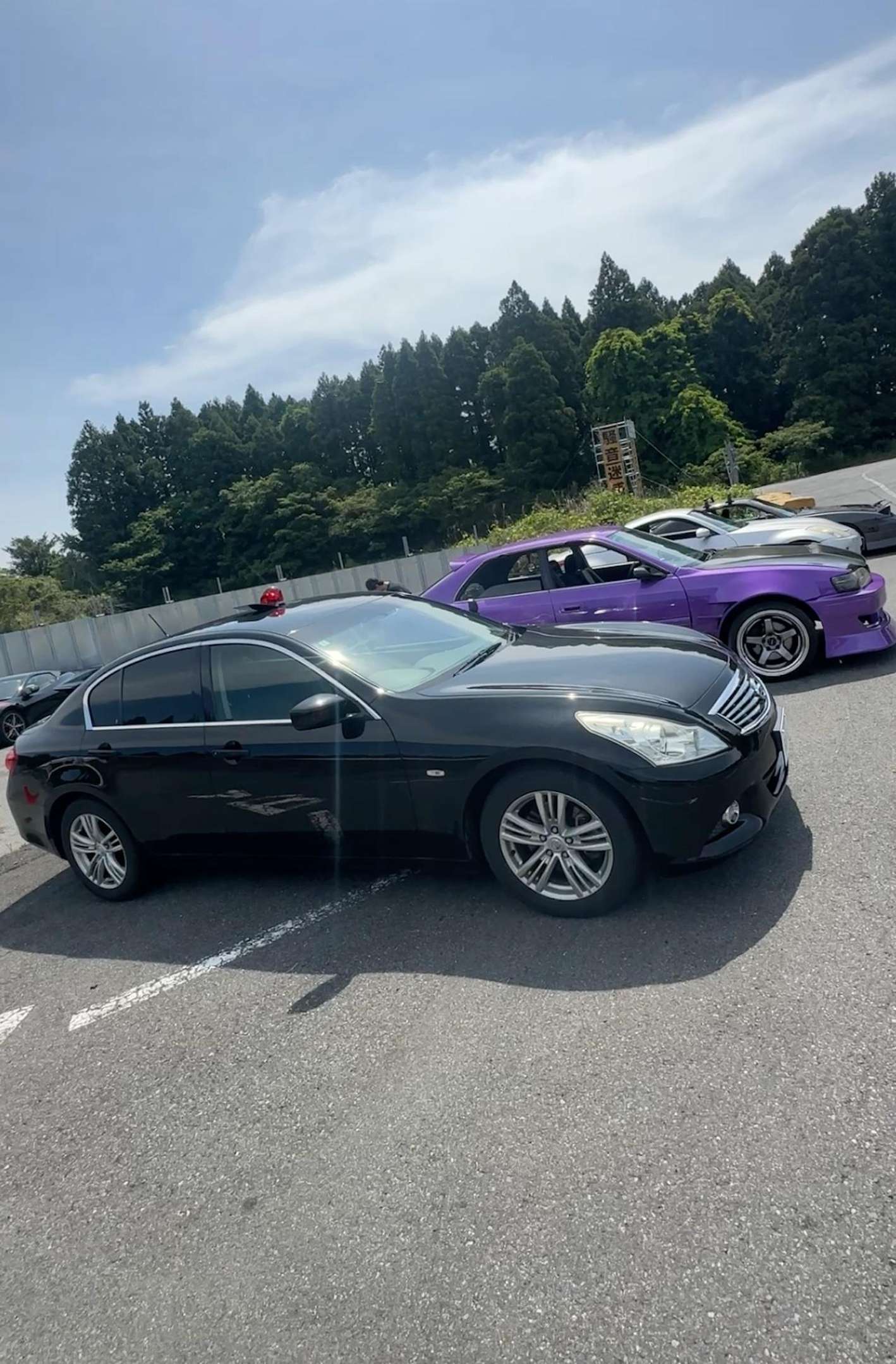
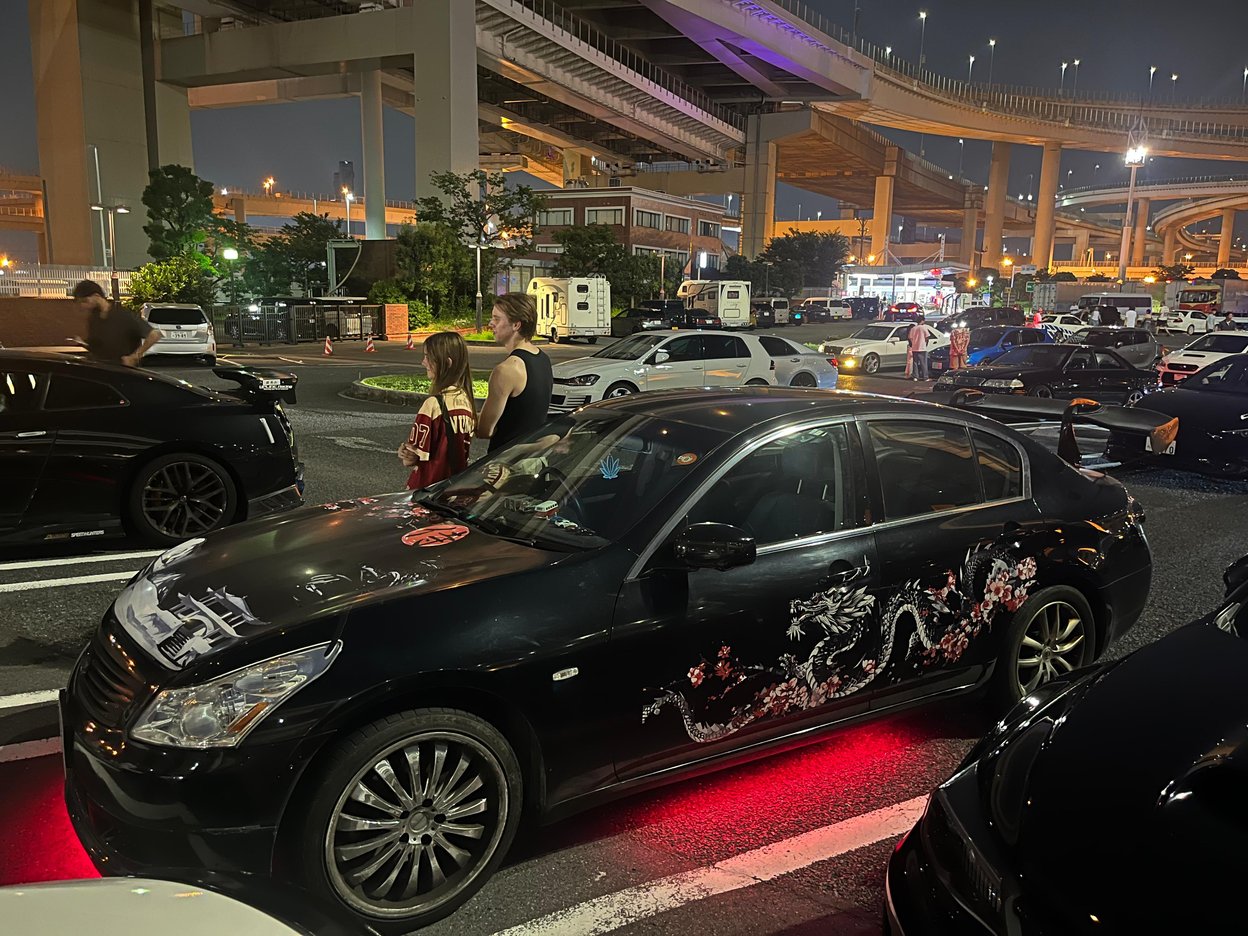
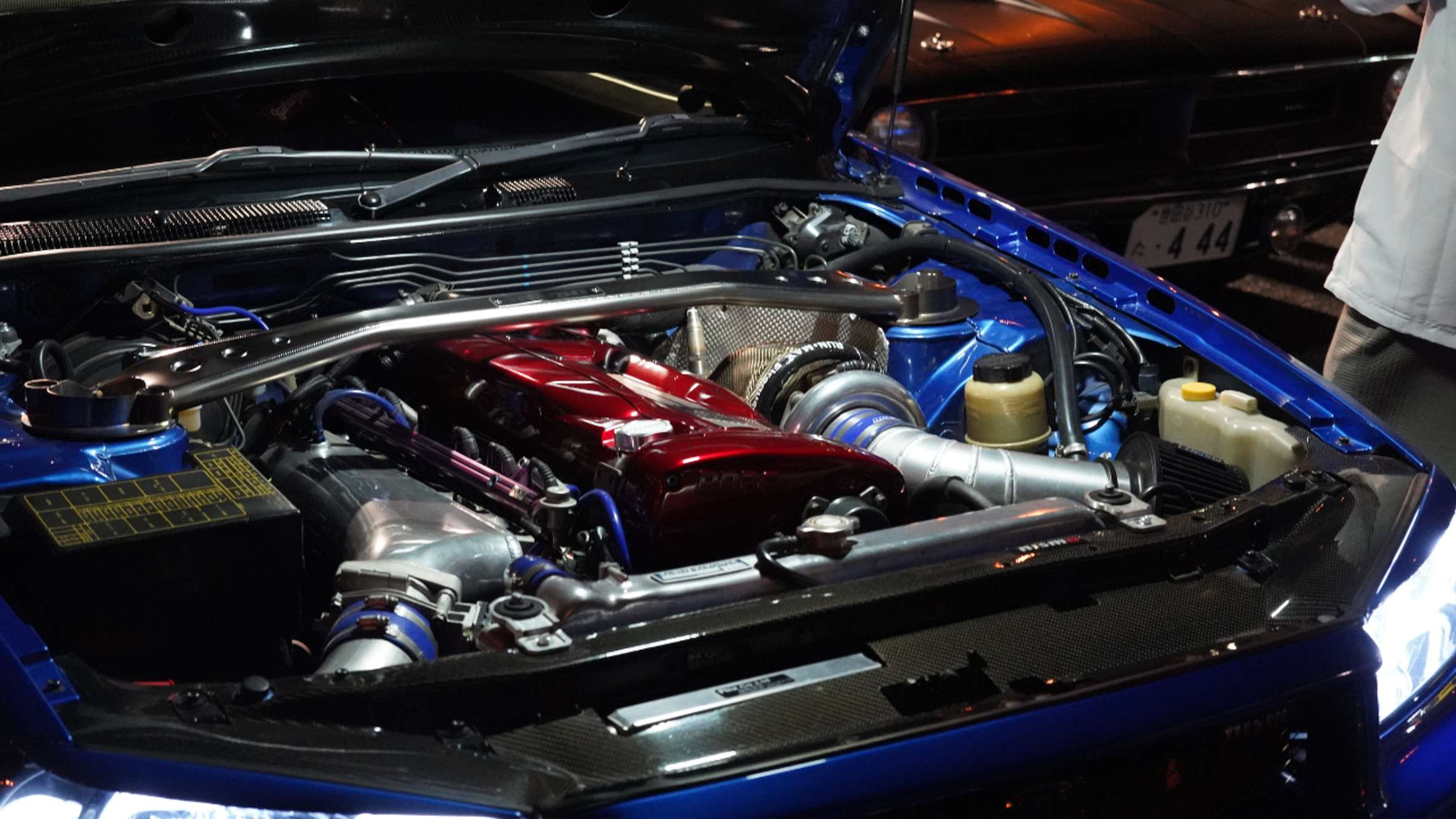
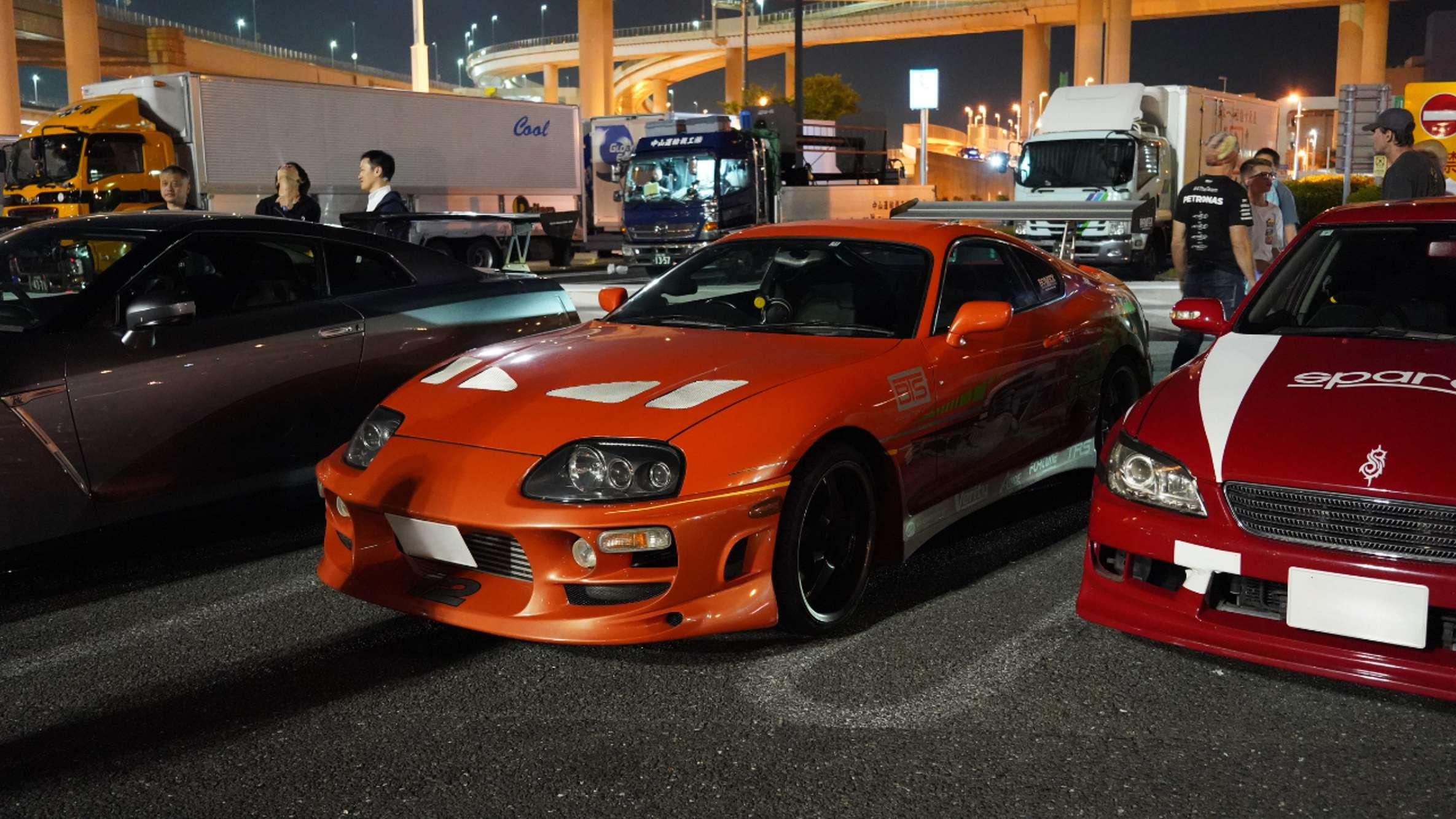
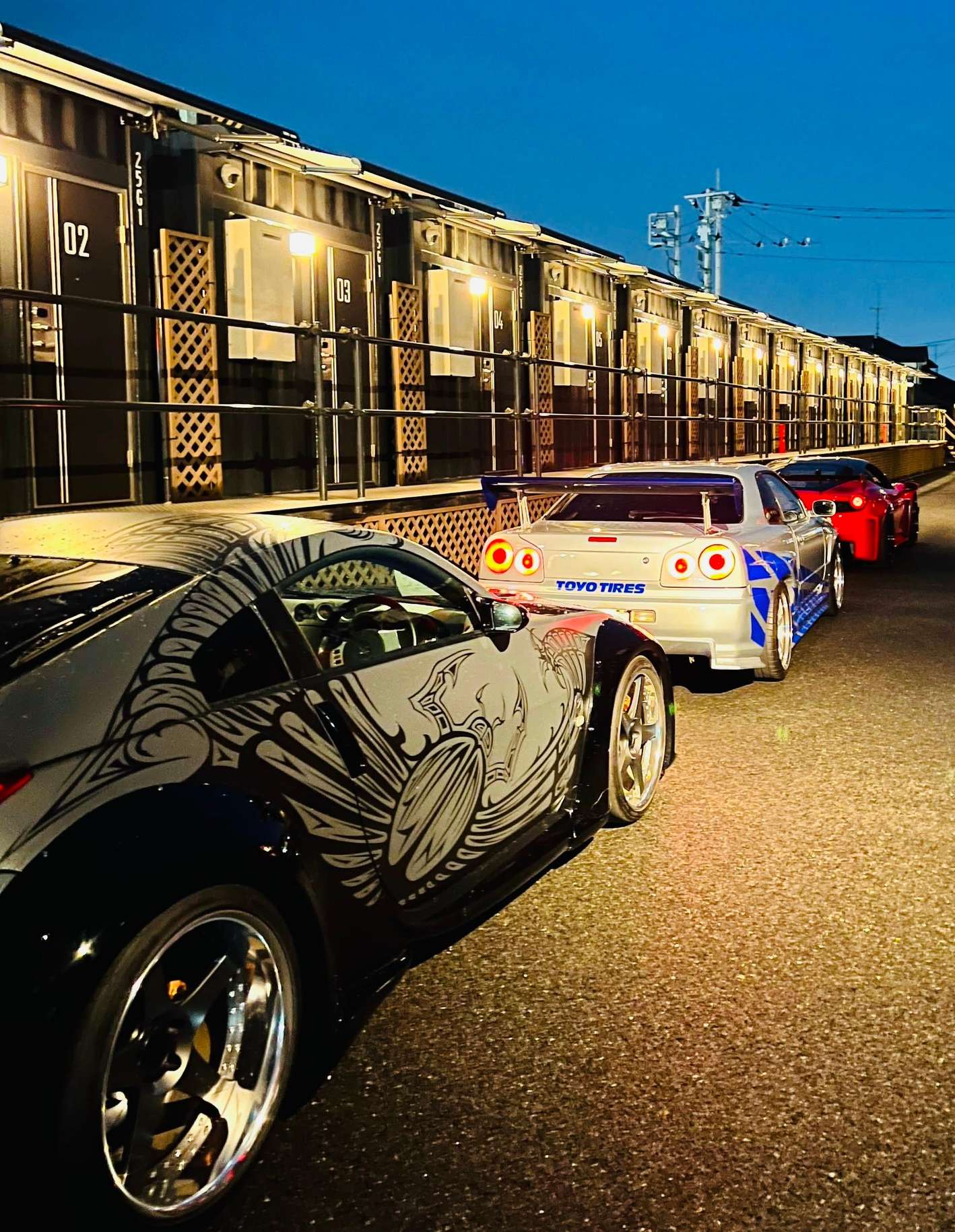
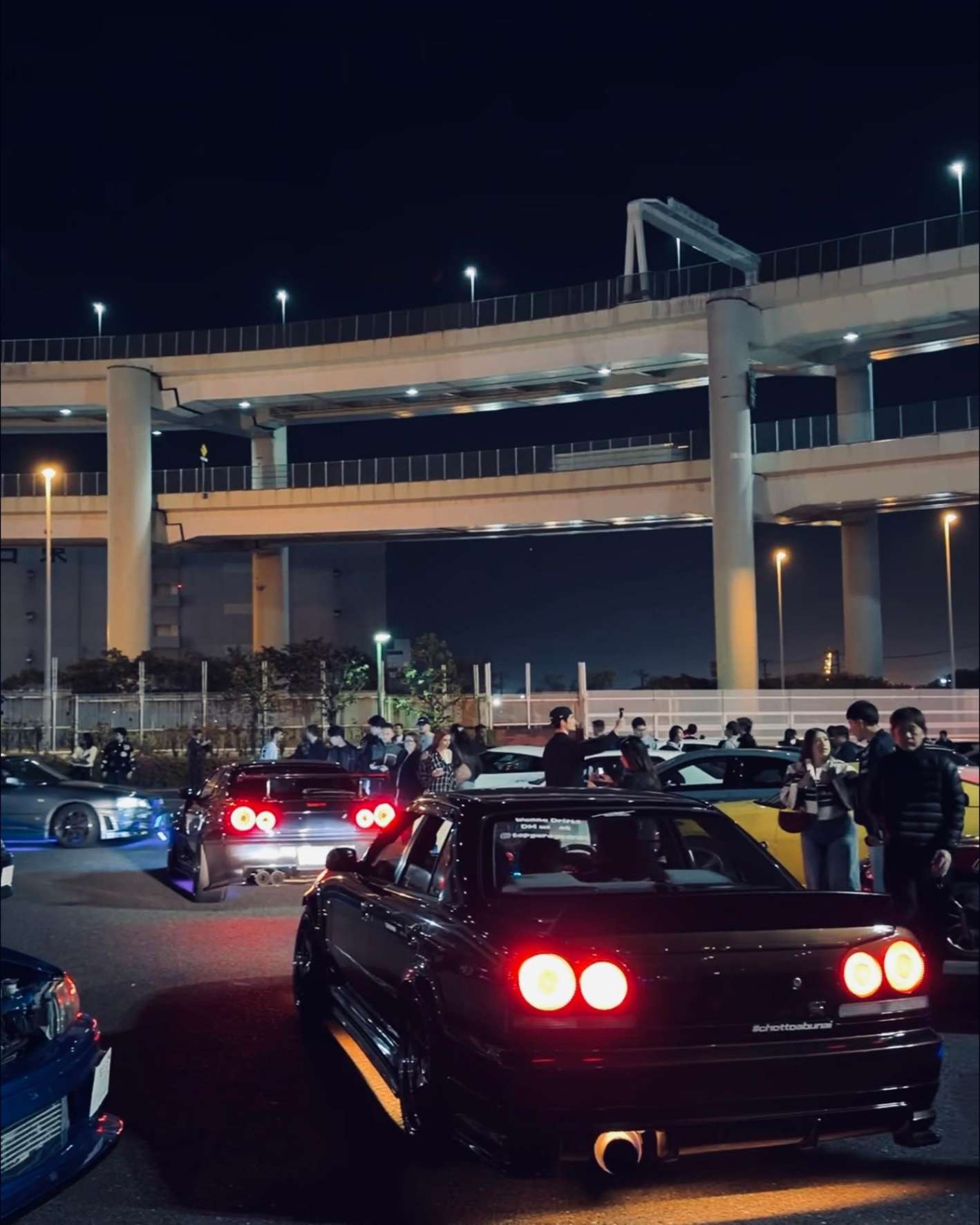
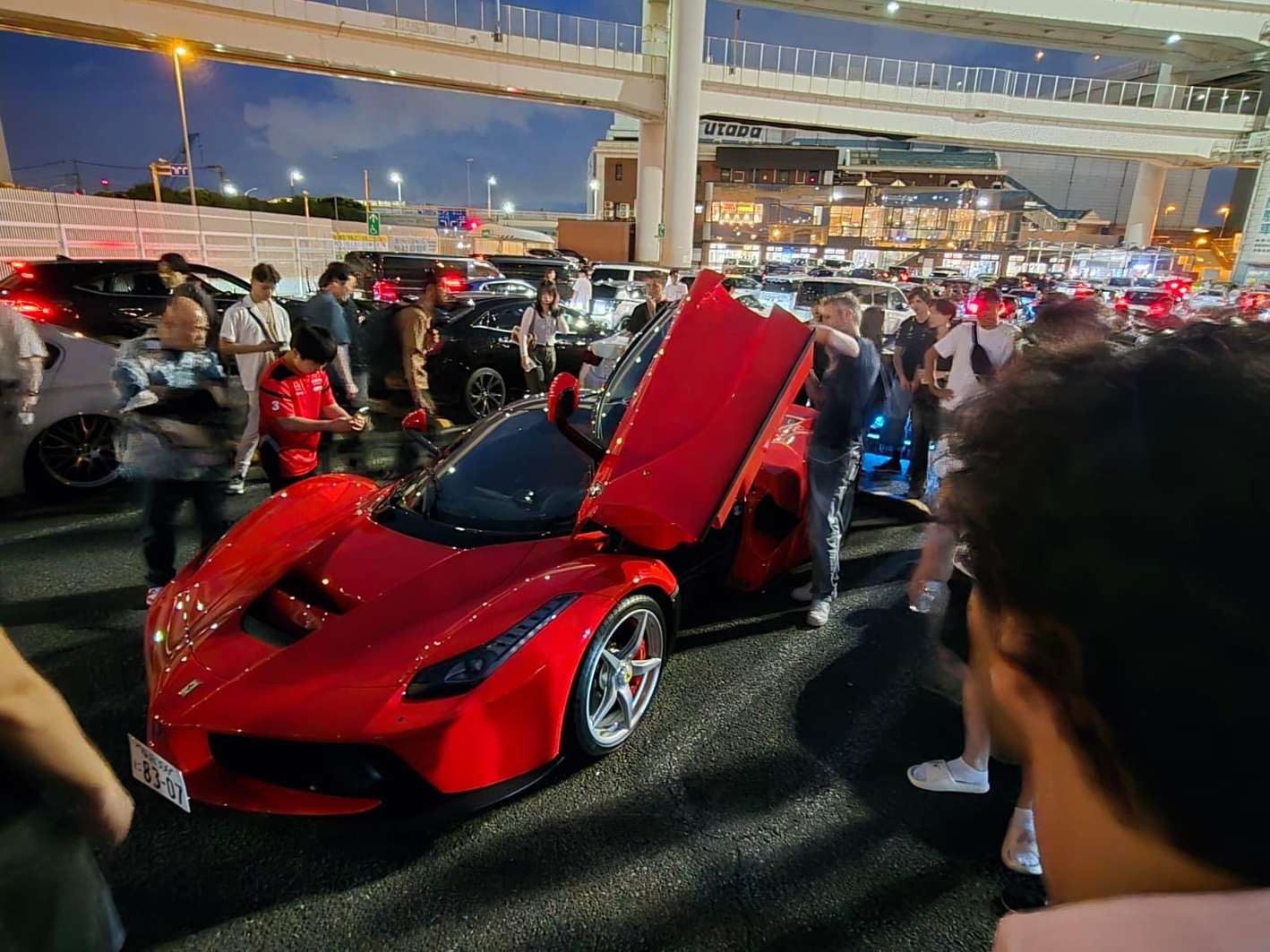
Down the long circular ramp at Daikoku, the lot opens up: GT-Rs lined shoulder to shoulder, owners lifting hoods, a FamilyMart glowing at the edge of it all.
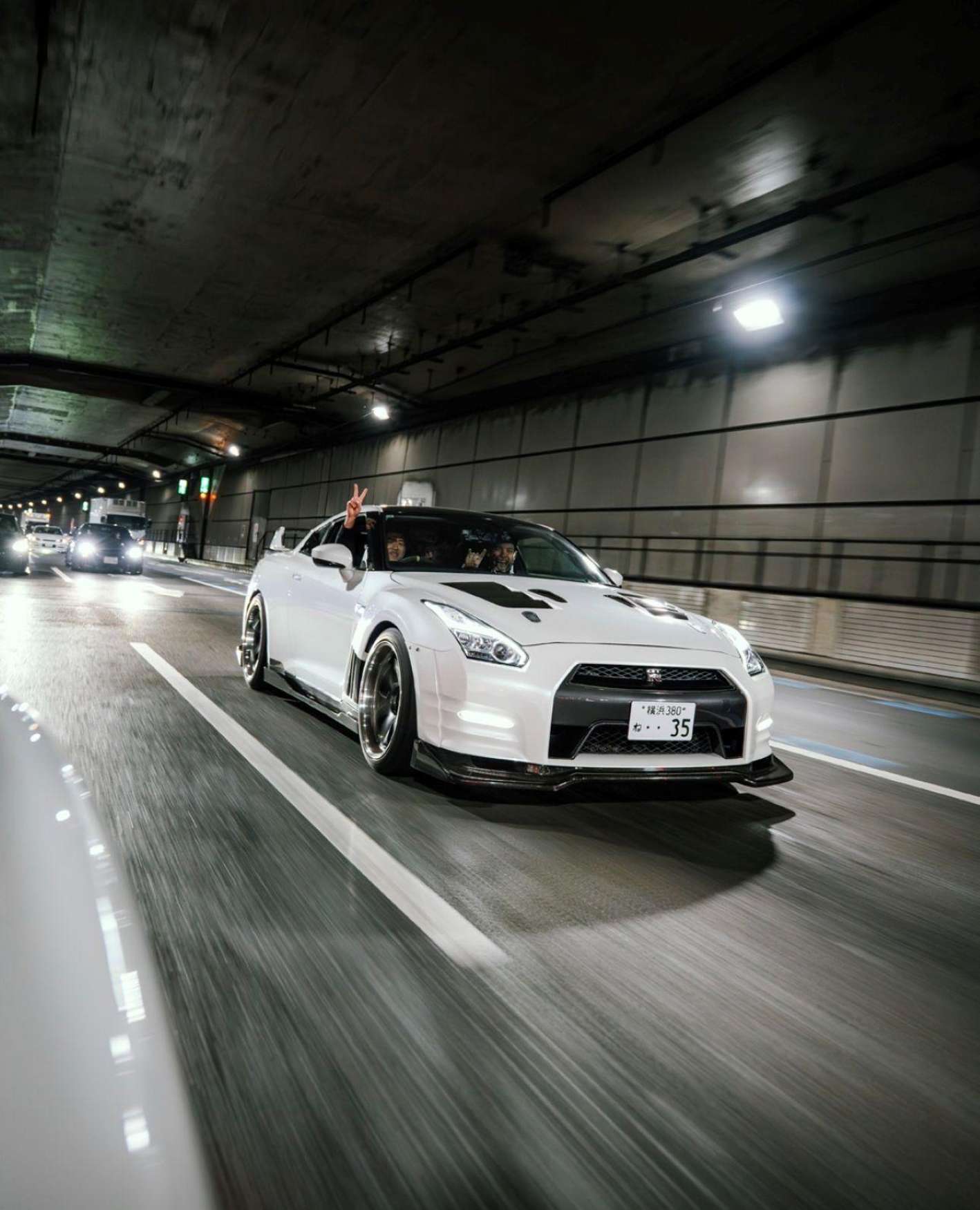
Most visitors see this from a passenger window. On a JDM driving tour you arrive with your own hands on the wheel, having crossed Rainbow Bridge with the engine note bouncing off the tunnel walls.
The format is simple. A lead pace car sets the route and a chase car closes the line, both tied to you by two-way radio. The radio does the navigating, calling junctions, toll gates and any speed traps ahead, so you steer and the paperwork of the Shuto Expressway stays off your mind.
JDM stands for Japanese Domestic Market, and on this side of the Pacific it means cars built for Japan first. The phrase comes alive the moment you roll into the meet with your own hands on the wheel.
Travelers who have done it put it one way:
A traveler's note
So much fun! Great break from shrines and food tours. Toshi let me on the aux, and rotating between three drift teachers explained things different ways. My regret: camera was on photo, not video.
That line shows up again and again from people who booked the wheel instead of the window seat.
It is also the practical case: a guided convoy removes the navigation stress and the heavy liability of renting a high-powered car alone on unfamiliar roads, while keeping the lead-pace guidance, the radio alerts and the photo stops.
Tour for this
Tokyo Drift 5.0 Real Fast & Furious Experience5.0★ (140) · 3 - 4 hours · Hotel pickup · Free cancellation
Highway convoy or drift circuit - driving JDM your way
Two ways to drive, and they share nothing but the badge. One is street driving to a real meet, four hours or so from a central meeting point to the lot at Daikoku. The other is a closed circuit outside the city, where an instructor teaches you to slide a car yourself.
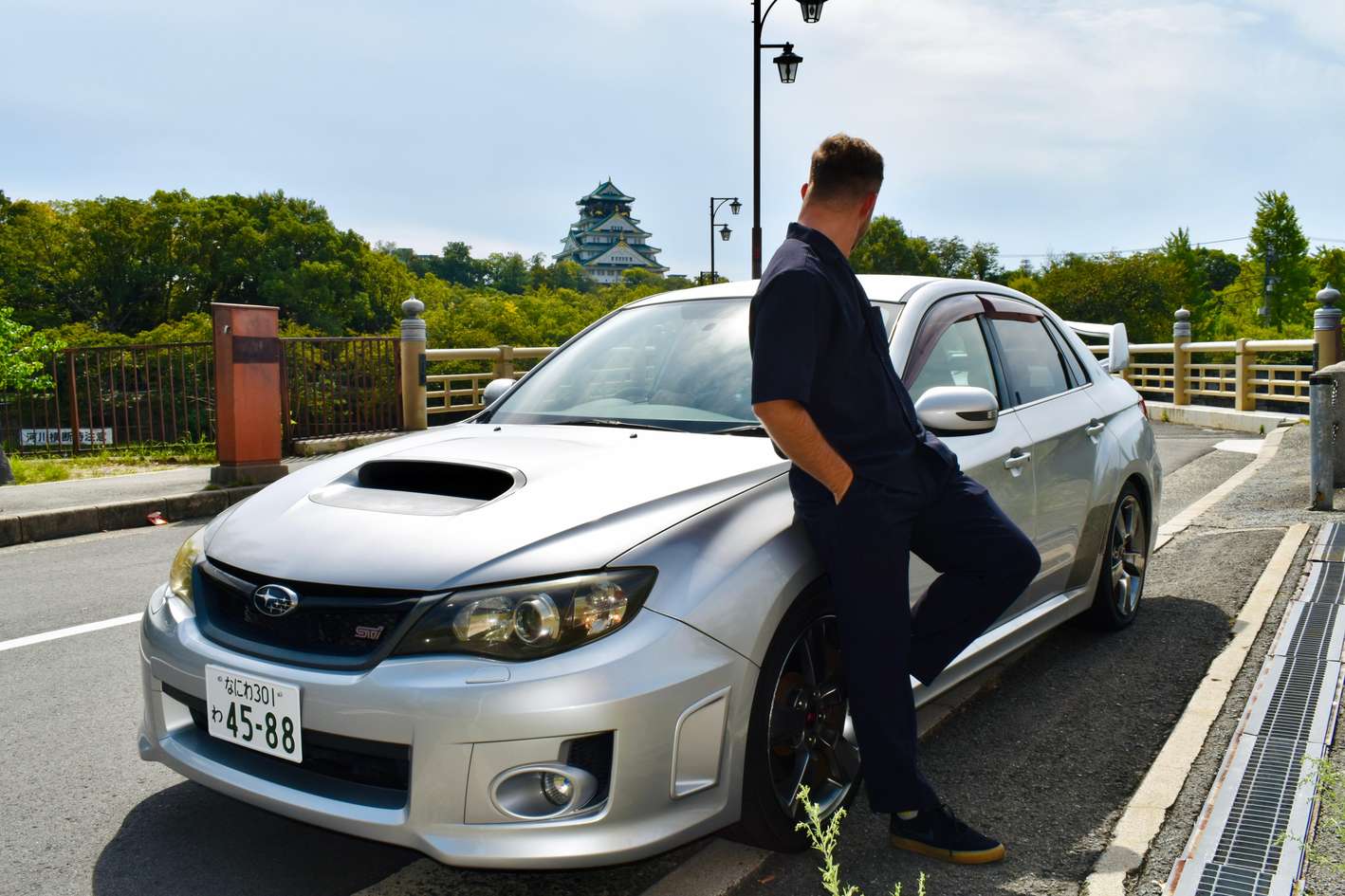
The Tokyo Drift: Self-Drive R34/35 GT-R JDM Car Tour Daikoku PA is the cleanest version of the first, with an English-speaking guide running the route and your car reserved for your booking group.
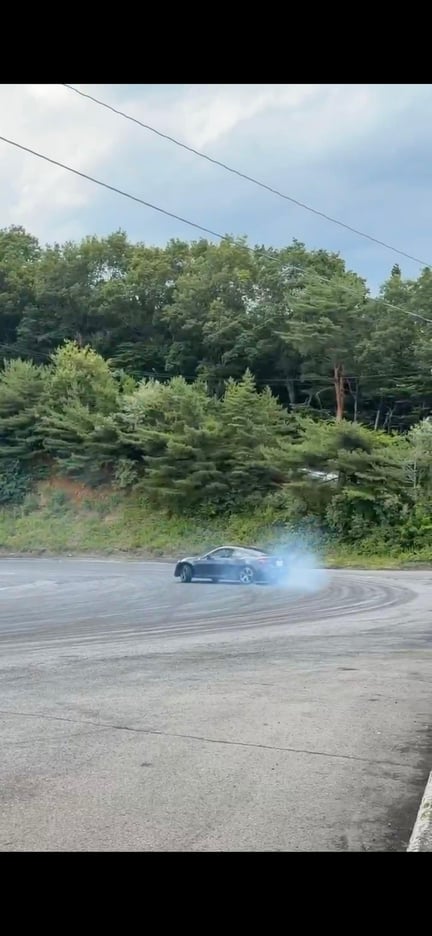
On the circuit the learning is hands-on. Beginners start with a proper donut in an MX-5 and move to figure-8s; more experienced drivers take a 350Z, RX-8 or 180SX through e-brake work and higher-gear changes. No license is needed on a circuit, because it is private land, and helmets and gloves are supplied.
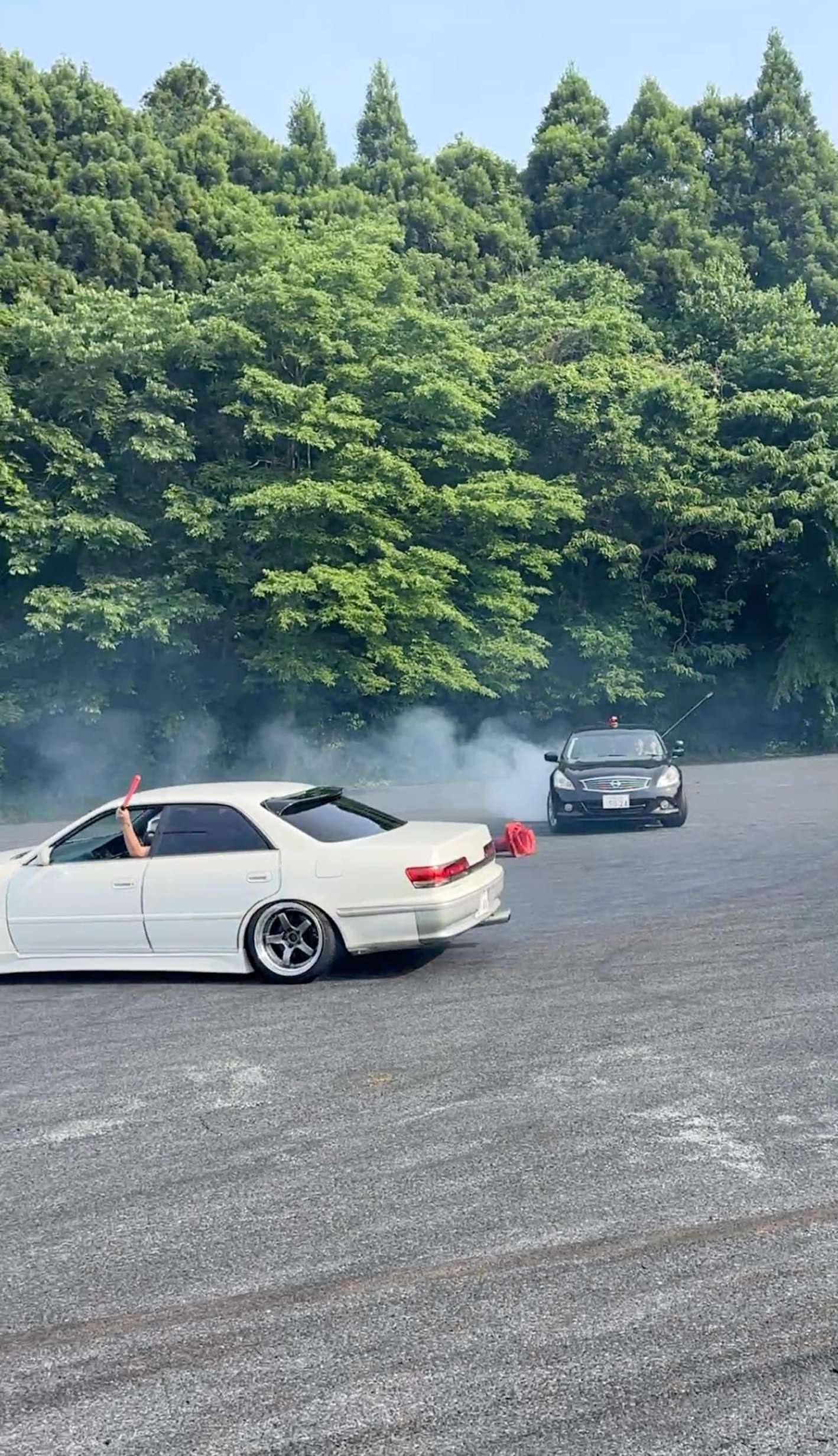
One thing a convoy will never give you is the slide. Drifting is illegal on every public road in Japan, and Daikoku nights are static displays and highway cruising; the movie version lives at a track. If the meet is the dream, book the convoy.
If the skill is, book the circuit. On the convoy, know that specific car requests are not always guaranteed, since maintenance and group size can force a swap, though private plans do lock in a model.
Tour for this
Self-Drive Drifting Lesson with Pro Tokyo Drift Experience4.9★ (52) · 6 hours · Hotel pickup · Free cancellation
Will your license let you drive a JDM car in Japan?
The handover is where tours are won or lost, and it runs on paper. The driver's side window drops, the guide holds out a hand, and what lands in it decides whether the GT-R is yours for the night. Original physical documents, every time: passport and home license, no photos on a phone, no scans.
What goes with the license depends on where it was issued. Drivers from the United States and most Geneva Convention countries carry an International Driving Permit issued under the 1949 Convention specifically; the 1968 version does not count at the counter.
Licenses from Switzerland, Germany, France, Belgium, Monaco, Taiwan and Austria travel instead with a certified Japanese translation, arranged in advance through JAF. U.S. military personnel and their families use a SOFA permit or defense ID with their state license.
Arrange the right document weeks before you fly. One tour's terms say it plainly: arrive without the required papers and there is no participation and no refund, with a full GT-R parked in front of you. Staff at smaller rental counters may speak limited English, so have everything ready and labelled before you queue.
Tour for this
Osaka: Self-Drive JDM Sports Car Rental for 9 or 24 Hours4.9★ (14) · 9 hours - 1 day · Free cancellation
Age, clutch and the wrong side - cleared for a JDM driving day?
Two numbers gate the GT-R keys. You must be at least 23, and R34 drivers must put down a credit card; debit cards do not work for the deposit hold, because it needs a card that can actually carry the security amount.
Pack both on the day, in the original, since copies and phone photos fail the check.
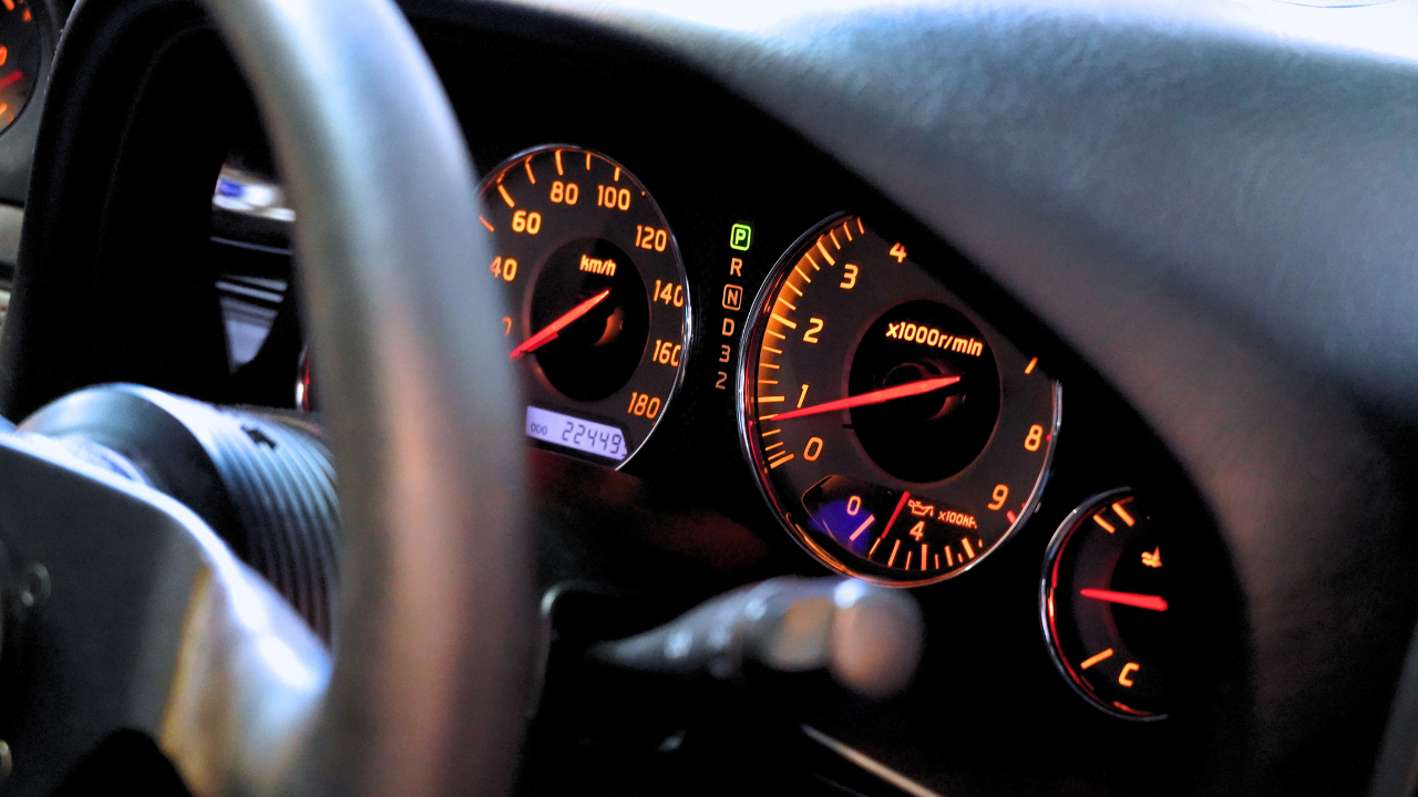
Then the cockpit, which reads backwards for an hour and then stops mattering. The pedals run left to right as always, clutch, brake, throttle, and the shift pattern matches a left-hand-drive manual exactly.
What changes is your hands: the gear lever lives in your left hand, and the turn signal stalk sits on the right side of the column, where the wipers usually wait. Expect to indicate twice in the first ten minutes.
Everything else is ordinary manual discipline. The cars are genuine R34 and R35 hardware, so if your clutch skills are rusted, a chauffeured format may be the honest choice for this trip. But if the six-speed is where you live, this is the car you have been rehearsing for.
On Friday and Saturday nights the first cars drift in between 5 pm and 6 pm around sunset, the main wave builds from 7 pm, and then the police sometimes clear the lot early, between 7:30 pm and 9:15 pm, when noise and crowds pile up.
Friday and Saturday Meet Activity at Daikoku PA
Late afternoon5 pm to 7 pm
First cars arrive before dusk
Early evening Peak7 pm to 9 pm
Main arrivals before police closures
Late evening9 pm to 11 pm
Peak density when not closed
Midnight11 pm to 2 am
Crowds thin or move elsewhere
QuietBusyThe busiest
Those hours shape the departure. To catch the gathering before a possible shutdown, aim to leave central Tokyo between 4:30 pm and 5 pm on Friday, weekends and holidays, arriving with the first wave.
Midweek is a different night altogether: smaller turnouts, a relaxed vibe, and closures are rare on weeknights, so a 7:30 pm departure still lands you in the thick of it.
And if crowds have never been the point, Sunday morning between 8 am and 10 am is the quiet version: vintage classics and European supercars idling in daylight, owners chatting before their weekend runs, almost no risk of the lot being cleared.
Tour for this
Tokyo: Daikoku Car parking area night Meet & Experience JDM5.0★ (5) · Valid 1 day · Hotel pickup · Free cancellation
How far ahead to book a JDM driving tour, and what it costs
The calendar matters more than the price list. Rare manual GT-Rs and R34s are few, and peak months fill first, so a summer or spring date needs locking in well before you fly.
Tour demand by month
August: 5 out of 5 for how busy it gets.
HighestMar, May, Jul to Sep
In betweenApr, Jun, Dec to Jan
LowestFeb, Oct to Nov
Darker: a higher how busy it gets score, out of 5
Tap a month to read it.
August and the busy spring months are the ones to book earliest; January and November sit nearly empty in demand, which is exactly when a last-minute R34 becomes realistic. Winter has its own logic, with warm layers replacing the booking scramble.
Then the bill behind the bill. Tolls and fuel are not always included on self-drive rentals, and the return highway run alone adds a real charge at the ETC gate, so read the inclusions before you compare base rates. Guided passenger and private tours more often fold tolls and fuel into the price.
One more thing to spend nothing on: touts around Shibuya and Shinjuku pitch cash rides to the parking areas at night, sometimes at steep four-figure sums in yen. Skip them. A booked tour carries insurance, a planned route and a guaranteed ride home.
Tour for this
Tokyo Drift: Self-Drive R34/35 GT-R JDM Car Tour Daikoku PA4.9★ (18) · 4 hours · Free cancellation
The evening begins on foot, with the briefing, before anyone takes the seat. Handover takes real time, with the crew walking through handling guidelines before keys change, so arrive fed and early. Then the convoy forms, lead car first, chase car last, radios checked.
On the Wangan the lead car calls everything: the junction coming up, the toll gate lane to take, any speed trap ahead. The limit is 80 km/h, and the Orvis cameras flash a bright red at anything far beyond it, photographing plate and driver together.
Pace follows your comfort, and the slot right behind the lead car gets the most dynamic run if you want one. Nobody signs up for a crawling tourist pace; the lead car pushes on when the roads are clear and the drivers are confident.
How the convoy night runs
1
6:30 pm
Briefing and vehicle handover
The crew walks through handling guidelines before keys change hands
2
Early evening
Convoy forms and departs
Lead car first, chase car last, radios checked
3
On the Wangan
Expressway run at 80 km/h
The lead car calls junctions, toll lanes and speed traps over the radio
4
Arrival
Spiral ramps down to Daikoku PA
Entry to the parking area costs nothing
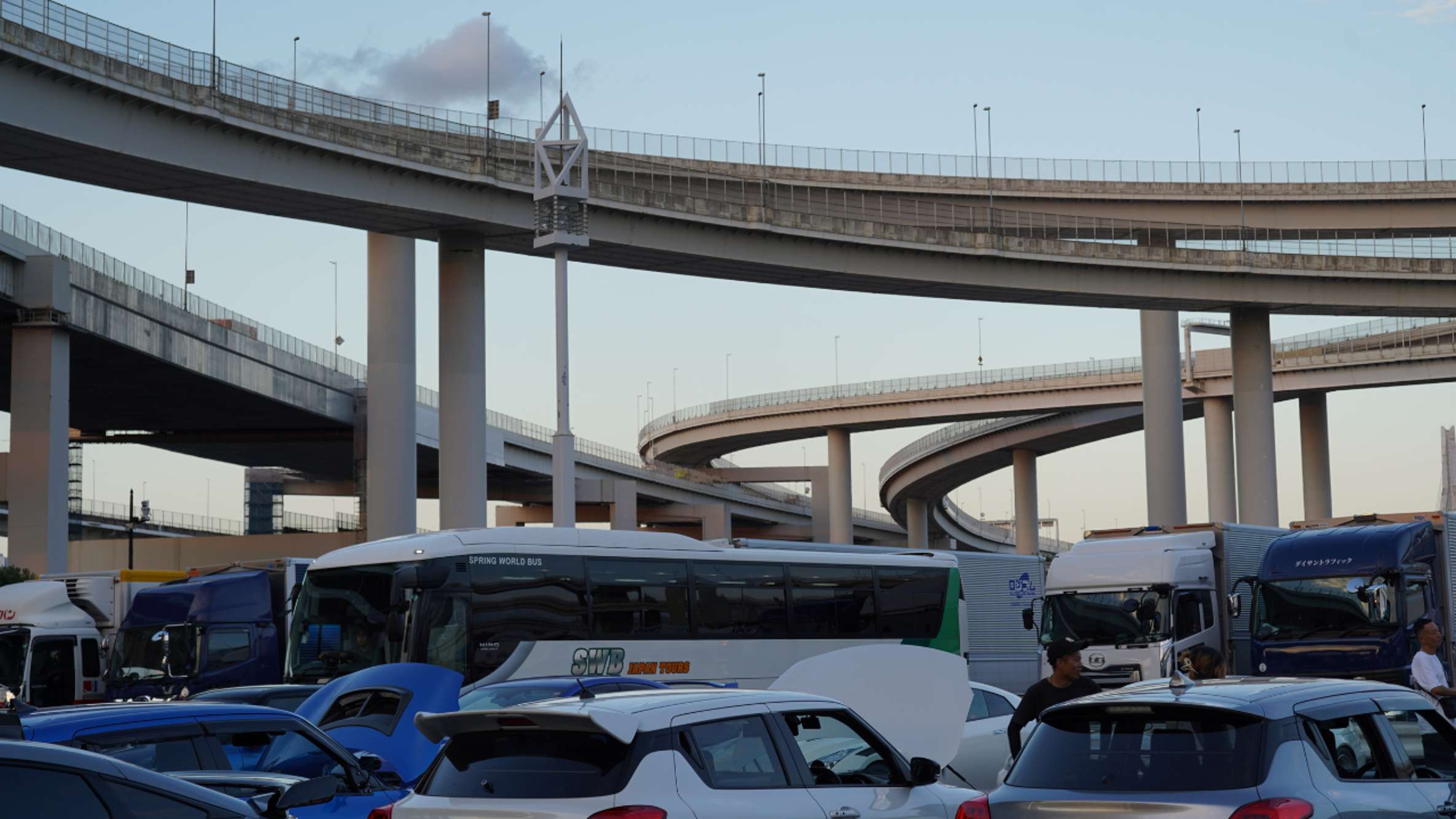
The arrival is the part you will retell: the spiral ramps of Daikoku Junction winding down from the expressway onto the pier, the lot opening beneath you. Buy a hot coffee from a vending machine or the 24-hour konbini, and stand in the middle of it.
Tour for this
Fast and the Furious III/Tokyo Tower/Daikoku PA/JDM Car Meet4.8★ (346) · 3 - 4 hours · Free cancellation
Getting to the start line of your JDM driving tour
Meeting points cluster where the subway runs: Shibuya, Akihabara, Tokyo Station, Shinjuku and Harajuku, all direct Metro rides from most of the city. Shibuya sits on the Ginza, Hanzomon and Fukutoshin lines, Akihabara on the Hibiya. Get there by train and the evening starts calm.
The island itself is another matter. Daikoku PA sits inside an expressway interchange with no station, bus stop or walkway of any kind, and the pedestrian gates are locked and fenced. On foot it is not merely banned, it is impossible.
That rules out clever plans. Taxis cannot pick up passengers inside Daikoku, and rideshare apps show no drivers there, so anyone dropped off by cab is stranded on the highway island with a 30-plus-minute taxi ride back to town and no way to book it from the lot.
A guided convoy closes that hole completely, carrying you out and back.
How each way of getting there treats you
Guided convoyGuaranteed return transport from Daikoku, whatever the night does
Easy
Subway to the meeting pointDirect Metro lines to Shibuya, Akihabara, Tokyo Station and Shinjuku
Easy
Self-drive rentalTolls and fuel come on top, and suburban pickups can eat hours
Difficult
Taxi or rideshareNo pickups at Daikoku PA, no trains, buses or walkways onto the island
No access
Friday evening rush hour, roughly 4:30 pm to 8 pm, adds 15 to 30 minutes each way, which is why Friday tours roll out earlier than midweek ones. Plan the start point around the Metro map and the whole logistics problem shrinks to one train ride.
Tour for this
Tokyo: Fast and the Furious Tokyo Drift III JDM Car Tour4.8★ (880) · 3 hours - 1 day · Free cancellation
Dress for two climates: the cabin and the bay. In the cabin, closed shoes are the law of the road in Japan, so sneakers or driving shoes with a held heel, and clothes without loose sleeves that can catch on the wheel.
Flip-flops, backless sandals and heels are out. On the bayside lot the wind does the rest, cutting hard off the water even in summer, so a light jacket rides along year-round.
Winter is the real test. Nights at Daikoku drop between 1 and 5 degrees, and you will stand on concrete for an hour or two with the sea blowing through, so a thermal layer, a fleece and a windproof shell beat one bulky coat, which also fights the low door sills of a sports car.
Gloves that work a phone screen, a beanie, and rain gear in May or September round out the bag.
Japan's zero-tolerance drink rule
Any alcohol at all before driving The law allows no alcohol behind the wheel, so the driver drinks nothing for the night and lets the passengers carry the vending machine tab
That rule has no soft edge in Japan, and a convoy driver holds it from the first coffee to the hotel drop-off. Everyone else can toast the lot; the person with the keys sticks to the hot chocolate.
Tour for this
Tokyo Drift Self-Drive Experience with Pro Instructor5.0★ (3) · 3 - 5 hours · Free cancellation
The single rule that covers most of it: the cars are not exhibits, they are somebody's pride parked at a public rest stop. Never touch, lean on, sit on or step inside one without the owner's say-so, and keep watches and rings away from the paint.
Photography runs on the same courtesy. Exteriors are generally fair game, but ask before close-ups, before engine bays and interiors, and before pointing a lens at a person or a private plate. If an owner declines, move on without a word.
Then the part that protects the whole scene. One revving engine can close the lot: revving, burnouts and any kind of racing draw police, and the parking area shuts early for everyone, drivers included.
Truckers sleep here, so voices stay low and stereos stay off. Buy a snack from the shop while you are at it, keep the trash in the bins, and when loudspeakers order a dispersal, clear out calmly like the locals do.
What nobody tells you
The meets are unauthorized
Daikoku is a working rest stop for truckers, not an event venue, so no permit protects the gathering
Loud nights end loud nights
Noise complaints bring police and an early dispersal of the entire lot
Your convoy is a guest too
The tour's welcome at Daikoku depends on every visitor behaving like a regular
That last point is the one worth carrying to the lot. The next convoy, and maybe your own second visit, depends on how this one's guests behave tonight.
Tour for this
Ebisu Circuit: JDM Drift Experience with Guide4.9★ (86) · 12 hours · Hotel pickup · Free cancellation
If police close Daikoku during your JDM driving night
A closed lot sounds like a ruined evening. In practice it is a redirect.
When Daikoku shuts, the crowds flow across Tokyo Bay to Umihotaru PA on the Aqua-Line, a rest stop built on an artificial island over the water, where meets peak between 9 pm and 10 pm on Friday and Saturday nights as the Daikoku crowd arrives.
Tatsumi PA and, at times, A PIT Autobacs in Shinonome take the overflow too.
Rain is handled the same way, quietly. Ordinary wet weather does not stop the tours, though the lot thins out because owners of rare cars keep them home; the regulars still come, and wet pavement photographs beautifully. Typhoons and severe storms are the only real stoppers, emptying the parking areas entirely.
What happens when the night changes
If this happens
What happens then
Police close Daikoku early
The convoy reroutes to Umihotaru or Tatsumi, where the meet continues over the water
Ordinary rain
Tours run on schedule with a thinner, quieter lot of committed regulars
Typhoon or unsafe roads
You are offered a new date, an adjusted route or a full refund
A closed lot on arrival
Drivers never stop on the expressway shoulder; the convoy keeps moving to the next spot
Read those rows as permission to book without hedging on the weather. The night has backup plans built in, and the tours' own terms say so.
The convoy leaves in the evening, which leaves a whole day for the rest of the car scene, most of it reachable by train.
Start at A PIT Autobacs in Shinonome, three floors of tuning parts, wheels and gear about five minutes from the Bayshore Route, where car clubs stage up before rolling to Daikoku. In Ginza, Nissan Crossing sits free and open on the crossing itself, with a driving simulator worth a turn.
Akihabara works for the afternoon: linked Initial D cabinets at the GiGO game center, itasha parked in the underground UDX garage you can walk into, model cars at Yodobashi Akiba and vehicle toys on the seventh floor of Mandarake Complex 2.
Some meets need no car at all: Shibuya Carjack gathers near Tower Records on Saturday nights around 9 pm, a short walk from the Scramble.
Use that list to fill the hours before pickup, and to pick a base district for the day: the Akihabara stops pair naturally with a meeting point there, while the Shinonome megastore sits closest to the evening expressway route.
One practical note closes the loop: A PIT Shinonome is itself an evening meet spot, so a stop there after 6 pm sometimes doubles as a preview of the night ahead, cars idling in the car park before the expressway run.
Driving a real R34 or R35 to Daikoku is the version of this trip worth planning a whole evening around, and the logistics are simpler than they look: right documents, closed shoes, an early Friday departure.
Pick the convoy if the meet is the goal, the circuit if the skill is. Either way, book the rare cars early.
Go ifYou hold a 1949 Convention IDP or a certified Japanese translation and you are 23 or olderYou want to arrive at Daikoku PA behind the wheel of the car you came to seeYou would rather learn donuts and figure-8s from a pro instructor than cruise
Skip ifYou cannot bring original documents and a credit card for an R34 on the dayYou plan to drink at dinner and drive afterwardsYou want drifting on public roads, which no legal tour provides
Our pick to book
Tokyo Drift: Self-Drive R34/35 GT-R JDM Car Tour Daikoku PA4.9★ (18) · 4 hours · Free cancellation
Straight answers on licenses, convoys, and what happens when the lot gets closed.
Tokyo2026
Just rolled down the Daikoku spiral ramp behind a lead car at sunset, first cars already rolling in. Bring your passport, license and a credit card.
What documents do I need to drive a rental sports car in Japan?
Bring your original physical passport and your valid home country license. Photocopies and phone photos do not count. Without the originals in hand, you will not be allowed to drive, and some tours also require proof at check-in.
Do I need an International Driving Permit for a Tokyo JDM driving tour?
Most travelers, including US license holders, need an IDP issued under the 1949 Geneva Convention. If you ride along as a passenger with a professional driver, no permit or license is needed at all.
My license is from Germany or France. What do I need instead of an IDP?
Licenses from Switzerland, Germany, France, Belgium, Monaco, Taiwan, and Austria need an official Japanese translation, arranged through the Japan Automobile Federation, plus your original license and passport.
How old do I have to be to drive an R34 or R35 GT-R myself?
Self-drive GT-R tours set the minimum age at 23. Meeting the age rule alone is not enough, since you also need the right documents on the day or you will sit the drive out with no refund.
Why do R34 GT-R tours ask for a credit card?
The R34 requires a credit card on the day, and a debit card will not do. Bring one that works in Japan so the deposit formalities go through without a hitch.
How does the convoy keep together on Tokyo's expressways?
A lead pace car goes first and a chase car follows behind, connected by two-way radio. The lead calls out turns, toll gates, and police speed traps, and sets the pace to match the least confident driver in the group.
Where is the best spot in the convoy?
The position directly behind the lead pace car gives the fastest and most dynamic run. Slotting in further back gives you more breathing room. Tell your guide how comfortable you feel and they will adjust the pace.
Do I have to navigate Tokyo's highway junctions myself?
No. The lead car handles the route through the expressway maze, so you follow its tail lights instead of a map. If you would rather skip the wheel entirely, a chauffeured tour gives you the same stops from the passenger seat.
Are tolls and fuel included in self-drive bookings?
Some basic sports car rentals leave expressway tolls, ETC charges, and fuel on top of the base rate, and a round trip on the highway can add noticeably to the bill. Check what the booking includes before you commit.
What time do cars actually gather at Daikoku PA?
There is no official schedule because the meets are informal. The first modified cars roll in between 5 and 6 pm around sunset, and the main wave builds from 7 pm onward on Friday and Saturday nights.
What happens if police close the parking area during our drive?
Officers announce the dispersal over loudspeakers, and the convoy clears out peacefully like everyone else. Guides then reroute to other spots such as Umihotaru PA on the bay, so the night continues rather than ending.
 Your best match